

Professor&Chief,Plastic and Reconstructive Surgery WashU in St. Louis School of Medicine/ @bjc_healthcare @wustlmed @washuplastics Head to toe Surgery Innovator
St.Louis, United States
Joined June 2009
- Tweets689
- Following2.2K
- Followers2.3K
- Likes8.9K


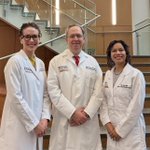


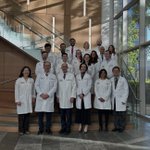
Proud moment for Tissuelock. We graduated from the MedTech Innovator 2026 Accelerator(ASPS/MTI Accelerator), and Nasdaq put the company up on the board in Times Square New York City. Congrats to other companies in the cohort!
Tissuelock is a WashU Plastic Surgery biotech startup developing an internal surgical adhesive designed to eliminate dead space and reduce or remove the need for drains. The work started with Matt Wood, Xiaowei Li, Grihith Varaday, and myself in the Division of Plastic and Reconstructive Surgery at WashU, with support from WashU OTM and the American Society of Plastic Surgeons @ASPS_News . MedTech Innovator selected us as one of 65 companies from 1,835 applicants.
tissuelock.com
Appreciate the MTI team for the recognition and the visibility. LG! @washuplastics @WashUSurgery @WashU @BJC_HealthCare @WashUOTM

4
254
Last week, it was an honor to give Grand Rounds for the Department of Surgery at Washington University School of Medicine BJC Healthcare on the 100+ year history of the Division of Plastic and Reconstructive Surgery here in St. Louis. Our program sits in the heart of the country, and the American Board of Plastic Surgery was started right here. I paid tribute to the remarkable chiefs who came before me: Dr. Vilray Blair, Dr. James Barrett Brown, Dr. Jack Hoopes, Dr. Paul Weeks and Dr. Susan Mackinnon. For more than a century, this program has shaped hundreds of medical students, residents, fellows and faculty. Serving as its chief for the last six plus years (started Feb 1 2020) has been the privilege of my career.
We also went back to the origins of the Mathes–Nahai classification Which I view as the standard base logic of plastic surgery and essential to first principle thinking. Much of the fundamental laboratory work behind it was done here at WashU, during Dr. Stephen Mathes's year on our faculty. Dr. Foad Nahai came to St. Louis to work alongside him, as did Dr. Grant Stevens, who was a medical student at the time. (@drgrantstevens was also a resident and hand fellow with Dr Paul Weeks for 3 years here at WashU!.) That work points to a first principle that still drives everything we do: anatomy and blood supply are the foundation of every plastic surgery procedure.
Then we looked ahead. The next chapter of plastic surgery will be written where medicine meets engineering, as we keep pushing the limits of innovation. Proud of where we come from, and excited about where we're going. PLASTIC SURGERY is a beautiful specialty. We cover head to toe cancer, trauma and aesthetic reconstruction. LG! @washuplastics @WashUSurgery @washumedicine @BJC_HealthCare @ASPS_News


READ. Beautiful.

The gap between impossible and inevitable is one person who would not stop.
In 1920, The New York Times told Robert Goddard that a rocket could not fly in space. Everyone knew it needed air to push against. The paper did not just disagree with him. It said he lacked the knowledge taught in any high school.
Yesterday, a rocket fell from orbit and was caught out of the sky by the tower that launched it.
Starship circled the Earth fourteen times. It spent more than twenty two hours in space. It survived reentry at thousands of degrees and came to rest, upright, in the grip of two mechanical arms. Gently.
Goddard never saw any of it. He died in 1945, sixteen years before anyone even reached orbit. The New York Times printed its correction in 1969, the day after Apollo 11 launched. Forty nine years after it told him he was wrong. Twenty four years after he could have read it.
His first rocket flew for two and a half seconds.
It rose forty one feet above a frozen field in Massachusetts, then fell. No one was watching. Almost no one ever heard about it. The entire flight could fit inside the pause between two heartbeats.
That was the beginning of everything.
Every impossible thing you have ever watched happen started as something that small. Not a committee. Not a consensus. Not a moonshot announced on a stage. One person, alone, building something the world had already decided could not work.
One hundred years separate those two and a half seconds from twenty two hours in orbit. That distance is not technology. It is the people who refused to stop after being told it was impossible.
The future does not arrive as a miracle. It arrives as a long, quiet line of people who kept going after the world laughed, looked away, and moved on.
Somewhere right now, someone is building something the world has not yet learned to take seriously. That has always been where the future comes from.
Keep throwing. Somebody, someday, will catch it.
Justin Sacks MD MBA FACS retweeted

Breaking News: SpaceX caught a spacecraft returning to Earth out of the air with giant mechanical arms, a major leap for reusable rockets. nyti.ms/4iIrOYv

It is 100 percent the latter “ability to synchronize and accelerate technological and engineering breakthroughs, piecing together convergent technologies to bring forward the singularity.” one stubborn person can move the world. We have seen this before historically. Ad astra. @wintonARK

This is the largest ever object that we have safely returned from orbit
Drops cost per kg in orbit to roughly $100 (from $1000) and promises a massive increase in achievable annual upmass.
With this cost input falling out of the equation the cheapest electrons in the solar system will be harnessed in orbit rather than on earth.
That this has happened as we have discovered mechanisms by which to directly transfigure inexpensive electrons into digitally transmittable machine intelligence that can directly accelerate economic production, is either:
a happy accident;
a fairly convincing proof that we live in a simulation (built atop a random number generator seeded with the number 42);
or a testament to Elon Musk’s ability to synchronize and accelerate technological and engineering breakthroughs, piecing together convergent technologies to bring forward the singularity.
(Or perhaps all three.)
Where once we were limited by the resources we could extract from the ground, we now have access to the energy-mass of space and the seeds of the tools that we will need to begin to order and arrange it.
A moment. A historical mind blowing moment. And the merest beginnings of the beginning.
1
106
Starship was caught by the Mechazilla arms at Starbase after 22 hours and 32 minutes in the air. Lifted off Friday around 4:47 in the afternoon. Fourteen orbits. Put 26 Starlink V3 satellites out. Fired the deorbit burn, came back through the atmosphere, flipped upright on the engines, and the arms took it on the first try. Upper stage coming back from orbit and getting caught that way, first time. Today the world changed. Ad astray. What a time to be alive.

This is actually a bigger deal for humanity than most people can imagine. I will always remember the looks on the engineers’ faces in the Starbase conference room in December 2020 when @elonmusk suggested, then insisted, that the Mechazilla launchpad arms could catch a returning Starship.
3
129
Justin Sacks MD MBA FACS retweeted

TOMORROW: Don't miss your chance to hear ASPS members pitch their innovations at the ASPS Inventors Challenge while battling it out to be awarded Top Innovator of 2026! bit.ly/42mEBYs #PSTM26 #PlasticSurgery

Interview season is right around the corner, and so let’s take a look at WashU Plastic and Reconstructive Surgery.
We are an academic program. We perform research. We train medical students, residents, and fellows. We operate head to toe. We performed over 6000 operations last year. And we are lucky to work with some of the brightest minds and best plastic surgeons in our field.
This week we start with the people who run our residency: Dr. Amber Leis, program director, and Dr. Kelly Currie, associate program director. Both are hand, upper extremity and reconstructive surgeons who operate and teach our trainees every week.
Weekly over the next few months we will introduce you to faculty, residents, and fellows, one person or team at a time. No brochure. Just the people who make WashU Plastic Surgery what it is. LG!
@ASPS_Members @washuplastics @WashUSurgery @washumedicine @WashU

Amazing opportunity for @ASPS_Members @ASPS_News

There's no better way to grow than by learning alongside people who get what you do! Applications are open for the Essentials of Leadership program, bringing ASPS members together to share ideas, build skills and make lasting connections. bit.ly/4hER7uk #PlasticSurgery


This is awesome! Congratulations to Dr Carolyn De La Cruz and her team! @ASPS_Members @ASPS_News @PittPlasticSurg

In partnership with our sister societies, The PSF is dedicated to fostering the development of surgeon-scientists. Apply for a Combined Pilot Research Grant today! bit.ly/47JGVMf #PlasticSurgery

1
124
Looking forward to seeing everyone in Houston @washuplastics @ASPS_Members @ASPS_News @washumedicine

Join us for a WashU Medicine Plastic & Reconstructive Surgery Alumni Reception at the 2026 PSTM.
📅 October 17, 2026
⏰ 6–8 p.m.
📍 Hilton Americas Houston
RSVP here: bit.ly/3VEbajs
We look forward to seeing you there!

115

We are lucky to have surgeon scientists of the highest caliber and committed tonight and every night here in St. LOUIS @WashUSurgery @BJC_HealthCare @acsJACS @isaiah_turnbull

15 cases on the board for tomorrow. Before anything comes in overnight. And that assumes all the overnight stuff gets done. 2 lap choles, some extremity stuff, 2 robot cases, plus the rest. @washusurgres acute care surgery is getting it done.
1
200
Keep cooking @mikepat711 Perfect explanation to why we have Grok Bot and Cursor and how they work together. Can't wait for the Videos!!! :))) and more tutorials on how these agents can optimize. LG! @elonmusk

I made a post this weekend about using Grok Bot's native Cursor integration to fix a cycling map mid-ride. Here's a longer recap for anyone curious about how to leverage the power of Cursor through their Grok Bots. It's totally seamless.

2
159
In Austin now. Waymos all over the place. A few Robotaxi’where and there. I remember my Blackberry and how my much I adored it…@mikepat711
102
This is the first principle thinking. Human in the loop always and forever. Well maybe not forever… :)

Oxford researchers just published a paper arguing LLMs cannot invent anything. Mathematically impossible.
The reason is simple and brutal. A model trained to predict the next word can never believe something the existing data says is wrong. And every real breakthrough in history started with exactly that belief.
In 1903 every prediction machine on Earth would have told the Wright Brothers that human flight was one to ten million years away. Nine weeks later they flew. Not because they had better data. Because they had a theory the data hadn't caught up to yet.
That is the gap between AI and human thinking. LLMs mirror the past. Humans reason into a future that doesn't exist yet. Oxford just proved mathematically that those are two different things.
I use these models every day. This matches what I see. The new stuff always comes from the human at the keyboard who decides the data is wrong.
LLMs don't think. You do.

Readers added context they thought people might want to know
The paper was not "just published", it was published on December 2nd, 2024 - 21 months and 16 days before the post.
pubsonline.informs.org/doi/10.1287/st…
Will be amazing! @ASPS_News @ASPS_Members

🎙️ Something new is coming from PRS
Join Editor-in-Chief Samuel J. Lin, MD, MBA, as he goes beyond the pages with leading voices in plastic surgery.
🎧 PRS Beyond the Pages: The Plastic Surgery Editors’ Podcast
Coming soon to Apple, Spotify, PRSJournal.com, and more.

This is an important tweet. Human in the loop needs to become the mantra. The frontier leaders and creators never speak of humanity. Humanity is not just an algorithm to be optimized. Good for MIT. Lead from the educational frontier. We will follow.

MIT published a brutally honest report on what AI is doing to students.
A committee of professors and students spent five months studying how AI changed learning on campus, and the findings read like a warning to every university on the planet.
Study groups are disappearing. Office hours are emptying out. Problem sets and take-home exams no longer prove anything, because AI can produce credible solutions to almost any written assignment in the undergraduate curriculum. Students who lean on chatbots lose mastery and confidence, and some slip into what the report calls cognitive surrender, reaching for AI at the first hint of struggle.
The numbers are rough. 46 percent of surveyed MIT undergrads use LLMs daily. 90 percent worry about their own overreliance. Undergrads who feel AI makes them replaceable now outnumber those who feel it makes them capable.
The committee's answer surprised me. They refused to fight AI with surveillance. The report calls AI detectors unreliable, says lockdown browsers feel like spying, and warns that policing students builds a classroom atmosphere of mutual distrust.
Instead, MIT wants to rebuild education around the things AI can't replace. That means oral exams, semester portfolios, in-person project work, and a required social component in every subject. The report even floats the idea of rethinking grades entirely, since without a GPA to optimize, much of the incentive to cheat with AI evaporates.
The committee warns professors against replacing undergrad research assistants with AI agents just because they're cheaper, because a university exists to grow people, not output.
The most famous tech school on earth admitted the machines broke its way of teaching. Its answer is more humans, not more software.

2
196