

dad speaker @ https://xitter.cf/t.co/Oye7CTDmwd writer @ https://xitter.cf/t.co/lCYvZjY3Ie podcaster @ https://xitter.cf/t.co/s4hfqWAzwt
new orleans, la
Joined March 2011
- Tweets32.6K
- Following2.8K
- Followers15.6K
- Likes15.5K





Pinned Tweet
The real magic of Stratfor was we had conversations like this everyday. I didn't realize how special it was till it was gone. This time we kept the mics on. Thanks to @Geo_papic @PeterZeihan @mgertken for making the time.
youtube.com/watch?v=z9zH8CJT…

👀

This is quite the story. Flavio Bolsonaro may have put his name on a decoy flight manifest from Brazil to the US, while in reality he was slipping into Argentina, from where he may now be en route to the US www1.folha.uol.com.br/poder/…

it will be fascinating to see what these record high turn out rates in israel end up translating into , i don't have a sense at all if it's good for netanyahu or the opposite
jacob l. shapiro retweeted

What is the significance of Serbian election? I have been asked this by a lot of folks, so here is an unusually long post from me.
The significance is...
1. ...That this happened before…
2. ...That you have no idea that it happened before…
3. ...And that the West messed it up the first time too.
I am not an expert on Serbian politics. If you want to follow an actual legitimate expert, please follow Professor Dusan Pavlovic (@d_pavlovic) for proper analysis or my elementary school buddy Dimitrije Vojnov (@timjohnbyford) if you want the more anarcho-Hollywood commentary.
Nonetheless, I was born in Belgrade, I left at 13 years old, and am a geopolitical/investment strategist by trade (basketball coach at heart). As such, lots of folks are asking me what is going on in Serbia and what I think about it.
Well, here is what is going on… Serbia has yet again illustrated that it has the capacity for non-violent regime change. Incumbent leader Aleksandar Vucic conceded in a short and relatively sweet manner and the collective will of student protesters won. Pretty extraordinary outcome in today's jaded world.
If this sounds vaguely familiar to you, it is because it also happened exactly 26 years ago, back in October 2000. Then, student protest movement OTPOR – in part led by dear friend @SrdjaPopovic – managed to do the unthinkable: use non-violent protest to topple the Slobodan Milosevic regime. The degree of difficulty then was higher than today. Say what you will about Vucic, but his government was not autocratic or engaged in military adventurism.
But I don’t really want to talk about what happened in Serbia. I want to talk about how the West reacted to the extraordinary defeat of Milosevic in 2000 by a group of pro-West students.
Instead of embracing the new government, it sought to force it into compliance with a deluge of conditionality. Sure, the incoming Prime Minister Vojislav Kostunica was not aligned with Western liberal values, but this is Serbia 26 years ago! Did Belgrade get a pass after it just toppled, peacefully, the so-called "Butcher of Balkans?" No. It got criticized for everything from LGBTQ+ policy to foreign policy towards Moscow. As if the country was supposed to transition from Serbia to Vermont overnight! It was all sticks all the time, very few carrots for the war-weary country.
The West then wrestled ~12% of Serbia’s territory – today’s Kosovo – without any real sweeteners and called the Belgrade government obstructionist for opposing it. I don’t want to get into debates of legality or normative justification for Kosovo independence. I think we can all simply agree that giving up ~12% of one’s territory is not an act most countries accept without some sort of constrenation. The US and the EU did not care. They gave Belgrade a fait accompli in a magnificent display of hegemonic arrogance. But hey, it was 2008... different world.
Underpinning this attitude has long been a general sense of antagonism by the liberal West towards conservative Serbia. In the mind of many foreign policy elites - a generation of elite "experts" for whom the first taste of geopolitics came from the wars in Yugoslavia - Serbia and Serbs are and always will be the "bad guys." Belgrade, effectively, has had to pay the price for the 1990s, even once the regime that underwrote that aggressive policy of that terrible decade was peacefully and extraordinarily toppled in 2000. The incredible enthusiasm and pro-West sentiment of that youth - the youth that stared Milosevic regime right in the face with no fear - was ignored and wasted. Many of that youth is no longer pro-EU or pro-West. It is jaded, nihilist, and very bitter.
I can see the same outcome on the horizon for Serbia today. The West is going to expect instant compliance, but 60% of Serbs do not want an antagonistic relationship with Russia. As such, expecting these students today to just throw away the country's relationship with Moscow is naive. Public support for accession to the EU is as low as 32%, according to some surveys, as high as a pathetic 45% in others. That is extremely low for a country that would objectively benefit from EU membership. The West’s brand has lost its luster.
If the West wants Serbia to actually change its geopolitical direction, it’s going to have to pay for that shift. No, Serbia will again not become Vermont overnight. It won’t be a bastion of liberal thought or values. So what? Judging by election results in the West, doesn’t seem like this should be a problem, now should it? The West appears to have approximated Serbia over the past quarter century. So, all should be good, no?
Serbia is also not going to give up its relationship with the Global South. Not unless Europeans and Americans pay for the shift. This is a multipolar world folks. If Belgrade stood by its geopolitical independence at the very height of American hegemony, the price for its compliance just went up, not down. You had your chance to "buy" Serbia cheap in 2000. If the students protesting in the streets of Belgrade listened to their game theory lessons, they should play hard-to-get this time around.
What the reaction in the West should be – and should have been in 2000 – is to celebrate the example that Serbian students just set. French students should, especially, get to studying the example set by the Serbs. As should young people in the Global South, India and elsewhere. This kind of change takes hard work, concentration, and an iron will commitment to non-violence. Now two generations of Serbian students – the generation from the 1990s and now this one 25 years later – have shown the world how to do peaceful change.
The question is not whether Serbs learned any lessons, but whether the West did. If the West actually cares which way Serbia leans – and it is not clear to me that it actually does – then it is going to have to stop trying to fight its own domestic ideological battles inside Serbian society. You want Belgrade to join the West? Then stop lecturing and start paying.
jacob l. shapiro retweeted

The countdown is on. Seats are filling fast for the 2027 Land Investment Expo.
Featuring @garyvee, @RonDiamond23, @JacobShap, @Geo_papic, Larry Selzer, and Court Wyckoff, this year's Land Expo brings together experts from across business, finance, economics, and land investment for one unforgettable day of learning and networking.
Don't miss your chance to be part of the conversation. Reserve your seat today at LandInvestmentExpo.com.

jacob l. shapiro retweeted

What Really Caused the Kobe Bryant Helicopter Crash ~ Bill Burr & Sam Morril
jacob l. shapiro retweeted
The new Geopolitical Cousins dropped... This one was recorded on Friday, so no real mention of Brazil, Israel, Serbia elections...
geopolitical-cousins.captiva…

jacob l. shapiro retweeted

The Shield of the Americas—with its hyper-militarized strategy and Rambo-style catchphrase—is a squandered opportunity, I told @washingtonpost. “It’s very rare to have so many presidents aligned,” and the Pentagon “is only taking advantage of this moment to generate content for X.”
washingtonpost.com/world/202…

jacob l. shapiro retweeted

I don't think Wang Qishan will be targeted directly. After all, he's now just about the same age as Xi will be when he approaches the 22nd Party Congress in 2032.
That said, a couple further thoughts:
1) for the past 18 months...
1/4
#China #politics
nytimes.com/2026/10/26/world…

jacob l. shapiro retweeted

It feels good to have been months ahead of the @NYTimesChina on the Wang Qishan story.
thediplomat.com/2026/06/not-…
nytimes.com/2026/10/26/world…

jacob l. shapiro retweeted

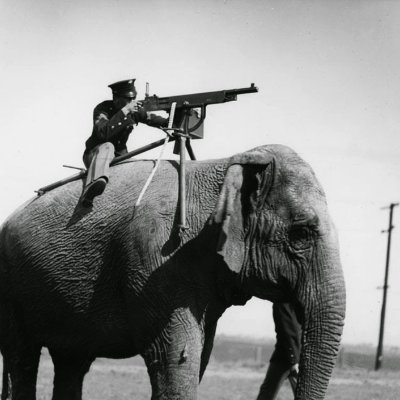
The opening paragraph to AJP Taylor's "The Course of German History" remains my absolute favourite start to a history book. Nobody's ever hit this hard right off the bat before

jacob l. shapiro retweeted

Impressive #Numbers
Lula increased his vote by 10.3m: similar to the number of people in the Lula's Army WhatsApp channel; & more than the defeated 3rd-party candidates combined.
Where did the votes come from?
Abstention fell from a record high 21%, to 19%, the lowest in 20 years. Blank votes also fell from 6m to 4m.
There is currently widespread concern that rapid technological change will fundamentally change the nature of work. In this paper we show that, despite 140 years of technological change, more than 70 percent of employment today is located in occupations whose core economic functions already existed in the late nineteenth century.
lup.lub.lu.se/search/files/2…
jacob l. shapiro retweeted

Lula wins, and it wasn’t particularly close — 3.5% or more than 4 million votes.
It’s an epic comeback and we will need time to fully understand it. But one thing is clear — the extension in voting hours was not the difference maker in this race.

jacob l. shapiro retweeted

The @gave_vincent interview is well worth a listen…he knows his stuff on France (and lots of other stuff too). podcasts.apple.com/ca/podcas…

jacob l. shapiro retweeted
In almost every state with counting advanced, Lula has doubled his percentage-point lead where he led in the first round.
Where he was behind, he's significantly cut into his deficit (by like 5% points).


been thinking in this direction myself for a bit now.

The ugly truth about France and some of the other European countries currently in turmoil - and which none of the politicians want to admit because it'd be political suicide - is that you can't solve the problem by going after immigrants (as the right asserts) or the rich (as the left asserts), but you could solve it by going after the old.
One extraordinary statistic for you: people over 60 in France, a quarter of the population, own 60% of France's wealth, non-financial and financial (ofce.fr/pdf/revue/2025/3-192…).
And here is another crazy statistic:
that same quarter of the population, those above 60, receive nearly two-thirds of all social spending by the French government (previssima.fr/actualite/prot…) - which is famously among the highest in the world (France's government spending is an insane 57.3% of GDP).
Last statistic: they make up about 40% of voters because they're a third of registered voters (insee.fr/fr/statistiques/266…), and they turn out far more than anyone else (franceinfo.fr/elections/sond…).
Put our 3 statistics together and there's almost a bit of an apartheid situation here: the old own most of the country's wealth, collect most of the social spending and have the political power to keep it that way.
Which makes them a de-facto rentier class, living off assets and transfers paid for by younger generations.
And, of course, at the risk of stating a truism, the future is built by the young. Yet France keeps effectively taking money away from them to give it to those whose working lives are already behind them - and need the money far less since they already own the country's wealth.
What about inheritance, I hear you ask? That's the funniest/saddest aspect: given that life expectancy has kept rising, the French now inherit a home at 54 on average. The most common case is someone in their 80s leaving it to heirs in their 50s, in effect the very old transferring wealth to the about-to-be old (insee.fr/fr/statistiques/fic…).
You can add this to our earlier apartheid statement: on top of all the rest, even when the old finally let go of their wealth, it stays within their own "camp".
That's my personal situation, incidentally: I'm 42, my father is 71 and he is starting to look at ways to pass things on to me and my siblings, when our professional lives are already well settled, so it'll arrive when it changes things the least, which is pretty much the French system in a nutshell.
Now, I get that there'd be some unfairness in going after them: they paid into the system their entire working lives, playing by the rules of a social contract that told them if they paid up they'd collect at the end. Changing the rules now means breaking that promise, which is admittedly unfair.
But there's no magic wealth tree in any society: you can only take it where it is. That's the way most major societal transformations end up happening. They're often triggered by a catastrophic event (the so-called "four horsemen": mass-mobilisation war, revolution, state collapse, plague) BUT what really drives change is a transfer: wealth gets pried from the privileged class who've been sitting on it and handed to those who'll build what comes next.
So, in theory and in an ideal world, you can do without the catastrophic event and directly proceed with the transfer...
The fact that in France, and elsewhere in Europe, it's the youth protesting is probably no coincidence - even though they don't frame it as a generational fight. And even though, cruel irony, the left politicians many of them march behind promise to bring the retirement age back to 60 (lcp.fr/actualites/legislativ…), which would make the situation even worse.
Let's say they understand intuitively that the system is stacked against them, even if they haven't yet figured out how. And politicians are obviously doing what politicians do, meaning pandering to the people who actually vote, while pointing the young towards easier - and politically convenient - scapegoats.
To be clear I'm not saying it's the only problem in France, VERY far from it. I'm also not saying that all old people in France live a lavish lifestyle at the expense of younger generations: there are also plenty of very poor retirees who, if anything, would deserve more.
What I am saying is that it's probably the biggest elephant in the room: everyone can see it, nobody dares mention it - no politician, from any side, wants to run on cutting grandma's pension - and it makes every other problem harder to fix.
jacob l. shapiro retweeted
Brazil. Could be a long, tense night — or longer. Both sides alleging irregularities / problems. Single Supreme Court judge ordered 2 hour extension in voting, but some stations closed anyway. I have sources on both sides talking about legal challenges. Sorry to say, looking like another step in the americanização of Brazilian politics
jacob l. shapiro retweeted

Lula overtakes Flávio Bolsonaro with about half the votes counted. Polymarket now gives him a 95% chance of winning. As recently as last night, traders put his odds at around 17%. If he holds on, it would rank among the most remarkable comebacks in Brazilian electoral history.
