

Husband, cat dad & Chelsea fan. Was a BBC journo, now civil service comms. Did a Masters, wrote a book & lost on Countdown. Used to tweet more back in the day.
Birmingham
Joined July 2011
- Tweets9.4K
- Following1.7K
- Followers885
- Likes9.8K









Pinned Tweet
Please help us find Bob. We haven’t seen him since he went out on Friday morning and we’re missing him so much 😿

🐱 #missing #cat Bob is a black shorthaired cat but has a few white hairs on his chest
Last seen 13 Sep 2019
BOB went missing from his garden in Station Road, Kings Heath, #Birmingham #B14
@JamesClarke75
doglost.co.uk/dog-blog.php?d…


Been to @birmingham2026 athletics tonight at Alexander Stadium and there are absolutely no shuttle buses to get people back to the city centre. And no staff around to explain why or let anyone know what’s going on. Thousands of people just waiting with no idea what’s going on.
Genuinely debatable as to what’s the more groundbreaking sporting development today - the sub-two-minute marathon or Chelsea scoring a goal.
2
157



James Clarke retweeted

Brian Glanville, who has sadly passed away aged 93, was the greatest football writer this country has ever known. The joy evoked by Glanville was not only in reading his beautiful, insightful words. But also listening to his eloquent appraisal of a player, a manager, a match. Glanville had a rich voice and vocabulary that demanded listening to. You didn’t so much meet Glanville as have an audience with him. All the time you were in his compelling company you were aware of what a privilege it was, what knowledge was being imparted.
Glanville was a heavyweight investigative reporter of supreme persistence and integrity who wrote hugely important pieces in the Sunday Times about Italian match-fixing amongst other scoops. As an acclaimed football correspondent, Glanville wrote powerfully about the triumphs and tribulations of the England national team in the 60s, 70s, 80s, 90s and well into the new Millennium.
He warned about the threat of a European Super League in his agenda-setting, argument-settling “World Soccer” column decades before it raised its repulsive Hydra-like head in 2021. Glanville predicted in 1992 that the new Premier League would quickly become all about money and greed. He saw talent, praised it and supported it. When Bruno Fernandes joined Manchester United, Glanville wrote about what an inspirational signing he would turn out to be.
Glanville delivered his authoritative verdicts in lengthy prose skilfully spiced with withering put-downs. He focused much of his ire on dithering leaders such as the FA’s Bert “The Inert” Millichip and Graham “Wet Fish” Kelly. FIFA’s Joao Havelange and Sepp Blatter were “horrible people”. He wasn’t wrong.
He loved Paul Gascoigne as a magical creator – “blessed are the playmakers” - but lamented the off-field behaviour of “a lost soul”. Glanville could occasionally get it wrong and was unfairly harsh on Sir Bobby Robson, “a grotesquely over-rated manager”. Glanville wouldn’t just write it and hide, he explained his views to Robson face to face. He was fearless.
One of the many joys of Glanville was that he wore his greatness lightly. He was always incredibly generous with his time and wisdom, especially to those starting out in football journalism. Sitting next to him in a press box guaranteed a running commentary on the game with distracting but entertaining score updates via his pocket radio from his beloved Serie A. “Lecce One-nil!!”
He was loved in football journalism for his brilliance as an observer of the national obsession, for attending 13 World Cups, and also for his kindness. Brian cared about people, especially family of course. Any conversation with Brian involved proud updates on the achievements and qualities of his children, Jo, Liz, Toby and Mark.
I went to see Brian at his home in Holland Park, London, shortly after his wife, Pamela, passed away in 2016 and Brian was bereft. What was supposed to be an interview about World Cups turned into a conversation about loss. Brian had a big heart, and was full of compassion as well as that powerful analytical mind, classical education and waspish wit.
His journalist friends held an annual dinner for him, mainly to listen to Brian. Roy Hodgson would come along and they’d swap and savour stories about Inter Milan. “Facchetti!” “Altobelli!” “Mazzola!” Brian was always good fun to be around as well as an education.
I first met Glanville when I was 16, playing for my London school against his Chelsea Casuals side full of flamboyant characters. (I later briefly played for them, and still recall Glanville’s patrician tones and urgent tactical instructions floating across Hackney Marshes or Wormwood Scrubs). Glanville was a full-back not particularly quick of body but very quick of mind and riposte. As schoolboys, we all wanted to play on the wing to get close to the great Glanville. He was a legend even back then, even to our nascent schoolboy minds.
For Glanville was more than a football correspondent. He was a successful playwright and novelist, Radio 4 meets Radio 5. He co-wrote the West End show “Underneath the Arches”. It played to packed houses. He wrote the screenplay “Goal!”, the official film of the 1966 World Cup. It won an Bafta. He wrote the novel “The Rise of Gerry Logan”. An instant classic. “The best book on football ever written,” Franz Beckenbauer told him. Glanville knew everyone.
He wrote “The Story of the World Cup” first published in 1973. “The definitive history,” Bobby Moore called it. Updated five times. He wrote “Goalkeepers Are Different”, a gripping novel set in professional football. As a schoolboy, I saved up to buy it from Foyles book emporium on Charing Cross Road in London. I walked out of Foyles clutching the book, feeling instantly more knowledgeable about the game. Simply by association with the great Glanville.
My deepest condolences to Brian’s family and many friends. They have lost an incredibly special human being. And our industry has lost a giant. Rest In Peace, Brian.
I hope a) Duo will be proud of me and b) todo este esfuerzo español será útil el próximo vez que lo necesito @duolingo @duolingoUK

83
More than 5 years on we still have no idea what happened to Bob. On this #MissingCatsDay I can only hope that he’s safe and well somewhere. But if anyone knows anything, please get in touch. @MissingPetsGB

James Clarke retweeted

#PetTheftAwarenessWeek concludes today with #MissingCatsDay.
Losing a cat is every owner’s nightmare - and it’s almost as worrying when a stray turns up, hungry and looking for help! But don't panic - follow our step-by-step guide here: catchat.org/index.php/cat-mi…

ALT Close-up of a long/medium-haired cat with brown-and-white fur. The caption reads: “Missing Cat? How To Find Your Lost Cat …”. Photo by Monique Laats at Pexels.

Bournemouth v Chelsea setting a record for most cards awarded in a Premier League game without being a bad-tempered match and despite there being no bad tackles, says plenty about Anthony Taylor’s ability as a referee.
1
243
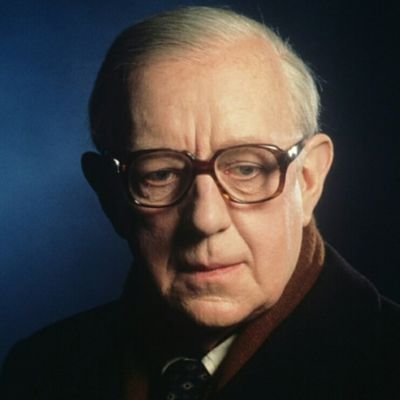

I was at Gareth Southgate’s first & last England games as manager. The improvements he made are frankly astonishing. Inherited an utter mess & took England to the World Cup semis less than 2 years later, to 2 Euros finals & transformed the culture along the way. Thank you Gareth.
5
224
“We’ve ended the season really well, qualified for Europe, got to a cup final, have been playing some quite attractive football and he’s managed to get a confusingly-assembled bunch of kids playing like a team. What shall we do?”
“Best get rid…”


James Clarke retweeted

#OnThisDay 1997
Roberto Di Matteo scored after 42 seconds to help Chelsea go on to beat Middlesbrough 2-0 in the FA Cup Final
#Chelsea #Middlesbrough #FACupFinal #90s
James Clarke retweeted
#OnThisDay 1960: A British schoolgirl cheerily told Judith Chalmers about her holiday, which involved accidentally getting arrested in East Germany.
Thought they didn’t like replays?

HISTORIC ✨
For the first time since 1885, the #EmiratesFACup Final will be a repeat of the previous year! 🤯

ALT A split graphic of Manchester United and Manchester City playing this season and lining up ahead of the 2022-23 Emirates FA Cup Final.
3
234