

Professor & Vice director, HPC Center of Shanghai Jiao Tong University; General Co-chair for IEEE Cluster 2024 & 2028
Shanghai, China
Joined December 2011
- Tweets2.9K
- Following247
- Followers763
- Likes1.6K


Prof. James Lin retweeted

When AI, HPC, and Quantum meet at SC Asia 2027 in SIngapore.
📢 Due to popular demand, the paper submission deadline has been extended.
We invite the community's very best papers.
🔗 sc-asia.org/sca2027-call-for…
#SCA27 #Supercomputing #AI #HPC #QuantumComputing #Singapore

Prof. James Lin retweeted
"Everything verifiable will be automated."
Mathematics is far more than proving theorems.
For young researchers, the opportunity is clear: build the automation, write the specifications, and develop the verification tools.
My HLF spark talk: youtu.be/qSXCqoHLVk4?si=6PIO…


Prof. James Lin retweeted

Qwen3.8 is launching and going open-weight soon!🌐
With a massive 2.4T parameters, this model is continuously evolving. We believe it’s one of the most powerful model available today, compatible to leading frontier AI models , second only to Fable 5.
You don't have to wait to test it. Just now, the Qwen3.8-Max-Preview made its debut on Alibaba’s Token Plan, Qoder, and QoderWork. Be among the very first to try it out.
Can't wait to hear what you build. Stay tuned! 🚀
Token Plan
international:qwencloud.com/pricing/token-…
China:platform.qianwenai.com/prici…

Prof. James Lin retweeted

Interesting that an online Japanese newspaper picked up my article… zaikei.co.jp/amp/article/202… good job in summarizing it in Japanese :-) More papers to come including the complete version of the Dongarra-Hoefler-Matsuoka paper.
Prof. James Lin retweeted
Since there are so much divergent opinions regarding the future of AI and their investments each painting multiple (rather radical) scenarios, I decided to do an extensive analysis. The report is now up on arxiv.org/abs/2607.07207 There are 5 scenarios with different probabilities and how fairly simple sets of parameters may dictate which one will likely happen... comments are welcome.


Prof. James Lin retweeted

I wrote up some notes after my week at #ISC26: blog.glennklockwood.com/2026…
Interested to hear others' perspectives on highlights and things I may have missed.
#HPC
Prof. James Lin retweeted

Prof. Matsuoka analyzed how four forces will restructure the AI industry over 2026–2030: the DRAM/HBM price surge; the arrival of frontier-capable open models; rapid inference-efficiency gains and the entry of Meta and xAI into the compute-resale market
arxiv.org/pdf/2607.07207

Prof. James Lin retweeted

OpenClaw is now on iOS + Android 🦞
📱 Native mobile apps, finally
💬 Agents in your pocket
🔔 Channels, tasks, replies on the go
Run agents from wherever your thumbs are.
iOS: apps.apple.com/us/app/opencl…
Android: play.google.com/store/apps/d…
Prof. James Lin retweeted

How and why China built an all-CPU exascale supercomputer for the third time.
nextplatform.com/hpc/2026/06…

LineShine, a domestically developed Chinese supercomputer, claims the top spot on the latest TOP500 list.


Prof. James Lin retweeted
Taisuke Boku follows on another interesting note: Japan is "changing lanes" from CPU to GPU and from "Made in Japan" to a collaborative "Made with Japan", partnering Fujitsu with NVIDIA.
"We don't chase fp64 performance but focus on #AI flops".
Onward!


Prof. James Lin retweeted

Claude Code 泄露了全部源码——不是被黑客攻破,是 Anthropic 自己把 source map 打包进了 npm 发布物。
一个 57MB 的 cli.js.map 文件,里面藏着 4756 个源文件的完整内容。其中 1906 个是 Claude Code 自身的 TypeScript/TSX 源码,剩下 2850 个是 node_modules 依赖。
提取方法极其简单:cli.js.map 本质就是一个 JSON,里面有两个关键数组——sources(文件路径)和 sourcesContent(对应的完整源码)。两者索引一一对应。不需要反编译,不需要反混淆,sourcesContent 里存的就是一字不差的原始代码。提取脚本见文末。
从还原的源码可以看到:Claude Code 用 React + Ink 构建 CLI 界面,核心是一个 REPL 循环,支持自然语言输入和 slash 命令,底层通过工具系统与 LLM API 交互。架构设计、系统提示词、工具调用逻辑,全部一览无余。
这件事的本质是一个经典的安全疏忽:source map 是开发调试用的,包含从变量名到注释的所有信息,不应该出现在生产发布物中。Anthropic 后来意识到了这个问题,移除了 source map,GitHub 上提取源码的仓库也被 DMCA 了。但早期版本的 npm 包已经被存档,源码早就在社区流传。
给所有发布 npm 包的开发者提个醒:发布前检查你的 .map 文件。一行 sourcesContent 就能让你的所有代码公之于众。
gist.github.com/sorrycc/ec29…

Prof. James Lin retweeted

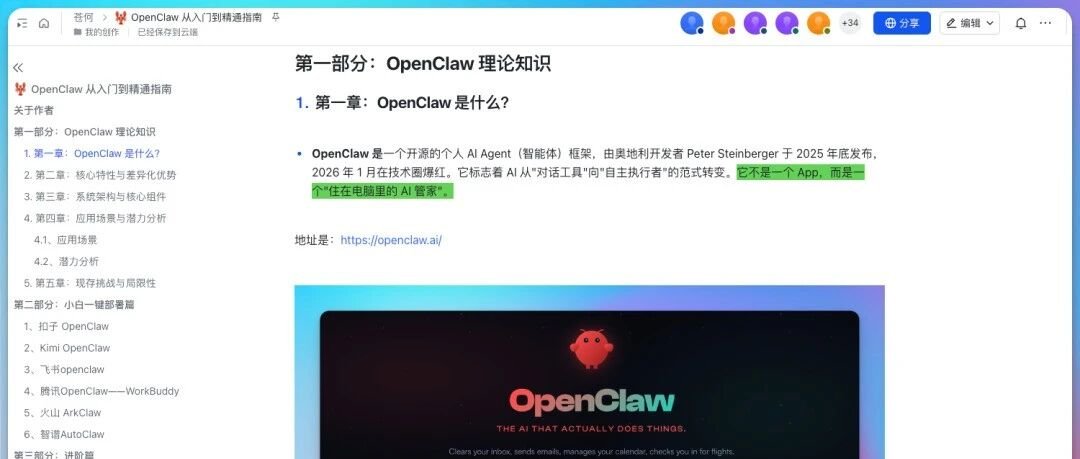
有点强啊,已经研究了两小时了,补充了很多缺失的知识点。
可以说是我目前看到最全的 OpenClaw 学习教程!
中推的博主有一个非常好的点,那就是大家做的内容真的非常优质,因为只有真正优质的内容才可以跑出来。
相比于国内一些标题党,如果遇到要学习的内容,问一下 Grok,给你推荐一些内容,是真的有学习的价值!
推荐收藏!

Prof. James Lin retweeted
"Shock! Shock!" is how the "Father of the Analysis of Algorithms" Don Knuth described an interaction with Claude, proving a problem he worked on for weeks
#Supercomputing enables the unthinkable and begins to automate the scientific method and progress
cs.stanford.edu/~knuth/paper…

Prof. James Lin retweeted

Nvidia faces criticism from the HPC community over flat FP64 gains as GPUs pivot toward AI. While experts like Jack Dongarra note limited 64-bit progress, Nvidia says FP64 isn’t abandoned, and future GPUs will boost it.
Read more: ow.ly/5uy050XJxTX
