





Jan Woldstad retweeted

Summary: 1) The hack job on Jensen Huang by the NYT failed. 2) Journalists don't like it when they lose their power over us citizens.
Social media works better than journalism.

my heart goes out to the intrepid team at the @nytimes who did absolutely generational reporting on the Nvidia scandal
I know the feeling of trying to do accountability journalism in a culture that simply does not care about accountability. Incredibly disheartening.


Jan Woldstad retweeted

BREAKING: Nvidia stock, $NVDA, surges over +28% after the company reinstates Jensen Huang as CEO, effectively immediately.
The stock has now added +$820 billion in market cap today on the news.
Jensen Huang is officially back.


Jan Woldstad retweeted

People should always be in control of the future.
OpenAI is against the notion that it would be acceptable for people to be relegated to a role of doing things that “AI systems think makes sense to reward in humans”.
People should not cede control of the future to superintelligence, and that requirement should ultimately constrain AI progress.
Jan Woldstad retweeted

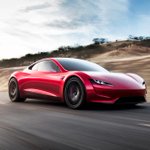
An homage to the Tesla Roadster: the greatest promise ever made
Ladies and gentlemen, we are witnessing history.
Nine years after unveiling the Roadster that was supposed to enter production in 2020, Elon has unveiled another Roadster.
And what a machine it is!
In 2017, he promised us 620 miles of range. The haters called it "vaporware", a phantom product that vanishes instead of becoming a real item you can buy. In 2028, we get roughly 300 miles.
Some may call this a reduction. Visionaries understand that the missing 320 miles have simply been converted into vertical distance.
Because the new Roadster can FLY! The haters call it "jump".
But to truly appreciate this extraordinary achievement, we must revisit some of the other masterpieces from Elon's career.
The Cybertruck: Precision Beyond Imagination
Remember the $39,900 Cybertruck?
Of course you don't. That particular price existed in a parallel universe that ordinary customers were never granted access to.
Remember the target of 250,000 Cybertrucks per year?
Apparently, demand was so overwhelmed by the product's magnificence that it decided to stay home.
And who could forget the legendary "sub-10-micron" manufacturing precision?
A level of engineering accuracy so extraordinary that some Cybertruck panel gaps apparently required an entirely different unit of measurement.
But these were merely warm-up exercises.
Optimus: The Army That Never Reported for Duty
Then came Optimus.
Thousands of humanoid robots were supposed to be produced "by the end of 2025".
Ten months into 2026, the world is still waiting for the army to report for duty.
But fear not. More than six months ago, Elon assured us that the next Optimus was receiving its "final touches."
Those must be extraordinarily sophisticated touches.
We are approaching a point where Michelangelo would have finished the Sistine Chapel faster.
But that is precisely the genius of Optimus.
Why employ thousands of robots in factories when you can employ millions of investors' imaginations?
The productivity is extraordinary.
Dojo: The Nvidia Killer That Killed Itself
And then there was Dojo.
Ah, Dojo.
Tesla's magnificent AI supercomputer, the technological marvel that was supposed to revolutionize artificial intelligence and gave Tesfluencers fodder for content for years.
In July 2024, Elon confidently told investors he "saw a path" for Dojo to compete with Nvidia. @JensenHuang
NVIDIA!
The company dominating AI computing.
But Elon wasn't intimidated. Why merely buy Nvidia's chips when you can build your own and eventually challenge the world's leading AI chipmaker?
Tesla committed hundreds of millions of dollars to the effort. In Buffalo alone, it had reportedly spent $314 million by 2024 toward a $500 million supercomputer investment.
Investors were invited to imagine yet another enormous market Tesla would conquer.
Cars? Check.
Robots? Check.
Robotaxis? Check.
Nvidia's business? Coming soon!
And then, just over a year after that bold competitive claim, in August 2025, Elon shut Dojo down.
Just like that.
The Nvidia challenger had apparently challenged itself out of existence.
Elon explained that Dojo 2 had become an "evolutionary dead end." Teslfluencers moved on quickly. Crickets thereafter.
An extraordinary discovery.
Hundreds of millions of dollars, years of engineering, enormous expectations, and it turns out evolution had taken a wrong turn.
And Tesla continued relying heavily on Nvidia's hardware.
Tesla's great Nvidia killer ended up being killed while Nvidia continued selling Tesla the very chips Dojo was supposed to challenge.
Magnificent.
But don't worry.
There is always another technological revolution just around the corner.
Battery Day: The 56% Revolution That Lost Its Charge
And who could forget Battery Day 2020?
Ah, the legendary 4680 battery cell.
The battery that was going to change EVERYTHING, according to Tesfluencers.
Five times the energy per cell!
Six times the power!
Up to 54% more vehicle range!
And, most importantly, a promised 56% reduction in battery cost per KWh, through a combination of cell design, manufacturing, materials and vehicle improvements.
Not 20%. Not 30%.
56%!
Elon had cracked the code.
A revolutionary battery strategy that would allow Tesla to crush the competition on cost, unlock extraordinary margins and finally bring the long-promised "lower cost" (2024) Teslas to market.
And all this was supposed to become reality within roughly three years.
Magnificent.
Then came 2024.
Elon was still explaining to investors how Tesla's 4680 cells would become cost-competitive with the cheapest suppliers by the end of the year.
Wait a minute.
Wasn't this the revolutionary battery that was supposed to make Tesla the undisputed cost leader years earlier? Not merely be cost-competitive? Again, the Tesfluencers long ignored that detail they sold to the fans for years and, as always, moved on. Or, as the haters call it, "move the goalpost".
Apparently, the revolution had encountered a minor manufacturing inconvenience.
Fast-forward to 2026.
The 4680 cell exists. Tesla actually manufactures it. Credit where credit is due! Tesla lacks credit. Barely anyone, especially on X, ever mentions Tesla's achievements.
Unfortunately, the grand Battery Day cost and range revolution remains far from what was originally advertised.
Tesla continues buying enormous quantities of battery cells from external suppliers, while its own cells have faced questions over their competitiveness with leading alternatives.
And that $25,000 Tesla?
Apparently, it went into witness protection alongside the $40,000 Cybertruck.
But here's the true genius.
In 2020, Elon promised a battery revolution that would make Tesla dramatically more competitive.
Six years later, investors are still debating whether Tesla's own cells can match the economics and performance of cells available from established suppliers.
From revolutionizing the entire battery industry to trying to catch up with the existing battery industry.
What an extraordinary journey!
The Million Robotaxis That Forgot to Arrive
And then, of course, there was "The Fleet Awakens."
Ah, the robotaxis.
In 2019, Elon explained to investors:
"This is why it’s possible for Tesla to have a million robotaxis by end of 2020 if we upgrade existing HW2 fleet of ~500k & make at least ~500k FSD cars."
One million robotaxis.
By the end of 2020.
Not 2030. Not 2040.
2020.
And not just a vague ambition, either. Elon had already done the math!
500,000 existing vehicles upgraded, another 500,000 manufactured, and voila: one million robotaxis.
Such extraordinary ("micron") precision. Such beautiful arithmetic.
There was just one tiny problem.
The cars couldn't actually drive themselves.
But why let such a minor engineering inconvenience get in the way of a million-unit deployment forecast?
Fast-forward six years.
The million-strong autonomous fleet never materialized. The vast majority of those supposed robotaxis are still being driven by their owners or, as they will not get tired of reminding you, supervised or has been "intervention free" for years.
And rather than generating passive income while they sleep, those owners continue performing the rather tedious task of driving their own cars. But now, Tesla is finally there: the car does indeed (most of the time) drive itself. Unfortunately, meanwhile, others show similar capability and may sell the same thing in only 18 months time.
But that is precisely the beauty of Elon's vision.
He didn't just promise cars that would drive themselves.
He promised cars that would make money for their owners.
He managed to sell investors on the economics of a business before solving the technology required for the business to exist. He predicted the "greatest asset appreciation in history".
Magnificent.
The fleet didn't awaken.
It pressed the snooze button.
Repeatedly.
AI3 hardware cars fell into a permanent coma.
AI4? We'll see.
The 20 Million Cars and the Five-Company Empire
But who needs robotaxis when Tesla is about to dominate the entire global automotive industry?
Remember the ambition of producing 20 million vehicles per year by 2030?
That target was so ambitious that Tesla eventually liberated itself from the burden of publishing it.
A true masterstroke of operational efficiency.
Why manufacture 20 million vehicles when you can simply manufacture the expectation of 20 million vehicles?
But let's move on from 20 million vehicles per year. It's only haters who have the audacity to still bring up these old and broken promises.
But even that was not ambitious enough.
Elon told investors that he could "see a path" where "Tesla would be worth more than the next five most valuable companies in the world COMBINED".
Apple. Microsoft. Nvidia. Amazon. Alphabet.
Mere rounding errors in the future Tesla empire.
An empire where cars drive themselves, robots manufacture everything, batteries cost almost nothing, and the Roadster flies.
An empire that has become so valuable in the future that the present can no longer afford to question it.
As anyone who dares to express even the slightest hint of skepticism will quickly discover in the comments on this platform.
After all, this place is populated by an extraordinary number of people who have already seen the future. And should you dare raise any of the inconvenient facts discussed above, they will generously explain not why your arguments are wrong, but why your intelligence is insufficient to comprehend Elon's genius.
Magnificent. The future is already known. The only thing still up for debate is your IQ.
And this brings us to perhaps Elon's greatest contribution to financial markets.
Industry-Leading Margins: The Great Vanishing Act
Ah, the margins.
In 2022, while Tesla was enjoying extraordinary profitability, Elon was confidently presenting a future of continued industry-leading margins.
What a beautiful outlook!
Tesla wasn't merely going to dominate the automotive industry in volume.
It was going to dominate in profitability as well.
And why wouldn't it?
Revolutionary manufacturing. Gigantic economies of scale. Unmatched technology. The world's cheapest batteries, naturally.
The competition never stood a chance.
Then something remarkable happened.
Elon sold billions upon billions of dollars worth of Tesla stock.
And what happened to those magnificent margins?
They collapsed.
Tesla's automotive gross margin, excluding regulatory credits, went from approximately 26.7% in 2022 to 15.4% in 2024 and 2025.
A collapse of more than 1,100 basis points!
Its company-wide operating margin deteriorated into the low single digits.
The supposedly unbeatable manufacturing advantage had somehow transformed into profitability much closer to that of ordinary automakers.
Tesla had gone from showing the rest of the automotive industry how to make money to discovering just how difficult making money in the automotive industry actually is.
Magnificent.
And here's the truly remarkable part.
While shareholders were being encouraged to look forward to a future of industry-leading margins and unprecedented growth, Elon was converting enormous amounts of Tesla stock into cash.
Of course, this could all be a coincidence.
Perhaps Elon simply had an exceptionally unfortunate sense of timing when making his optimistic profitability projections.
And an exceptionally fortunate sense of timing when selling his shares.
After all, nobody can predict the future.
Except, apparently, Elon.
He can predict 20 million annual vehicle sales, one million robotaxis by 2020, revolutionary battery economics, thousands of humanoid robots and a Tesla valuation exceeding the world's five most valuable companies combined.
Just not the approaching collapse in his own company's automotive margins.
The man who could see the future of the entire global economy apparently couldn't see the future of his own income statement.
Which brings us to something even more extraordinary.
The Last Man to Sell
Years ago, Elon assured Tesla shareholders that he would be the last to sell Tesla stock.
What a beautiful commitment.
Naturally, he subsequently became one of the largest sellers of Tesla stock in history, unloading tens of billions of dollars worth of shares.
But don't misunderstand this as a broken promise.
Elon was saving free speech!
When he bought Twitter, he wasn't merely acquiring a social media platform.
He was saving civilization itself.
And civilization, apparently, required an extraordinary amount of Tesla stock to be sold.
In fact, the selling continued beyond his initial Twitter financing announcements, including billions more after the acquisition closed.
One might reasonably wonder why a man whose principal mission was saving free speech needed to sell quite so much Tesla stock.
But such questions betray a fundamental misunderstanding of genius.
While ordinary investors were holding Tesla shares in anticipation of a magnificent future, Elon was converting substantial portions of his holdings into liquidity, giving himself extraordinary financial flexibility to fund other ventures and investments.
What a brilliant diversification strategy!
Meanwhile, Tesla cult members routinely scold fellow shareholders for not being "all-in" on Tesla stock, treating diversification as a sign of insufficient conviction.
The irony? Not even Elon himself is all-in on Tesla.
Apparently, diversification is perfectly sensible when you're Elon Musk. When you're an ordinary shareholder, it's a failure to understand his genius.
Magnificent.
And perhaps the most beautiful part of this extraordinary journey is what happened to the shareholders who actually believed him.
Imagine being a loyal Tesla investor five years ago.
You listened to Elon.
You believed in 20 million annual vehicle sales, industry-leading margins, millions of robotaxis, revolutionary batteries, humanoid robots and a company destined to become more valuable than the world's five largest companies combined.
So you held your shares.
Year after year after year after year...
Through every missed deadline, every downward revision, every margin collapse and every new announcement promising that the REAL revolution was just around the corner. And, of course, the occasional public spectacle of Elon accusing the President of appearing in the Epstein files, only to be fortunate enough to receive his forgiveness later.
Apparently, even burning bridges is part of the master plan. Fortunately, some bridges can be rebuilt faster than Tesla can deliver its promises. But we digress...
Meanwhile, Elon was doing something rather different.
He was selling.
Billions upon billions of dollars worth of Tesla stock, much of it at valuations supported by the very expectations he had spent years cultivating.
And while loyal shareholders were patiently waiting for the future to arrive, Elon was already enjoying the present.
What an extraordinary arrangement!
The shareholders got the promises. Elon got the proceeds.
They got exposure to the execution risk.
He got liquidity, diversification and the freedom to invest elsewhere.
And here's the true genius.
Elon didn't need all his predictions to come true to realize enormous wealth from Tesla.
He merely needed enough investors to believe they would.
And, of course, he retained an enormous Tesla stake, allowing him to benefit if those promises eventually materialized.
He could cash out tens of billions, retain massive upside, and leave other shareholders waiting for delivery.
But wait.
The story gets even better.
The Billion-Dollar Rediscovery of Tesla
In September 2025, Elon suddenly rediscovered the extraordinary investment merits of Tesla stock.
He purchased approximately $1 billion worth of shares.
The market celebrated!
The media hailed his renewed confidence! Especially the Twitter/X world.
What timing. What conviction. What extraordinary faith in Tesla's future!
And purely by coincidence, the purchase came just weeks before a crucial shareholder vote on a compensation package potentially worth up to $1 trillion.
Even more remarkably, the purchase settled in time for the shareholder voting record date.
What an astonishing alignment of the stars!
One might ask:
If Tesla was such an extraordinary investment, why not repurchase billions of dollars worth of shares after selling them in 2022? After Twitter was acquired and the money clearly wasn't needed anymore?
Why wait until a crucial shareholder vote? But this is a question only haters, of course, would ask.
And this is precisely where lesser minds fail to grasp the genius, as the army of self-appointed intellectual giants on X will be more than happy to remind you, preferably while questioning your intelligence rather than addressing your arguments.
Elon doesn't merely time the market. He times his conviction.
Sell tens of billions when the opportunity presents itself.
Buy back $1 billion when shareholders are about to vote on your compensation.
And call both decisions expressions of extraordinary commitment to Tesla.
Beautiful.
And remember, he once promised he would be the last to sell.
Apparently, that meant the last person shareholders should have expected to sell.
The Philosophy of Confident Wrongness
Which brings us to one of Elon's most profound philosophical observations.
He once explained that "being confidently wrong is far worse than being merely wrong".
And I couldn't agree more.
What an extraordinary insight.
Particularly coming from a man who has spent the better part of a decade confidently announcing production dates, prices, technological breakthroughs, sales targets and financial outcomes that reality has repeatedly declined to accommodate.
But this is where his genius truly shines.
Elon isn't merely confidently wrong.
He has industrialized confident wrongness.
He has scaled it, automated it, and turned it into an entirely new business model.
And unlike the $40,000 Cybertruck, the 250,000 annual Cybertruck sales, the 20 million annual Tesla deliveries, or the thousands of Optimus robots, this particular product has actually achieved mass production.
Not only that.
It has extraordinary margins, worth a price-to-earnings ratio of over 300x.
There are no meaningful manufacturing costs.
No delivery logistics.
No warranty obligations.
No battery degradation.
No recalls.
Simply announce the next revolution and let investors do the rest.
Perhaps this is the most profitable product Tesla has ever created.
A machine that converts expectations into valuation. The SpaceX IPO is the latest and greatest example of that.
And, occasionally, valuation into personal liquidity.
The Roadster: The Ultimate Achievement
Which brings us back to the new Roadster.
A machine that can fly over traffic jams, drive upside down and accelerate faster than your broker can issue a margin call.
A car so advanced that the mundane questions of price, road legality, mass production and delivery have once again been delegated to a future generation.
And the production target?
2028!
Magnificent.
Eleven years after the original unveiling and eight years after the original production target.
But one must understand that Elon operates on a different calendar.
In Elon Time, "next year" is not a date.
It is a philosophical concept.
And that is why I salute the new Roadster.
Porsche builds cars.
Ferrari builds cars.
Lamborghini builds cars.
Elon builds anticipation.
And while those inferior manufacturers remain trapped in the tedious cycle of designing, manufacturing, delivering and supporting their products, Elon has invented something infinitely more scalable:
The perpetual prototype or, as the haters call it, the "dangling carrot".
A product that can be unveiled again and again, generating excitement without the inconvenience of generating meaningful revenue.
And perhaps this is why Elon believes Tesla could become worth more than the next five largest companies combined.
Those companies are constrained by their actual businesses.
Tesla has the entire future at its disposal.
And the beauty of the future is that nobody can audit it. There is no tedious accountability.
At least not yet.
So here's to the new Roadster!
There's always another Roadster unveiling.
Because the future belongs to those who believe.
The present, apparently, belongs to those who sell.

Jan Woldstad retweeted

I've attempted to map everything in oncology in a public website and open source repo for all.
The site is trying to get all cancers, products, technologies, bottlenecks, people, startup opportunities with 1000+ ideas for upgrading the field.
If you have a loved one with cancer and you are technical or can engineer, go take a look, file improvement requests or bugs or help with the open repo and make this the best open and free info resource for individuals, researchers and educational use.
This should save people time, aid AI oncology projects and generate positive action. If you are not technical just complain in this thread about broken or annoying or things you want and I'll fix them live.
Some of the interesting pages:
Treatments: onco.cc/drugs
A gallery of the molecules being used onco.cc/molecules/
And targets: onco.cc/targets/
The technologies in oncology: onco.cc/technologies/
1100 ideas for helping oncology: onco.cc/ideas/
Bottlenecks on oncology: onco.cc/bottlenecks/
Open questions (LETS GO RESEARCH PEOPLE) onco.cc/open-questions/
Startup requests (LETS GO STARTUP PEOPLE) onco.cc/startup-requests/
Mechanics of cancer: onco.cc/mechanics
Battlefronts: onco.cc/fronts/
Isotope supply: onco.cc/isotopes
Key papers: onco.cc/key-papers
Pipeline funnels: onco.cc/pipeline
Cancer by type: onco.cc/cancers/
Institutional rankings: onco.cc/institutions/
The startups: onco.cc/startups/
Heros and heroines : onco.cc/heroes/
Key medical people: onco.cc/people/
Here is the project roadmap: onco.cc/roadmap/
Models and data sets: onco.cc/models/
There are other views as well, take a browse.
Try making a PR if you have an upgrade to this on the repo here: github.com/judegomila/OnCo
If you are biologically/medically minded and something is wrong, file a bug as well or say on the thread and we will get it fixed live.
If this is a useful project star the repo and help get it calibrated.
I've tried to add some other languages but I cannot speak them so tell me if that doesnt work well.
I believe we will crack oncology and having total information dominance is key to the problem.
Let the feedback flow!


Jan Woldstad retweeted

every Russian dinner party has at least one PhD physicist (who against his will works as a programmer), one mathematician (who has a similar fate) and one person trained in music theory or philology(no job but has money somehow)—usually there's more—and they reenact this video.

Jan Woldstad retweeted

1/2 Thanks Gavin for an especially thoughtful exchange. I don't usually spend much time on social media but I wanted to engage here because it really brings out the heart of an important conversation.
First, on regulation, I think that “either concentrate it in the hands of a chosen few companies and politicians via regulation or distribute it widely” is a false choice. I know that there’s a sort of Silicon Valley shorthand where regulation = regulatory capture = concentration of power, but I’ve always found this to be an overly simplified picture of the world. Many people outside this bubble think of regulation as something that constrains corporate power and benefits ordinary people. I don’t necessarily agree with that perspective either, rather I think it’s complicated and really depends on what the “regulation” consists of. But in particular I think that those in the “regulation = regulatory capture = concentration of power” frame often underrate the decentralizing power of objective and fair institutional processes. A crude analogy is that the formal court system can sometimes feel stuffy and elitist, but it does a much better job of defending the rights of vulnerable individuals than the alternative, mob justice. At their best, institutions can vest power in ideas rather than people, and thereby decentralize that power.
This is why Anthropic has always made its policy proposals very carefully. We try very hard to make proposals that disadvantage (slow down) frontier AI companies while *advantaging* smaller competitors. California’s SB53 (which we supported), and even the much-maligned SB 1047 (which we were ambivalent on), completely exempt any company below a certain amount of revenue or model training costs from being covered at all (it was $500M for SB 53, lower for 1047 but we objected to that). More recently the testing process we’ve advocated for at CAISI and the White House involves more rigorous tests for frontier models than off-frontier models — something that differentially advantages challengers. Similarly, the “Pacing the Frontier” letter envisions (or at least Anthropic’s preferred implementation of it envisions) modulating the pace of the very best models while not constraining those who are catching up. This hurts the business interests of the frontier labs and helps challengers, including open-weights!
Overall my view is that AI is *structurally* a technology that tends to concentrate power, for reasons that have nothing to do with regulation (more to do with the extreme implications of the scaling laws). Open-weights do help some with this but are nowhere near a sufficient solution because they simply shift the concentration somewhat to those with the most compute and chips (which are roughly the frontier labs plus maybe hardware providers). By contrast I think the right “rules of the road” can simultaneously (a) address AI’s cyber/bio/alignment risks, (b) institutionally constrain the power of the frontier AI companies, and (c) leave room for open-weights models while also addressing the specific risks that they bring.
BTW I do not think that the events of the last few months have “failed to result in [my] preferred regulatory path”. The approach that the Trump administration is reported to be taking — pre-deployment testing for frontier models, and also testing of open-weights models when they get closer to the frontier — is one that I am very supportive of, though of course I have to see the details to be sure. I am also supportive of Demis Hassabis’ ideas around a FINRA-like entity. This contrasts with six months ago when most of the industry was still pushing for preemption of all state regulation and no apparent federal approach either.

Sholto, thank you for setting the record straight. Larger issue is that multiple very serious people in Silicon Valley have heard some variation of this and believe it to be true. And the reason it is believable to so many is that it is consistent with Dario’s public messaging and what he outlined in the essay you shared: this technology *might* be dangerous for humans in multiple ways, could lead to extreme concentration of economic power (as outlined in the essay) and therefore needs to be regulated thoughtfully. I agree with the potential risks and I believe Dario makes all of these arguments in good faith.
As discussed on the pod, if one agrees that AI *might* be dangerous, there are two ways to address this potential risk. Either concentrate it in the hands of a chosen few companies and politicians via regulation or distribute it widely. Essentially boils down to whether one believes AI is too dangerous to concentrate or too dangerous to distribute. There are reasonable arguments on both sides, but I profoundly agree with Zuckerberg’s statement that: “The notion that AI is so dangerous that the only safe path is an extreme concentration of power seems inherently problematic. Historically, hoping that an absolute power will benevolently provide for humanity if sufficiently enlightened has not led to safe or positive outcomes.” And as Dario says in the aforementioned essay, “some may object that we can simply keep AIs in check with a balance of power between many AI systems, as we do with humans.” I believe this is the best path forward: I want as many AIs as possible to maximize the odds that one shares my own particular values. And as Dario notes, no human has ever been able to take over the world.
At this point, I think safe to say that Dario has lost the argument. His messaging has failed to result in his preferred regulatory path. The fact that the only solution to the recent incident where an unreleased advanced OpenAI model hacked Hugging Face was an open-source model likely ended any chance of strict near-term regulation. Essentially every major company other than Anthropic has signed Jensen’s letter.
However, Dario’s messaging has been massively helpful to efforts to ban datacenters here in America. I suspect we will see anti-datacenter advocacy groups runnings ads using clips of Dario warning about how dangerous AI could be for humans. His good faith efforts in favor of regulation are now increasing the odds that AI will not be beneficial for Americans and humans everywhere. I believe that there is a reasonable chance AI might help us cure most forms of disease such that we have extended lifespans and can enjoy these long lives in an abundant Star Trek like future. That is the future that I want and I think Dario is decreasing the odds of that future at this point.
He is about to be the CEO of one of the most important public companies in the world and given that the pro-regulatory effort has failed (at least for now), I respectfully think he should make an effort to be a more positive advocate for his own industry. And if I am wrong and we do need to regulate this technology, he will be a more effective advocate for this in the future having been open-minded to the alternative.
And for the sake of clarity and as I outlined on the pod, I think Anthropic has deep competitive advantages and is an amazing company. Ironically, the main risk I saw to Anthropic a few months ago was nationalization as a result of Dario’s own rhetoric and behavior.
Jan Woldstad retweeted
HAVE ANOTHER DRINK!
nntaleb.substack.com/p/have-…

Friends, I am examining the so touted paper by George et al. "Alcohol Intake & Health Study: No Protective Effect at Low Levels" & finding something odd (aside from the mismatch between claims & content), the Conf Int are not symmetric.
Cannot fit a distribution and they do not explain in supplementary material.
jsad.com/doi/10.15288/jsad.2…

Jan Woldstad retweeted

Liquidate Leo for pennies on the dollar.
Ok, now convince Burry that the bubble is popping.
Ok, now liquidate Burry.

Jan Woldstad retweeted

A large fraction of the world has teamed up to destroy the West
They literally host conferences about it
And yet most in the West think everything is fine

At the World Decolonization Forum, Dr. Esra Albayrak, the daughter of Turkish President Recep Tayyip Erdogan, spoke about their endeavour to “decolonize” the West.
The first phase of their plan as she says is not within the political realm, but the realm of knowledge and thought.
Their alliance is not advocating for a world without the West, rather, there is an open invitation for the West to accept its own “decolonization”.
The current centers of knowledge located in Paris, London, Amsterdam. And New York; need to be replaced by new centers in Istanbul, Jakarta, Addis Abbaba, Rabat, Cairo, and Gaza.
Jan Woldstad retweeted

애플 이 진짜 악덕 기업이라는 폭로 글이 올라옴
글 내용을 보면 애플이 단가를 낮추려고 공급사 경쟁을 붙임
이 과정에서 삼성과 LG의 기술을 중국에 유출시켰다는 의혹임
하청을 바꾸려고 국내 기술을 중국에 넘겼다는 지적임
과거 마이크론이 적자로 힘들 때도 갑질로 단가 후림
어닝 서프라이즈로 살아나려 하니 다음 날 바로 가격을 대폭 올림
반도체 값 상승폭보다 훨씬 비싸게 올려 잔칫상에 재를 뿌림
반도체 시장에 삼전, 하닉, 마이크론만 살아남은 이유도 나옴
애플 같은 빅테크의 갑질과 노쇼로 경쟁사들을 다 망하게 만듦
심지어 에어팟 원가는 5만 원인데 폭리를 취한다는 내용임
이 내용들이 전부 사실이라면 애플은 진짜 악덕 기업이 맞음
하청업체 피를 말려서 자신들의 이익을 극대화하는 구조
하지만 이런 논란에도 애플의 고객 충성도는 쉽게 깨지지 않음
당장 이 글을 쓰는 나조차도 아이폰과 애플 제품을 쓰고 있음

Jan Woldstad retweeted

Tesla. In hindsight Elon knew holding up the stock price at that valuation required endless carrots. 1. Cybertruck had 2 million reservations. It turned into hot air. 2. The compact car was coming (for 2 years) and Mexico factory was to build it. It friend into complete BS. 3. Operating a lithium refinery factory is license to print money. It opened and no measurable impact to bottom line. 4. The golden key was the dry battery process once it becomes a reality. It did but cell costs from China plummeted and it became a nothing burger. 5. Major manufacturers were in discussion with Tesla to license FSD and then poof it was all a dream. 6. The most famous.. half the US population will be served by robotaxis by year end 2025 (said before his comp vote). And poof .. last quarter it was replaced with “it doesn’t make sense to scale robotaxi faster if better FSD models are coming. 7. Another famous claim “Everyone that could afford a Tesla would want a Tesla the problem is high monthly payments and interest costs” .. horse sht. 8. Solar roof and solar city — let’s not go there’s. 9. DOJO .. for 3 years it was the golden egg project … poof entire team was let go and he has been beginning GPUs from Jensen since. 10. Thousands of Optimus will be doing useful things in Tesla factories before 2025 years end…. Poof. 11. I will reward long time Tesla shareholders if any of my private companies go public. We all got the middle finger. 12. “I won’t go through with twitter purchase” then sold tens of billions with out warning. 13. We all endured bidens ensuing legal warfare. 14. DOGE drama. 15. Filthy Public spat with the president and getting booted from the White House lawn. 16. Never ending political posts. 17. The most absurd retarded earnings calls of any public company. 18. The next even bigger carrot? Terrafab. 50 football fields long and it will produce billions of chips. Because no one can supply enough for what Tesla would need like a national federal autonomous taxi service that does a federal law for it is being willow walked, and an Optimus robot that would first need high production factories (2 years) then ramp (1 year or more) and no one knows if it will be like cybertrucks 2 million reservation claim. One of The greatest series of business fantasy borderline scams ever told. Sold it all and moved to Micron at $400 and everyday I ask myself how did I become so stupid to keep given him the benefit of the doubt. Looking back it was more about not wanting to accept my failure of holding it. His carrot traps kept that hope and goal posts moving. Blocked him and his retarded gang of influencers. If someone hurts you move on.

