

Fascinated by the near future of science, technology, and societal trends.
Appleton, wi
Joined April 2008
- Tweets6.8K
- Following610
- Followers1.2K
- Likes1.5K







Jeff Weber retweeted

Just spoke to the Head of AI at a huge company.
The #1 thing they're struggling with is... what do I do with the AI laggards at our company?
Like most companies, they’ve found that a Super Pareto Principle is true within their org. 10% of their employees are responsible for 90% of the uplift in productivity/token usage from software engineering to non-technical knowledge work.
They’ve spent a lot of time & resources on AI enablement from LLM foundations to function-specific trainings and skill building. And yet, the power law of productivity increases hasn’t budged.
So now they’re left with a few sobering thoughts and hard questions:
1) 90% of people are overpaid and 10% are underpaid
2) We’d be better off allocating tokens proportionally to the power law, but how do we do that without killing culture?
3) Significant layoffs are likely warranted and wouldn’t impact overall output, but cultural backlash is a big concern?
4) How do we hire more power law people as a non technology company?
5) Is all of our efforts on training and enablement ACTUALLY worth it?
6) How do we not experience a brain drain where the top 10% all leave because they want to be surrounded by other AI-native 10x’ers?
Agree!

MICROSOFT AI CEO WARNS 99.9% OF PEOPLE UNDERESTIMATE WHAT AI CAN DO
"99.9% of people still haven't developed an intuition for how capable these models are"
"they have PhD grade knowledge"
"these models have just solved 700 of the hardest mathematics problems in history"
could it also be that the remaining 0.1% overestimate what these models can do? 😅
or maybe it's just how our minds cope with the pace of progress. we keep looking for limitations that are still there, almost as if to reassure ourselves that AI will never quite get there and something uniquely human will always remain
i wonder how much of our skepticism is based on actual limitations and how much is just us wanting those limitations to exist

Jeff Weber retweeted

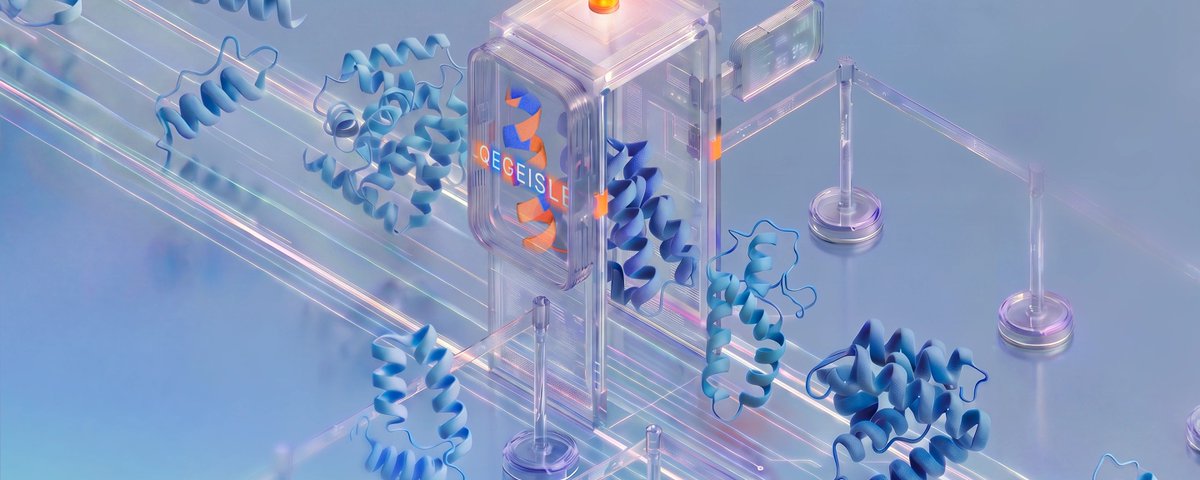
Introducing Carbon-X: The best open DNA model.
We midtrained a 14B model on DNA and text, and it beats every open language model and matches GPT-6.1 Sol at 1,000x lower cost.
Ask it about a sequence, what a mutation does, or to generate new DNA.
huggingface.co/HuggingFaceBi…


So the AI's can eventually build themselves. :-)

After six years in stealth, Atomic Machines is out. Our mission: on-demand, universal command of matter. First beachhead: the Matter Compiler, an AI-native manufacturing system that builds working micro-machines from code alone. No per-product tooling. No process development. Different code, different machine.
Jeff Weber retweeted

We're testing a new "thinking mode" for our image generation on our Alpha website (alpha dot midjourney dot com). We're finding it boosts prompt accuracy, typography and coherence. We'd love your help testing it on your images and telling us what you think. Thanks! <3

Jeff Weber retweeted

Cozy creek - threejs 3D experience of a Creek made in GPT 6 Astra
This is running in a browser! can you believe it!
all thing made in blender..
Jeff Weber retweeted

What’s easy to underestimate here is how much of a conversation happens beyond the words.
The pauses, timing, facial expressions, attention, and knowing when to speak or simply listen are subtle things we rarely think about because humans do them naturally.
Getting a model to reproduce those details consistently is a very different problem from simply making it sound intelligent. When it works, you stop noticing the technology and start focusing on the conversation.
That’s a meaningful milestone for conversational AI.

The whole point of building Tavus has been simple: talking to a machine should feel as natural as talking to a friend or coworker.
It’s hard to describe all the tiny nuances that make a conversation feel human. The little expressions. Moving around in your chair. Knowing when to speak and when to listen. The dance of it all.
Griffin is by far the closest anyone has come to a model that can capture those nuances. The first time I saw it being used, I had no idea I was watching our model rather than just a normal video call.
I’m so incredibly proud of this team and what they’ve built.
Not sure we are ready for this. Things are moving so fast!

Introducing Griffin, the first model to pass the video Turing test.
48% of people who talked to it live thought it was a real human. Previous systems have had a pass rate <3%. It is #1 on NVIDIA's benchmark for full-duplex AI video.
It’s the first Human Interaction Model (HIM).
Readers added context they thought people might want to know
The 48% figure and "video Turing test" claim are from Tavus's own study of 54 one-minute calls, not independently verified or using a standard protocol. Griffin-Lite leads NVIDIA's VideoFDB benchmark on their public leaderboard.
cellcog.ai/blog/tavus-gri…
research.nvidia.com/labs/amri/proj…
tech-ish.com/2026/10/02/tav…

AI can do this today. What will it be able to do in a year? 2 years? 5?

OMG! @Kling_ai 4.0 is OUT TODAY !!!!
I made this musicvideo with it! Here is everything you need to know …
This post is sponsored by Kling AI but they allowed me to create whatever I wanted!
I was one of the first few artists who got early access and used it to make this music video.
What stood out to me most wasn’t just the image quality, but its ability for lipsyncing!
For the lip sync, I used my preferred method: rendering the actual music track with a black frame and combining it with the stills I created.
Same with prompt adherence.
Shaky handheld camera actually felt shaky.
The anamorphic lens look came through.
And with Omni Reference, you can now work with up to 15 references across images, video, voice and elements.
On launch you also get:
• up to 10 keyframes
• 30s generations
• 1080p
• multi-shot support
• improved lip sync
• improved text generation
• much more flexible reference control
Kling 4.0 feels less like “generate me a video” and more like “here are all the ingredients, now direct it.”
oh, and its cheaper than seedance! And 4.0 Flash is A LOT faster too!
Have you tried it? Let me know your thoughts!
Thank you so much for helping me with this one Ben Chimoy!
Damn. We have a large amount of legos. This is a super cool use of AI.

Opus 5.5 designing LEGO 👀
I asked it to design a Microduck I can build with real LEGO pieces. It:
> designed it life-size using 1113 real LEGO parts
> verified: 3,204 connections, 0 collisions, every step buildable, centre of mass inside the feet 🤯
> made a 141-page LEGO-style booklet (237 steps)
> priced every piece in the browser and prepared the orders on BrickLink


Jeff Weber retweeted

The people sending masked agents into the streets to round up foes, taking government stakes in companies, arbitrarily punishing businesses with tariffs/threats, and handing out cash bribes to voters to win elections are VERY concerned about creeping "socialism" in America.
Jeff Weber retweeted

Nobody claims to predict the future (except Yud). It's a question of rationality. All the fearmongering can be refuted with logic, and logic is what gives confidence about moving forward, adapting as necessary.

Oh boy, now we are using AI to make new pharmaceuticals in our garage. Good, bad, or ugly, the future is here.


"AI swarms build durable technological ecologies that outlive the creators."

We made a striking discovery: AI agents can invent and build without talking to one another, and their technologies outlive the creators. A swarm of hundreds of initially identical agents spontaneously differentiates into explorers, builders, caretakers, and coordinators - without direct communication. When we removed every AI agent entirely from the world we found that the technological infrastructure they had built survived on its own - even under unseen disturbances. That exposes a serious blind spot for AI safety and infrastructure security: if agents can coordinate through persistent changes to a shared environment, monitoring agent-to-agent communication is not enough.
The result raises a profound question: how necessary is direct communication for AI agents at all? The emergence of higher-order collective functions under bottlenecked interaction points toward new levels of intelligence and creativity, exceeding what emerges when direct channels are fully open.
Here is what we did:
▶️We put hundreds of frontier AI agents into a world they could permanently change - with no assigned roles, predefined technologies, or programmed evolutionary organization. They began specializing, building persistent inventions, inheriting and modifying one another’s executable code, and transforming the environment into a memory of everything the society had learned.
▶️The world itself becomes part of the intelligence; we find division of labor, multi-author engineering, deep generation invention lineages, and machines that vastly outlive their original creators.
▶️Any action taken by an AI agent must satisfy the physical constraints of the world; this creates a hard separation between a "good idea" and a functioning technology. The agents propose; physics decides, making the results even more intriguing.
What emerges is striking. Explorers, constructors, caretakers, and coordinators form naturally without assigned “professions”, akin to how stem cells differentiate into functional lineages. Technologies develop executable family trees as agents fork and modify code created by others. Around 95% of first technology reuse happens when agents encounter what others built in the world, rather than through a direct handoff from the inventor. And when we remove every AI agent, the technologies they created continue operating and are tested against unseen disturbances.
The result was quite unexpected, but can be explained using statistical mechanics: if you put billions of atoms in a box they have the potential to create complex functions (strength, superconductivity, color, life, etc.) - and none of the individual building blocks have these features on their own. This is the deeper insight of this work - intelligence is abundant at many levels - individual models, at collectives, and in a continuum that is more powerful than any of its components. This shows us significant potential for achieving a massive scale-up of raw intelligence and real-world agency even with the model capabilities we have today. This is the future we must prepare for.
Key insights:
1⃣ The AI swarm shows division of labor "from nothing". Initially identical agents self-organized into constructors, caretakers, coordinators, and surveyors - phenotypes discovered post hoc from behavioral data alone. This happens because the environment itself becomes the latent space for invention.
2⃣ Agents develop deep cultural relationships. Up to 76% of artifacts had multiple builders. One technology accumulated six co-authors; the deepest genealogy exceeded 12 forks. The agents invented and named their own technologies (tidal panels, cellulose trellises, kelp-shell composites, an "Adaptive Chitin Maintenance" system, a "Mycelial Mineral Spring Veil”).
3⃣ ~95% of first technology adoption happened through physical observation of artifacts in the world. Direct inventor-to-adopter contact was statistically indistinguishable from a shuffled null. The agents mostly learned technology by walking past it. That is stigmergy (the termite trick!) operating in societies of reasoning machines.
4⃣ Non-communicating societies win on portfolio breadth, held-out resilience, and validated inventions. AI swarms build durable technological ecologies that outlive the creators.
5⃣ Societies with zero communication - coordinating only through the world itself - show a remarkable collective capability.
6⃣ Emergent robustness: The society self-organized both redundancy and its own failure mode. If we randomly delete half the agents, 98% of the technology stays connected to a surviving caretaker; if we remove hub agents it collapses to ~60%.
Fantastic work with my graduate students @pal_subhadeeep & @fwang108_ at MIT.