

Antique dealer based in Franschhoek, South Africa. The Old Corkscrew is my home base but you can catch me in Johannesburg and London as well.
South Africa
Joined September 2015
- Tweets2.3K
- Following547
- Followers459
- Likes4.6K



Jeremy Astfalck retweeted

Whether you believe in a higher power or not, Joburg collapsing in real time right before a municipal election could not be a clearer sign of why you need to vote.
And vote wisely.
Up in Johannesburg on business- no water in certain parts, rubbish uncollected for days now.
Please vote and let’s see if we can change course once again.


22
Jeremy Astfalck retweeted

South Africa was producing wine more than a century before America declared independence. The Cape's first recorded wine was made on 2 February 1659. French Huguenots began settling at the Cape in 1688, bringing winemaking knowledge that would help establish Franschhoek, the French Corner, as one of South Africa's great wine regions. Among them was Pierre Jourdan, who was granted land in the valley in 1694. More than three centuries later, his name remains part of the story of Haute Cabrière.
When Achim von Arnim acquired the farm in 1982, he named his Cap Classique wines Pierre Jourdan in honour of its first owner. Today, Achim's son Takuan continues the family tradition, with Chardonnay and Pinot Noir at the centre of the estate's winemaking.
Franschhoek lies within the Cape Floral Kingdom, the smallest of the world's six floral kingdoms, yet home to more than 9,000 plant species, most found nowhere else on Earth.
A visit to the Cape Winelands is a wonderful way to end a safari. After early mornings, dusty tracks and the excitement of searching for wildlife, there is time for slower mornings, long lunches and stories shared around the table. I like the thought of reliving those moments over a glass of Cap Classique from an estate with more than three centuries of history behind it.
Let Me Show You The South Africa I Love
Start Planning
johnrobbie.africa
[email protected]
@HauteCabriere @Franschhoek_SA @adore_africa
Jeremy Astfalck retweeted

My friend Leo traveled to Tokyo carrying his late grandfather’s 1970s Seiko watch.
It had stopped working years ago. Leo didn't speak a word of Japanese, so he relied entirely on Google Translate.
In a quiet back alley, he walked into a tiny watch repair shop with just an elderly man sitting behind a cluttered desk.
Leo held up his phone and typed:
"It stopped ticking years ago. Can you fix it?"
The old watchmaker examined the watch, paused, and put on his magnifying loupe. He didn't say a single word.
He opened the caseback, took a deep breath, and worked in complete silence for 40 minutes.
Suddenly, a faint, steady ticking filled the room.
Leo teared up. He typed on his phone and showed the screen:
"How much do I owe you?"
The old man gently shook his head.
He slowly typed something on his own phone and turned the screen toward Leo:
"No charge. Look inside the caseback. That tiny engraved mark was mine. I assembled this watch 53 years ago as a young apprentice. Thank you for bringing my boy home."
Jeremy Astfalck retweeted

AI companies are buying large volumes of used, rare, and out-of-print books, scanning them for training data, and in many cases destroying the physical copies afterward.
This practice has accelerated as labs seek high-quality, pre-2022 human-written text free of AI-generated content that now saturates much of the open web.
The most documented example is Anthropic’s internal effort known as Project Panama. Court filings from copyright litigation revealed that the company acquired millions of physical books from used-book sellers and wholesalers such as Better World Books. Workers used hydraulic cutting machines to slice off the spines, fed the loose pages into industrial high-speed scanners, and then discarded or pulped the remains. An internal planning document described the goal as an effort to destructively scan books at massive scale. A federal judge later ruled that purchasing the books, creating internal digital copies this way, and destroying the originals constituted transformative fair use under U.S. copyright law, relying in part on the first-sale doctrine.
Similar activity is now widespread. Specialized brokers, including ISBNdb, openly market bulk acquisition services to AI labs, offering orders ranging from thousands to as many as one million titles. They emphasize older printed books as “structurally clean” training data.
Booksellers in the United States and Europe have reported sudden surges in bulk orders for mixed, random selections that include rare and out-of-print volumes. Some of these titles may represent among the last readily available physical copies. While a substantial portion of the books involved would otherwise have been remaindered, recycled, or sent to landfills, the inclusion of uncommon editions has drawn criticism from archivists, collectors, and rare-book dealers who note that gentler, non-destructive scanning methods exist yet are slower and more expensive.
The process remains largely quiet because the intermediary services promise anonymity to their AI clients. Public attention has grown mainly through litigation disclosures and reporting by outlets that examined the court records and interviewed booksellers.
The practice highlights a practical tension in large-scale AI development: the demand for vast quantities of reliable human text collides with the finite physical supply of older printed works and the cultural value of preserving rare copies.
Jeremy Astfalck retweeted

Suspects charged after Chipping Norton antiques centre theft:
buff.ly/nnUU0Yw


Jeremy Astfalck retweeted

SARS has warned that any travellers entering or leaving South Africa must now submit a mandatory online traveller declaration before they travel.
businesstech.co.za/news/life…

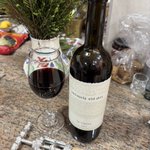
Winter in Franschhoek and I had the most spectacular red wine last night. It was the 2022 Vilafonte- Seriously Old Dirt @mikeratcliffe unleashed with this beautiful American Gorham corkscrew dating from the early part of the 20th century.


Edward Kieswetter honoured with honorary doctorate at CPUT, inspires graduates to lead iol.co.za/news/2026-04-18-ed…

Congratulations Sir - you have inspired, led and excelled and we appreciate it @EdKieswetter

Jeremy Astfalck retweeted

Silver hit record highs in 2025 – here's why the 'Devil’s metal' has further to run cnbc.com/2025/11/29/silver-h…

Before the Swiss even hit snooze on their cuckoo clocks and dreamt up the Swiss Army knife, before the Leatherman was more than a glimmer in a tinkerer’s eye, there were Gun Chest Hammers.
Come and see this collection at the SAADA Fair in Franschhoek -14-16 February, 10am-6 pm


World Class ….
Part of the corkscrews from the personal collection of Bertrand Giulian that will go out this weekend at the SAADA Antiques, Art & Design fair in Franschhoek, South Africa.


Exciting News for Wine Enthusiasts
The Old Corkscrew is showing a collection of antique corkscrews at the SAADA Fair (Feb 14–16). Featuring rare pieces from Bertrand Giulian’s collection, as documented in his book. A chance to own a piece of history!


1
66
