

Team Facilitator & Exec Coach Founder @ https://nitter.gq/t.co/O03QTSDCe4 I ❤️ Human Excellence ... and Turtles 🐢
Bay Area, CA
Joined March 2019
- Tweets847
- Following1.4K
- Followers253
- Likes6.9K








Special founders see the world in a way others don’t. In the same way, special inception stage VCs see something in those founders others miss.
I spent early years around architects, engineers and construction teams. The design tools barely changed while everything else did. Andy and Arjun are building AI that understands how a building actually goes together, not just how it looks. Congrats, Dream!"

Today @arjunmathur_ and I are introducing Dream.
We’re announcing $17M in seed funding from @a16z , @svangel , @xyz_vc , and @ziggcap.
@dreamhq is developing a new class of models trained to reason about physical space: its geometry, its constraints, and the relationships between objects and the spaces that contain them. With these models, AI can make a real impact in the $13 trillion architecture, engineering, and construction (AEC) industry for the first time.
Jon Low retweeted

Today @arjunmathur_ and I are introducing Dream.
We’re announcing $17M in seed funding from @a16z , @svangel , @xyz_vc , and @ziggcap.
@dreamhq is developing a new class of models trained to reason about physical space: its geometry, its constraints, and the relationships between objects and the spaces that contain them. With these models, AI can make a real impact in the $13 trillion architecture, engineering, and construction (AEC) industry for the first time.

Grok is fun to use. I wish it had its own peripheral. Tired of Siri or Alex or Google hub being friction inducing intermediaries. So much can be achieved conversationally.
Listen closely to the customer. Frothy markets have confusing signals that will drive you insane.

Tony Xu of @DoorDash on getting rejected by investors, competing against rivals with thousands of times more capital, and how founders can tell conviction from delusion:
"I had over 100 rejections in a span of over 1,000 days where the company almost constantly ran out of money... I couldn't raise a dime, and we were running out of capital."
"Companies like Amazon or Uber were in the space who had way more capital than we had. Hundreds of times, maybe thousands of times of capital deployed versus the amount that we raised. So then the question becomes, well, how are you gonna win this cash-burning machine?"
"This is where you as the founder have to finely tune that line between delusion and knowing that you have something that others don't understand. What are the customers telling you?"
"We the founders did deliveries for almost virtually every day the first three years of the company's life... And so we had strong points of view on each side of our marketplace that could explain what was happening in the numbers."
"When you have one set of facts, which is your customers, you have another set of facts, what are called opinions and perceptions, you gotta trust the facts. That's ultimately what kept us going."
@t_xu w/ @speedrun GP @andrewchen
Context matters so much. Also one of the hardest things for humans and or machines to master. Any behavior can made dysfunctional by slight changes in time, space, and interacting organisms.


Jon Low retweeted

When markets are growing quickly, moats don't really matter. It doesn't make sense for leaders to invest in new spaces. And tons of whitespace gets created.
When markets slow down, most moats can't save you anyway.
Don't worry too much about moats.

Jon Low retweeted

i love writing. i never let agents write for me. whether it's docs, or tweets, or shitposts, or even prompts (okay maybe that one's harder as agents manage other agents)
there's a simple reason for that: i still strongly believe that writing is thinking. it's a skill i hope to never give up. it's also important to me that whatever i say is always authentic, mistakes and all. my favorite posts are the ones that i just full send without any editing
i suspect it also helps with prompting. being able to clearly express what i want, and knowing the vocabulary i need to be able to direct my agents does seem to make for more effective usage of agents. in the same way that engineers have an advantage when we prompt agents to write code, because we are intimately familiar with the words that make up the discipline
knowing the right word incantations to get an agent to produce a desired goal almost feels like spellcasting. as models get more capable, and that input box looks more and more like a magic box that can output anything, words become the interface between you and the genie
there may come a time when we give up the keyboard in exchange for brain-computer interfaces. but until then, i'm writing every word.


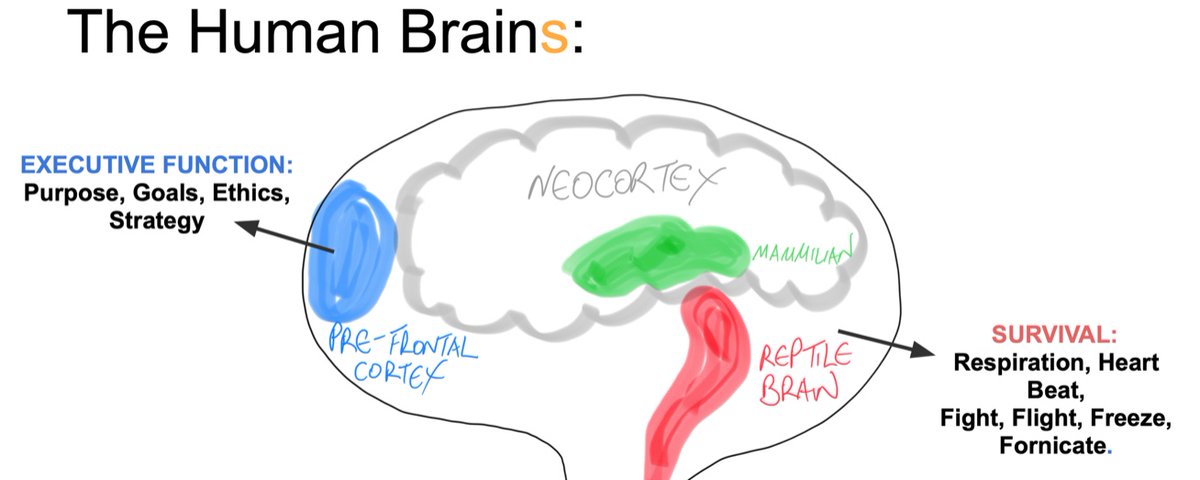
Most founder habits under pressure aren't flaws. They're old wins.
At some point, shutting down or over-controlling was the best feeling available on the menu. It got you through.
The work isn't fighting the pattern. It's giving yourself a better option for the room you're in now.

Patterned negative neural pathways, ironically, are patterned because they lead to the best feeling available on the menu at some past “when”— “I have survived shittyness for time immemorial. And that feels safe. Not great but it is survivable.”
Jon Low retweeted

Alexandr Wang 说了一句让技术流创始人集体沉默的话。
“做技术的人习惯了数据说话,觉得东西更好、数字更漂亮,客户总会识货”
他直接点破:大公司不是这么运转的,政府更不是。
在那些客户眼里,感知比现实更真实。
真实的业务现状太难看了,没几个人愿意直面。
大家要的不是真相,是一套能让自己在系统里安全生存的叙事。
所以更好的产品照样被踢出局。
买方根本没在评测产品,谁掌控了感知,单子给谁。
他甚至点名 Palantir:表面是软件公司,底色是个剧团。新员工入职,真的会发一本戏剧表演书,发了整整好多年。
做企业级市场,改写现实只是一半的工作;
塑造一套客户愿意相信的说法,是另一半。
技术人最容易栽在这道坎上:
你的东西确实碾压竞品,但坐在对面签字盖章的人,自始至终连看都没看屏幕一眼。