

Researching, Building, & Writing | New papers & book recently published - "The Classical Brain to the Quantum Mind" | YT videos on these topics | Links below 👇
LA
Joined November 2021
- Tweets824
- Following917
- Followers752
- Likes14.4K




Pinned Tweet
The brain and LLMs face the same fundamental problems. But the brain solved them first while running on only 2.5 watts for informational processing. How is that possible?
Jack Tuszynski and I were invited by Azrieli College of Engineering to present our recent paper published in Frontiers in Human Neuroscience.
The scope of the presentation was to connect the paper's mechanism to LLM system design, which turned out to be a incredible thread to pull on because the brain and LLMs face incredibly very problems as the first slide walks through.
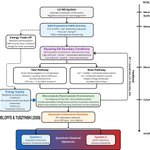
The paper proposes that the brain switches between two computational modes, a fast parallel quantum-enhanced regime and a slower classical sequential regime, and that self-referential processing through the default mode network is the biological mechanism that controls the switch. If this mechanism is even partially correct, it has real implications for how we think about attention, compression, and mode-switching in artificial systems. It was an honor to present and we could have gone on for another few hours easily. Jack walked through the biophysics of microtubules, quantum coherence at the nanometer scale, the CaMKII memory encoding mechanism, and the experimental evidence for quantum states in tubulin, and then the Q&A walked through energy pumping and the process at the cytoskeletal level.
We're very grateful to Azrieli for the generous invitation and for the wonderful questions.
0:00 - Shared Problems Between the Brain and LLMs
3:04 - Flow States and the Origin of the Hypothesis
4:16 - The Double Slit Experiment Parallel
5:40 - System 1, System 2, and the Missing Mechanism
7:04 - Roger Penrose and Non-Algorithmic Computation
9:02 - Quantum Cognition and the Noise Hypothesis
10:14 - Vervaeke, Ferraro, and the Selection Pressure for Two Modes
12:45 - Carhart-Harris and the Entropic Brain Hypothesis
13:50 - The Default Mode Network as the Switch
14:55 - 66% of Ego Dissolution Explained by Alpha in the PCC
15:49 - Connecting to Flow Research (Leroy and Cheron 2020)
17:10 - Predictions from DMN to Tubulin Dimers
19:47 - The Formal Hypothesis and the Full Mechanism
22:40 - Q&A on DMN, Quantum Activity, and Free Will
25:13 - Jack Tuszynski: Inside the Neuron
29:00 - ATP, Mitochondria, and Biophotons
30:15 - Microtubules and Tubulin Dimers
33:01 - Microtubule Functions and Parallel Bundles
35:48 - Stuart Hameroff and Orchestrated Objective Reduction
37:08 - C-Termini and Electromagnetic Sensitivity
39:40 - Quantum Properties of Microtubules
41:05 - Microtubule Associated Proteins and Alzheimer's
42:08 - Memory Storage Capacity in Microtubules
43:45 - CaMKII and Memory Encoding
46:36 - Quantum States in Tubulin Dimers (Kalra et al.)
49:51 - Q&A: Is Mental Energy Physical Energy?
54:38 - Q&A: Is Memory Distributed or Localized?
56:56 - Closing Thoughts
I’m happy to share a recorded version of the presentation I gave at The Science of Consciousness Conference last week, which covered a paper Jack Tuszynski and I recently published in BioSystems, titled “On the Functional Significance of Quantum Effects at Subneuronal Scales.”
Timestamps:
1:00 Penrose’s non-algorithmic computation
2:48 What Tegmark actually asked
6:01 De Broglie and the quantum regime
9:45 Photosynthesis: decoherence as the mechanism
12:28 Quantum effects in microtubules
17:21 Do quantum effects actually matter?
19:23 The Meyer-Overton correlation
21:42 Protecting microtubules delays unconsciousness
25:09 Psychedelics and the opposite direction
31:00 How to picture this
33:14 Where this research is headed
A link to the paper is in the replies below.
amen. we can either:
1 - find answers to questions
2 - find questions to ask
3 - wander through the darkness until either one appears
it seems like there's something really special about #3

WORLD'S TOP MATHEMATICIAN SAYS AI MAY BE MAKING US TOO EFFICIENT
terence tao talks about how he used to go to the library for one paper and randomly find another one sitting next to it
now u type exactly what u need into search or ai and get it in seconds
his take:
"you actually do need a certain level of distraction in your life."
and i think this goes way beyond math
we keep treating everything between the question and the answer like wasted time, but sometimes thats literally where the learning happened
u looked for one thing, read something u didnt need, got confused, went somewhere else and came back knowing more than u originally asked for
ai removing all that friction is insanely useful, i use it every day. i just dont think every second we remove from the process was useless
sometimes getting the answer slower was part of what made the answer yours
1
167
The things you run from shape your future just as completely as the things you are running towards
75
I'm thrilled to announce that our newest manuscript has been accepted by BioSystems and is available in press as of today!
On the Functional Significance of Quantum Effects at Subneuronal Scales
Abstract:
This paper develops a constraint based hypothesis from established physics and published experimental measurements. De Broglie's relation predicts that electronic quantum effects become part of the physical regime when functional structures approach nanometer dimensions. The semiconductor industry provides a test case, as reliable classical switching at few nanometer scales requires architectural intervention biological systems lack. Microtubule tryptophan networks operate at 1 to 2 nm spacing and exhibit energy migration with a 6.6 nm diffusion length that classical Förster theory cannot account for, alongside superradiant behavior across over 105 transition dipoles with robustness that increases with system size. Photosynthesis provides biological precedent for organizing quantum dynamics through molecular architecture and energy flow. These premises support the case that the brain operates with quantum effects at the microtubule scale.
The functional question is whether these processes matter for higher order neural function. Six pharmacological and cross species constraints address this question. Anesthetics reduce microtubule energy migration by 12 to 15 percent, and anesthetic potency tracks collective tubulin oscillation changes across chemically diverse compounds with R2 = 0.999. Volatile anesthetics suppress organized responsiveness across eukaryotic organisms without nervous systems, while microtubule stabilizing drugs delay anesthetic induced unconsciousness with a large effect size. Open energy pumped architecture addresses physiological viability, and psychedelic phenethylamines that enhance microtubule polymerization provide an opposite pharmacological test. Together, these constraints support the hypothesis that microtubule tryptophan networks and collective tubulin dynamics participate in the maintenance of higher order neural function and conscious states.
Full Paper:
sciencedirect.com/science/ar…
here's a link that gives access to the article for the next five weeks: authors.elsevier.com/a/1nXeF…
32
The whole point Penrose was making in Emperor's New Mind was that understanding or "seeing" as he says, is a non-algorithmic process.
Then Tegmark interpreted it as "the brain is a quantum computer" and tried to disprove it.
But quantum computers are designed for algorithmic computation.
Tegmark entirely missed the point. His paper quite explicitly asks whether the brain can do the thing that Penrose specifically said the brain doesn't do.
Then, somehow, this paper has been interpreted for the last 25 years as evidence that it is impossible for the brain to have/utilize quantum effects.


Tegmark took Penrose's argument, which was "consciousness involves non-algorithmic understanding and likely quantum mechanics" and then translated it into "the brain is a quantum computer," which is almost exactly the opposite of what Penrose said.
Then Tegmark tried to show the brain can't be a quantum computer (and still made huge unexamined assumptions in his work) and for the last 25 years, everyone cited this as a refutation of Penrose.
The world is weird.
Think about this:
-You can remain alive, but not conscious (anesthesia).
-You can have conscious awareness with no sense of self or higher order cognition (psychadelics)
-You can have cognition-like processing without awareness (sleepwalking for example)
This points to something like a spectrum of what being alive, conscious, and/or aware actually is.
Under anesthesia, the quantum substrate itself is impaired (Kalra's 12-15% reduction in diffusion length), and the energy supply to the substrate is simultaneously reduced (Winegar and MacIver's 60% depression of glutamatergic EPSPs). When you're anesthetized classical processing can continue because it's cheap relative to higher frequency processes at the nanoscale level.
Under 5-MeO-DMT, the opposite happens as the DMN shuts down, self-referential processing collapses, and organized neural activity is almost entirely suppressed at the alpha level, but awareness persists and is actually reported to be "more real" or "more intense." But psychedelics don't affect the energy supply to the cellular substrate, so when higher order functions are impaired, there is actually more energy available to the rest of the system.
The idea here is that when the energy supply drops below a certain threshold for these fundamental nanoscale processes, the system progressively shuts down its processes in order of their energy cost per unit of survival-critical output.
This would very much be similar to how the least efficient bitcoin miners shut down first cost-benefit changes.
But then when the anesthetic wears off, the cheapest most survival-critical processes come back first for example reflexes, then motor responses, perceptual awareness, higher cognitive function, then finally the self.
Considering this, there seem to be three tiers of human existence:
1 - The baseline of classical biological function (heart beats, etc.)
2 - The substrate of pure awareness (intra-cellular level, nanoscale)
3 - Higher order cognition and self (neural architecture builds on top of awareness to make the world intelligible, maneuverable, and navigable)
I'm excited to announce that I will be presenting this paper at the Science of Consciousness conference in October!
It will be on Wednesday, October 14th during the breakout sessions in the "Quantum Brain Biology: Microtubules, Orch OR, and Coherent Substrates" group.
I'm very much looking forward to sharing it will such a great group of people.
I'm thrilled to announce that our newest manuscript has been accepted by BioSystems and is available in press as of today!
On the Functional Significance of Quantum Effects at Subneuronal Scales
Abstract:
This paper develops a constraint based hypothesis from established physics and published experimental measurements. De Broglie's relation predicts that electronic quantum effects become part of the physical regime when functional structures approach nanometer dimensions. The semiconductor industry provides a test case, as reliable classical switching at few nanometer scales requires architectural intervention biological systems lack. Microtubule tryptophan networks operate at 1 to 2 nm spacing and exhibit energy migration with a 6.6 nm diffusion length that classical Förster theory cannot account for, alongside superradiant behavior across over 105 transition dipoles with robustness that increases with system size. Photosynthesis provides biological precedent for organizing quantum dynamics through molecular architecture and energy flow. These premises support the case that the brain operates with quantum effects at the microtubule scale.
The functional question is whether these processes matter for higher order neural function. Six pharmacological and cross species constraints address this question. Anesthetics reduce microtubule energy migration by 12 to 15 percent, and anesthetic potency tracks collective tubulin oscillation changes across chemically diverse compounds with R2 = 0.999. Volatile anesthetics suppress organized responsiveness across eukaryotic organisms without nervous systems, while microtubule stabilizing drugs delay anesthetic induced unconsciousness with a large effect size. Open energy pumped architecture addresses physiological viability, and psychedelic phenethylamines that enhance microtubule polymerization provide an opposite pharmacological test. Together, these constraints support the hypothesis that microtubule tryptophan networks and collective tubulin dynamics participate in the maintenance of higher order neural function and conscious states.
Full Paper:
sciencedirect.com/science/ar…
2
2
285
Here is information on the presentation: tsc2026.org/concurrent.html#…

2
39
Here's a link to the paper that for 6 weeks requires no login to access the work, so make sure to download it now if you don't have access to BioSystems.
authors.elsevier.com/a/1nXeF…
41
This paper flips Tegmark's "too warm, noisy, and wet" argument on its head.
Tegmark entirely missed the point.
De Broglie showed us that quantum effects are unavoidable at nanometer scales, and evolution found ways to harnesses this.
Biology was never in the game of manufacturing quantum computers, which need long term coherence. It would be way too expensive and inefficient for nature to do so. What has been proven recently is that nature harnesses decoherence for efficient energy transfer.
Its answer was to build molecular architectures that use decoherence as a functional tool for directing energy transport, and to sustain these architectures with continuous metabolic pumping so that the short-lived quantum dynamics renew faster than thermal noise degrades them, as long as that's happening, the computation takes place. This generates similar computational advantages to quantum computers without the need for predetermined algorithmic search or long term coherence.
In biology, the environment is part of the computation itself. It needs short-lived coherence that explores the configuration space, followed by decoherence that selects and directs the result, then metabolic pumping resets the system for the next cycle. Billions of these cycles happen per second, and each one generates a computational result without needing the kind of sustained coherence that Tegmark thought was required.
These are the unavoidable quantum dynamics at subneuronal scales.
Following the constraints through deductive reasoning, established by existing experiments, these quantum effects at nanometer scales are shown to be functionally critical to consciousness and higher order neuronal function.
Quantum dynamics in the brain are critical to consciousness and cognition.
I'm thrilled to announce that our newest manuscript has been accepted by BioSystems and is available in press as of today!
On the Functional Significance of Quantum Effects at Subneuronal Scales
Abstract:
This paper develops a constraint based hypothesis from established physics and published experimental measurements. De Broglie's relation predicts that electronic quantum effects become part of the physical regime when functional structures approach nanometer dimensions. The semiconductor industry provides a test case, as reliable classical switching at few nanometer scales requires architectural intervention biological systems lack. Microtubule tryptophan networks operate at 1 to 2 nm spacing and exhibit energy migration with a 6.6 nm diffusion length that classical Förster theory cannot account for, alongside superradiant behavior across over 105 transition dipoles with robustness that increases with system size. Photosynthesis provides biological precedent for organizing quantum dynamics through molecular architecture and energy flow. These premises support the case that the brain operates with quantum effects at the microtubule scale.
The functional question is whether these processes matter for higher order neural function. Six pharmacological and cross species constraints address this question. Anesthetics reduce microtubule energy migration by 12 to 15 percent, and anesthetic potency tracks collective tubulin oscillation changes across chemically diverse compounds with R2 = 0.999. Volatile anesthetics suppress organized responsiveness across eukaryotic organisms without nervous systems, while microtubule stabilizing drugs delay anesthetic induced unconsciousness with a large effect size. Open energy pumped architecture addresses physiological viability, and psychedelic phenethylamines that enhance microtubule polymerization provide an opposite pharmacological test. Together, these constraints support the hypothesis that microtubule tryptophan networks and collective tubulin dynamics participate in the maintenance of higher order neural function and conscious states.
Full Paper:
sciencedirect.com/science/ar…
Levin's work is absolutely incredible, but here's the thing.
He's willing to say that:
-there's a non-physical space of patterns that exist independently of the physical world (platonic space)
-physical objects are interfaces to this non-physical space
-these non-physical patterns causally determine physical outcomes.
-evolution gets "free compute" from the platonic space
-the mind-body relation is the same as the math-physics relation
-He even directly says physicalism is insufficient
The question is... HOW?
Quantum mechanics already has the answers and quantum effects in biology (including the brain) are the mechanism through which it operates.
The platonic space could be called the total configuration space, the quantum information dimension, the bulk, total Hilbert space, or "the thing that the path integral sums over." It's the same thing.
The path integral includes the structured space and the weighting results in the selection. This happens outside of spacetime in "configuration space" / "the bulk" / "platonic space" before selection. Evolution enjoys the benefits of the "free compute" from the information structure innate from the space.
Quantum biology is the key here.
When that clicks, everything changes.
Here is Levin's wonderful lecture about this space: youtu.be/2RcW65tBxRA?si=CnYt…


The exceptional @drmichaellevin is all over the place today! I listened to him on @BBCRadio4 #Sideways this morning (bbc.co.uk/sounds/play/m002zg…) & then here he is in this rich portrait in @NYMag by @lizweil nymag.com/intelligencer/arti…

237
It's fascinating to consider what big breakthroughs would look like today, when in reality more than likely by definition, or in principle, we can't even conceive of what they will look like.
It's ironic because everyone is in their own information bubble to such a massive degree, and everyone is playing their own game in life.
To me, it seems as though the value at this point is in bridge building. The evidence for the big breakthroughs may already exist, but it exists only in the dark, unexplored connections between fields.
Higher education has next to no infrastructure that supports bridge building between fields. It entirely supports going deeper and deeper into a single topic, but this may have significant side effects as everyone loses the forest for the trees.
The tools of each field can only reveal what those tools are designed to reveal. Each field's tools are transparent to those inside of it, as they look through the tools to what he tools reveal, so they aren't stepping back to see the tools themselves. The medium is the message (and the medium shapes the message) in that sense as well.
It feels like many fields have got close to finding the floor of its own apparatus and is beginning to mistake it for the floor of reality, hence why hundreds of theories of consciousness exist for example.
It seems the path of least resistance has flipped over the last 40 years or so from becoming a leading expert in a field to becoming dangerously knowledgeable in a wide variety, since there is no "path" to success in doing so. It's not obvious how you can get "credibility" or a "job" or "status" from it, because depth is measurable, publishable, and fundable. The journals want you to be a specialist, and rightly so from their perspective.
However, anyone can essentially get a PhD in a niche topic today with the right connections and enough time or money (this isn't to take away from any given individual who has done it, as the journey itself is clearly valuable), but genuinely having a breadth of first principled knowledge with an ability to ask questions, genuinely listen, and avoid imposing preconceived beliefs upon the things you experience and learn may be the most distinct skill one can develop for the future.
110
New conversation posted on YT! Check it out.
youtu.be/t_v3kCKi1IY
129