
theoretical neuroscience (on consciousness), machine learning
Joined October 2010
- Tweets55
- Following391
- Followers183
- Likes1.4K


Jun Kitazono retweeted

New paper out! Looks the same. Connects differently
Awake vs NREM activity barely changes, but topology does. Wide-field 2P imaging reveals that single-cell networks in unconscious states become more segregated while modules remain spatially intermixed.
👉 doi.org/10.1016/j.celrep.202…
Jun Kitazono retweeted
新作論文:意識・無意識脳での神経ネットワーク構造の可視化に成功-睡眠中に感覚応答を知覚できない脳の謎にヒント-ハブ細胞の役割とは?大泉ラボ@oizumimとのコラボ。同じデータでマクロからミクロまでネットワーク指標を解析するパイプラインを構築
doi.org/10.1016/j.celrep.202…
riken.jp/press/2026/20260207…
Jun Kitazono retweeted

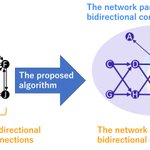
#JNeurosci: Findings from @_ttaguchi @JunKitazono @shuxnys and @oizumim offer novel insights into how network cores with strong bidirectional interactions contribute to the mechanisms underlying conscious perception and cognitive functions.
vist.ly/3n5nakw

Jun Kitazono retweeted

Excited to share another new paper in Journal of Neuroscience Methods!
We introduce GWTune, a toolbox for unsupervised alignment using Gromov–Wasserstein Optimal Transport (GWOT).
Open-source and ready to use.
🔗 doi.org/10.1016/j.jneumeth.2…
🧰 oizumi-lab.github.io/GWTune/

Jun Kitazono retweeted
Excited to share our new paper in iScience! 🎉
cell.com/iscience/fulltext/S…
We present an unsupervised alignment framework applied to neural recordings, enabling comparison of neural representations across individuals and brain areas—without relying on stimulus correspondence.

Jun Kitazono retweeted

Applications for this (well-paid) postdoctoral position in our group in Sydney, Australia close in a few days. Anyone interested in complex systems and/or neural dynamics 👀👇

An opportunity to *join our group* as a postdoc researcher analyzing complex physical systems, and the time-varying data they produce (with applications to sleep)!
Join us on a great campus in a beautiful city! Please share 🙂
usyd.wd105.myworkdayjobs.com…
Jun Kitazono retweeted

Grateful to my co-authors @D_Sekizawa and @JunKitazono, and especially to my supervisor @oizumim!
This collaboration made our latest study possible.
Jun Kitazono retweeted
Our latest preprint is out! How can we design optimal perturbations—such as TMS, tACS, and tDCS—to accurately identify neural dynamics?
By designing perturbations based on system’s eigenvalues and network structure, we can improve system identification. biorxiv.org/content/10.1101/…

Jun Kitazono retweeted

This work was led by Yumi Shikauchi, a former postdoc in my lab. The TMS-EEG data during motor tasks were collected by @mitsuaki1988, @TomasevicLeo, and @HSiebner, while @JunKitazono and I contributed on the theoretical side. Thanks to the team for making this possible!

[New preprint!] We show that applying impulse perturbations to the brain provides a simple yet theoretically grounded way to estimate the Controllability Gramian! This reveals controllable directions & their magnitudes via eigenvectors & eigenvalues.
biorxiv.org/content/10.1101/…

Jun Kitazono retweeted

🚀New Preprint by Shikauchi et al🧠
Our method combines network control theory with perturbation inputs (TMS) to explore brain dynamics (EEG responses). Co-authored with @TomasevicLeo @JunKitazono @HSiebner @oizumim

Quantifying state-dependent control properties of brain dynamics from perturbation responses biorxiv.org/content/10.1101/… #biorxiv_neursci

Jun Kitazono retweeted
New results just added by @AnnieGBryant in an update to arxiv.org/abs/2201.11941, highlighting some high-performing statistics of coupling in EEG and fMRI time series 👀

New preprint! @olivercliff w/ @NaoTsuchiya @jlizier: "Unifying Pairwise Interactions in Complex Dynamics". Want to quantify the relationship between two time series? We compared over 249 pairwise dependence measures on >1000 multivariate time series 😮
arxiv.org/abs/2201.11941

Jun Kitazono retweeted
Press release from the University of Tokyo for our latest paper in #JNeuosci! @mathmrk_neusci @gen21ka @shuxnys @JunKitazono With our control theory framework, we examined the significant brain regions for the optimal control in human fMRI data.
u-tokyo.ac.jp/focus/en/press…

Jun Kitazono retweeted

Finally out in #JNeurosci! We quantified control cost to transition brain states in a stochastic manner. We applied this method to HCP data and identified significant brain regions for controlling state transitions. See more details in my previous thread!
jneurosci.org/content/43/2/2…


Excited to share our latest preprint with @gen21ka, @shuxnys, @JunKitazono, and @oizumim! We propose a novel framework to quantify control costs for state transitions in the brain using a linear stochastic control system. (1/n)
biorxiv.org/content/10.1101/…

Jun Kitazono retweeted

Is my “red” your “red”? In this preprint with @ariel_zj, @NaoTsuchiya, @oizumim, we propose a novel quantitative method to compare subjective experiences in a purely unsupervised manner based on the qualia structure paradigm. 1/13
psyarxiv.com/h3pqm/
Jun Kitazono retweeted

【拡散歓迎】
今年は #ASCONE 復活します!
脳科学への数理的アプローチや計算神経科学に興味のある方はぜひご応募ください。
開催地は木更津。講師等詳細はスレッドかWebで。
日本神経回路学会 オータムスクール #ASCONE2022
10月13日〆
ascone.brainsci.net/

Jun Kitazono retweeted
Excited to share our latest preprint with @gen21ka, @shuxnys, @JunKitazono, and @oizumim! We propose a novel framework to quantify control costs for state transitions in the brain using a linear stochastic control system. (1/n)
biorxiv.org/content/10.1101/…
Jun Kitazono retweeted

Network Neuroscience (2022) 6 (1): 118–134.
Quantifying brain state transition cost via Schrödinger Bridge
direct.mit.edu/netn/article/…

Jun Kitazono retweeted
Excited to share a new preprint from my lab @gen21ka @mathmrk_neusci @JunKitazono and @shuxnys from Araya. We propose a novel framework for quantifying brain state transition cost in stochastic neural systems utilizing control-theoretic approaches.
biorxiv.org/cgi/content/shor…