


Kagi retweeted
BREAKING: Anthropic, OpenAI, Google, Vercel and Hugging Face put the skills their own AI runs on into 5 public GitHub repos
282.7K stars between them
you still paste the same long prompt into every new chat. these labs wrote theirs once and saved it as a folder your agent opens when the task matches
1. Anthropic · 187.5K stars
the skills behind the Word, PDF, PowerPoint and Excel files their own AI makes
2. Vercel · 33.6K stars
40+ React fixes, a UI check with 100+ rules, deploy in one command
3. OpenAI · 28.6K stars
5 skills install inside Codex on their own. 39 more: fix a red CI, Figma to code, deploy
4. Google · 21.8K stars
180+ skills for Google products. no outside code gets in, each one passes Google's own review
5. Hugging Face · 11.2K stars
your agent fine-tunes a model on cloud GPUs, finds datasets and tracks the training run
one folder, one SKILL.md. your agent reads the short name first and opens the rest only when it needs it
pick one task you repeat every week and take the skill for it today
the labs wrote these once and run them inside their own products. you still write yours from zero every morni
Kagi retweeted

BREAKING!!!!!!
Anthropic just shared one of the best tricks for Claude Code.
The idea: run Sonnet, Haiku 5.5 and Opus 5.5 at once, each one doing only the job it's best at.
Better results and way fewer tokens, because every task lands on the right model.
You just launch Claude Code like this:
claude --model sonnet --advisor opus
here's the split:
→ Sonnet 5.5 runs the session, writes the code and applies the fixes
→ Haiku 5.5 swarms the repo in parallel: search, grep and diff audits
→ Opus 5.5 stays on call as advisor for the big calls and signs off on the diff
→ you stop burning Opus context on work that doesn't need it
Opus only steps in at three moments:
→ before a plan locks
→ when the same error shows up twice
→ before calling it done
Sonnet builds. Haiku swarms. Opus reviews.
JEV engineering is the same move one layer down: the forks that need no thinker (which file, which tool, retry or stop) go to JEV in milliseconds, and the big models only see the ones that split
the full tree
Sonnet 5.5 runs the main session and coordinates the work
search maps the repo on Haiku 5.5, read-only
grep finds call sites on Haiku 5.5 in its own context
audit checks the diff on Haiku 5.5 in a throwaway worktree
Opus 5.5 on call as advisor, reviews the synthesized diff before sign-off
JEV routes micro-forks in milliseconds
paste the tree and this prompt into Claude Code ↓
"Reconfigure my Claude Code setup around this tree:
Run the main session on Sonnet 5.5 with Opus 5.5 as advisor.
Create three Haiku 5.5 subagents in .claude/agents: search (maps the repo), grep (finds call sites), audit (checks the diff).
Set isolation: worktree on audit so its checks never touch my working branch.
Add one rule to CLAUDE.md: delegate every repo search and test run to the Haiku 5.5 subagents to keep the main context small.
Route fast deterministic forks (tool choice, path selection, retries) through JEV.
Show me every change as a diff first. No edits until I say go."
↳ code.claude.com/docs/en/sub-…


Kagi retweeted
BREAKING : people still wire Obsidian into Claude Code by hand
Obsidian's CEO already open-sourced the whole stack. 5 repos, 70K stars, $0
→ obsidian-skills · 51K stars
his own repo. 6 skills, so your agent writes real Obsidian: wikilinks, Bases, Canvas, the CLI
→ defuddle · 9.9K stars
also his. it cuts menus, cookie banners and comments, so you pay tokens for the article only
→ obsidian clipper · 5.5K stars
the official web clipper. 1 click and any page lands in your vault
→ obsidian help · 2K stars
the official docs as plain Markdown, AGENTS.md included. your agent learns Obsidian from the team that built it
→ obsidian importer · 1.7K stars
15 apps, from Notion to Evernote to Apple Notes, turned into Markdown your agent can read
install one tonight. all 5 links in the reply ↓
70K stars on GitHub. and you're still building it from scratch

Kagi retweeted

everyone's using the same 3 AI tools
meanwhile there's a whole layer of stuff almost nobody talks about. most have a free plan
20 worth bookmarking
1. Goblin Tools — breaks any task into tiny steps. weirdly good cure for procrastination
2. Napkin AI — paste text, get a clean diagram
3. Granola — meeting notes without a bot joining your call
4. Wispr Flow — you talk, it writes. cleaner than you'd type it
5. Elicit — reads research papers and pulls out the findings
6. Consensus — ask a question, get answers from actual studies
7. Krea — image gen that updates in real time as you draw
8. Recraft — vector icons & illustrations in one consistent style
9. Ideogram — finally AI images where the text isn't gibberish
10. Adobe Podcast Enhance — phone mic audio → studio sound
11. Upscayl — free open source upscaler, runs on your laptop
12. LM Studio — run AI models offline. nothing leaves your computer
13. Pinokio — one-click install for open source AI apps
14. Mapify — PDF or YouTube video → mind map
15. Exa — search engine that finds pages by meaning, not keywords
16. Gling — auto-cuts silences and bad takes from your videos
17. Hedra — one photo + audio = talking video
18. Photoroom — product photos that look shot in a studio
19. Clay — finds and researches leads for outreach
20. Reclaim — AI calendar that guards your focus time
the free ones (10, 11, 12) are kinda insane for $0 tbh
which one did I miss? drop yours below

BREAKING: someone on X gave Anthropic's Opus 5.5 a memory with 3 folders and 1 map file. 0 apps, 0 databases
it picks up where the last session stopped and shows the file behind every answer
ask it for your admin password and it says "not written down" instead of making one up
how it works:
→ 1 map file loads first, every time you start
→ 3 folders sit around it: notes, people, projects
→ 1 topic = 1 file, named after what's inside
→ new lessons and decisions go back into root files, so session 2 knows more than session 1
when the answer isn't in a file, it says not found and stops
paste this into Claude Code in an empty folder ↓
"set up a memory in this folder:
1. make notes, people and projects
2. add root files for memory, lessons and decisions
3. write one map file called CLAUDE.md that says what lives where
4. one topic per file, lowercase with hyphens
5. answer from the file the map points to and name it. not written down? say so
6. after each task, write new lessons and decisions into the root files
show me the plan before creating anything"
your next chat starts from zero. this folder doesn't

Kagi retweeted
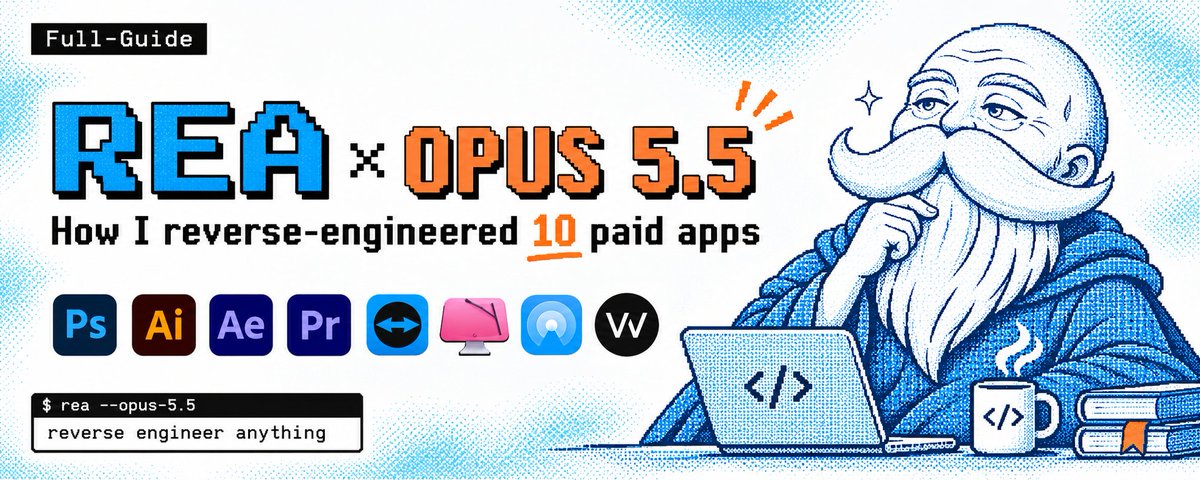
HOLY F*CK… Lauren Tan from the React core team just open-sourced the 27 skills she runs her own agents on, and they plug straight into Anthropic's Claude Code
her bedtime prompt: "i'm going to bed. land the stack even if ci flakes."
one install turns Opus 5.5 into a team of bots that lands almost any task by morning
→ sharpens the ask and writes the pass condition first
→ cuts the task into slices and runs them in parallel
→ lets other models try to break every diff, keeps only what a run proves
→ checks what else a one-line change could break
→ strips comments and AI tells before review
→ turns every repeated mistake into a rule for next time
→ wakes you only for the step that can't be undone
at 8:00 check 3 things:
→ every PR merged and ci green
→ what got dropped for having no proof
→ the one call it left for you
give it to Claude at bedtime with the stack you've been putting off for a week
it's called pstack. install line in the reply ↓ save it before it gets lost
Kagi retweeted
THIS IS F*CKING GOLD
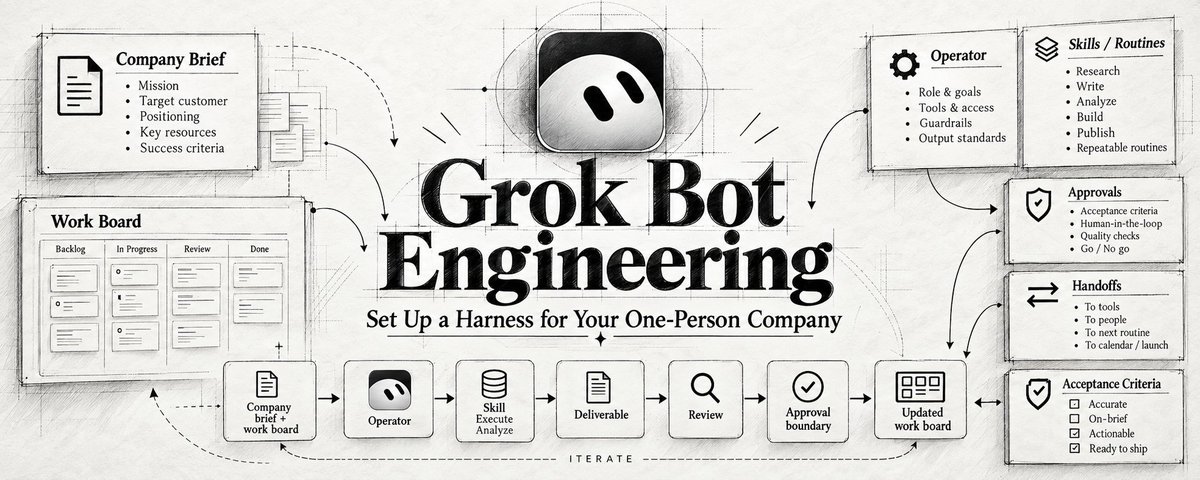
Anthropic just shared a Claude Code trick: 3 models, 1 command. Opus judgment on the big calls, cheaper models on everything else
update first: claude update
then launch it like this:
claude --model sonnet --advisor opus
the split:
→ Sonnet 5.5 runs the session and writes the code
→ Haiku 5.5 reads files and docs in parallel
→ Opus 5.5 waits on call as the advisor
→ Opus stays quiet on routine turns
you tell Claude to call Opus at 3 moments:
→ before the plan locks
→ when the same error shows up twice
→ before the task is called done
Sonnet builds, Haiku explores, Opus reviews
the full tree:
> Sonnet 5.5: main session, edits code
> search: maps the repo, Haiku 5.5
> grep: finds call sites, Haiku 5.5
> docs: pulls the API reference, Haiku 5.5
> Opus 5.5: advisor, reads the whole transcript when asked
paste this into Claude Code:
"Rebuild my setup around this tree:
1. main session on Sonnet 5.5, Opus 5.5 as advisor
2. three read-only Haiku 5.5 subagents: search (maps the repo), grep (finds call sites), docs (pulls the API reference)
3. one rule in CLAUDE.md: consult the advisor before locking a plan, after the same error twice, and before calling a task done
Show every change as a diff first. No edits until I say go."
the advisor is experimental. it runs on the Anthropic API only, not on Bedrock, Google Cloud or Foundry
if you run Opus on every turn, you pay Opus rates for file reads too. save this before your next big refactor

Kagi retweeted
BREAKING: Anthropic's docs let you put Opus 5.5 in charge of 3 Sonnet 5.5 builders
a dev on X shared the setup. 45K views in 2 days
most people still ask 1 agent to do everything. it plans, codes and tests in one chat, and the chat gets messy
here is the team:
→ 1 lead on Opus 5.5 plans the work and hands out tasks
→ 3 builders on Sonnet 5.5: frontend, backend, tests
→ each builder works in its own context window
→ 1 shared task list tracks who owns what
→ builders message each other when their parts must match
→ the lead steps in at 3 points: before the plan locks, when a builder is stuck, before done
start with 1 line:
CLAUDE_CODE_EXPERIMENTAL_AGENT_TEAMS=1 claude --model opus
the catch: it is experimental. Anthropic says a team uses a lot more tokens than 1 session. and 2 builders on the same file overwrite each other, so give each builder its own files
1 messy chat → 1 lead + 3 builders → 1 shared task list
the prompt and the docs link are in the first comment ↓
your 1 agent is still doing a whole team's job alone
Kagi retweeted
THIS AI PODCAST MADE $15,248 AND NEITHER HOST IS A REAL PERSON 🤯
no camera. no mic. no studio. no guests to chase down.
here's roughly how the setup works:
1. ask an AI chatbot for a viral podcast idea + the opening lines
2. paste the script into an AI video tool that has a "podcast" template
3. it generates two hosts who look real and talk to each other
4. post on YouTube, repeat, let the views turn into revenue
the crazy part is i honestly couldn't tell at first. the lighting, the mic, the way they react to each other... it all looks like a normal studio podcast
and that's what bugs me a bit tbh. if a faceless channel can pull $15k with people who don't exist, what does "authentic content" even mean in 2026?
but also, the barrier to start a show is basically zero now. one person + a laptop = a whole podcast studio
would you watch an AI podcast if you knew the hosts weren't real? or would you click away the second you found out? 👇
BREAKING: Anthropic's docs let you put Opus 5.5 in charge of 3 Sonnet 5.5 builders
a dev on X shared the setup. 45K views in 2 days
most people still ask 1 agent to do everything. it plans, codes and tests in one chat, and the chat gets messy
here is the team:
→ 1 lead on Opus 5.5 plans the work and hands out tasks
→ 3 builders on Sonnet 5.5: frontend, backend, tests
→ each builder works in its own context window
→ 1 shared task list tracks who owns what
→ builders message each other when their parts must match
→ the lead steps in at 3 points: before the plan locks, when a builder is stuck, before done
start with 1 line:
CLAUDE_CODE_EXPERIMENTAL_AGENT_TEAMS=1 claude --model opus
the catch: it is experimental. Anthropic says a team uses a lot more tokens than 1 session. and 2 builders on the same file overwrite each other, so give each builder its own files
1 messy chat → 1 lead + 3 builders → 1 shared task list
the prompt and the docs link are in the first comment ↓
your 1 agent is still doing a whole team's job alone
docs: code.claude.com/docs/en/agen…
Run this session as team lead on Opus 5.5.
Spawn 3 teammates on Sonnet 5.5: frontend, backend, tests.
Give each teammate its own files. Shared schema and config stay with you.
Use one shared task list for owners, progress and blockers.
Let teammates message each other when their parts must match.
Step in before the plan locks, when a teammate is stuck, and before done.
Show me the plan first. No edits until I say go.

Kagi retweeted
BREAKING: WALL STREET spends millions on quant teams.
I spent $20 on Anthropic.
Last night I gave it a paper account.
$10,000. Fake money. One prompt.
I typed:
"Analyze profitable Polymarket wallets from the last 90 days and build me an edge."
Then went to sleep.
Woke up to:
+$4,237.
(simulated run)
While I slept, the agent:
• scanned 10,000 wallets
• filtered fake alpha from real edge
• tracked sizing, timing, and conviction
• found traders consistently beating the market
Then it built a fully automated strategy:
→ monitors breaking news
→ maps narratives to active markets
→ detects mispriced odds
→ executes arbitrage
→ sizes positions dynamically
Started at 11:47 PM.
By morning:
94 trades.
Zero manual input.
No fear.
No greed.
No second-guessing.
Just data reacting faster than humans can.
People keep asking if AI will replace jobs.
Wrong question.
The real question is:
what happens when one person gets tools that used to belong only to Wall Street?
You only need Anthropic + laptop + 1 hour/day.
Paper first.
Most people skip it and test with their rent.
Kagi retweeted
BREAKING: an OpenAI co-founder's notes setup is at 22M views and 108K bookmarks. this is f*cking wild
Andrej Karpathy now spends a big part of his tokens on notes, not code
most people still google strangers. he asks his own wiki
the setup takes about 5 minutes:
→ brew install --cask obsidian, then mkdir ~/vault
→ open Claude Code in ~/vault and ask for a CLAUDE.md: raw/ for sources, wiki/ for pages, plus ingest and lint
→ drop a pdf, a transcript or meeting notes into raw/ and type: ingest
→ the model writes the wiki pages and backlinks. Karpathy says he rarely edits them himself
→ ask questions inside the vault. answers point to your own pages
→ save good answers back into the wiki, so every question adds up
→ type: lint. it finds pages that disagree and gaps to fill
honest part: he says it works at a ~small scale. his wiki is ~100 articles and ~400K words, and he still vibe coded a small search engine on top
108K people bookmarked his post. this time put it in raw/
full guide in the article below

Kagi retweeted
i still don't get why people build a second brain for Claude Code from scratch
7 repos already did it. 75,000+ stars combined
1. obsidian-skills: 6 skills from the CEO of Obsidian. teaches Claude its formats and tools
github.com/kepano/obsidian-s…
2. claude-obsidian: drop text in inbox/, check the plan, get linked notes
github.com/AgriciDaniel/clau…
3. obsidian-second-brain: saves decisions and tasks, loads them back next session
github.com/eugeniughelbur/ob…
4. karpathy-llm-wiki: unofficial Karpathy-style wiki. ingest, query, lint
github.com/Astro-Han/karpath…
5. second-brain-os: starter vault with 18 skills and 72 commands
github.com/undefined-ui/seco…
6. ai-second-brain: turns your ChatGPT and Claude exports into linked notes. run only step 1 of the README
github.com/charlie947/ai-sec…
7. llm-wiki: rules load every session, wiki pages only when needed. skip its tip to keep secrets in memory
github.com/MehmetGoekce/llm-…
start with #1. it takes 2 commands:
/plugin marketplace add kepano/obsidian-skills
/plugin install obsidian@obsidian-skills
all 7 run on plain markdown. you can open every file in any editor
full guide in the article below