

Bharat Mavens - Growth Marketing Partner Worked with 75+ Brands | 4.6 avg rating | Help Ecommerce & Lead Generation Businesses Grow with Google & Meta Ads
Shimoga
Joined April 2021
- Tweets22.1K
- Following485
- Followers3.1K
- Likes8.7K




Pinned Tweet
Hey,
I’m Kanish - an Ecom Growth Marketer, helping brands increase sales and ROI with performance marketing
We help brands with Google, Facebook & Amazon ads
Our services include
- Paid Ads
- Creative Strategy
- Growth Marketing Strategy
- Conversion Rate Optimizations
Check some of my work here:
bharatmavens.com/
Or you can book a call here
calendly.com/kanishjain001/1…


In the last 3 months, the majority of brands have quietly reversed their approach to going back to things before Andromeda update
→ Creative volume: Brands went from 15/week to 50/week but performance didn’t follow.
Most are back to 15-20 but with stricter diversity rules. Every new creative must shift at least one axis: audience, message, or format.
→ Everything into one Advantage+ campaign: the YOLO consolidation era. Brands dumped all creatives into one CBO and let Meta figure it out. Even Meta now says test in ABO first, find your winners in a sandbox, then push to CBO. The algorithm needs signal, not chaos.
→ Ignoring catalog: Andromeda reads product data directly. Brands with clean catalogs - proper titles, GTINs, high-res images are getting auction retrieval priority that no amount of creative volume can match.
→ Engagement metrics as creative KPIs: hook rate, hold rate, watch time - none of these reliably predict which creative the algorithm will scale.
Spend is the vote. The creative Meta puts budget behind is the winner.
It’s been two years since Meta rolled out Andromeda and the biggest lesson
Brands with the biggest creative volume are NOT the fastest-growing
Here’s what Andromeda actually did:
> It reads the content of your ad
> Clusters similar ads into one entity
> Ten variations of the same hook with different colours, that's one ad
Every brand that posts hard on creative volume failed in step two and three
The brands scaling fastest right now have fewer creatives but genuinely different ones.
Different angles. Different formats. Different audiences.

How to identify creative fatigue early?
Track Incremental spend, incremental revenue and incremental ROAS
With your winner ads
Don’t look at total spend vs total revenue.
Look at the additional spend vs the additional revenue - day on day.
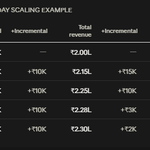
Scale 1 → baseline. ₹50K spend, ₹2L revenue. Blended ROAS = 4.0x.
Scale 2 → you pushed ₹10K more. Revenue went up ₹15K. That extra ₹10K made ₹15K. Incremental ROAS = 1.5x. Scaling is working.
Scale 3 → another ₹10K. Revenue only went up ₹10K. Incremental ROAS = 1.0x. You’re breaking even on new spend. First signs of creative reaching it's limit.

Once you go from spending 1 Lakh per day to 10 Lakh per day on the same ad account, you realize two things
1. Spend is the metric of creative testing
Spend is how Meta votes. If the algorithm is putting money behind a creative, that creative is working towards your goal (directly or indirectly).
That’s the signal. Everything else is commentary.
2. 90% of the metrics creative teams obsess over don’t correlate to revenue.
When you actually plot them against revenue, the correlation is weak.
The 10% of metrics that matter include: spend, cost per purchase, ROAS, incremental ROAS.
Everything else is noise

If you have an offline presence - a store, a warehouse, even a small office. Shoot your founder ads there
If you don’t have one, build the feeling. A clean setup that looks like somewhere people actually work
The ad that feels like a real place will always outperform the ad that feels like a Pinterest template.
Working with lead generation businesses has opened up possibilities for so many new ad ideas in e-commerce.
A few things I picked up:
→ Running messenger ads (Instagram + WhatsApp) alongside purchase campaigns. In lead gen this is standard.
In e-commerce, almost nobody does it - especially at high AOV where the customer needs warming up before they spend ₹20K in first purchase
→ Shooting founder content inside a physical store. Lead gen businesses do this instinctively - the office, the showroom, the setup.
→ If you don’t have a physical space, create the atmosphere of one. A setup that feels real. Trust is visual
One brand we applied this to: October sales +83% over September.
Lead gen brand - AOV ₹30K. B2C. Started in October
ROAS from 4.2 to 5.87 in 1 month since starting
Cracking the message funnel was the biggest win for growth
We kept the purchase campaigns running. But we added Instagram and WhatsApp Messenger ads on top.
For warming up people who aren’t ready to spend ₹30K on the first touch.
If you're selling products above 10K AOV, then this funnel can add at least 20% to 30% additional revenue
Will write a longer form article one day

Next frontier for ecommerce
How to have "monthly usage revenue" as a subscription component


In the era of replacing SAAS with AI, everyone focused on its creation, very few looked at it's maintenance
Reason for q-com to not launch private labels is margin in advertising business. The margin of product is far lower than selling an ad space to a brand
Meta rep from the Health & Wellness category has indicated drops across the category in the last 2 months and is projecting to continue for next few weeks as well. December should be a pick-up
"AI Mode incentivises dialogue, Google wants to keep you engaged to serve more ads at each turn"
Due to AI, for the first time, do we see decrease in CPM's?
As Google can serve more ads per customer per session and create enough value for all parties in the transaction - buyer, seller and Google

Reddit call was absolutely fascinating. Everyone should listen to it as a bellwether for where the internet is going
- AI Mode is increasingly default Google experience
- AI Mode provides rich info and data in line, less incentive to leave search
- AI Mose incentivizes dialog, Google wants to keep you engaged to serve more ads at each turn
- Google will milk search for as much revenue as possible as they transition from a search company to a cloud service and chip company
- As traffic from humans becomes more scarce this will put Google in an increasingly adversarial position to the rest of the internet
- This is a massive headwind to all media type companies who are not destinations
- This is a massive headwind to all content-driven go-to-market motions especially in the SMB. You have seen companies like HubSpot and Monday.com get crushed by this funnel collapse
We are entering the end game - a knife fight for the remaining and dwindling volume of human traffic on the internet
