

Life is like a camera. Just focus on what's important & capture the good times, develop from the negatives and if things don't work out, just take another shot.
London, England
Joined December 2009
- Tweets24.5K
- Following369
- Followers35.8K
- Likes23.7K


The Anonymous Admiral:
The front facade at Deptford Town Hall, New Cross Road, features four prominent carved figures standing in niches. While three represent real historical naval giants—Sir Francis Drake, Robert Blake, and Horatio Nelson—the fourth statue is completely anonymous. It simply depicts a generic, contemporary Edwardian admiral holding a sextant and binoculars, carved with the date 1905 to mark the building's completion.


Knowledge of London retweeted
London has many street bollards, some are from cannons said to be from the Napoleonic wars, others copied from the originals. But the only one as far as I'm aware of a policeman is the bollard on Gerald Road in Belgravia, it is a unique three-foot-tall iron street marker shaped like a traditional police officer.
The iron bollard styled Bobby with a helmet and silver badge wearing a uniform. It stands outside the former Gerald Road Police Station, which operated from 1846 until it closed in 1993 and has since been converted into a luxury private residence, but the policeman bollard and the original police overhead lantern remain as a reminder to the building's history.


You was my M.P @Anna_Firth and when you said on GBNews - "free clean tap water" I thought of my £88 per month Essex water bill... what's that all about then?
Knowledge of London retweeted
The Plessey electronics factory on Ley Street in the London Borough of Redbridge was a major local manufacturer, employer, and a vital wartime production site.
Plessey established premises on Ley Street around 1924 after moving from earlier local sites, growing into one of the largest electronics and telecommunications employers in the area.
The television pioneer John Logie Baird worked from a workshop on the roof of the Plessey premises on Ley Street during the 1920s.
After heavy German bombing damaged surface facilities during the 1940 Blitz, Plessey moved a massive defense manufacturing operation into the uncompleted Central line tube tunnels between Leytonstone and Gants Hill.
Up to 4,000 workers (predominantly women) worked 24-hour shifts in the deep tunnels producing vital war goods, including bomber wireless receivers, field telephones, wiring sets for Halifax and Lancaster bombers.
The original Ley Street factory buildings have since been demolished and replaced by modern housing developments.

Knowledge of London retweeted
The Haunted Cellars of Millbank Prison.
Beneath the Morpeth Arms, Millbank, holds the original underground holding cells and part of a tunnel system from the old prison.
This tunnel was used to march convicts directly from Millbank Prison to the river steps, where they were deported by ship to penal colonies in Australia.
Many prisoners died of disease or malnutrition in these grim vaults before their ships even arrived. The hauntings are traditionally linked to two specific spirits: a prisoner who tragically hanged himself in the cells to avoid deportation, and another who was fatally shot down by guards during a desperate escape attempt.
Staff and visitors have long reported sudden drops in temperature, intense feelings of panic, and objects moving on their own. Poltergeist activity is common; bottles have launched themselves from behind the bar, and drinks have been knocked clean off tables.
The phenomenon became so frequent that the pub installed a closed-circuit "Ghost Cam". Customers can watch a live feed of the haunted subterranean tunnels directly from the comfort of the bar.
I was given a private tour by bar staff a few years ago for the Knowledgeoflondon.com website. Very eerie experience!


Knowledge of London retweeted
The Mysterious Green "Mini" Stink Pipe, located at the eastern end of Shepherd's Bush Green near the Uxbridge Rd. The pipe is an anomaly among typical London sewer vents.
Unlike standard 6-to-8-metre-tall columns, this specific cast-iron pipe is unusually short. It is dark green, features decorative ridges, and is uniquely topped with a distinctive circle of crenellations (a crown-like top).
Because it is so low to the ground, local historians and urban explorers often debate its exact ventilation purpose. Its short height is highly unusual for venting foul odours directly into pedestrian paths. It is heavily speculated to have originally ventilated long-lost subterranean Victorian public toilets that once sat nearby

The History of the Old Kent Road mural is a massive 1,000-square-foot ceramic masterpiece created in 1965 by Polish artist Adam Kossowski.
Located on the exterior walls of the former North Peckham Civic Centre (now the Everlasting Arms Ministries church) at 600-608 Old Kent Road, London, it depicts the chronological story of one of Britain’s most famous thoroughfares.
The mural consists of a three-panel mosaic frieze rendered in highly textured, moulded, and selectively glazed ceramic tiles. It walks viewers through 2,000 years of London’s evolution:
In April 2017, following local campaigns spearheaded by organizations like the Twentieth Century Society, the mural was granted Grade II listed status by Historic England. This listing legally protects the artwork from destruction or careless redevelopment, keeping this vibrant visual anchor of Southwark history preserved for future generations.


London Bridge Station is the oldest London station (opened 1836) and the only London terminus with the word "London" officially in its title.
Achaeologists uncovered the structural remains of an old clay pipe kiln that had been demolished centuries ago, preserving pieces of the superstructure and various pipes—including whole items and discarded/broken rejects from failed firings.
One notable clay pipe found during the excavations features the inscription “JOINER STREET” on one side of the stem and “TOOLEY STREET BORO” on the other, identifying it as the work of maker James Minto active between 1809 and 1811—decades before the construction of London Bridge rail station.


Knowledge of London retweeted
Peek Frean's company was founded in 1857 by James Peek, a London tea merchant and George Hender Frean, a ship's biscuit maker. They initially set up production in a disused sugar refinery on Mill Street in Dockhead.
While Peek and Frean started the company, its legendary success is widely attributed to John Carr, who joined the firm and introduced innovative, modern biscuit-making machinery and techniques.
Needing more space to fuel their rapid growth, the company bought a site integrated with the London and Greenwich Railway arches, opening the newer, massive factory at Drummond Road in 1866.
Growing up in Bermondsey I can well recall the delicious smell of custard all about this area.
Sadly the factory closed in May 1989.


Knowledge of London retweeted
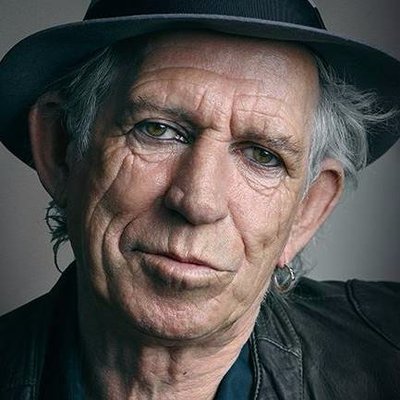
Happy 90th Birthday, Bill!
One love, Keith...
@bill_wyman
📷 #1 Bill Rasic
#2 Ethan Russell
#3,4 J.Bouquet


Knowledge of London retweeted
St Dunstan in the East Church Garden, a Grade I listed medieval church that was destroyed in the Blitz and transformed into a peaceful, overgrown public park.


Knowledge of London retweeted
The circular blue plaque at the Grade II listed carriage ramp in Deptford Market Yard, by the railway arches and station, commemorates the design and history of the historic structure.
The ramp was originally used to haul carriages, locomotives, and livestock from the ground-level market up to the elevated viaduct tracks.
After years of dereliction, the yard was restored and reopened around 2015/2016 as Deptford Market Yard, repurposing the arches into local businesses.


Sticky Fingers in Kensington, famous rock-and-roll-themed American diner shut its doors for the last time in June 2021 after 32 years of business due to the financial impact of the COVID-19 pandemic.
Opened in May 1989 by former Rolling Stones bassist Bill Wyman, the restaurant was named after the band's acclaimed 1971 album Sticky Fingers. Located just off Kensington High Street at 1 Phillimore Gardens, it became a beloved haven for music fans and tourists alike.
The walls were adorned with iconic Rolling Stones memorabilia, guitars, and rock-and-roll artifacts.
It featured classic red upholstered booths, a lively music scene, and a distinct motorbike display in the window.
The first time I visited with my son, all the music being played was the "Stones" the next time I went with my wife a few years later I was disappointed with the music choice, hardly any from the Stones
On October 24 2026, Bill Wyman had his 90th birthday, making him the Worlds oldest Rock & Roll star.


Knowledge of London retweeted
Cherry Garden Pier - The PLA Lookout Huts.
Surviving Port of London Authority (PLA) wooden huts remain from the days when 24/7 staff watched ships round Limehouse bend and telephoned Tower Bridge to coordinate bridge lifts.


Knowledge of London retweeted
Troubadour, Old Brompton Road.
A legendary coffee house and basement club operating since 1954. It served as a hub for Beat poets in the Jack Kerouac era, and its basement stage famously hosted early gigs for Jimi Hendrix, Bob Dylan, Paul Simon, Charlie Watts, and Led Zeppelin.

The cast-iron lamppost near Albert Bridge features two climbing boys—one passing a burning torch to the other—wrapped around a shaft decorated with oak leaves, acorns, and overflowing cornucopias. It was sculpted by Timothy Butler in 1874.
When the London Metropolitan Board of Works was choosing lighting for the new Thames Embankments, Butler's design was rejected for mass production because it was deemed too complex and expensive to replicate. The city chose the famous "Dolphin" (sturgeon) lamps instead, leaving only two of Butler's rare climbing boy lamps in existence—both on Chelsea Embankment (the other sits further west near Chelsea Old Church).
The granite plinth features writing on its east face that marks the official opening of the Chelsea Embankment in May 1874. It credits the foundry, Coalbrookdale, and honors the key players behind London's revolutionary Victorian sewage system: Sir James Macnaghten Hogg (Chairman of the Metropolitan Board of Works) and Sir Joseph Bazalgette (the chief civil engineer).


Knowledge of London retweeted
Charlie Brown's Roundabout in South Woodford, East London, is a major road junction connecting the M11 motorway, the A406 North Circular, and the A1400.
The story actually begins a few miles south in the London Docklands. Charlie Brown Sr. (1859–1932) was a former boxer who took over the Railway Tavern in Limehouse in 1893. The pub became an internationally famous hotspot for sailors, who traded rare, global curiosities and treasures to Charlie Sr. in exchange for drinks. It became so iconic that sailors worldwide would simply say, "Meet you at Charlie Brown's."
When Charlie Sr. passed away in 1932, his funeral was one of the largest the East End had ever seen, drawing 16,000 people. Following his death, a family dispute arose over his massive collection of eccentric treasures. The curiosities were split between his daughter (who took over the Railway Tavern) and his son, Charlie Brown Jr., who ran the Blue Posts pub directly across the street. Both pubs aggressively put up signs reading "Charlie Brown's", causing mass confusion for locals and visiting sailors.
Moving to Woodford and 'The Roundabout' Pub
Tired of competing with his sister, Charlie Brown Jr. left Limehouse in 1938 and moved out to the Essex border to take over a newly built pub in Woodford called The Roundabout. He brought a portion of his father’s famous eccentric treasures with him.
The pub sat adjacent to a small, early version of the junction built in the 1920s. It quickly became a beloved community hub and landmark, with locals universally nicknaming the building (and the junction next to it) "Charlie Brown's". The pub was instantly recognizable by its unique pub sign: a tall pedestal topped with an ornate, moving fairground carousel complete with finely carved gilt horses. According to a local community group discussion on Facebook, this landmark pub, along with the adjacent Ted's Transport Cafe, served as the primary anchors for the area before major urban development changed the landscape.
Demolition and the Modern Junction
In 1972, major infrastructure plans completely altered the area. To accommodate the construction of the new M11 motorway terminus and expand the A406 North Circular, the original junction had to be drastically enlarged to build new slip roads and flyovers.
Tragically, The Roundabout pub stood directly in the way of the expansion and was demolished. The community was effectively split in two by the massive new concrete roads, cutting residents off from local shops and schools.
The remaining pub treasures were scattered or lost, and the iconic carousel pub sign reportedly disappeared "up north," despite later community efforts to track it down and reinstall it.
Though the pub has been gone for over half a century, the name stuck so firmly in the local lexicon that transport authorities officially designated the concrete interchange as Charlie Brown's Roundabout, keeping the memory of the East End's most famous publicans alive.
