
Student researcher exploring AI infrastructure, hardware, and how tech companies create value. Substack: https://nitter.gq/t.co/nAojxfbQWh
Silicon Valley
Joined June 2025
- Tweets396
- Following765
- Followers36
- Likes55


Pinned Tweet
If AI is going to reach software-like margins, the economics cannot depend on the lab paying for every token forever.
Local LLMs are not just a privacy story. They are a margin story.
New essay on Substack: kylezz.substack.com/p/the-fr…

A test I’d like to try for agent safety: send the same forbidden action through the rules, ML filter and LLM judge, then check that no later layer can turn a hard denial into permission.
6
Wow this is one of the most important local AI breakthroughs of the year

Today we are happy to share one of our first open research releases: Latent Sparse Attention (LSA), a step towards subquadratic attention that matches accuracy of full attention at ultra-long context.
Sparse attention attends to only a few tokens per query, but it has to find the right ones. At 10M tokens, that search takes 98% of the attention layer's time. LSA makes sparse attention up to 22.7× faster and full attention 72.4x faster.
With @kubicek_ales @caciolai @PengLiangzu @SukritSumant @Ben_Hoov @FraserGreenlee @RMBattleday @radim_urban @thoefler @jcrwhittington


I bet such flow and local decisions models will soon be integrated into operating systems

Jev Founder, Diogo Amogo, just released a PDF on building a Jev Harness for coding agents
this is a blueprint on how to make your coding agents 200× faster and 400× cheaper
Send this PDF and the article below to your Claude
Code or Codex instance and start shipping 200× faster 👇

38
A good overview. TBH you could just change the final layer of an LLM and its activation function to build your own Jev. It will likely be absorbed into LLMs in the next few months. Definitely something very suitable for local.

56
@sama stop worrying about civilization apocalypse or SGI. Fix your shit first. Codex project creation has been broken for weeks on Windows with WSL and noone in @OpenAI even cares. github.com/openai/codex/issu…

219
I have been playing with freetoken for the last two weeks and was really impressed. It figured out a clever way of caching the experts in MOE models by automatically trading off system memory bandwidth and VRAM bandwidth. Local AI exploitation is imminent now!

Qwen3.8-Flash-Next now runs on a single RTX 5090 at 68.3 tok/s — no extreme quantization, no speculative decoding.
· Production-level checkpoint: GB300-validated NVFP4 checkpoint from RadixArk
· 63GB host RAM — less than what 1-bit quants of this model need
· The 51GB n-gram table? It lives on your NVMe, at ~0.5% throughput cost
In the video: one prompt → a playable minecraft-style world, then FreeToken on my 5090 desktop fixing a real FreeToken bug in 10.5 minutes.
Meet FreeToken 🧵
I thought I had to stick with Q3 and 60k q8 context on my 5080. This is really cool

🤯 So you can actually get a 100K context & ~50 tps on one 16GB GPU.
Putting Qwen3.8-27B onto an RTX 4070 Ti super is the kind of localmaxxing I ❤️ to hear about.
Recipe 👇
🧠 Qwen3.8-27B
🎮 RTX 4070 Ti SUPER — 16GB
📚 100,000-token context
⚡ 47–50 tok/s
💾 15.93GB VRAM
This recipe stacks several optimizations:
✧ 13.5GB hybrid GGUF
→ attention stays IQ4_XS
→ FFNs compressed to IQ3_S
✧ BeeLlama.cpp instead of stock llama.cpp
✧ KVarN compressed KV cache
→ K = kvarn5
→ V = kvarn4
✧ Last 1,024 KV tokens kept at higher precision
✧ MTP-2 speculative decoding
Changing the KV cache from kvarn5/kvarn5 → kvarn5/kvarn4 alone reportedly freed another ~6% VRAM and pushed context from 88K → 100K.
🎯 So this is what they did …
Weights → selectively quantized.
KV cache → selectively compressed.
Recent context → kept high precision.
Decode → speculated.
⚠️ This uses BeeLlama.cpp, a llama.cpp fork, not stock llama.cpp/LM Studio, and the 47–50 tps number is a community report.
Links 👇
🔗 Reddit r/LocalLLaMA/comments/1w1lq7u/qwen_38_27b_at_50_toks_with_100k_context_on_a/

47
I have been playing with the Freetoken project in the past week and was really impressed. It trades off the GPU and CPU memory bandwidth and cache the most frequently used experts in moe models on GPU allowing to run large moe models much faster github.com/FlashML-org/FreeT…

21

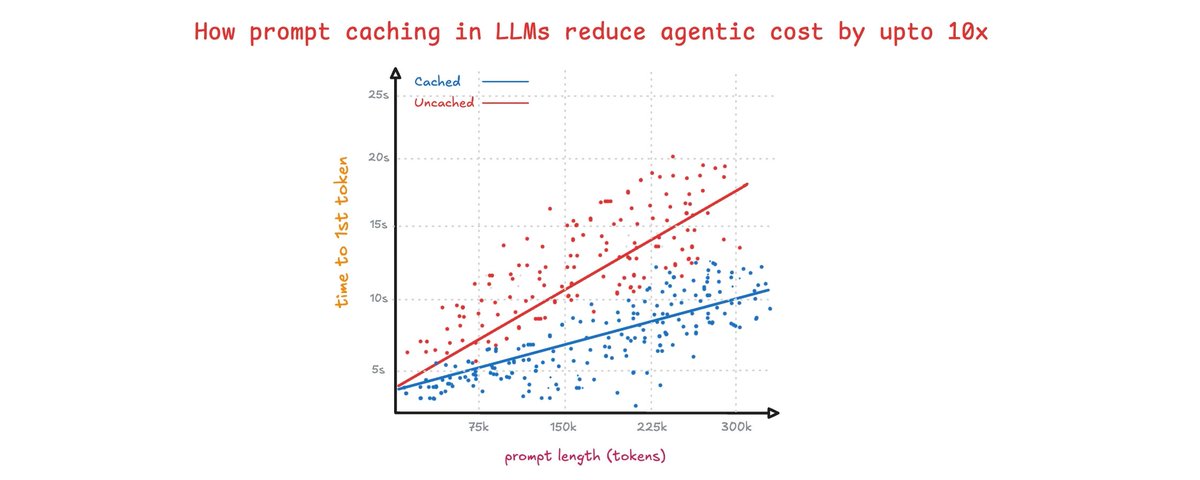

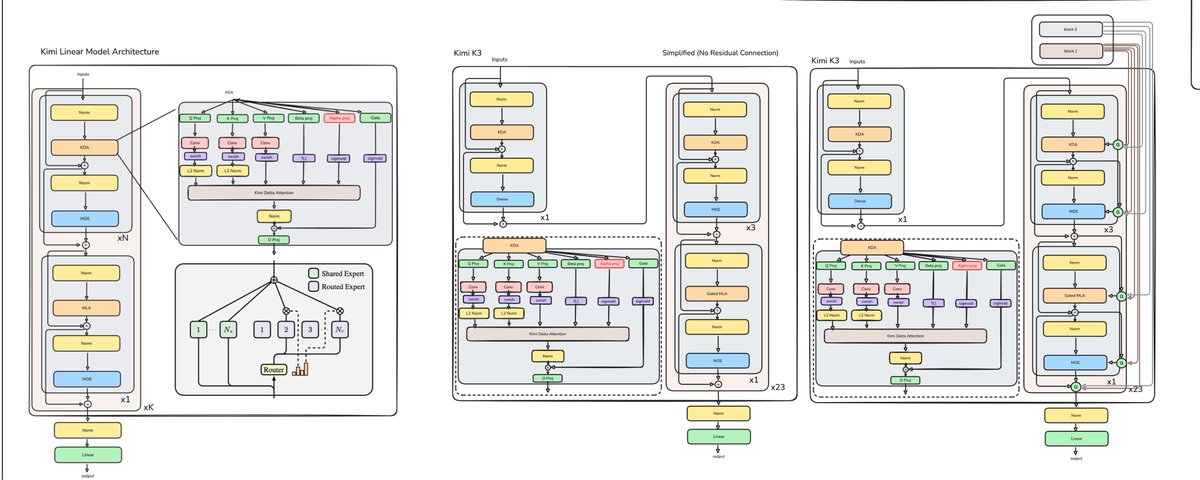
Dylan Patel @dylan522p of Semi Analysis just resonated the ideas in my pinned post in May. It is completely bullshit to claim CPU to GPU ratio is flipping in AI workloads. CPU is just growing together with datacenter investment. youtu.be/lHnxU9f-rwc?si=IeI4…
1
79
Just got my ASUS A16 and tested local LLMs.
Finding: X2 EE is mostly memory-bound on large models. CPU/GPU/Qualcomm kernels gave similar decode speed; power/fans and prefill changed more.
Build notes for llama.cpp on Windows + Qualcomm GPU kernels:
github.com/kylezhu88/LocalLL…

34
A more complete reference than what I had in my post

Local AI hardware = capacity X bandwidth X software stack
- Capacity tells you what fits
- Bandwidth tells you how hard the box can breathe
- The software stack tells you how much of the spec sheet you can actually cash out.
Hardware by Memory Bandwidth
- Mac Studio M3 Ultra: up to 512GB @ 819 GB/s
- RTX PRO 6000 Blackwell: 96GB @ 1792 GB/s
- RTX 5090: 32GB @ 1792 GB/s
- RTX 4090: 24GB @ 1008 GB/s
- RX 7900 XTX: 24GB @ 960 GB/s
- Radeon PRO W7900: 48GB @ 864 GB/s
- AMD Radeon AI PRO R9700: 32GB @ 640 GB/s
- Intel Arc Pro B65: 32GB @ ~608 GB/s
- Tenstorrent Wormhole n300: 24GB @ 576 GB/s
- Tenstorrent Blackhole p150: 32GB @ 512 GB/s + 800G
- MacBook Pro M5 Max: 460-614 GB/s
- MacBook Pro M5 Pro: 307 GB/s
- DGX Spark: 128GB @ 273 GB/s (coherent + CUDA)
- Mac mini M4 Pro: 273 GB/s
- Ryzen AI Max / Strix Halo: ~256 GB/s (~96GB usable GPU)
- MacBook Air M5: 153 GB/s
- Snapdragon X2 Elite: 152-228 GB/s
- Intel Lunar Lake: 136 GB/s
- Snapdragon X Elite: 135 GB/s
- Mac mini M4: 120 GB/s
- Arc Pro B60: 24GB @ ~456 GB/s
Verdict
- GPUs are still the bandwidth kings
- Apple wins: stupid amounts of memory, don't want to shard across GPUs
- Apple loses: when raw tokens/sec & concurrency matter more
- DGX Spark: coherent memory + NVIDIA stack
- Strix Halo / Ryzen AI Max: first real x86 unified-memory contender
- Tenstorrent: fully OSS stack, excited to see this mature
Fitting != serving
Even if it fits, you still pay for
- bandwidth during decode
- KV cache growth
- dequantization
- batching + concurrency
- scheduler quality
- framework overhead
The only mental model that matters:
1. What must fit?
2. What bandwidth tier do I need?
3. What software stack can actually deliver it?
In short:
- NVIDIA -> fastest raw speed
- Apple Studio M3 Ultra -> biggest one-box memory
- Strix Halo -> first real x86 unified
- DGX Spark -> coherent NVIDIA dev appliance
- AMD / Intel Arc -> rising alternatives
- Tenstorrent -> fully opensource stack
Do ask: "which bottleneck am I buying?"
Not: "which hardware is best?"

42
Apple’s focus and products center around lpddr5 instead of HBM. Using the system architecture to solve the memory bandwidth problem. CXMT is the perfect match.

The memory supply-demand gap will keep widening through 2027. That is the real reason Apple is lobbying the White House to keep CXMT off the Entity List.
▌Start with my latest industry checks: The pressure on Apple has shifted from soaring memory costs to a widening supply gap.
1. Of the memory capacity allocated to consumer electronics in 2026, an estimated 15–20% is expected to shift to data centers in 2027, and that share could grow.
2. Due to tight memory (LPDDR) supply, Apple's actual pull-in volume of A20 chips in 2H26–1Q27 could be 10–20% below its original target (though part of that may reflect Apple’s own overbooking).
▌CXMT states in its IPO prospectus that its capacity is far below domestic demand. Given the persistent global memory imbalance, even if Apple’s lobbying succeeds and it buys DRAM from CXMT, that would not materially lower costs or fill the supply gap. Still, with the imbalance widening, Apple has every reason to secure an additional source.
▌This also explains why Apple is being more proactive this time than it was when it evaluated YMTC in 2022. YMTC was mainly about lowering NAND costs; CXMT is about managing DRAM supply risk.
▌Tim Cook is one of the few tech leaders who can still navigate both Washington and Beijing, so this is better handled before he steps down as CEO. Even if the effort goes nowhere, the media coverage can still leave the market with the impression that Apple tried but was constrained by U.S. policy. That may help ease frustration over price hikes and longer delivery times.
35
The local vs frontier debate is usually framed as model quality.
I think the better framing is workload routing.
Hard, ambiguous tasks go to frontier models. Repetitive/private/high-volume tasks should move local whenever possible.
1
28
Cloud AI made intelligence feel like software.
But economically, every answer is still hardware: GPUs, memory bandwidth, electricity, cooling, and depreciation.
The next big AI platform shift may be about deciding which tokens never need to hit the cloud.
1
23
Frontier AI labs have a margin problem.
They are being valued like software companies, but cloud AI inference behaves more like hardware: every answer burns GPUs, electricity, and data-center capacity.
1
1
53