

Perugia, Umbria NO TAG
Joined November 2012
- Tweets16K
- Following15.8K
- Followers14.5K
- Likes149K






Luciana Pellegrino retweeted

Come il sarto cuce il vestito il liutaio vernicia il suo strumento.
Elemi,sandracca,mastice di kios,alla fine saranno circa 40 mani,non piu di due al giorno.
Più proseguo più bellezza ed armonia si manifestano.
Luciana Pellegrino retweeted

Tarquinia, musée (1), réouverture en juillet des quatre tombes exposées, revues pour qu'on puisse y entrer, et non pas seulement les voir depuis la porte, déclenchant une sonnerie si l'on se penchait (testé, plusieurs fois).
Accéder aux détails est un bonheur.


Luciana Pellegrino retweeted

“Queste conchiglie che ho trovato
saremo noi
noi acquietati levigati
senza più dolori
di bei colori
poseranno le orecchie su di noi
per ascoltare
che rumore fa
il mare.”
— Vivian Lamarque, Queste conchiglie.
“Seeking shells„: 📷 © Kees Scherer

Luciana Pellegrino retweeted

The Romans built a 43 meter dome that should collapse but 2,000 years later, it's still standing.
And it has no steel.
They pulled it off because they made concrete lighter.
The concrete at the bottom is heavy and dense. And as the masons built higher they mixed in lighter and lighter stone until at the very top they were using pumice.
The dome also gets thinner as it rises, and those coffered squares carved inside took out tons of extra material.
The oculus in the center is the whole trick. It's open sky where the heaviest stone should be.
Inside you're standing inside a sphere. Same distance from floor to oculus as wall to wall.
Hadrian's architects figured it out without anything we consider essential today and the result is still standing while so much of what we build falls apart in fifty years.
Are we really that advanced?
Luciana Pellegrino retweeted

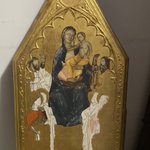
#6novembre Oggi si celebra San Leonardo, eremita francese, vissuto nel 6° secolo. È raffigurato con i ceppi in mano nell’Assunzione di Maria con i santi Leonardo, Benedetto, Caterina da Siena e Antonio Abate, opera del 1470-1480 ca di Pellegrino di Mariano della nostra Pinacoteca

ALT San Leonardo è raffigurato come un giovane con la tonsura e i ceppi, in quanto, all'epoca delle crociate, gli si attribuì il miracolo di aver liberato il principe Boemondo d'Antiochia. Per questo motivo San Leonardo è raffigurato con i ceppi in mano.
Luciana Pellegrino retweeted

CIRMIS sempre sulla breccia dell’innovazione tecnologica centrata sui bisogni del paziente e del medico: oggi a Napoli AI per il diabete.
#diabetesawarenessmonth
#AI


Luciana Pellegrino retweeted

La policía italiana ha recuperado en el mercado del arte clandestino un tesoro etrusco, con unos 2.200 años de antigüedad, procedente de unas excavaciones clandestinas en el municipio de Città della Pieve, en la provincia de Perugia.

Luciana Pellegrino retweeted

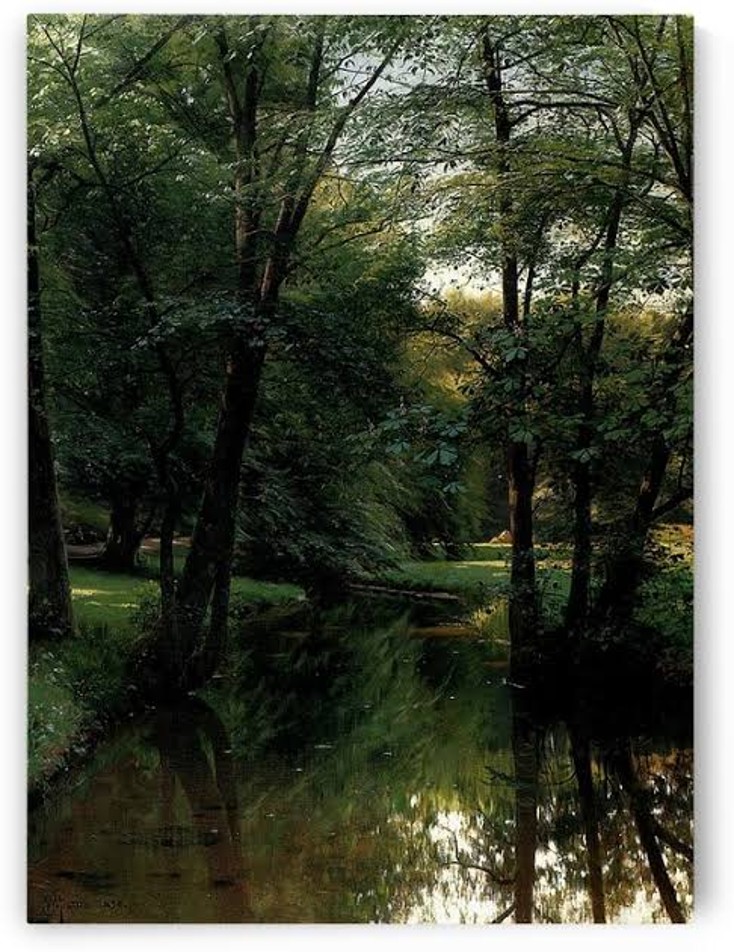
This is not a photo ~ it’s a remarkably realistic oil painting by Danish artist Peder Mørk Mønsted, with brilliant treatment of light, foliage and water reflections (Landscape with a Stream, 1898)


Luciana Pellegrino retweeted

Quack, quack !!
Long line of lame ducks, by Clifford K. Berryman, 1915
Buenos días @AraceliRego

Luciana Pellegrino retweeted
'Voglio che sappia una cosa.
Tu sai com'è questo: se guardo
la luna di cristallo...
l'impalpabile cenere...
tutto mi conduce a te, come se ciò che esiste, aromi, luce, metalli, fossero piccole navi che vanno verso le tue isole
che m'attendono."


Luciana Pellegrino retweeted

November 4, 1576. Spanish troops sacked the richest city in northern Europe and killed at least 7,000 people in it over three days.
They were not under orders. They were on strike.
The Spanish Fury is the single worst atrocity of the Dutch Revolt and the reason it happened is almost entirely financial.
Philip II of Spain had declared bankruptcy. His bankers stopped processing his transactions until a settlement could be reached, and that meant the pay for the Army of Flanders stopped.
And you could not simply wire money to Flanders in 1576. Letters of exchange needed solvent bankers, so when the credit froze, the wages had to go physically, as silver, by sea or by road, slowly and expensively and at risk. In 1568 the English had seized 400,000 florins meant for those troops.
So you had the best infantry in Europe, veterans of years of brutal fighting against the Dutch rebels, sitting unpaid in a foreign country.
Spanish armies of this period had a recognised procedure for that situation. The men would mutiny formally, elect a leader called the Eletto, and march off as a body to extract what they were owed.
They had already sacked Zierikzee and Aalst that way.
The political situation made it worse. Holland and Zeeland were in rebel hands, while the other fifteen provinces were still loyal to Spain. Those loyal provinces were so fed up with the unpaid Spanish troops wandering around robbing them that they were working through the States-General to have the mercenaries removed entirely.
Which the troops knew. If they were going to be sent home, they wanted paying first.
And then Sancho d'Avila, the Spanish commander of the citadel of Antwerp, proposed the target.
Antwerp was the wealthiest commercial city in northern Europe, the centre of the cloth trade and international finance, with a Spanish-held fortress sitting right against it.
D'Avila first tried to get Count Otto van Eberstein, who commanded the German garrison in the city, to simply hand it over. Eberstein refused and warned the governor, Champagny, and they started improvising defences.
On November 3 Champagny let in 6,000 Walloon troops under Charles Philippe de Croÿ, who nobody entirely trusted. About 10,000 civilians turned out to throw up earthworks facing the citadel.
Meanwhile mutinous Spanish units from Aalst, Lier, Breda and Maastricht were converging on the city.
They attacked at eleven in the morning on November 4.
The civilian defences lasted no time at all against veteran Spanish infantry. Accounts differ on the Walloons, who either ran or joined in the looting. The Germans and the townspeople fought and were overwhelmed. Eberstein drowned in the Scheldt trying to get away.
Then three days of pillage.
At least 7,000 people killed. An English eyewitness, the poet George Gascoigne, who was actually in the city, estimated 17,000, and the range given in modern accounts runs from 7,000 to 18,000. Hundreds of buildings burned, including a large part of the commercial district and the new town hall.
The economic damage was permanent. The Antwerp cloth market was destroyed. English merchants stopped coming, and by 1582 English trade with the city had ended entirely. The city's Jewish community was hit especially hard.
Antwerp never recovered its position. The merchants, the bankers and the skilled trades that survived started leaving, and a lot of them went north. The rise of Amsterdam as the commercial capital of Europe starts here and accelerates after the Spanish retook Antwerp properly in 1585 and the Dutch closed the Scheldt to shipping.
And the political consequence was immediate and total.
Four days later, on November 8, the States-General signed the Pacification of Ghent. It united the rebel provinces with the loyal ones, demanded the removal of every Spanish soldier from the Netherlands, and called a halt to the persecution of heretics.
Think about what that means. Fifteen provinces that had stayed loyal to the King of Spain through eight years of revolt signed a common agreement with the rebels within a week, because the King's own army had just massacred a Catholic city for its back pay.
The Fury made the revolt general. It turned Dutch Catholics against Spanish rule, it wrecked Philip's reputation across Europe, and it fed the propaganda tradition that became the Black Legend.
An army that had never lost a serious battle in the Netherlands handed its enemies their best recruiting argument, because a bank in Genoa stopped honouring the King's paper.

Luciana Pellegrino retweeted

Sabbia di stelle nella clessidra. Scivola via.

ALT Miriadi di stelle lungo la Via Lattea in direzione della costellazione dello Scudo. Al centro l'ammasso M11. Lontanissimo, sulla riva di ogni sogno: sabbia di stelle. Scende nella clessidra. Così scivola via tutto ciò che è luminoso e resta solo buio.


Luciana Pellegrino retweeted

#4novembre 1623, #Venezia: per evitare che i Podestà veneziani inviati in terraferma vengano idolatrati dalla popolazione locale, si fonde la statua di quello di #Belluno per trarne un cannone e si vieta alle città suddite di innalzare stendardi o monumenti in onor dei Rettori

ALT Il bellunese con il feltrino, 1667