
Dad, husband, scientist and social activist
Jaboticabal, Brasil
Joined March 2019
- Tweets937
- Following443
- Followers190
- Likes4.4K




Márcio Oliveira retweeted

📖 New research
Megafaunal engineering in the tropical rainforest: African forest elephants reduce avian species richness but elevate functional diversity🐘 🌳 🦚
🔎Read more: buff.ly/T1ydgRt

Márcio Oliveira retweeted
🦌 Elements on the move: How ungulate migration expands Alpine biogeochemical footprints🦌
These findings highlight the broader ecosystem consequences of declining animal movement extent 👇️
buff.ly/2KmnGj8

Márcio Oliveira retweeted

Strong papers are team goals. One person may develop the idea, another lead the experiment, another analyze the data, and another lead the writing. Authorship should recognize all substantial contributions, not only who wrote the final sentences.

Márcio Oliveira retweeted

📖 New research📖
These results imply that hunting not only targets areas used as refuges by wildlife, but also reduces recolonisation potential and may therefore alter source–sink dynamics 🐒 🌲
🔎 Find out more: besjournals.onlinelibrary.wi…

Márcio Oliveira retweeted
Some tips on how to use AI for scientific writing that I am going to give to my students.
Comments are welcome!!!

Márcio Oliveira retweeted

Online now: Mind the gap: do herbivores shape light niches of trees? dlvr.it/TVNjjp

Márcio Oliveira retweeted
🚨 new research highlight: "lockdowns as a natural experiment: Human presence, not buildings, drives mammal avoidance behaviour"
📝 read it here: buff.ly/vQQ4sQe
💡 and the associated article here: buff.ly/BcuDYQm

Márcio Oliveira retweeted

A research team in Tanzania had a backlog of 11 million wildlife photos. An open-source AI model processed the entire decades-long archive in a few days.
Biologists rely on motion-triggered cameras to see what animals do when humans aren't around. The cameras capture incredible footage. They also create a massive logistical burden. A single project easily generates millions of snapshots. For years, turning those images into usable data meant paying experts or begging volunteers to manually tag every single frame.
Google open-sourced SpeciesNet a year ago. The AI model automatically identifies nearly 2,500 categories of mammals, birds and reptiles.
The Snapshot Serengeti project had operated camera traps since 2010. They tried using online volunteers, but the sheer volume of images overwhelmed them. Researchers ran SpeciesNet on their 11 million backlogged photos. The model processed decades of data in days, finally giving the team a comprehensive, long-term view of animal populations in the region.
The Humboldt Institute in Colombia analysed their own massive image datasets through the tool. They discovered rapid, undocumented shifts in animal behaviour. Mammals in the Amazon are becoming nocturnal to avoid threats. Birds in developed areas are delaying their morning routines to avoid predators.
In Australia, the Wildlife Observatory took the open-source code and adapted it. They trained the model to identify endemic species like cassowaries and pademelons. Local conservationists can take the base architecture and fine-tune it for the specific endangered animals in their own backyards.
State agencies like the Idaho Department of Fish and Game use the model to sort millions of images annually. The AI does the heavy lifting, and human experts handle the final review.

Márcio Oliveira retweeted

🚨 RETROCESSO NA FAPESP! A ANPG manifesta discordância e indignação com a extinção do programa Bolsa Estágio de Pesquisa no Exterior (BEPE), da @AgenciaFAPESP , para a iniciação científica e mestrado, bem como a redução do estágio de doutorado de 1 ano para 6 meses.
Trata-se de grave retrocesso e restrição das possibilidades de estágio no exterior, vez que o programa responde por cerca de 1/3 das bolsas em outros países concedidas pela agência de fomento paulista.
É também muito grave que a medida tenha sido tomada sem debate com a comunidade acadêmica e reflete o objetivo do governo estadual de reduzir investimentos em ciência e educação, o que vai na contramão das necessidades de São Paulo e do Brasil.
A ANPG está procurando a Fapesp para obter mais informações e não poupará esforços para que o corte seja revertido.
Márcio Oliveira retweeted
📖 New paper📖
Space between houses influences movement and habitat selection of ungulates: Width as a novel metric of development🦌 🏘️ 🌍
🔎 besjournals.onlinelibrary.wi…


Márcio Oliveira retweeted

authors.elsevier.com/sd/arti…
Publicamos, junto a Emiliano Arona sobre la ecología del perro asilvestrado en Tierra del Fuego, en una estancia de 10.000 Has.
Identificamos 117 perros asilvestrados diferentes, en grupos de hasta nueve individuos, observando focos de reproducción.

Márcio Oliveira retweeted

Celebrating World Ranger Day 🌍
We’ve worked with over 100 rangers around the world this year, and they’ve been key to driving our success restoring wildlife globally. We’re proud to have carried out training with Rangers in Nepal, Philippines, Kenya, Cameroon and Benin over the last 12 months.
Our ZSL Kenya team have been hugely successful in transforming Ranger training across the country together with the Kenya Wildlife Service and Forest Service. We've worked to complete a full review of the training curriculum to further up-skill Rangers, and we have translated training materials into Swahili to make the courses more accessible.
A big thank you to every Ranger that we’ve worked with over the last year, we couldn’t protect wildlife without you 🙌


Márcio Oliveira retweeted
Creating small clearings helps herbivores keep trees from taking over savannas 🐃
This summary discusses how new glades draw grazers who keep young trees short. This slows woody encroachment & maintains open savannas in an affordable & scalable way 🌳
🔗 bit.ly/4xfgWpX

Márcio Oliveira retweeted

Screwworm reemergence, illegal cattle movements, and emerging risks to wildlife and protected areas in Mesoamerica doi.org/10.1111/cobi.70333

Márcio Oliveira retweeted

"El impacto ecológico de perros ferales en Oaxaca" por Gabriela Elena Medina-Cruz, Eugenio Padilla-Gómez y Miguel Briones-Salas publicado en Therya ixmana 5(3): doi.org/10.12933/therya_ixma…
Foto: Comisariado Ejidal de Jalapa del Valle, Oaxaca
@ipnciidiroaxaca @CONANP_mx

Márcio Oliveira retweeted

Essa reportagem da inigualável @SoniaBridi mostra o tamanho do CRIME que o CONGRESSO INIMIGO DO POVO cometeu na semana passada pra favorecer latifundiário canalha.
A câmara ta legislando pra BANDIDO, pra favorecer o PCC e CV, e a Amazônia que se lasque!
g1.globo.com/fantastico/vide…

Márcio Oliveira retweeted
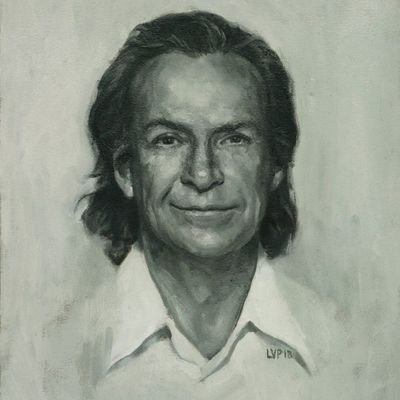
If you cannot explain it in simple terms, you don't understand it well enough.
Márcio Oliveira retweeted

Dynamic Lake Ice Conditions Shape Caribou Water‐Crossing Behavior in the Arctic
🔗 buff.ly/DGcYL4a


