






Jake retweeted
This is fun. Cut the whole Great Books survey. Cut modern science. Cut the attempt at the look at modern mathematics. Move formal theology to the very summit. Use as much recovered time as possible to teach the seven liberal arts as actual arts. And do this through their historically authoritative texts (and I assume TAC is only interested in the Latin West tradition and not the Greek East). Only then continue on to natural and moral philosophy, metaphysics, and finally theology in that order. Four years isn’t nearly enough time for all this, but it’s the best that can be done if freshman aren’t entering with any arts.
Something like this:
Year 1: Trivium focus plus Arithmetic. Donatus and Priscian for Grammar (along with the usual Latin authors as matter—Virgil, Salish, Terence). In Dialectic start with Porphyry and try to get through the Organon through Book 2 of Prior Analytics. Rhetoric, Cicero’s De inventione, Ad Herennium, and selections of Quintillian. Arithmetic is Boethius’s Arithmetic obviously—every word of it.
Year 2: Complete the Organon—scrap Sophistical Refutatjons if need to. Advanced Rhetoric: invention, style, imitation, arrangement, declamation. Geometry: the one art TAC probably successfully already does well, so stick with getting as deep into Elements as possible without skipping any propositions. Music: every word of Boethius’s De Musica. Astronomy: ideally the Almagest but there’s no way they’ll be prepared adequately. It’ll have to be a deep study of Sacrobosco’s De sphaera mundi. Continue reading the Latin authors for Grammar.
Year 3: Natural philosophy. Physics, On the Heavens, On Generation and Corruption, On the Soul, and as much of the biological works as possible. Plow through Nic Ethics and Poltics for Moral and political philosophy. Aquinas’s commentaries after Aristotle, but only if there’s time.
Year 4: Metaphysics and Aquinas’s De ente et essentia. Finish with sacred theology. Scripture, Lombard, Augustine, Aquinas.
So even with that massive butcher job we are still desperate for time.

Jake retweeted
The CLT is 40 minutes of Verbal Reasoning, 35 minutes of Grammar/Writing, and 45 minutes of Quantitative Reasoning and the SAT is 64 minutes of Reading/Writing and 70 minutes of Math. You’ve said publicly the primary difference between the CLT and the SAT/ACT is “source material.” The CLT’s FAQ explains that it requires no prior knowledge of the texts. It is open to students “regardless of educational background,” and “classic” refers to the use of enduring texts. It is a timed college-readiness exams testing modern verbal, writing, and mathematical performance like the others.
The exam simply isn’t one that attempts to test the learning of a classical education. Acknowledging this isn’t insulting it or calling it irrelevant. And frankly if it did attempt that, then it wouldn’t be a college-readiness exam. And even more, maybe a dozen people in the country would be equipped to take it.

Jake retweeted

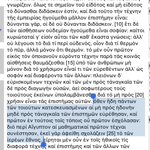
Porphyry’s Isagoge is now on the Aristotle Reader — the 3rd-century gateway to Aristotle’s logic. Greek + Owen’s 1853 English side by side, clickable word parsing (and a modern diagram of the Porphyrian Tree).
johnhboyer-sys.github.io/ari…


Jake retweeted
Aristotle Reader v. 0.6.5 Update: Added the rest of the Organon (Prior & Posterior Analytics, Topics, Sophistical Refutations).
Please RT and share! johnhboyer-sys.github.io/ari…

Jake retweeted
Aristotle Reader Update:
New works!
• Categories (Greek + Taylor, Edgehill translations)
• De Interpretatione (Greek + Taylor, Edgehill Translations)
Sidebar navigation!
Check it out here: johnhboyer-sys.github.io/ari…
Please RT to spread the word!
Reply w/suggestions, bug reports!


Jake retweeted
“That this obscurity, however, in the writings of Aristotle does not arise from imbecility, will be obvious to those who are but moderately skilled in rhetoric. For such is the wonderful compression, such the pregnant brevity of his diction, that entire sentences are frequently comprised in a few words; and he condenses in a line what Cicero would dilate into a page.”
“All the works of Aristotle lead us to the attainment of this end [the last and most perfect felicity of which our nature is capable]. For some of them unfold to us the art of demonstration; others, that we may become virtuous, instruct us in morals; and lastly, others lead us to the knowledge of natural things, and afterwards to those luminous beings which have a supernatural subsistence. The philosophy of Aristotle, however, is so scientifically connected in all its parts, that his sublimest theoretic doctrines cannot be understood by any one who has not been previously disciplined in those that are less sublime; nor are even the latter to be apprehended without long and laborious study, accompanied with an ardent love of truth, an extreme docility, and, as the consequence of it, an indefatigable perusal of the writings of his Greek disciples.”
-Thomas Taylor
Jake retweeted
Yeah, this goes back to the Hellenistic period when the Stoics argued logic was a part of philosophy. But the Peripatetics showed how that leads to absurdity, and explained how it was instead an instrument. And even within the Peripatetics some argued that philosophy should start with what is more known to us; i.e.; the sensible world—so we should begin philosophy with physics. This debate culminated with Andronicus of Rhodes (logic) vs Boethus of Sidon (physics) in the 1st century BC. But Andronicus, getting his hands on the full Aristotelian corpus for the first time since Aristotle’s successor Theophrastus died, organized the corpus, understood the method of inquiry, and arranged the logical treatises into the Organon, and placed it at the beginning of the corpus as the instrument to be known before proceeding. It was more or less understood this way until the decline of the classical liberal arts after the Reformation.


Jake retweeted

Who wants to see head of the @mises Institute, Tom DiLorenzo, dismantle the Lincoln myth on @TuckerCarlson? ✋


If you think @martyrmade is taking heat for his critique of Winston Churchill, just wait until someone tells the truth about Abraham Lincoln on Tucker Carlson's show.
Jake retweeted

President Milei just went to the WEF and called out the Davos elites to their faces
His full speech (English):
