

Educating the world on Litecoin. Wallets, payments, privacy & adoption. Building the future of digital cash.
Florida, USA
Joined October 2024
- Tweets4.8K
- Following208
- Followers703
- Likes10.8K









LearnLitecoin Ⓜ️🕸️ retweeted

Banks are currently experiencing outages. I have seen an unprecedented amount of outages in the last 2 months in the Point of Sale world. Here is how they will manage the inevitable Banking Collapse and rollout of the Digital Currency.


LearnLitecoin Ⓜ️🕸️ retweeted
🚨 CRYPTO IS BIGGER THAN “NUMBER GO UP.”
Most people look at cryptocurrency and ask:
“Which coin will make me the most money?”
But that misses the bigger idea.
Cryptocurrency introduced something fundamentally different: the ability to hold and transfer digital value over an open network without requiring a bank to maintain the ledger or approve every transaction.
At the same time, the broader financial system is becoming increasingly digital. Stablecoins, tokenized assets, blockchain settlement systems and other forms of digital money are being developed and used around the world.
Does that guarantee that cryptocurrency will replace dollars, banks or the existing monetary system?
No. Not yet
But it does mean we should be asking a much bigger question than:
“What crypto should I buy?”
We should be asking:
“What will money look like in a more digital and potentially more on-chain financial system—and what role will decentralized money play in it?”
That’s where understanding networks like Bitcoin and Litecoin becomes important.
Litecoin isn’t just a ticker on an exchange.
It is a decentralized, permissionless monetary network that allows people to send and receive LTC without needing a bank to process the transaction.
Don’t just learn the price.
Learn the technology.
Learn what cryptocurrency was actually built to do.
Education first. Speculation second.

LearnLitecoin Ⓜ️🕸️ retweeted
🤔 LET’S TALK ABOUT THE FUTURE OF DIGITAL PAYMENTS
Where do you think payments are actually headed?
Will cash still matter 10 or 20 years from now?
Will banks always be at the center of every payment?
Will we still depend on cards and traditional payment networks?
Could blockchain eventually become a meaningful part of everyday payments?
Should you be able to send money directly to another person anywhere in the world, 24/7?
How important will privacy be?
Should anyone be able to freeze, block, reverse, or restrict your money?
Do you think people will eventually want more control over how they hold and transfer value?
And here’s the big one:
What would the perfect digital payment system look like to YOU?
There are no predetermined answers here.
👇 I want to hear your opinion. Where do you think digital payments are heading?
#DigitalPayments #FutureOfMoney #Crypto #LearnLitecoin
LearnLitecoin Ⓜ️🕸️ retweeted
🚨 STOP LOOKING AT CRYPTO PRICES FOR A MINUTE. LOOK AT WHAT’S HAPPENING AROUND MONEY ITSELF.
Visa is expanding its involvement with stablecoin-linked payments.
Lloyds and Visa have tested round-the-clock cross-border settlement using stablecoins.
Digital-asset infrastructure is being used for a bank-backed stablecoin initiative in North Dakota.
The Federal Reserve is developing rules around payment stablecoins.
Instant payment systems continue expanding.
Now forget Bitcoin.
Forget Litecoin.
Forget what crypto you own.
Just think about the direction of travel.
More money is moving digitally.
Payments are getting faster.
Settlement is being pushed toward 24/7 availability.
Stablecoins are moving further into traditional financial infrastructure.
Banks, payment companies, governments and decentralized cryptocurrency networks are all approaching digital money from very different directions.
So here’s the question nobody can answer with certainty yet:
What does the monetary system look like when this transition is completed?
Do banks simply modernize the system we already have?
Do stablecoins become a major payment layer?
Do decentralized currencies like Bitcoin and Litecoin exist alongside traditional money?
Do several systems compete?
Or are we heading toward something entirely different that most people haven’t considered yet?
And here’s the question that really should interests YOU.
If money becomes increasingly digital, who do YOU think should control the rules of YOUR money?

LearnLitecoin Ⓜ️🕸️ retweeted
🚨 STABLECOINS VS. DECENTRALIZED CURRENCIES — WHO ACTUALLY HAS CONTROL?
Not all digital money works the same way.
A fiat-backed stablecoin and a decentralized cryptocurrency such as Litecoin can both move across blockchain networks—but their control models are fundamentally different.
Take many major fiat-backed stablecoins.
A company issues the token and manages the reserves intended to back it. Depending on the stablecoin’s design, the issuer may also have administrative capabilities that allow certain addresses to be frozen or blacklisted.
That doesn’t automatically make stablecoins “bad.” Those controls can exist for legal compliance, fraud response, sanctions, or security purposes.
But it does mean you should understand who has authority over the money you’re using.
Now compare that with native Litecoin (LTC).
Litecoin doesn’t have a company issuing LTC or an administrator holding a master key capable of freezing native LTC in your self-custody wallet at the protocol level.
If you control your private keys, you control the credentials required to authorize spending your LTC under Litecoin’s consensus rules.
That doesn’t mean LTC can never become inaccessible. An exchange or other custodian can restrict your account or your access to LTC it controls on your behalf.
That’s an important distinction:
Stablecoin: Depending on its design, the issuer itself may have technical controls over the token.
Self-custodied LTC: No central Litecoin issuer has an administrative key that can simply freeze your coins at the protocol level.
Both can serve purposes in digital payments.
But before choosing digital money, ask four questions:
Who issues it?
Who controls the keys?
Who can freeze or restrict it?
Who can change the rules?
Don’t just ask what digital money is worth.
Ask how it works and who has control.
#Litecoin #LTC #Stablecoins #Crypto #DigitalMoney #LearnLitecoin

LearnLitecoin Ⓜ️🕸️ retweeted
🔐 Custodial vs. Non-Custodial Wallets
Before choosing a Litecoin wallet, there is one important question to understand:
Who controls the private keys?
🔐 Custodial Wallet
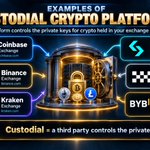
With a custodial service, a third party controls the private keys associated with the Litecoin it holds on your behalf.
This is common with many cryptocurrency exchanges and other custodial platforms.
You typically access your funds through an account with the provider rather than directly managing the private keys yourself.
Advantages:
• Often easier for beginners
• Account/password recovery may be available
• Convenient for buying, selling, and trading
Tradeoffs:
• You depend on the custodian to safeguard the assets
• Withdrawals may be delayed, limited, or suspended
• Problems involving the custodian can affect your access to your LTC
🔑 Non-Custodial Wallet
A non-custodial wallet puts control of the private keys in your hands.
You control the keys needed to authorize spending your Litecoin, rather than relying on a custodian to approve a withdrawal.
Advantages:
• Direct control of your LTC
• You don’t need an exchange to authorize an ordinary Litecoin transaction
• You control your wallet backups and keys
Tradeoffs:
• Security becomes your responsibility
• Losing the necessary keys or recovery information can permanently prevent you from spending your LTC
• If someone obtains your private keys or recovery information, they may be able to steal your LTC
⚠️ Important:
Your Litecoin isn’t literally stored inside your wallet.
The Litecoin blockchain records the spendable outputs. Your wallet manages the cryptographic keys and information needed to identify and authorize spending the LTC you control.
That is why custody matters.
Custodial = A third party controls the keys.
Non-custodial = You control the keys.
Neither eliminates risk. They simply place control, trust, and responsibility in different hands.
💬 Which would you rather use to hold your Litecoin: custodial or non-custodial? Why?
Learn. Understand. Decide for yourself.
#LearnLitecoin #Litecoin #LTC #CryptoEducation #SelfCustod


LearnLitecoin Ⓜ️🕸️ retweeted

There's a new Litecoin pool! @LuxxfolioH has just unveiled LuxxPool which is live (beta) to the public. It's the very first Scrypt mining pool to direct a portion of proceeds back to the Litecoin Foundation! 🙏

BREAKING: LuxxPool is live in public beta! ⛏️
Connect your Scrypt miner to one stratum endpoint and mine @Litecoin, @Dogecoin, and eight more coins at the same time.
1% pool fee • PPLNS rewards
Get started: luxxpool.luxxlabs.ca/
The first Scrypt pool to direct a portion of proceeds to the @LTCFoundation.
Coming soon:
• Auto-convert mined coins to currency of choice.
• Built-in wallet integration for merge-mined coins
• Automatic payouts
• LuxxBuxx
Join Discord: discord.com/invite/GAfxjWPeb…
It’s not luck 🍀 It’s LUXX 🔥
🇨🇦 $LUXX.CN 🇺🇸 $LUXFF litecoin:native


Take the time and LearnLitecoin, Why it’s a better Bitcoin.
lookintolitecoin.com/post/li…

LearnLitecoin Ⓜ️🕸️ retweeted

15 years ago, Litecoin was an experiment. Today, it's a testament to decentralization, resilience, and the power of an open network.

🎂 Happy Birthday to Litecoin! 🎂
"15 Years of Litecoin & 15 Milestones" 🧵
Since Litecoin launched on 13 October 2011, Coinmarketcap has estimated more than 60 million cryptocurrencies have appeared. Among former ‘Top 100’ projects, Cryptorank’s research shows only 71.9% still exist, and even fewer remain active. Well, Litecoin hasn’t left the leaderboard since launch. Ever. While market cap is one way to measure Litecoin’s success, there’s so much more to the project’s 15 years of existence. And this piece is celebrating 15 milestones that’ve had a profound impact on the space, the project, and Litecoin’s users.
Happy 15 Years, Litecoin. Here’s to many more! Enjoy the 🧵 👇

🚨 THE SUPPRESSION OF LITECOIN — WHY SO LITTLE ATTENTION?
For years, Litecoin has operated in the shadows of an industry that claims to stand for decentralization, financial freedom, and independence.
Yet one of the longest-running decentralized cryptocurrencies receives surprisingly little attention.
Why?
Throughout history, there has been a struggle between GOOD and EVIL, between freedom and control, between those who seek power and those who refuse to surrender it.
But no matter how dark things become, the LITE always has a way of shining through. 💡
🌎 The world’s monetary system is undergoing a transformation.
Banks, governments, corporations, and major financial institutions are investing in digital payments, stablecoins, tokenization, and new financial infrastructure.
Much of that infrastructure operates within institutionally controlled systems.
But Litecoin represents something different.
⚡ No central issuer.
⚡ No corporation controlling the Litecoin network.
⚡ No government required to authorize ordinary peer-to-peer transactions.
⚡ A transparent, predetermined issuance schedule.
⚡ The ability to hold your own private keys and control your LTC.
Litecoin doesn’t require permission from the world’s financial institutions to exist.
And that’s what makes decentralization so powerful.
While institutions develop their own digital financial systems, Litecoin offers another choice: an open, permissionless monetary network that individuals can use without relying on a central issuer.
It isn’t completely immune to regulation, surveillance, or restrictions at the points where it interacts with traditional finance. But its fundamental design gives people an alternative.
Freedom or control?
Centralized authority or individual responsibility?
Institutional money or the people’s money?
The future of finance is being shaped right now.
And perhaps the question we should be asking isn’t simply why Litecoin receives so little attention.
It’s why a cryptocurrency built around financial independence isn’t receiving MORE.
💡 The LITE shines brightest in the dark.
Litecoin — The People’s Money.
LearnLitecoin
Education first. Freedom through knowledge.


🌎 Why Is Litecoin Mentioned in International Economic Statistics?
Here is something many people may not know:
Litecoin is specifically mentioned in international work examining how cryptocurrencies should be treated within economic statistics.
But why Litecoin?
Beginning in 2018, the IMF, OECD and international statistical experts were examining an important question:
How should cryptocurrencies fit into national and global economic statistics?
They needed to consider questions such as:
• How should cryptocurrencies be classified?
• How should cryptocurrency transactions and holdings be recorded?
• How should cryptocurrency mining be treated economically?
• How should cryptoassets held across borders be measured?
• How should decentralized cryptocurrencies without a corresponding issuer liability be treated?
And Litecoin appears in this work.
In 2018, IMF material discussing blockchain-based cryptoassets included:
Bitcoin
Ether
XRP
Bitcoin Cash
EOS
Stellar
Litecoin
These were discussed in the context of cryptoassets designed as general-purpose media of exchange for peer-to-peer payments, without an issuer or corresponding liability.
But it gets even more interesting.
Later international statistical work discussing an earlier IMF definition described payment-oriented cryptoassets as assets intended to be used broadly as:
a unit of account,
a store of value,
and a means of payment.
And the example specifically given was:
Litecoin.
Why does that matter?
Because Litecoin represents something fundamentally different from traditional financial assets.
There is no central company issuing LTC as its liability.
There is no bank required to authorize a Litecoin transaction.
Users can hold their own private keys and transfer LTC peer-to-peer.
That creates an entirely different question for economists and governments:
How do you classify and measure decentralized digital money when there isn't a traditional issuer sitting on the other side of it?
International statistical organizations have had to confront that question.
Now here's where we need to separate documented fact from questions worth asking.
The UN's 2030 Agenda does not identify Litecoin as an official cryptocurrency for Agenda 2030.
It doesn't officially designate Bitcoin, XRP, XLM or another cryptocurrency as the cryptocurrency of Agenda 2030 either.
But international organizations have studied cryptocurrency and blockchain technology.
Some blockchain networks have even been used in UN-related programs.
And Litecoin itself has been specifically identified in international economic work examining decentralized payment-oriented cryptoassets.
So instead of claiming we know what that ultimately means, perhaps we should be asking:
🤔 Why was Litecoin specifically used as an example?
🤔 Why were decentralized cryptocurrencies being studied within international economic statistics in the first place?
🤔 Why do international institutions need systems for measuring cryptoasset transactions and holdings?
🤔 As financial systems become increasingly digital, where does decentralized money like Litecoin fit?
🤔 Could Litecoin eventually play a role that hasn't been officially designated today?
🤔 And if Litecoin's monetary characteristics were important enough to be studied then, why does Litecoin receive comparatively little attention today?
💭 If international institutions recognize Litecoin as a peer-to-peer cryptocurrency, what role could truly decentralized currencies like Litecoin play as the world's financial system becomes increasingly digital?


LearnLitecoin Ⓜ️🕸️ retweeted
On October 7, 2011, @SatoshiLite officially launched the Litecoin network by creating the Genesis Block, the first block of the Litecoin blockchain. The Genesis Hash was deliberately constructed using the Scrypt hashing algorithm, distinguishing it from other cryptocurrencies.
Litecoin’s genesis block includes the following message: NY Times 05/Oct/2011 Steve Jobs, Apple’s Visionary, Dies at 56.
While Litecoin has evolved through numerous updates and enhancements over time, the Genesis Hash has remained an unchanging cornerstone of the blockchain. This immutable block anchors the network's security, consensus mechanism, and integrity.
From its inception to the present day, the Genesis Hash embodies Litecoin's foundational principles and trajectory. It stands as a testament to the original mission: developing a faster, more accessible, and secure alternative to traditional digital currency.
litecoin:native ⚡️
LearnLitecoin Ⓜ️🕸️ retweeted

Atomic swaps coming to Litecoin wallets.

Currently in the final testing phase of our atomic swap integration into @litecoin's @nexuswallet! 🚀
It's now fully working, on mainnet, using the latest Nexus build.
Still a few minor things to tweak/improve here and there, but a public release is now very near!

🔐 Custodial vs. Non-Custodial Wallets
Before choosing a Litecoin wallet, there is one important question to understand:
Who controls the private keys?
🔐 Custodial Wallet
With a custodial service, a third party controls the private keys associated with the Litecoin it holds on your behalf.
This is common with many cryptocurrency exchanges and other custodial platforms.
You typically access your funds through an account with the provider rather than directly managing the private keys yourself.
Advantages:
• Often easier for beginners
• Account/password recovery may be available
• Convenient for buying, selling, and trading
Tradeoffs:
• You depend on the custodian to safeguard the assets
• Withdrawals may be delayed, limited, or suspended
• Problems involving the custodian can affect your access to your LTC
🔑 Non-Custodial Wallet
A non-custodial wallet puts control of the private keys in your hands.
You control the keys needed to authorize spending your Litecoin, rather than relying on a custodian to approve a withdrawal.
Advantages:
• Direct control of your LTC
• You don’t need an exchange to authorize an ordinary Litecoin transaction
• You control your wallet backups and keys
Tradeoffs:
• Security becomes your responsibility
• Losing the necessary keys or recovery information can permanently prevent you from spending your LTC
• If someone obtains your private keys or recovery information, they may be able to steal your LTC
⚠️ Important:
Your Litecoin isn’t literally stored inside your wallet.
The Litecoin blockchain records the spendable outputs. Your wallet manages the cryptographic keys and information needed to identify and authorize spending the LTC you control.
That is why custody matters.
Custodial = A third party controls the keys.
Non-custodial = You control the keys.
Neither eliminates risk. They simply place control, trust, and responsibility in different hands.
💬 Which would you rather use to hold your Litecoin: custodial or non-custodial? Why?
Learn. Understand. Decide for yourself.
#LearnLitecoin #Litecoin #LTC #CryptoEducation #SelfCustod