

Former MJ Industry Grower | USCG Vet 🇺🇸 | Legal Home Grow Advocate | Cannabis History | Logical Fallacy Destroyer | No Filter | Grow Your Own
In Your Head (rent free)
Joined September 2024
- Tweets21.4K
- Following1.2K
- Followers3.4K
- Likes101K


Pinned Tweet
Open letter to @learnaboutsam (and Kevin Sabet):
If the recreational ban (or state-level repeal) you are pursuing actually happens, what is the operational plan for the tens of millions of existing consumers?
The 2025 National Survey on Drug Use and Health reports 61.6 million people aged 12 or older used marijuana in the past year. Past-month figures from the prior wave were already in the mid-40 millions, with roughly 21 million reporting daily or near-daily use. Those are survey numbers. Federal researchers and independent analyses have long noted underreporting from social-desirability and other biases; corrected estimates run higher.
Legal-market sales data (Headset-tracked state markets alone around $24 billion in the twelve months ending mid-2026, with broader regulated totals higher and illicit volume still larger) are inconsistent with the idea that this is a small, easily extinguished population.
Recreational use, not medical-card use, accounts for the overwhelming majority of that demand.
A ban does not make the demand disappear. It relocates it.
Under the framework SAM has publicly described for years—opposition to commercial adult-use markets, support for civil penalties or diversion rather than prison for simple possession, emphasis on treatment and prevention—the practical questions remain unanswered at scale:
Who enforces against the residual supply that currently serves the half of the country (and the majority of consumers) still outside fully legal state systems? Chinese criminal groups and other illicit operators already dominate unregulated cultivation, precisely because federal Schedule I status and incomplete state legality leave a large cash market.
Expanding prohibition does not remove the incentive; it concentrates it.
What capacity exists to process even a fraction of 40–60 million past-year users through drug courts, brief interventions, or mandated treatment? Most of those users, by the DEA’s own post-hearing characterization after SAM witnesses testified, “do so in a manner that does not result in dangers to themselves or to their communities.”
Prioritizing them diverts resources from higher-harm substances.
Home cultivation, which your organization and allied campaigns have often treated as a loophole to close, becomes the lowest-friction response for anyone who already grows or can learn. Alcohol Prohibition did not eliminate drinking; it shifted production into homes, speakeasies, and organized crime. Cannabis is easier and safer to grow than is to distill alcohol.
Kevin Sabet’s tenure as a White House Office of National Drug Control Policy adviser across three administrations coincided with continued high prevalence, "rising potency" (when the University of Mississippi monitoring already recorded flower samples above 37 percent THC in 2008, years before any state adult-use market), and the later emergence of unregulated intoxicating hemp products that filled gaps left by prohibition.
Those outcomes are not evidence that the same approach, applied more vigorously to a larger consumer base, will now succeed. SAM’s own recent efforts, including the Massachusetts repeal push, have faced majority voter opposition in polling.
The recently staged C-SPAN caller episode (later identified as an organization official) and the pattern of blocking critics(including yours truly), after detailed write-ups, do not substitute for an enforcement model that accounts for observed consumption volumes.
If the goal is reduced use and reduced harm, the record of commercial alcohol and tobacco regulation—age gates, potency and product standards, taxation, and legal home production—has a longer empirical track record than re-prohibiting a substance already used by roughly one in five adults, and likely many more than that.
If the goal is simply to prevent another commercial industry, say so, and specify the policing, court, and treatment numbers required once the regulated shelves are gone.
Otherwise, you're just blowing air into a furnace you built.
So, what is the plan?
The consumers and the plants will still be here either way.

This sounds like the musings of a DARE graduate. It wouldn't be legal in half the country if the only end result is your couch.
Marijuana is also a social lubricant for many, and most drinkers sit on their ass while drinking, doing absolutely nothing.
In fact, I wouldn't dare do 99% of the things I like to do with my friends and family for "activities out of the house" while drinking, that's alcoholic shit right there lol.

I was just thinking — we had an entire TV show (Cheers) in the US dedicated to alcoholics doing nothing but drinking , complaining about their lives and telling jokes about liver disease.
All while sitting on their asses, accomplishing nothing.
But weed makes you lazy?
Got me a little small boat for now for the bay and ICW, I can also take this into the state creeks and springs since it’s only a 9.9 hp.
I found someone locally with a 20hp Honda for sale I can throw on her for the bay.


One Nation Under Informed retweeted

Another MAHA win! @FDA has cleared the first new sunscreen ingredient in decades: bemotrizinol, used safely in Europe, Australia, and parts of Asia for more than 20 years.
Now Americans have access to another option for protecting their skin. We are expanding choice and bringing proven innovations to the American people.


I was actually thinking about this when in was 19 in 1996 when California legalized medical.
It’s also a reason to pretend it’s not a recreational thing, and that anyone who “abuses” this “medicine” is an “addict”.

Medical marijuana is a SCAM‼️
YES, cannabis is medicine, but we should NOT need a prescription for it.
These corporate medical marijuana dispensaries don't even work like medical facilities! It's just a retail shop where people buy jars of weed with fancy colorful labels on it and weed hype strains like toad venom or stinky elephant ass hairs or some shit.
They took the GOOD version of medical that the west coast USED to be, and bastardized it so they can capture local state markets before everyone else!
Don't fall for the scam! See: Florida.
If you were an investor looking at the American beer market, and you had potential access to roughly 150 million consumers, would you—
a: Put your money into legislation that keeps production and sale legal and competitive for everyone, a market that still rewards scale but does not require a government permission slip to exist, or;
b: Put all your money into locking in sole-producer status for the only 4 million people a doctor will certify as “patients,” while the other 146 million drinkers stay federal criminals the moment they touch a beer that did not come from you?
That is the choice.
Nobody serious pretends the demand is the medical-card population. The 2025 NSDUH already puts past-year marijuana use at 61.6 million people 12 and older.
Now, before X rage sets in with the detractors at the age group this stat starts at, the survey starts at 12 because that is the floor of the household sample SAMHSA has used for decades, not because the market is teens.
Adolescents 12–17 are about 2.2 million of that 61.6 million past-year total—roughly 3.5 percent. Past-month use in that age band is 5.0 percent, down from 6.1 percent in 2021 and from 14.2 percent in 2011, the year before any state legalized adult use.
Monitoring the Future shows the same pattern: youth rates flat or at multi-decade lows while adult use rose. The drop happened alongside legalization, not in spite of it. Age-gated retail and the disappearance of the corner dealer as the default supplier are the obvious mechanisms. Prohibitionists will still wave the “12 and older” line like it means the customer base is children. It does not.
Past-month figures for the full 12+ population sit in the mid-40 millions, with about 21 million daily or near-daily. Survey numbers undercount by the government's own admission. Sales data and the size of the remaining illicit market do not. Recreational use, not the MMJ card, is the real market.
Option b is not a business plan. It is a request that the federal government shrink a commodity market by 90-plus percent and then hand the remainder to you, enforced by criminal penalties on everyone else.
Alcohol Prohibition already ran this experiment.
Alcohol demand did not vanish, it multiplied exponentially.
It moved into homes, speakeasies, and whoever was willing to supply it. That continues to this day, home distilling is quite popular and has been federally illegal for decades.
A competitive market does not guarantee any single operator wins.
It does guarantee the customers exist in the open.
The medical-only monopoly under Schedule 3 guarantees the opposite: most of the customers stay illegal by design, and your “market” is whatever fraction of them a doctor and a registry will still sign.
Investors who understand volume do not volunteer for the smaller number.
Grow Your Own

Great point.

Disagree with the caps for personal use. Not everyone wants to sell their Cannabis and make money off the plant or even share it with anyone. Prohibition is already in major violation of my U.S. Constitutional rights and limiting how many plants I can grow for personal use is a continuation of those same violations. On one hand, If someone does get caught selling it without a license and proper testing requirements it can easily be dealt with the same way as selling unregulated alcohol. On the other hand, If someone does have the fire and wants to sell it, they should easily be able to obtain an offical license, proper testing, and be able to practice free market capitalism on a level playing field. These simple principles would allow the creme of the crop to rise to the top, destroy the nasty semi-synthetic market plaguing society, protect constitutional rights, and free society from the chains of tyrrany on this issue. Throwing plant caps around for personal consumption/textile making/personal research/etc is anti-constitutional thinking even if it a bid to compromise with demons. Other than that, good article.
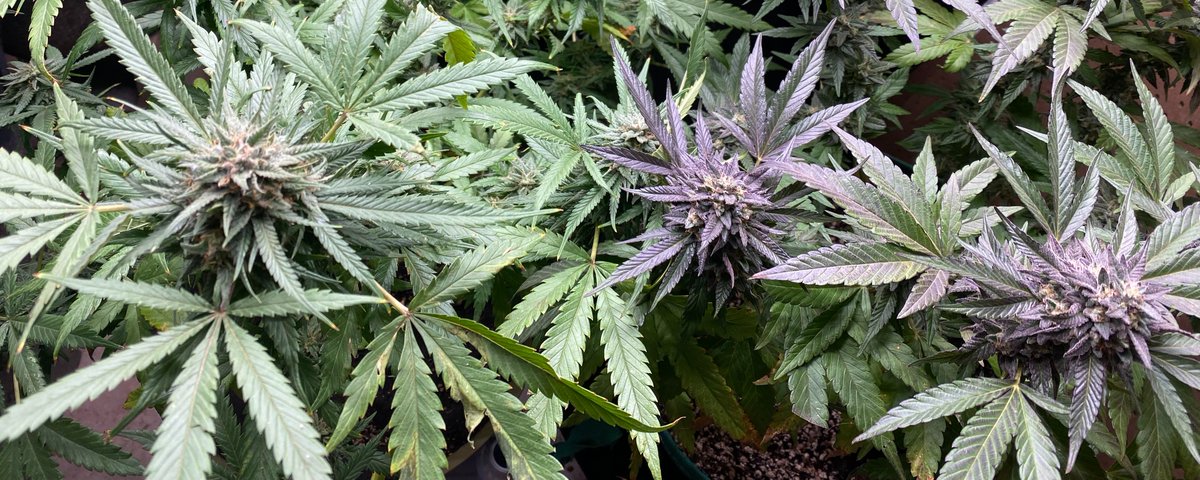
These are actually pretty solid for Florida.
"Nothing herein shall prohibit the legislature from providing for the home growing of marijuana by adults for their personal use and the reasonable regulation thereof,”
My only gripe is this line, "....taxation of sales of marijuana and appropriating such tax revenues to fund law enforcement, education, or as otherwise determined by the Legislature.” sans the education cut out, as long as its honest education and not a newer version of DARE.
Over taxation always leads to black market issues, and the cycle for law enforcement funding continues.
Otherwise, they're both pretty solid proposals.

Recreational Marijuana Would Be Legalized In Florida Under Two Newly Filed Ballot Measures: A third previously submitted cannabis legalization initiative is also pending.
marijuanamoment.net/recreati…
