

Channel for the Professional Neuroscience Community. Follow us for congress news, interviews & Alzheimer’s Disease info. Guideline: https://xitter.cf/t.co/bLVX1qgIEF
International
Joined June 2023
- Tweets252
- Following0
- Followers2K
- Likes0
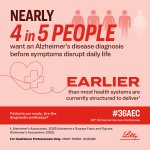


People want to know their Alzheimer's disease diagnosis earlier than most healthcare systems are structured to deliver.¹ How do you see care pathways adapting to meet this patient need? #TimeIsNowAD #36AEC

Delays in diagnosis of #AlzheimersDisease take time away. Time people could be planning, getting support, and preserving their quality of life.³ What are the current barriers to a timely diagnosis? #TimeIsNowAD #36AEC
The 36ᵗʰ Alzheimer Europe Conference #36AEC starts today! We look forward to exchanging perspectives on the future of #AlzheimersDisease care and evolving patient management. Which sessions are you most looking forward to? #TimeIsNowAD #AlzheimersAwareness

Prof. Mercè Boada highlights how Alzheimer’s disease care must adapt across stages, from mild cognitive impairment to moderate dementia. People caring for patients may need support too. How can care partners be better integrated into clinical care models?
Only 1 week until the 36ᵗʰ Alzheimer Europe Conference #36AEC! We are excited to join the community to discuss how we can advance #AlzheimersDisease diagnosis and care. What topics are you most interested in this year? #TimeIsNowAD #AlzheimersAwareness

What truly matters most to people living with Alzheimer's Disease? Research provides a deeper look into what patients prioritize.¹ How can these insights inform care, and how is timely diagnosis key to meeting patients’ needs?
Behind an Alzheimer's Disease diagnosis are loved ones striving to provide optimal care, but who is caring for them?
Timely intervention and connected care pathways can strengthen support for both patients and care partners.¹,⁴ What more can we do to help?

Prof. Mercè Boada discusses the evolving biology of Alzheimer’s disease and the crucial need for early intervention.¹,² Focusing on timely detection maximizes opportunities for proactive patient management.¹,² Which diagnostic tools do you think will have the greatest impact?
Which clinical insight from our World Alzheimer’s Month series resonated with you the most?
26%Timely diagnosis focus
23%Lifestyle adjustments
26%Patient-centric care
25%Clear communication
608 votes • Final resultsThis #WorldAlzMonth, Prof. Robert Perneczky highlights how people with #AlzheimersDisease are active partners, not passive recipients of care. Timely diagnosis can help empower them to take control of their future. How do you involve patients in proactive care? #TimeIsNowAD
"Who will be the witness of my life?" For #WorldAlzMonth, Dr. Caline el Jadam shares a patient’s question that reveals what is truly at stake in Alzheimer’s Disease. #TimeIsNowAD #AlzheimersAwareness
Too often, Alzheimer's disease diagnoses come after significant decline.¹ Recognizing changes earlier can help give people more time to plan and focus on quality of life. How can we work to close the detection gap? #TimeIsNowAD #AlzheimersAwareness #WorldAlzMonth

Assoc. Prof. Adina Stan shares how returning to a hobby helped one couple feel Alzheimer's disease no longer defined their lives. Timely assessment could offer patients more time to stay active and connected to what they love. How do you encourage patients to keep active? #TimeIsNowAD
In your opinion, which lifestyle change most supports quality of life in early Alzheimer's Disease?
21%Joint physical hobbies
15%Dietary adjustments
20%Social routines
44%Cognitive exercises
601 votes • Final resultsDuring this #WorldAlzMonth, Dr. Marco Toccaceli Blasi reminds us that behavioural changes in Alzheimer’s disease often express unmet needs rather than just symptoms to suppress. How do you approach non-cognitive care? #TimeIsNowAD #AlzheimerAwareness
Dementia-related stigma can take a toll on people living with the disease.¹,² It can keep many from seeking help and lead to symptoms being dismissed, delaying timely Alzheimer's disease diagnosis and access to support.¹,² How can we address stigma this #WorldAlzMonth?
Kicking off our #WorldAlzMonth series, Prof. Soeren Mattke introduces the need for timely diagnosis, sharing how managing a chronic disease is as much about adding life to years as adding years to life. How could timely assessment play a role in this? #TimeIsNowAD
Behind every #AlzheimersDisease diagnosis is a person, a story, an identity at risk. This #WorldAlzMonth, global experts explore how timely detection shifts care from reaction to anticipation to help preserve identity. Follow our five-part video series to find out more.

Which «AD Care in Transition» video reflects how you see AD care evolving?
30%Digital diagnostics
20%Biological diagnosis
25%Routine care advances
26%AD care development
264 votes • Final results