






midda🇮🇹 retweeted

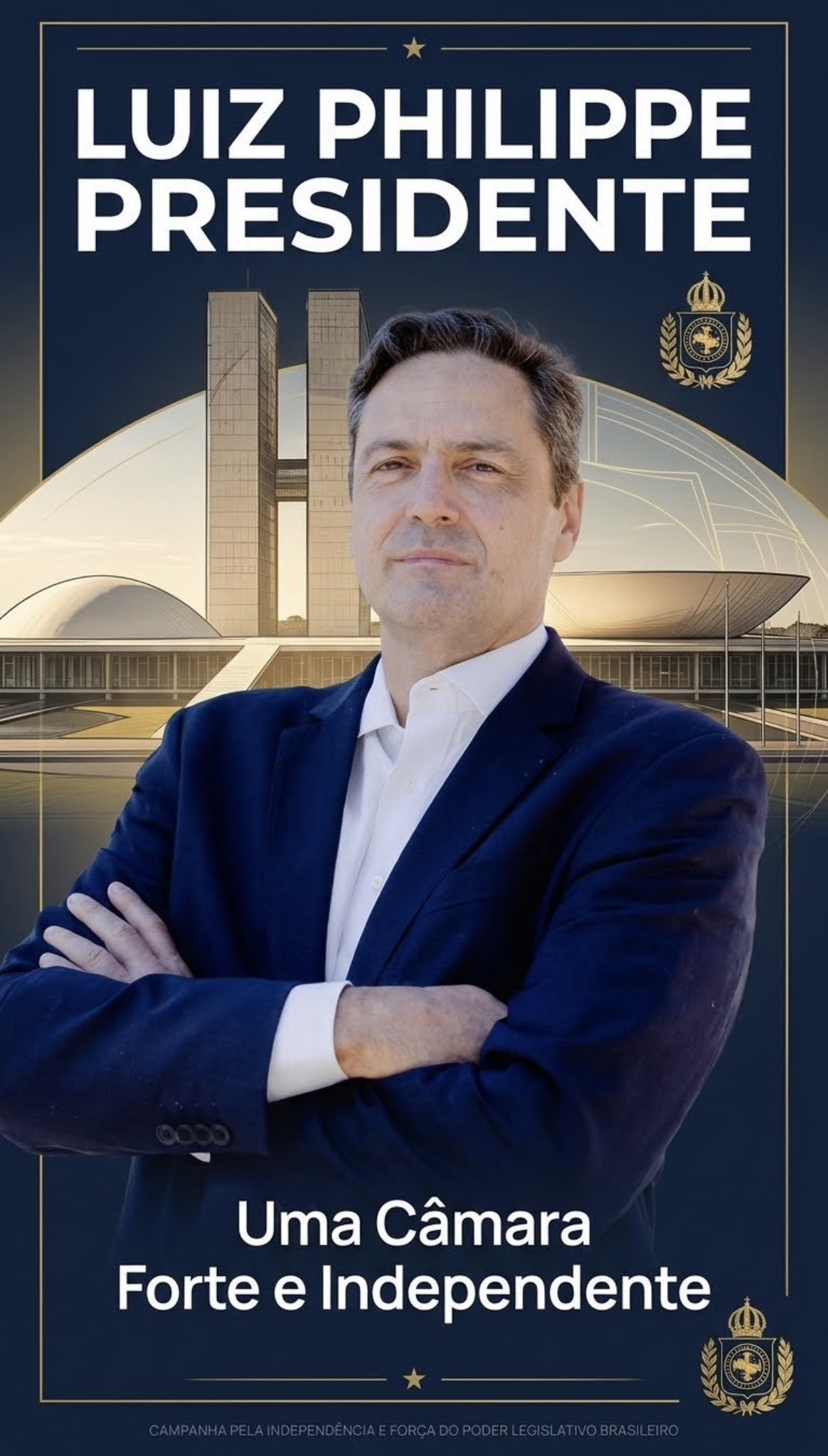
Devemos apoiar, INCANSAVELMENTE, o deputado federal LUIZ PHILIPPE DE ORLEANS E BRAGANÇA @lpbragancabr como o próximo presidente da Camara dos Deputados (2027 - 2029).
#ForaHugoMotta


midda🇮🇹 retweeted

SERÁ O FIM DO PARTIDO SE APOIAR MOTA E ALCOLUMBRE
🇧🇷🙋/ SERÁ O FIM DO POLITICO QUE APOIAR A CANDIDATURA DE HUGO MOTA E ALCOLUMBRE
Escreve aí: SERÁ O FIM.

midda🇮🇹 retweeted

Não existe outro Deputado mais preparado que @lpbragancabr – at Carapicuíba, Brasil


midda🇮🇹 retweeted

Eu apoio @rogeriosmarinho para presidente do Senado e @lpbragancabr para presidente da Câmara dos Deputados.
Pelo bem do Brasil! 💪🇧🇷

midda🇮🇹 retweeted
1/8 🚨 ATENÇÃO! AMANHÃ A CÂMARA PODE VOTAR UM PROJETO QUE MUDA A FORMA COMO VOCÊ USA A INTERNET.
É o PL 4.675/2025. E não estamos falando apenas de redes sociais.
Entenda o que está em jogo. 🧵👇


midda🇮🇹 retweeted

NÓS INFLUENCIADORES DE DIREITA NOS UNIMOS CONTRA ESSA AFRONTA DO PL DE PENSAR EM APOIAR O ALIADO DO LULA, HUGO MOTA! ELE É FAVORITO PRA VENCER, MAS SER LEAL AOS ELEITORES CONSERVADORES É MUITO MAIS IMPORTANTE DO QUE GANHAR PRESIDÊNCIA DE COMISSÕES QUE GERALMENTE NÃO MUDAM NADA!


midda🇮🇹 retweeted

Tem coisas que o Olavo falava e que eu não concordava, mas o véio estava certo.
Essa é uma delas:

midda🇮🇹 retweeted

Seems like I've gone viral again.
I just wish people would tag me when they post my videos.

midda🇮🇹 retweeted

I was not born an atheist. I was a Salafi, someone who had memorized the Quran, which means I did not come to this field from the outside, but from within. I know the texts as well as those who defend them, and perhaps better.
That is why, when I talk about Islam, I am not speaking as an outsider throwing stones from a distance, but as someone who lived inside the house and then discovered that the walls were not as solid as he had been told.
The problem is not just "extremism"
The prevailing narrative wants to convince us that the problem is "misinterpretation" or "extremism". But the question that arises is: why does the same text, throughout its long history, produce such consistently hardline readings? Why, in the body of Islamic jurisprudence, do we find no substantive criticism of the idea of "jihad" in its military sense, or of the punishment for apostasy, or of women's status, except in a few rare marginal notes?
The problem is not "who reads", but "what is read".
The freedom they fear
In 2022, after a televised debate, a religious body publicly called for me to be prosecuted. Then came the complaints accusing me of "contempt of religion", followed by imprisonment and a fine. And now, after all this, they ask: "Why are you disappearing?"
I disappear because the question itself has become a crime. Because simply saying "I don't believe" in public can mean a prison cell. This is not weakness on my part, but strength on the part of a system that fears one idea: that people might hear one another without an intermediary threatening punishment.
Why Islam specifically?
Not because I hate Muslims. Muslims are people like me, with good and bad people, religious and secular people among them. But in our region, Islam is not just a "religion" in the personal sense; it is a political, social, and legal system that demands obedience. When the law threatens you with imprisonment because you criticized a religious idea, that is not religious freedom, but religious control.
I support the separation of religion and state, not because I want to "fight God" (a ridiculous expression to begin with), but because I want faith to be a genuine choice, not something driven by fear of prison or social ostracism.
What do I actually want?
I do not want to "get people out of Islam", as some claim. That is the talk of people who are afraid to let people see for themselves. What I want is for questions to be allowed. For a young man at Al-Azhar to be able to ask: "Why is this the ruling?" without being expelled. For a woman to be able to say: "I don't find this convincing" without being afraid.
I do not possess "the truth". But I do have the right to search for it, and to say what I have arrived at. And anyone who wants to keep their faith should do so — provided that their faith comes from conviction, not fear.
I was not born an atheist. I was a Salafi, someone who had memorized the Quran, which means I did not come to this field from the outside, but from within. I know the texts as well as those who defend them, and perhaps better.


