

I Learn in public, Discover useful apps, Explore emerging tech, and Make complex products easier to understand. (NO PR)
Camden Town, London
Joined July 2023
- Tweets7K
- Following994
- Followers835
- Likes36.1K





Frank lino retweeted

Several addresses that had deposited to Firelight did not satisfy the Protocol's screening criteria. All the funds belonging to those addresses have been unstaked and returned to the deposit addresses/wallets that they originated from.
If you would still like to participate, you may attempt to stake using a different wallet address and/or different funds, which will be subject to the Protocol’s standard screening process and eligibility requirements.


here are some of the things i’ve created over the past year and months.
1. nitter.gq/Linodefi1/status/20244…
2. nitter.gq/Linodefi1/status/20190…
3. nitter.gq/Linodefi1/status/19690…
4. nitter.gq/Linodefi1/status/20404…
5. nitter.gq/Linodefi1/status/20313…
6. nitter.gq/Linodefi1/status/20299…
7. nitter.gq/Linodefi1/status/20364…

Helium network didn't suddenly pivot from IoT to 5G.
It expanded the stack.
From low-power LoRaWAN
→ to decentralized mobile coverage
→ to a unified, people-owned wireless layer.
Most people see tokens.
I see infrastructure evolution.
This infographic breaks down the full evolution of the stack
Full article below 👇

Frank lino retweeted
Helium network didn't suddenly pivot from IoT to 5G.
It expanded the stack.
From low-power LoRaWAN
→ to decentralized mobile coverage
→ to a unified, people-owned wireless layer.
Most people see tokens.
I see infrastructure evolution.
This infographic breaks down the full evolution of the stack
Full article below 👇
Frank lino retweeted
Crypto is becoming the infrastructure of our daily lives. So, I grabbed my Figma to map out exactly what that looks like.
I built this blueprint to show the engine behind Starknet x Bitcoin. It shows how native BTC gets compressed (940x faster via the S-Two prover!) into liquid strkBTC.
This is the plumbing that makes BTC scaling possible. (Math over trust me)
What do you guys think of the architectural layout?
Full Deep dive below..


Frank lino retweeted

wtf is privacysummit.xyz

The biggest privacy event in Singapore 🇸🇬
Join us on October 7 for Privacy Summit: live demos, discussions with industry leaders, and the tech powering the next generation of private apps.
See onchain privacy in action, and discover what’s next: luma.com/gbb4thfy

Frank lino retweeted

I know some of my tweets may come off like paranoia but honestly I am on high alert due to the acceleration of ai
It is a threat to jobs to people to human intelligence in its self. It’s a threat to humanity.
If you think oh who cares that’s the type of thinking that get you in trouble
It needs to be nipped now.
A few years ago, you could become reasonably good at design, writing, coding, editing, or any Digital skills put together a portfolio, and start pitching your works.
Now a client would think:
"Why should I pay someone $300–$1,000 for this when I can try an AI tool for $20?"
Even when the AI output isn't actually better, the client's perception of what the work should cost has changed, and that's the brutal reality we're facing right now.
You can spend years becoming excellent at something, while the market simultaneously makes the production of that thing cheaper.


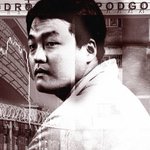
DON'T BE DO KWON:
- 1991: Born in Seoul, South Korea.
- 2015: Graduated from Stanford with a Computer Science degree.Later worked at Microsoft and Apple.
- 2016: Founded his first startup 'Anyfi', focused on improving internet connectivity.
- 2017: Anyfi didn't work out. Kwon left the company.
- 2018: He Co-founded Terraform Labs with Daniel Shin.
- 2020: Terraform launched UST, an algorithmic stablecoin designed to stay around $1.
- 2021–2022: Terra exploded in popularity. LUNA became one of crypto's biggest tokens.
- April 2022: LUNA hit $119+ ath
- May 2022: UST lost its $1 peg. LUNA collapsed, the Terra ecosystem imploded.
- 2022: Authorities in South Korea and the U.S. began looking for Kwon.
- March 2023: Kwon was arrested in Montenegro while traveling with fraudulent documents.
- December 2024: Extradited to the United States.
- August 2025: Pleaded guilty to federal fraud charges.
- December 2025: Sentenced to 15 years in prison.
- September 2026: Still serving his sentence in the United States.
Bro went from building one of crypto's biggest ecosystems to serving 15 years in jail.

Back in july 2023, two onchain investigators were paid about $5k for finding wallets controlled by Do kwon the CEO of Terrausd
how did it happen?
Crypto protocol Arkham created a marketplace where people could put up bounties asking others to identify who controlled certain wallets.
basically:
“here is a wallet address. figure out who owns it, and we’ll pay you if you’re right.”
two investigators eventually tracked down wallets that was linked to Do'kwon, and they got paid.
the blockchain gave them the movement.
all they had to do was follow it.
and this is the most interesting part that people still miss when they create their first crypto wallet.
your wallet doesn't have your name on it.
but your transactions are public onchain.
>who paid you.
>who you paid.
>what apps you used.
>where your money went next.
anyone with your address can trace all these movements I mentioned above.
it's like walking around a city wearing a mask.
people might not know your face.
but you're leaving footprints everywhere you go.
someone who really wants to track you can follow those footprints until they figure out who you are.
the same thing can happen with crypto.
so the real question you should be asking right now isn't:
“is my wallet anonymous?”
it's:
“how much of my financial life should a stranger be able to reconstruct just from knowing one address?”
that's the problem @STEALFxyz is Solving, with @Arcium behind the privacy layer.
Stealf gives you two separate wallets/accounts inside one app.
1. Private side: these wallet is for the money you don’t want people watching.
This means you keep your main assets in the shielded wallet.
"The goal is to make it harder for someone looking at your public wallet activity to see your entire financial position and history."
2. Spending side: these wallet is what you use day to day mainly as your spending account.
You can use it for normal payments and everyday financial activity.
these two wallets are designed not to connect onchain.
so if someone finds your spending wallet, they don't automatically get an onchain link to your private wallet
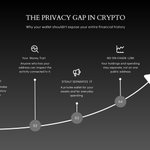
i mapped out how wallets can leak your identity and how Stealf approaches private spending in the infographic attached.
full deep dive below 👇


Before using a Web3 protocol, slow down: read the docs, look for clear risk disclosures, and understand each wallet request before approving it. If you can’t explain what you’re agreeing to, pause.


Frank lino retweeted

the bar for tokenomics is so much higher now
you need a working product, revenue (or at least a credible path to it) and a clear way for that value to flow back to holders
dont have that? good luck convincing anyone to hold your token through the unlocks
feels gud
