

Certified in holistic health, nutrition, integrative health & functional medicine. #LiveAncestral
Warrington, England
Joined April 2009
- Tweets6.9K
- Following851
- Followers15.3K
- Likes2.6K




Pinned Tweet
I do the opposite of almost everything the “experts” tell me.
I eat eggs every day.
I eat fatty red meat and bacon.
I cook with real butter.
I salt my food.
I eat liver.
I avoid seed oils.
I don’t buy low fat products.
I don’t count calories.
I eat until I’m full.
I don’t snack.
And yes, my LDL cholesterol is high.
Apparently that alone is supposed to terrify me.
Never mind that my triglycerides are low.
Or that my HDL is high.
And my blood sugar is better than when I followed the “balanced diet” advice.
One number goes up and suddenly I’m treated like a ticking time bomb.
That logic makes less sense to me the deeper I look into cholesterol.
LDL is not “bad cholesterol.”
Your body literally makes cholesterol on purpose.
It uses LDL to transport energy, hormones, fat soluble nutrients and repair materials around the body.
When you eat low carb and burn more fat for fuel, lipid transport changes. Of course it does.
But instead of asking why LDL changed, the entire conversation becomes fear.
Statin.
Low fat diet.
Eat the carbs.
Avoid the red meat.
Meanwhile people following the official advice are more overweight, more diabetic, more inflamed and more medicated than ever before.
That should raise more questions than my LDL number.
I genuinely think the cholesterol story people were given is one of the biggest health scares ever sold to the public.
Have you had your LDL and triglycerides checked lately?

You've been told you're "just hormonal."
You're starving an hour after breakfast. You can see the fat round your middle, but your body point-blank refuses to burn it.
You've eaten half a packet of biscuits standing at the counter and you still want chocolate. And you're snapping at the people you love, then lying awake feeling guilty about it.
That isn't a personality flaw. It's years of stress and beige carbs sending your blood sugar up and down like a fairground ride, with cortisol pouring petrol on it.
You gave everything to everyone else and kept nothing back for yourself. No proper meals, no rest, no quiet. Just tea, toast and putting everyone else first.
Here's the bit nobody tells you. If you don't sort it before menopause, menopause will sort it for you, and you won't like how.
So eat protein first.
Ditch the beige stuff. Rest without apologising. Put yourself at the top of the list for once.
No prescription needed. Just a woman finally feeding herself like she matters.
Is this you?

My nan lived to 103.
She cooked everything in beef dripping.
Her favourite meal was beef potatoes and peas with gravy.
Meat and 2 veg. Every day.
Bread without synthetic vitamins or seed oils and real butter.
She never counted a calorie, never owned a pair of trainers, and never once asked a doctor what she was allowed to eat.
Meanwhile I spent my 30s eating low-fat yoghurt and margarine, because a man in a suit on the telly said my heart depended on it.
She outlived three doctors who tied to tell her to eat margarine.
I trust the woman who made it to 103 more than the people selling me a “heart healthy” spread.
What did your nan swear by?

While everyone is watching the news and listening to the government tell them to panic buy water and bog roll, I’m here.
In Portugal test driving the venue for my ancestral escape retreat next year.


Nothing says "we care about your health" quite like a pink French Fancy.
It's October, which means Breast Cancer Awareness Month, which means the food industry has found the pink paint again.
This year Asda's Tickled Pink campaign has turned more than 220 products pink.
Among them:
Diet Coke
Kellogg's Corn Flakes
Mr Kipling French Fancies
Swizzels Squashies
Häagen-Dazs
Pizza Express Dough Balls
Monty Bojangles chocolate truffles
Over at another breast cancer charity, Candy Kittens sweets are doing their bit too, 10p a pack.
Brilliant. Buy the sugar, help the cancer charity, feel good about yourself.
Everyone wins.
Well, the shareholders do.
At least 10% of each sale goes to charity. So if you spend a tenner on pink fizzy drinks and sweets, a quid goes to the cause and the other nine go to the very companies selling you the stuff.
Meanwhile, nobody on the pack mentions insulin. Nobody mentions that high blood sugar and insulin resistance are linked to a higher risk of several cancers. Nobody suggests you check your fasting insulin or HbA1c while you're checking your chest.
Of course they don't. You can't sell Squashies with that message on the front.
Check your chest, absolutely. But maybe also check what's in your basket.
This is marketing that has nothing to do with medicine, wrapped in a pink bow.
Have you ever bought something just because it was pink in October? No judgement, the marketing is designed to get you.


Good morning, patients. Breakfast is served.
You're in hospital. Your body is trying to heal. It needs protein, fat and nutrients to repair itself.
So the NHS has lovingly put together the following:
Cornflakes
Rice Krispies
Weetabix
Ready Brek
White or wholemeal toast
Sunflower spread
Jam, marmalade or honey
A glass of orange or apple juice
I've read the 2026 patient menu at King's College Hospital in London. That's the list. Butter isn't even on it. Sunflower spread, though, front and centre.
Not an egg in sight. Not a rasher of bacon. No sausage at breakfast.
Just sugar, starch, seed oil and more sugar, washed down with a glass of juice.
At one Coventry hospital, bran flakes and a wholewheat biscuit cereal get a little heart next to them.
Healthy, apparently.
The same menu says they've added more vegan options "to reduce our carbon footprint." Lovely. The planet's fine, it's the patient in bed 4 I'm worried about.
Then we wonder why people don't recover. Why muscle wastes away on the ward. Why blood sugar goes up and down like a fairground ride.
If anyone ran a fasting insulin or HbA1c on patients after a week of this, I'd love to see the results.
You couldn't design a worse breakfast for healing if you tried. And it looks like they did try.
If you've been in hospital, what did they give you for breakfast?

The clocks went back last night. Dark by teatime from now until spring. This is the kind of tea that got British families through winters for generations.
A tin of sardines or pilchards. Under a pound. No app, no air fryer, no recipe card.
It was seen as cheap filler food. It's actually one of the most nourishing meals in your cupboard:
• Omega-3 fats, and oily fish is the best place to get them
• Vitamin D, right when the sun stops making it for us
• Soft bones you eat whole, so calcium without a glass of milk
• Protein and B12 for pennies a portion
How I'd have them:
• Warmed in a pan with a knob of real butter
• Pilchards in tomato sauce, mashed with a fork
• Two fried eggs on the side, yolks runny
• Black pepper and a squeeze of lemon
No toast needed. The fish and the eggs are the meal.
Small fish near the bottom of the food chain also carry far less mercury than the big ones.
Nobody needed a nutritionist to tell them this was good food. They just ate it and cleared the plate.
Did you grow up on sardines, pilchards or kippers?

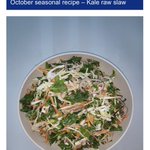
The NHS has published its seasonal recipe for hospital kitchens this October.
Kale raw slaw.
Cabbage. Kale. Carrots. Red onion. A splash of vinegar. And rapeseed oil to bring it all together.
Their own chef's tip proudly calls it "a great vegan salad".
Lovely.
So you're lying in a hospital bed. Maybe recovering from surgery. Maybe trying to heal a wound, rebuild muscle, get your strength back.
And what turns up?
Raw cabbage in seed oil.
Not a bit of beef. Not an egg. Not a knob of butter. Nothing your body could actually rebuild itself with.
Protein is what heals tissue. Older people lose muscle fast when they're stuck in bed. Everyone knows a poorly person needs feeding up.
Our grandparents knew it. Beef tea. Bone broth. A proper bit of stew.
But no. Rapeseed oil and kale.
Then they wonder why people come out weaker than they went in.
The NHS will spend billions on weight-loss jabs, and then serve the sick a factory oil dressing and call it nutrition.
You couldn't make it up.
If you were stuck in a hospital bed, what would you actually want brought to you?


Our mums were told butter would kill us. So every morning, for years, they scraped margarine on our toast because the experts said so.
They did it out of love. They did exactly what they were told.
Then the story quietly changed. The trans fats in the hard margarines of those years turned out to raise the risk of heart disease, the very thing they were sold to prevent. The World Health Organization now wants industrial trans fats gone from the food supply altogether. Recipes changed, new labels went on the tubs, and everyone moved on.
Nobody knocked on the door to say sorry. Nobody went back to the mums who followed the advice and said "we got that wrong".
Meanwhile your nan kept butter in a dish on the table and cooked in dripping. She was the one told she was wrong.
That's why I don't take diet advice on trust any more. Not because I think I know better than everyone. Because I remember the margarine.
If your mum switched to margarine in the 70s or 80s, share this. She deserves to know it wasn't her fault.
What went on your toast when you were growing up?
Link in the comments.
WHO fact sheet on trans fat:

Ladies, you are not "just getting older".
The exhaustion. The 3am wake-ups. The belly that appeared out of nowhere. The brain fog. The aching joints. The mood swings you don't recognise in yourself.
You go to the doctor and hear the same thing: "It's your age." "Your bloods are normal." "Have you tried antidepressants?"
No. Your body is changing, and nobody bothered to tell you how to feed it.
For 40 years women have been sold low-fat yoghurts, cereal bars, diet drinks and calorie counting. Then we're blamed when it stops working.
Midlife women need more protein, not less. More real fat, not less. No ultra-processed carbs. More sunlight, strength and sleep. And many need their hormones properly looked at, instead of being fobbed off.
None of this is complicated. It just doesn't sell anything.
You deserve to feel strong, clear and like yourself again, at 45, 55 or 75.
Which symptom were you told was "just your age"?
Share this with a woman who needs to hear it.

She's 52. She wakes at 3am every night with her heart racing.
Her waist has grown two sizes even though she eats less than ever. She's anxious for no reason, craves sugar by 4pm, and cries at adverts.
She goes to her GP.
"Your bloods are fine. It's your age. Have you tried eating less and moving more?"
She walks out with a leaflet and a prescription for antidepressants.
Nobody asked what she eats for breakfast. Nobody asked how her blood sugar behaves after a bowl of cereal and a banana. Nobody joined the dots.
"Normal" doesn't mean healthy. It just means you're not sick enough for them to act yet.
Millions of women are being sent home every year, told it's in their heads, when their bodies are telling them clearly that something has changed.
She isn't broken. She's been fed the wrong advice for 30 years.
Has this happened to you or someone you love?

The official health advice over the years…
- Eat less fat.
- Eat more grains.
- Swap butter for margarine.
- Actually, margarine's not great either.
- Eggs are bad.
- Eggs are fine now.
- Have a glass of fruit juice, it's one of your five a day.
- Actually, fruit juice is mostly sugar.
- Skip the salt.
- Don't skip breakfast.
And not once did anyone say, "sorry, we got that wrong." They just reprinted the leaflet.
Just do the opposite of what they say and you’ll be fine
You can spend five years at medical school and come out knowing almost nothing about food.
That isn't me hating doctors. Most of them will tell you the same thing themselves. Nutrition gets a tiny slice of the training, and nobody teaches you how to change what a patient eats in a ten-minute appointment.
So think about what happens when you walk in tired, overweight, with creeping blood sugar and rising blood pressure.
You get a test. You get a number. You get a tablet.
Metformin for the blood sugar. Something for the blood pressure. Maybe a statin "while we're at it". An antacid for the heartburn. Antidepressants because you're exhausted and low.
Five prescriptions. And not one question about the cereal, the toast, the low-fat yoghurt, the "healthy" snack bars and the pasta bake you're eating every single day.
Then you're told it's "just your age". Or "it runs in the family".
What nobody tells you is that many of those numbers are signs of the same underlying problem: insulin resistance. And the cheapest test for it, fasting insulin, is almost never run on the NHS.
You can't fix what nobody measures. And you can't medicate your way out of a diet that's making you ill.
Before your next appointment, write down everything you ate yesterday. Take it with you. Ask for:
• Fasting insulin
• HbA1c
• Triglycerides and HDL
• hs-CRP
Then ask the question your GP might not: "Could my food be causing this?"
Share this with someone who's on three tablets and has never once been asked what's on their plate.

Who helped shape the UK's Eatwell Guide?
When Public Health England refreshed the old eatwell plate, it set up an "external reference group" in 2014 to advise on its approach. The members are listed in PHE's own report, From Plate to Guide (2016), Appendix 3.
Alongside health bodies like the British Dietetic Association and the Royal College of Nursing, the members included:
• The Food and Drink Federation
• The British Retail Consortium
• The Association of Convenience Stores
• The Institute of Grocery Distribution
• The Agricultural and Horticultural Development Board
PHE says the group advised on methods and wasn't asked to approve the final picture. Fair enough. But its remit included advising on how the segment sizes were revised, and the segment sizes are the part that tells you how much of your plate should be starchy carbs.
The trade bodies for food manufacturers, supermarkets and convenience stores were in the room for that conversation.
So when the official guide tells you to build just over a third of your plate on bread, pasta, rice and potatoes, it's fair to ask who that plate really works for.
Read Appendix 3 yourself. Link in the comments 👇
Appendix 3 (From Plate to Guide, PHE 2016):
assets.publishing.service.go…
The Eatwell Guide itself:
gov.uk/government/publicatio…

Just eat meat 🥩

The $35 Ozempic Killer.
Introducing the Neo Muzzle.
The world's first wearable appetite suppression device.
$35. No prescription. No nausea. No muscle loss. No pancreatitis. No losing your face. No $1,500 monthly subscription to Novo Nordisk.
Available in Matte Black, Arctic White, and Neo Teal.
Programmable timer synced to your fasting window. It unlocks when it is time to eat. Double functions as a germ barrier. Flu season covered. One size fits all. Machine washable. Pairs with the Neo Root app for fasting tracking.
Does this sound absolutely insane?
Good.
Because this is EXACTLY what Ozempic does.
It chemically muzzles your hunger signals so your brain stops telling you to eat. You pay $1,500 a month for a pharmaceutical company to shut down the system your body has used for 200,000 years to keep you alive.
And when you stop taking it? The weight comes back. Because nothing changed. You never fixed what was broken. You just stopped eating.
Here is what is actually broken: the food.
Your great grandmother did not need a muzzle or a weekly injection. She ate eggs, meat, butter, vegetables, and fruit. She cooked with animal fat. She did not snack between meals because her insulin was not spiking every 90 minutes from seed oils and processed carbs.
The answer to overeating is not to stop eating.
The answer is to eat real food.
Your hunger normalizes. Your insulin drops. Your body remembers what it was built to do.
The Neo Muzzle is $35.
A lifetime of real food costs less than a year of Ozempic.
Stop muzzling your biology. Start feeding it.

They're telling us to be prepared. Prepared for what, exactly?
I have a freezer full of meat and a year's supply of collagen powder and coffee. Does that count?
Nobody will say. Just stock up. Start now. Keep going for the next five months. Get three days of food and water in. And whatever you do, keep worrying.
Funny, isn't it? No details. No explanation. Just a vague warning, left hanging in the air, so everyone's imagination can do the rest.
If there really was a specific threat, wouldn't they tell us what it was? Wouldn't there be a plan we could actually see?
The NHS? It can't get you a GP appointment this side of Christmas, but apparently it's ready for whatever "it" is.
So no visible plan, no explanation, no answers. Just fear.
A frightened public is a compliant public. People who are scared don't ask questions. They do as they're told, they accept whatever comes next, and they're grateful for any crumb of reassurance.
So here's a thought. If you want us prepared, tell us what for. And show us how you're preparing.
Do you think we're being prepared for something?
