

Supercritical Media Logging Trash Accelerator Collider TAC for solids Supercritical Turbine Fuel Cell STFC Uses Allam Fedvedt and Supercritical Electrolysis
Joined October 2023
- Tweets92.3K
- Following5.9K
- Followers1.5K
- Likes34K




Jason Lee Thompson retweeted

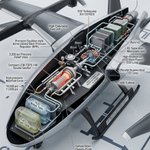
How did she get there?
A magic carpet?

Swedish activist Greta Thunberg arrived at COP31, her first time attending the climate summit since 2021. She said the impact of the talks could have 'life or death consequences on 'countless people' reut.rs/4BS6Eym
Jason Lee Thompson retweeted
I am a 23-year-old meteorologist.
Greta Thunberg and I are the same age.
Despite having solid credentials, climate alarmists routinely criticize me because I don’t subscribe to their religion of doom. They say, “Chris is a kid and therefore he isn’t qualified to discuss climate change or advise lawmakers and world leaders.”
Yet, climate panic merchants have no problem with Thunberg, a climate activist with zero college education or training in meteorology and climate dynamics, advising world leaders.
Climate alarmists only care about one’s credentials if you are against their creed.
Jason Lee Thompson retweeted
The United Nations is the world’s leading sponsor of climate propaganda.
Defund the UN.

"#ClimateAction without #ClimateScience is like a ship without a rudder. Robust evidence and comprehensive findings such as those provided by IPCC can steer effective climate action.” - IPCC Chair @JimSkeaIPCC at the Ceremonial opening of #COP31 today.
lnkd.in/eztGPehx

Jason Lee Thompson retweeted

Recently I have been travelling through northern Kurdistan, and have met with Kurdish people from all different kinds of backgrounds. They told countless stories of the current systematic oppression and repression they face – especially from the Turkish state –, as well as a history full of massacres.
Destruction and exploitation of the nature – such as unlawful forest cutdowns, sacrificing zones for mining companies and fires – is one of the many tools used as part of the continuous attacks against the Kurds. This often leads to devastation of local communities and biodiversity as well as forced displacement. Erasure of culture and identity, state violence, political prisoners, forced displacement, ecocides and disappearances are just some examples of the discrimination people face on an everyday basis, as well as being denied the right to self determination and freedom.
To build genuine bridges of solidarity in Turkey, autonomy and self-governance for Kurdish regions are essential. The Kurdish people deserve the right to shape their own lives, culture, and communities.
Turkey must clarify its stance on the Kurds and other minority groups by enshrining their rights in the constitution. The government continues to use “terrorism” as a pretext to silence its political opponents. Tens of thousands of politically active individuals remain imprisoned without fair trials. International organizations such as the ECHR, UN, and Amnesty have condemned this and call for their release.
For a sustainable peace and a just future, the Kurds’ right to freedom and autonomy must be respected and the violent attacks against Kurdistan must end.
No one is free until everyone is free. Bijî Kurdistan!
#bijikurdistan #freekurdistan #climatejusticenow


Jason Lee Thompson retweeted

A locked Mercedes EQS battery won't even let you repair it. One cell dies, the slave BMS latches the whole pack, throws P1C80 and kills the high voltage — and here's the trap: you can't just clear it, the fault is burned into the BMS memory and no diagnostic tool on this planet can wipe it. Dealer answer? New battery. Thirty grand. For one dead cell. That's exactly where we come in.
We cracked it the only way that actually works — read both slave BMS EEPROMs byte by byte, decode the stored faults, map the internal resistance of all 108 cells, and watch the failure replay itself: cell 12 in module I collapsing from 3.8V down to 1.5V under load while the BMS counted down to lockout. No scanner shows you that. We pull it straight out of the chip — and we even caught the next cells starting to go before they strand the car again.
And here's the clever bit nobody talks about — this pack is really two batteries in one. Two 400V strings running in parallel, each on its own BMS. When the right string went bad, the system did exactly what it was built to do: it cut the faulty right side off from its own control and kept the car running on the left string alone. The car literally drove on half its battery, limping along on the healthy left side while the dead right one sat isolated — until the left slowly drained itself down to empty. That's redundancy doing its job, and most people never even know it happened.
And get this straight — the lockout is wiped while EVERY byte of the original factory calibration stays untouched. No donor BMS. No swapped-in module dragging someone else's data into your pack. Nothing compromised. The battery keeps its own brain, its own calibration, its own identity — just without the fault. That's the difference between a real fix and a bodge.
Full breakdown, pictures and part numbers at the bottom of the article:
EQS V297 · slave BMS M95M02 + TC277T - Cells CATL
TOP A789 900 2801 · BOTTOM A789 900 9800
Faults cleared: P1C80 · P1540 · P0F18 · P0F64 · P0B63 · P0B64 · P0B67 · U357D
Software side is done — the lockout is beaten, calibration intact. Now we are waiting brand new modules from Poland to install into battery and finally run the car without any locking faults and with more range.
Sustainablity of EV in comparison with ICE is measured in repairability!
Full article: evclinic.eu/2026/11/10/the-m…


Jason Lee Thompson retweeted

Ford did not limit the 300 to pickup trucks and Broncos. It also offered the engine as a standalone stationary power unit, supplied as a long block with the appropriate bellhousing or power-take-off adapter and mounted on a steel skid. It could sit on a concrete pad without ever being connected to a transmission, driveshaft, or vehicle. The same inline-six that moved F-150s down the highway could power generators, water pumps, air compressors, welding machines, and hydraulic equipment on farms, ranches, oil fields, and construction sites. Its usefulness did not depend on being installed in a truck. The 300 made its torque at low engine speeds, operated comfortably under sustained loads, and had the mechanical simplicity that industrial operators valued. Whether it was pulling a trailer, turning an irrigation pump, or driving a generator, the basic job remained the same: produce dependable power without demanding much attention.
Agriculture is where much of the engine's reputation was earned, and the reason was primarily economic. A grain farmer in Kansas in the 1970s needed an engine that would start before sunrise on a freezing January morning, pull a loaded trailer twenty miles to the elevator, and then spend the afternoon running an irrigation pump or grain auger. The 300 could handle all three jobs without requiring a different engine for every piece of equipment. In an F-250, the available V8 alternatives included the FE-family 360 and 390, which offered more horsepower but generally consumed more fuel under comparable working conditions. Depending on the load and operating conditions, that difference could be substantial. On a farm where fuel costs directly affected the year's profit, choosing the six-cylinder was not an emotional rejection of V8 power. It was a business decision. Farmers bought the engine that completed the work while leaving more money in the fuel tank and the bank account.
Marine service tested the 300 in a different way. A truck engine typically operates at varying throttle openings, with road speed pushing air through the radiator and engine compartment. A marine engine can spend hours under heavy, nearly continuous load, often with little natural airflow around the machinery. An engine that overheats after thirty minutes near full throttle is no use to a commercial operator. Marine suppliers such as Crusader and Pleasurecraft adapted Ford sixes with marine cooling arrangements, exhaust manifolds, and corrosion protection suited to their installations. Depending on the application, that meant raw-water cooling or a closed cooling circuit with a heat exchanger. The 300's cast-iron block and cylinder head provided a substantial, durable structure for sustained operation, while its low-speed torque suited workboats that needed to turn propellers or auxiliary equipment for long periods. Commercial fishing vessels, towboats, and utility craft could put these engines to work for extended shifts, sometimes running around 3,000 RPM for much of the day. The gear-driven camshaft was another advantage: unlike a timing belt, it did not require periodic replacement, whether the engine was installed in a truck or working in a boat.
The 300's versatility came from a combination that was difficult to replace with a single alternative. Its inline-six layout was narrow enough for industrial skids and equipment installations where a wider V8 could create packaging problems. It produced more low-speed torque than many smaller four-cylinder gasoline engines, while remaining simpler and less expensive to operate than a comparable diesel installation.
Because it burned gasoline, it could work in places where diesel infrastructure was limited and ordinary fuel supplies were readily available. Its mechanical fuel and ignition systems were also familiar to mechanics who had no access to specialized diagnostic equipment. When Ford discontinued the 300 in 1996, the 4.6-liter Modular V8 became part of the next generation of Ford truck powertrains, but it did not provide a direct replacement for every industrial and marine application the inline-six had served. Some operators responded by buying used 300s from salvage yards and keeping spare engines in storage, because they understood the value of a power unit that could be repaired, installed, and trusted for years. The 300 had become more than a truck engine. It was a piece of working infrastructure, and when production ended, many of the people who depended on it discovered that dependable replacements were difficult to find.

Jason Lee Thompson retweeted

Swedish activist Greta Thunberg arrived at COP31, her first time attending the climate summit since 2021. She said the impact of the talks could have 'life or death consequences on 'countless people' reut.rs/4BS6Eym

Jason Lee Thompson retweeted

It's Energy Day at the UN Climate Summit in Turkey #COP31. Hold on to your wallet
The host has promised net zero. What would net zero by 2050 buy?
Cost to Turkey: ₺83.8 trillion ($1.8 trillion)
The world gets 0.0151°C less warming in 2100
NetZeroCostBenefit.com/Turke…
Jason Lee Thompson retweeted
You are a liar.
Fossil fuels are not an economic security threat. They make the world go around.
Case in point, the more carbon-intensive that a nation’s economy is, the higher the GDP per capita.
Solar panels and wind turbines may be able to generate enough electricity to power homes, but good luck powering an industrialized economy on them.
Oil price volatility is a problem, but if we transitioned to EVs, we’d fight wars over lithium instead.


Fossil fuels are not only driving the climate crisis. Dependence on them carries a steep economic & security price, as the crisis in the Middle East has shown.
An accelerated transition away from fossil fuels is fundamental to building economies that are cleaner, more secure & less exposed to shocks.
At #COP31 we must move from discussing the transition to organizing it, financing it & delivering it.
Jason Lee Thompson retweeted

Why do nations target the engineers behind their rivals' most advanced technologies?
- Under Hitler's wartime regime, Nazi Germany developed the V-2, the world's first operational long-range liquid-fuel ballistic missile. Its engine consumed 130 kilograms of propellant every second.
- Turbopumps forced fuel and liquid oxygen into a combustion chamber reaching 2,700°C. Extreme pressures, violent vibrations and thermal stresses had to be controlled simultaneously.
- Modern high-performance engines are even more demanding. Cryogenic propellants, precision valves, specialised alloys and intricate cooling systems must work together. One critical defect can destroy an entire rocket.
- Building an engine is only half the challenge. Perfecting its efficiency, reducing weight and achieving consistent reliability demand years of experimentation. Every failed test consumes money, materials and engineering time.
- America's Saturn V F-1 engine illustrates this. Despite understanding the physics, engineers conducted roughly 3,200 full scale tests to overcome destructive combustion instability.
- When Nazi Germany collapsed in 1945, the Americans shipped components for roughly 100 V-2 rockets home and recruited German engineers. The Soviets also acquired machinery, technical documentation and specialists. France recruited German rocket engineers too.
- The knowledge spread further. In the 1950s, the Soviets supplied China with missiles, rocket engine technology, blueprints and technical experts. India later benefited from French liquid engine technology. Both subsequently developed advanced capabilities of their own.
- This is why engineers and scientists become prime targets for industrial espionage. Chinese intelligence officer Yanjun Xu targeted aerospace specialists through paid technical presentations, seeking proprietary engineering knowledge from companies including GE Aviation.
- The real prize is often knowledge that drawings cannot convey failed experiments, manufacturing processes and the engineering judgment accumulated over decades. Acquiring it can shorten an otherwise enormously expensive development journey.
A century after the first liquid-fuel rocket, only 12 countries have ever demonstrated independent orbital-launch capability.
Understanding the physics is one thing. Mastering the technology, reproducing it reliably and developing what comes next is another.
That hard won human expertise is precisely what makes the people behind strategic technologies so valuable.


Jason Lee Thompson retweeted

Some of the vehicles that come in here are not worth the time, money, or effort needed for repairs. In my opinion.


Jason Lee Thompson retweeted

how is this a real company lmao
this German startup sells cyborg cockroach spies to NATO militaries
it's called SWARM Biotactics, they've raised €13M, and their website literally says it "makes living organisms programmable"
militaries want them because nobody looks twice at a cockroach
for example, a drone can't sneak into a building where enemy soldiers are hiding
but a cockroach can squeeze through almost anything
so the company straps a tiny backpack onto a live Madagascar hissing cockroach:
> the backpack can carry a camera or microphone so the bug can see and hear for you
> electrodes on its antennae let you steer it in the direction you want
> AI lets a whole group move as a swarm so nobody has to individually drive each one
the same setup could also find survivors under rubble after an earthquake
my favorite part is the CEO says the roaches aren't carrying explosives for now, but admits that could change
i have no words


Jason Lee Thompson retweeted

Global carbon dioxide (CO2) emissions from fossil fuels are projected to fall by around 0.4% in 2026. This is based on the latest preliminary estimates from the Global Carbon Project, published today.
This is a small reduction within an overall upward trend. Emissions have grown more slowly over the past decade than in previous decades, but they have not yet peaked or begun a consistent decline.
This fall mostly came from a reduction in oil consumption and a small decline in gas. Coal use increased slightly.
Among the major emitters, emissions are projected to fall in China, the United States, the European Union, and Japan. But they’re expected to increase by around 4% in India.
Why did emissions fall? The authors cite three key factors.
The deployment of clean energy (particularly solar and wind) displaced some fossil fuel use that would have otherwise been required to meet growing energy demand. Electric vehicles also reduced oil demand. Finally, the war in Iran and its impact on oil prices led to reduced demand, which has inadvertently reduced emissions.
Emissions from land-use change are more uncertain but are projected to increase this year due to peat fires and forest degradation in Southeast Asia.
(written by @_HannahRitchie and Pablo Rosado)

Jason Lee Thompson retweeted

The E.U. is going to waste €4.3 trillion by 2050 on the net zero scam to no avail on climate. None.
Imagine what could be done with that money.
The opportunity cost is huge.
It's criminal. They'll have to be held accountable.

Politicians promise net zero by 2050. But what will it cost you, and how much will it cut global warming?
Take the EU: €4.3 trillion ($5.0 trillion), for just 0.0268°C less warming in 2100
Today I launch NetZeroCostBenefit.com: numbers for almost 200 countries. Find yours
Jason Lee Thompson retweeted

Electrification, implementation and tomorrow’s launch of the #WeNeedToTalk campaign to put climate change back on the agenda, not just during COPs, but every single day. That’s what I’m looking for from this year’s #COP31!
Jason Lee Thompson retweeted
Cathy, you claim to be concerned about climate change.
You think that global warming is entirely because of mankind’s CO₂ emissions.
Given that’s the case, how did you travel to Turkey for COP31? Surely you didn’t fly by air? Surely you didn’t emit CO₂, right?

Electrification, implementation and tomorrow’s launch of the #WeNeedToTalk campaign to put climate change back on the agenda, not just during COPs, but every single day. That’s what I’m looking for from this year’s #COP31!