
CEO @EverMind https://nitter.gq/t.co/s0pvFmiABl
Joined December 2025
- Tweets69
- Following64
- Followers778
- Likes246






Yafeng Deng retweeted

Agent Memory: An AI Companion That Reaches Out First
You mention your coffee preference once. In a later conversation, she remembers.
OpenHer shows how memory can make an AI companion feel more familiar over time.
In this demo, Iris remembers “black, no sugar” and sends a morning message without waiting for you to start the conversation.
EverOS provides the long-term memory behind those remembered details.
OpenHer combines that history with its own personality and proactive messaging systems, so conversations can develop beyond the first introduction.
OpenHer is one example of what you can build with EverOS. Bring persistent memory to your own application with EverOS Cloud.
EverOS Pro users get 3X usage for 6 months.
everos.evermind.ai
Agreed, LoCoMo is short by today's standards. That's why we also run BEAM-1M, million-token conversations: 69.42% on our next release (internal).
好问题。EverOS 的记忆带时间:偏好变了,新的成为当前状态,旧的留在时间线里,但不再出现在默认检索中。开源版的 Reflection 会在后台定期合并碎片、处理冲突,被取代的记忆只归档、不删除,每次都有报告可查。云端版的 Reflection 也在路上。
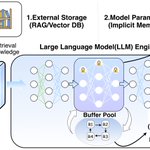
Every AI product will need memory. Here's EverOS.
Next release (internal): LoCoMo 94.74% · AMA 80.89% · BEAM-1M 69.42% · SWE-ContextBench 34.34%
Current release: LongMemEval 94.00%
Built around two ideas:
Self-evolving. Every task becomes experience, experience becomes skills, and skills keep improving with use. Your agent gets better without retraining a model or rewriting a prompt.
Universal. One memory layer for any agent, any model, any app. Each agent gets exactly the context its task needs, in open source or in the cloud, on the same API.
Full write-up 👇
This quoted post is unavailable.
Thanks for reading the repo this closely. You're right.
LongMemEval 94.00 is the published figure for the current release, carried over and not re-measured. LoCoMo 94.74 comes from an internal run on our next release, which will ship soon. Putting both under one "latest internal" label made them look like the same run, and they aren't.
When the new release ships, we'll re-run LongMemEval on it and add the full row to benchmarks/README.md with its run_spec.json, so every number can be checked against a config.
Agreed — similarity is not applicability. A learned procedure should ship with its prerequisites and failure conditions attached, the way a function ships with its preconditions. Otherwise memory becomes a source of confident errors.
EverOS Cloud treats persistent memory as a first-class infrastructure layer — agents finally compound across sessions instead of starting from scratch. This is the missing primitive for long-term agents that genuinely improve with use.
nitter.gq/evermind/status/211218…

Meet EverOS Cloud. 💛
Your agent shouldn’t have to start from scratch every time a conversation ends.
The preferences a user shared. The decisions made during a project. The approach that worked on a previous task. That context should be available when it matters again.
EverOS Cloud gives your agents persistent memory through an API:
• Remember users and retrieve relevant context across sessions
• Turn task experience into Cases and reusable Skill memories
• Bring conversations, images, and documents into your memory workflow
You build the agent experience. We handle the memory infrastructure, so you can spend less time maintaining the stack and more time making your product useful.
Subscribe to EverOS Cloud Pro and get 3× the standard Pro usage allowance for 6 months.
Start here:
everos.evermind.ai
Yafeng Deng retweeted
Meet EverOS Cloud. 💛
Your agent shouldn’t have to start from scratch every time a conversation ends.
The preferences a user shared. The decisions made during a project. The approach that worked on a previous task. That context should be available when it matters again.
EverOS Cloud gives your agents persistent memory through an API:
• Remember users and retrieve relevant context across sessions
• Turn task experience into Cases and reusable Skill memories
• Bring conversations, images, and documents into your memory workflow
You build the agent experience. We handle the memory infrastructure, so you can spend less time maintaining the stack and more time making your product useful.
Subscribe to EverOS Cloud Pro and get 3× the standard Pro usage allowance for 6 months.
Start here:
everos.evermind.ai

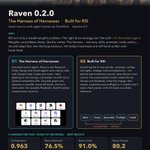
Raven is the #1 paper of the month on @huggingface for September 🐦⬛
Thank you all. The Harness of Harnesses, built for RSI, and fully open source 👇

Agreed. Faster individuals don’t add up to a faster organization — the bottleneck just moves to handoffs, alignment and decisions. AI-native teams will organize around goals and tasks, not roles and tools: AI keeps the work moving, people set direction and make the calls.

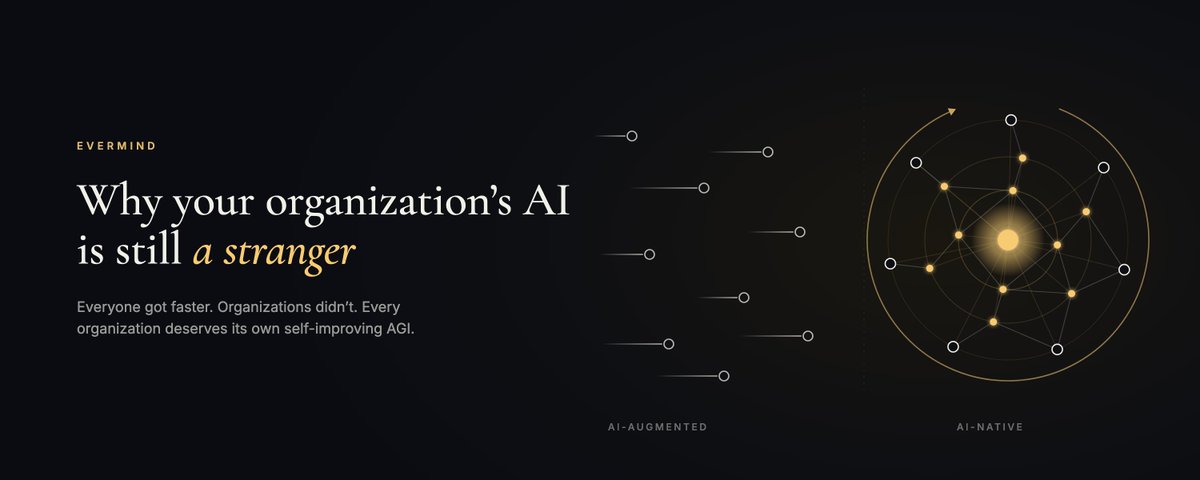
Everyone got faster with AI. Organizations didn't.
Because adding AI to an old org chart just makes each person faster. The way work moves, waits and gets aligned stays the same.
That's AI-augmented, not AI-native.
An AI-native org works differently:
Every piece of work points to one goal.
Humans and AI work side by side, and AI drives by default.
The system gets better on its own.
A model that knows nothing about your organization is a brilliant stranger.
Every organization deserves its own self-improving AGI.
Live web search at prediction time, and every forecast is locked in before the event resolves. So the facts are as fresh as the web that day, and the outcome itself can't leak in.
🛠️ Code: github.com/EverMind-AI/Raven
🌐 Try Raven: raven.evermind.ai
Onyx (Nevar-B) and Basalt (Nevar-A) are our Raven-based submissions.
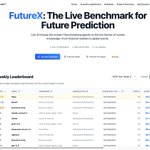
📊 Leaderboard: futurex.live

Raven-built multi-agent forecasting systems took #1 and #2 on the FutureX weekly leaderboard 🐦⬛
Forecasting the future is one of the most valuable things intelligence can do. Human experts do it by pulling many sources, cross-checking facts, weighing evidence, and only then making a call.
We built that workflow on Raven, with Raven-Research at the core:
• Gather: agents search the web for each question
• Analyze: they cross-verify sources and draft a forecast
• Verify: a verifier agent approves it before submission
FutureX-Online, Sep Week 4:
🥇 Onyx, 53.06: all sub-agents run on GPT-5.6-Sol
🥈 Basalt, 52.73: DeepSeek V4-Pro, DeepSeek Flash, GPT-5.6-Sol and Claude Fable 5.1 working together
One framework, two directions: many agents on a single model, or many models in one team. That's the Harness of Harnesses in practice.
