









Can optimising LDL-C fully offset elevated Lp(a)-related CV risk? New Japanese data on @LpaForum show 5-year major CV event rates remained 5x higher with Lp(a) ≥50 vs <30 mg/dL, despite good LDL-C control.
🔗 lpaforum.org/japanese-study-…
#Lpa #LDLC #Cardiology

New research links elevated Lp(a) with VTE, including DVT and PE, even after adjustment for established thrombotic risk factors. What could this mean for Lp(a)-lowering therapy?
Read more on @LpaForum >> lpaforum.org/elevated-lpa-li…
#Lpa #VTE #LpALowering @MayoClinic #cardiology

Reassuring data: Low Lp(a) levels were not linked to increased serious bleeding risk in ODYSSEY OUTCOMES. @LpaForum summarises findings relevant to emerging Lp(a)-lowering therapies.
Read more: lpaforum.org/low-lpa-level-n…
#Lpa #LpATesting #PCSK9

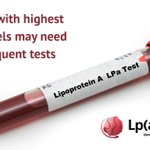
Is one Lp(a) test enough? New REDUCE-IT data add to the case for repeat testing in some patients, particularly those with higher baseline #Lpa and specific clinical characteristics. Read more >> lpaforum.org/patients-with-h…
#LpaTesting #Lipidology #Cardiology @DLBHATTMD @mmillermd1

Catch up with September’s Lp(a) research news on @LpaForum: new data on repeat testing, ASCVD risk into very old age, low Lp(a) safety and links between elevated Lp(a) and VTE.
Read more: lpaforum.org/category/news/
#Lpa #Lipidology #Cardiology #ASCVD #VTE

Catch up with September’s Lp(a) research news on @Lpa Forum: new data on repeat testing, ASCVD risk into very old age, low Lp(a) safety and links between elevated Lp(a) and VTE.
Read more: lpaforum.org/category/news/
#Lpa #Lipidology #Cardiology #ASCVD #VTE

Catch up with September’s Lp(a) research news on @LpaForum: new data on repeat testing, ASCVD risk into very old age, low Lp(a) safety and links between elevated Lp(a) and VTE.
Read more: lpaforum.org/category/news/
#Lpa #Lipidology #Cardiology #ASCVD #VTE

Data from Japan presented at #ESCCongress2026 suggest elevated #Lpa is associated with severe coronary plaque calcification—potentially informing risk stratification and interventional planning in #CoronaryArteryDisease.
Read more: lpaforum.org/congress-report…
#Lipidology #Cardiology

Could “one-and-done” #Lp(a) testing miss clinically relevant variability #ESCCongress2026 data from ODYSSEY OUTCOMES suggest repeated measurement may be warranted in some high-risk patients. Read more on @LpaForum >> lpaforum.org/congress-report…
#Lipidology #Cardiology @gabrielsteg

~25% of patients undergoing PCI had elevated #Lpa, identifying a group at increased cardiovascular risk. #ESCCongress2026 data support systematic Lp(a) testing after PCI to improve risk stratification and inform secondary prevention. Read more: lpaforum.org/congress-report…
#Cardiology

Post hoc ALPACA data suggest #lepodisiran produces dose-dependent reductions in OxPL associated with #Lpa. At #ESCCongress2026 Steven Nissen described findings as evidence of target engagement and a possible mechanism of benefit.
lpaforum.org/congress-report…
@ClevelandClinic @escardio

At #ESCCongress2026, there was a wealth of data on the importance of #Lpa as a risk factor for coronary heart disease and the impact of novel Lp(a) lowering agents, the need for systematic testing and growing understanding of patient groups.
Read more … lpaforum.org/congress-report…

The whole Lp(a) Back to Basics series is now FREE to download! lpaforum.org/back-to-basics-…
From who’s at risk and how to test, to #ASCVD risk assessment in primary care—plus expert video commentary. Essential reading for anyone working in #lipidology & CV prevention. #Lpa #Cardiology

If Lp(a) testing isn't available, can age, sex and family history identify patients with elevated #Lpa? New research examines whether self-reported data can guide testing and lipid-lowering decisions. Read more: lpaforum.org/self-reported-d…
#CardioTwitter @goteborgsuni @EliasBjornson

Raised Lp(a) is a well-established CV risk factor, but what about venous thromboembolism (#VTE)? New research suggests hormone status may influence the relationship, with differences seen between pre-/post-menopausal women and men. More on @LpaForum > lpaforum.org/possible-hormon…
#Lpa

Research suggests the commonly used mg/dL to nmol/L conversion factor may be less accurate than a formula derived from the #CopenhagenGeneralPopulationStudy.
Read more on @LpaForum >> lpaforum.org/conversion-meth…
#LpaTests #Lipidology #lipidTwitter @ClevelandClinic

Could #Lpa improve cardiovascular risk prediction in #primarycare? Prof 𝗛𝗲𝗻𝗿𝘆 𝗚𝗶𝗻𝘀𝗯𝗲𝗿𝗴 explains how Lp(a) testing can enhance risk scores & guide more intensive prevention strategies.
Learn more: lpaforum.org/back-to-basics-…
#Cardiology #lipids
@Columbia @EliLillyandCo

Elevated Lp(a) is linked to MI, stroke, PAD, heart failure and aortic valve stenosis—but how robust is the evidence? Explore our latest downloadable slide deck and expert video from Prof Pia R. Kamstrup: lpaforum.org/back-to-basics-…
#Lpa #Cardiology #ASCVD #cardioTwitter

Will Lp(a)-lowering therapies be #costeffective for reducing #CVD risk? Preliminary data at #EAS2026 suggest they could be cost-effective for secondary prevention if priced similarly to other siRNA therapies.
Read more on @LpaForum >> lpaforum.org/congress-report…
#cardioTwitter #Lpa

Research presented at #EASCongress2026 suggests that adding Lp(a) levels to a #PolygenicRiskScore may improve myocardial infarction risk assessment when used alongside traditional risk factors.
Find out more: lpaforum.org/congress-report…
#elevatedLpa #Lpa #MI #CVrisk
@society_eas
