




Mr.Lunc🫡 retweeted

I'm sorry to say I voted "NO" on prop #12192
- Marketing strategy is "the community can market it if they want."
- Tone deaf to the likelihood of world Govs negative campaigns against anything non-compliant.
- Overwhelming bad optics of the chain known for the worst crypto crash this decade, if not ever, and largely responsible for the U.S. push for stablecoin regs, launching a stable that "skirts regulations".
- Potential to make the reputation of #TerraClassic worst than it is.
- Illogical premise that the TC community will use this protocol and make so much money doing so that it will attract users from the greater crypto space when there are multiple other options.
- Proposed 1.3 yrs working at 20% APR yield from the start and maintaining that level the whole time to pay back the $264,000 (Highly speculative).
- Scare tactic narrative that Terra Classic will be dead in 1-3 years if USTD is not shipped and nothing else being built on chain currently will stop it.
- Threat of bringing USTD elsewhere if Terra Classic rejects it, demonstrating a commitment to the project, not the chain. (I'll take my ball and go home.)
- The weak narrative that "well we've got to do something" so let's gamble just under 20% of the community pool reserves.
If we indeed have 1 year before TC dies, USTD wouldn't have time to do anything. If we have 2 or 3ish, I'd rather spend the CP money on something proven, less speculative, and with less potential to stick a fork in the chain's rep once and for all. This is not the way IMHO.

Mr.Lunc🫡 retweeted

After discussion in today’s X Space and careful deliberation, we voted NO on Terra Classic Proposal 12192 (USTD).
Stablecoins outside major regs, run on human multisigs & centralized collateral, pose heavy regulatory risk. Too much for L1 to shoulder — better left to L2s that assume their own liability + reward.
#TerraClassic #LUNC #Hexxagon

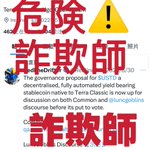
Two years ago, the bitch @RedlineDrifter did communicate with the CEX, but unfortunately, according to the CEX staff’s recollection, his behavior was just like that of a bitch!
#LUNC
#USTC
#OKX
Mr.Lunc🫡 retweeted

StrathCole on Proposal #12192 ( $USTD):
💡 Solid idea, could boost income & cut $LUNC / $USTC supply.
⚠️ Risks with chain ownership (bridging, semi-centralization, legal).
➡️ Suggests L2 launch instead of Community Pool funding.
#LUNC #USTC #TerraClassic #Stablecoins

Dear #LUNCcommunity,
coming to a conclusion on proposal #12192 (@RedlineDrifter USTD) has not been an easy task.
The idea of the yield-bearing stable as a native token and protocol on the chain is appealing, the potential income for the chain is promising. But as well as this is a chance, it is a risk. A failure of a protocol launched on-chain has different implications than a failure of a protocol launched by the chain.
With paying for and thus owning a protocol, the chain inherits both the potentials and the risks. If adopted, the potential could be massive in terms of income for the chain and reducing $LUNC / $USTC supply, but major issues and/or failures would fall back on the chain as well.
Given the decentralized nature, and that the chain is driven by all its contributors (including projects built on chain) during the past years, this includes potential effects on those projects in case of a negative event.
I think the idea itself seems solid and promising per se. It could be attracting niche users (and while niche sounds like only a few, the “pool” is big). It could bring badly needed income to the chain. Yet after all things considered, all discussions with RedlineDrifter of the past days reflected, I think the chain itself should not fund it from the Community Pool.
Although the project itself is drafted as decentralized as it can be (given the current technology available), it has some inherent semi-centralized components and areas of operation that are not easy to mitigate or “keep under control”.
First, the bridging of funds is a concern. The main application would reside on Terra Classic, but most of the collateral would be off-chain (otherwise the yield-fetching would not work). This means that not all users could withdraw their funds, or, if a lot of liquidity would be kept on chain, the yield would be significantly lower (less percentage in the liquidity pools earning fees). In case of any sort of bridging issues (on either side), the funds could be stuck for a short period of time, which could be a marketing disaster.
Second, the semi-centralized components need multisig-wallets to work as at the current state they cannot be controlled by #TerraClassic governance directly (Akash does not support Interchain Accounts). The past has shown that it can be a lengthy and controversial process to find and approve the necessary people for that (although it also can be quick, see liquidity provision of USDC). These parts of the protocol are fundamental to its inner workings, though. They will need regular attention of the multisig-holders.
Third, although the executing company’s legal department judges the protocol “fine” in terms of regulations, we need to keep in mind that a different legal judgement would not only affect the protocol itself, in case that happened. It would affect the chain itself, too. While the protocol would be decentralized, Circle (CCTP) and Teather are not.
Fourth, I am not sure chain governance would be capable of running this kind of business or make the best decisions for the interest of the protocol as there might be several conflicts of priorities or interest. The "reaction speed" is also a concern in this context.
Point five is a question of philosophy. While a chain-owned protocol could benefit the chain directly, it also could compete with third-party protocols and potentially lower the attractiveness for builders, if the chain prefers its own products. This (the chain going for MEV) could go against the free-for-all idea where Terra Classic is just the “infrastructure”.
There are some more, rather minor items that would be too much for this text to add here.
Just to repeat, I find the idea and concept appealing, and I would very likely invest in a credible project delivered on Terra Classic implementing just that, but I am hesitant to give a “consent” to the chain itself funding it because of the broader implications.
And to be clear, it would not matter if it would be done on L1 or L2, as soon as the CP/Chain pays for it, it is owned and as such deeply tied to the chain itself. This in turn means it would have implications on all projects building on this chain.
This conclusion has nothing to do with the individuals behind the concept/proposal, nor has it to do with the amount of funds that would be paid from the CP or the concept itself. Contrary, I’d love to see it become a reality as a non-chain-owned L2 project on this chain, maybe through a “governance token” launch, where the funding is paid to the development company, and where the gov token holders gain part of the fees later and govern the protocol as it is intended in the whitepaper (just that it’s chain governance there). I say that knowing this would have some downsides (no chain-native token, no MM utilization, …) and would lead to less income for the chain than it being chain-owned. Still it could have positive side-effects on user inflow, liquidity and PR even in this case.
Cheers.
Mr.Lunc🫡 retweeted

Let me just remind everyone what's at stake with this catastrophic $USTD prop that's about to kill any chance of a LUNC recovery (if passed).
Vote "No" or "No with Veto" to preserve the future of $LUNC and $USTC. I chose the second option, "No With Veto" was the correct decision!!!
Stay vigilant people!!! 🔥🔥🔥
#LUNC #USTC #LUNCcommunity #TerraClassic #LunaClassic #Crypto #altcoins #DeFi $LUNC $LUNA $USTC #LUNA #Terra #Blockchain #Cryptocurrency #CryptoNews #Altcoin #CryptoCommunity #DeFiProjects #BlockchainTechnology #CryptoTrading #CryptoInvesting #TerraLuna
@cz_binance @_RichardTeng @heyibinance @davidprincay @TigranGambaryan @LeBinanceFR @noahperlman @RachelConlan @BinanceAcademy @BinanceAfrica @BinanceAngels @BinanceArabic @BinanceArg @Binance_AUS @BinanceBCF @BinanceBrasil @BinanceES @BinanceFanToken @BinanceFutures @BinanceHelpDesk @BinanceItalian @BinanceJE @BinanceResearch @binanceafrique @binance_vietnam @Web3WithBinance @BinanceLabs @BinanceMoonbixv

I won’t add much more on USTD. I’ve been clear on why I oppose it, and I’ll be voting "NO With Veto".
Not because I’m against any one individual (I respect all efforts), but because this represents an existential threat for Luna Classic (LUNC) if placed at Layer 1.
My key objections:
- Embeds fragility at Layer 1, exposing the entire chain to contagion.
- It’s not a “stablecoin”... at best it’s a "yield-bearing token" and should be treated as such.
- Rehypothecation “three-body problem”: USTD inherits risk from both USDC and USDT, stacking correlation risk instead of diversifying it.
- Relies on bridges & external stablecoins, some of the largest failure points in crypto.
- It’s negatively asymmetric: capped upside, potential for catastrophic downside.
As I’ve said, if this were proposed as a Layer 2 "yield-bearing token" experiment, siloed away from the core, I’d be more open. But at the heart of the chain, it’s unacceptable.
Below are links to my detailed posts for anyone who wants the full reasoning. I’m also happy to discuss directly with anyone who wants to understand why a "No With Veto" is the responsible vote.
nitter.gq/LUNCStrategist/status/…
nitter.gq/LUNCStrategist/status/…
nitter.gq/LUNCStrategist/status/…
#LUNC #USTC #LUNCcommunity #TerraClassic #LunaClassic #Crypto #altcoins #DeFi $LUNC $LUNA $USTC #LUNA #Terra #Blockchain #Cryptocurrency #CryptoNews #Altcoin #CryptoCommunity #DeFiProjects #BlockchainTechnology #CryptoTrading #CryptoInvesting #TerraLuna
@cz_binance @_RichardTeng @heyibinance @davidprincay @TigranGambaryan @LeBinanceFR @noahperlman @RachelConlan @BinanceAcademy @BinanceAfrica @BinanceAngels @BinanceArabic @BinanceArg @Binance_AUS @BinanceBCF @BinanceBrasil @BinanceES @BinanceFanToken @BinanceFutures @BinanceHelpDesk @BinanceItalian @BinanceJE @BinanceResearch @binanceafrique @binance_vietnam @Web3WithBinance @BinanceLabs @BinanceMoonbixv

Mr.Lunc🫡 retweeted

I agree with the assessment of the USTD proposal on #TerraClassic
The idea is solid and appealing, but direct funding by the chain carries significant risks. Better as an independent project, letting the chain benefit from activity and liquidity without taking on the risk #lunc
Dear #LUNCcommunity,
coming to a conclusion on proposal #12192 (@RedlineDrifter USTD) has not been an easy task.
The idea of the yield-bearing stable as a native token and protocol on the chain is appealing, the potential income for the chain is promising. But as well as this is a chance, it is a risk. A failure of a protocol launched on-chain has different implications than a failure of a protocol launched by the chain.
With paying for and thus owning a protocol, the chain inherits both the potentials and the risks. If adopted, the potential could be massive in terms of income for the chain and reducing $LUNC / $USTC supply, but major issues and/or failures would fall back on the chain as well.
Given the decentralized nature, and that the chain is driven by all its contributors (including projects built on chain) during the past years, this includes potential effects on those projects in case of a negative event.
I think the idea itself seems solid and promising per se. It could be attracting niche users (and while niche sounds like only a few, the “pool” is big). It could bring badly needed income to the chain. Yet after all things considered, all discussions with RedlineDrifter of the past days reflected, I think the chain itself should not fund it from the Community Pool.
Although the project itself is drafted as decentralized as it can be (given the current technology available), it has some inherent semi-centralized components and areas of operation that are not easy to mitigate or “keep under control”.
First, the bridging of funds is a concern. The main application would reside on Terra Classic, but most of the collateral would be off-chain (otherwise the yield-fetching would not work). This means that not all users could withdraw their funds, or, if a lot of liquidity would be kept on chain, the yield would be significantly lower (less percentage in the liquidity pools earning fees). In case of any sort of bridging issues (on either side), the funds could be stuck for a short period of time, which could be a marketing disaster.
Second, the semi-centralized components need multisig-wallets to work as at the current state they cannot be controlled by #TerraClassic governance directly (Akash does not support Interchain Accounts). The past has shown that it can be a lengthy and controversial process to find and approve the necessary people for that (although it also can be quick, see liquidity provision of USDC). These parts of the protocol are fundamental to its inner workings, though. They will need regular attention of the multisig-holders.
Third, although the executing company’s legal department judges the protocol “fine” in terms of regulations, we need to keep in mind that a different legal judgement would not only affect the protocol itself, in case that happened. It would affect the chain itself, too. While the protocol would be decentralized, Circle (CCTP) and Teather are not.
Fourth, I am not sure chain governance would be capable of running this kind of business or make the best decisions for the interest of the protocol as there might be several conflicts of priorities or interest. The "reaction speed" is also a concern in this context.
Point five is a question of philosophy. While a chain-owned protocol could benefit the chain directly, it also could compete with third-party protocols and potentially lower the attractiveness for builders, if the chain prefers its own products. This (the chain going for MEV) could go against the free-for-all idea where Terra Classic is just the “infrastructure”.
There are some more, rather minor items that would be too much for this text to add here.
Just to repeat, I find the idea and concept appealing, and I would very likely invest in a credible project delivered on Terra Classic implementing just that, but I am hesitant to give a “consent” to the chain itself funding it because of the broader implications.
And to be clear, it would not matter if it would be done on L1 or L2, as soon as the CP/Chain pays for it, it is owned and as such deeply tied to the chain itself. This in turn means it would have implications on all projects building on this chain.
This conclusion has nothing to do with the individuals behind the concept/proposal, nor has it to do with the amount of funds that would be paid from the CP or the concept itself. Contrary, I’d love to see it become a reality as a non-chain-owned L2 project on this chain, maybe through a “governance token” launch, where the funding is paid to the development company, and where the gov token holders gain part of the fees later and govern the protocol as it is intended in the whitepaper (just that it’s chain governance there). I say that knowing this would have some downsides (no chain-native token, no MM utilization, …) and would lead to less income for the chain than it being chain-owned. Still it could have positive side-effects on user inflow, liquidity and PR even in this case.
Cheers.
Mr.Lunc🫡 retweeted

We’ve had this discussion before. Pay per job isn’t a safeguard. It just means the team get paid after each phase, even if the end product fails to deliver. At that point you can walk away and the chain carries the loss. If you’re confident in the outcome, then escrow tied to the final working protocol should be no issue. Anything less leaves the fund exposed. Besides, there are some technical issues that @ColeStrathclyde has mentioned. To be clear, we’re not against you or the project but risk management matters.
I’m shocked that this scammer and bitch have so many sons risking so much and working for him! It seems the #LUNC chain is completely hopeless!
#LUNC
#USTC
@RedlineDrifter @luna_lover69 @JurisProtocol


#JURIS, this bitch project, will eventually go to zero. A bunch of bitches only want to take away the LUNC in your hands.
@JurisProtocol
@luna_lover69
#LUNC
#USTC
Mr.Lunc🫡 retweeted

Dear #LUNCcommunity,
coming to a conclusion on proposal #12192 (@RedlineDrifter USTD) has not been an easy task.
The idea of the yield-bearing stable as a native token and protocol on the chain is appealing, the potential income for the chain is promising. But as well as this is a chance, it is a risk. A failure of a protocol launched on-chain has different implications than a failure of a protocol launched by the chain.
With paying for and thus owning a protocol, the chain inherits both the potentials and the risks. If adopted, the potential could be massive in terms of income for the chain and reducing $LUNC / $USTC supply, but major issues and/or failures would fall back on the chain as well.
Given the decentralized nature, and that the chain is driven by all its contributors (including projects built on chain) during the past years, this includes potential effects on those projects in case of a negative event.
I think the idea itself seems solid and promising per se. It could be attracting niche users (and while niche sounds like only a few, the “pool” is big). It could bring badly needed income to the chain. Yet after all things considered, all discussions with RedlineDrifter of the past days reflected, I think the chain itself should not fund it from the Community Pool.
Although the project itself is drafted as decentralized as it can be (given the current technology available), it has some inherent semi-centralized components and areas of operation that are not easy to mitigate or “keep under control”.
First, the bridging of funds is a concern. The main application would reside on Terra Classic, but most of the collateral would be off-chain (otherwise the yield-fetching would not work). This means that not all users could withdraw their funds, or, if a lot of liquidity would be kept on chain, the yield would be significantly lower (less percentage in the liquidity pools earning fees). In case of any sort of bridging issues (on either side), the funds could be stuck for a short period of time, which could be a marketing disaster.
Second, the semi-centralized components need multisig-wallets to work as at the current state they cannot be controlled by #TerraClassic governance directly (Akash does not support Interchain Accounts). The past has shown that it can be a lengthy and controversial process to find and approve the necessary people for that (although it also can be quick, see liquidity provision of USDC). These parts of the protocol are fundamental to its inner workings, though. They will need regular attention of the multisig-holders.
Third, although the executing company’s legal department judges the protocol “fine” in terms of regulations, we need to keep in mind that a different legal judgement would not only affect the protocol itself, in case that happened. It would affect the chain itself, too. While the protocol would be decentralized, Circle (CCTP) and Teather are not.
Fourth, I am not sure chain governance would be capable of running this kind of business or make the best decisions for the interest of the protocol as there might be several conflicts of priorities or interest. The "reaction speed" is also a concern in this context.
Point five is a question of philosophy. While a chain-owned protocol could benefit the chain directly, it also could compete with third-party protocols and potentially lower the attractiveness for builders, if the chain prefers its own products. This (the chain going for MEV) could go against the free-for-all idea where Terra Classic is just the “infrastructure”.
There are some more, rather minor items that would be too much for this text to add here.
Just to repeat, I find the idea and concept appealing, and I would very likely invest in a credible project delivered on Terra Classic implementing just that, but I am hesitant to give a “consent” to the chain itself funding it because of the broader implications.
And to be clear, it would not matter if it would be done on L1 or L2, as soon as the CP/Chain pays for it, it is owned and as such deeply tied to the chain itself. This in turn means it would have implications on all projects building on this chain.
This conclusion has nothing to do with the individuals behind the concept/proposal, nor has it to do with the amount of funds that would be paid from the CP or the concept itself. Contrary, I’d love to see it become a reality as a non-chain-owned L2 project on this chain, maybe through a “governance token” launch, where the funding is paid to the development company, and where the gov token holders gain part of the fees later and govern the protocol as it is intended in the whitepaper (just that it’s chain governance there). I say that knowing this would have some downsides (no chain-native token, no MM utilization, …) and would lead to less income for the chain than it being chain-owned. Still it could have positive side-effects on user inflow, liquidity and PR even in this case.
Cheers.