



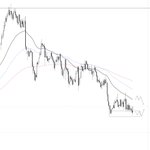

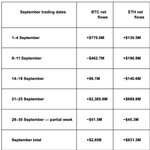
Been quiet on here. Back with the $BTC levels I’m watching.
The biggest mistake after a sell-off? Confusing a bounce with a reversal.
My map into the rest of the session:
$82.03k–$82.28k: first meaningful recovery test.
$82.88k–$83.19k: bigger resistance.
$80.15k–$80.65k: key support zone.
Lose support and fail to reclaim it - $80k, then the September open at $78.55k comes into focus.
Higher timeframe structure remains under pressure. I want to see buyers reclaim broken levels before calling a bottom.

Mars retweeted

We’re 7% away from 75K.
We’re 56% away from 126K.
Maybe we test 75K, maybe we don’t. Nobody can say with 100% certainty, not even me.
So humble yourself and ask, are you really willing to risk missing a 56% move to new highs because you’re fixated on buying 7% lower?
I said the same thing when $BTC was at 60K. People were waiting for 50K, trying to squeeze out another 10%, and ended up missing the entire move.
The market has a funny way of never giving you exactly what you want. And even when it does, people move the goalposts and ask for more.

Mars retweeted

Never sign in with Google on other websites or apps. This helps prevent Google from linking the services you use.
Use Proton Mail aliases instead of your real email address.
Give each service a unique email address so that if one service suffers a data breach or sells your information, your activity is less likely to be linked to a single identity.

Mars retweeted

bitcoin:native
Only outlook I have really, not forcing any new trades. Don’t hurt yourself and let the trade present it too you


$BTC
Only trade that presented was small bounce after price took the poor low as there was a lot of liquidity there. Besides that it’s better not to hurt yourself trying to catch the bottom. Only plan I have is longing from a sweep of lows


$BTC - Buyers defended the lows. Now they need to reclaim what they lost.
This morning’s bounce followed a sweep below $82.5k, but price remained beneath the October open. That leaves the recovery vulnerable.
The bigger change is demand:
Yesterday, BTC ETFs lost $484.9M
wiping out October’s net inflows. Coinbase premium was negative, and the rebound’s buying gave way to renewed selling.
That doesn’t guarantee another leg down. It does put the burden of proof on buyers.
My map:
• $82.96k–$83.04k: first reclaim.
• $83.27k–$83.31k: next recovery test.
• $83.57k–$83.80k: the zone that would meaningfully improve the structure.
Keep rejecting below those levels, and $82.50k-$82.15k stays exposed. Lose that support with acceptance, and $81.66k becomes relevant.
The distinction I’m watching: can buyers turn the sweep into a higher low, or does this bounce simply build another lower high?
US claims at 12:30 UTC could test both sides.
Mars retweeted

I don't recommend anyone scramble to move their funds to new wallets today. But we should take the risks to cryptography from AI-accelerated math seriously, and minimize our exposure to not just quantum-vulnerable cryptography, but also potentially AI-vulnerable cryptography.
The core new area of risk from this viewpoint is, unfortunately, ML-DSA / FHE / lattices.
(and it's also another reason, along with quantum, why ECDSA might fall even faster than expected, hence the "fresh address" recommendation)
So far most people have been in the mode of thinking "elliptic curves broken, hashes safe, lattices safe". But there is a good chance that the concrete security of lattices will take serious hits from the next two years of AI math.
The basic threat model is: factoring is something that naively takes 2^(n/2) time, but over decades smart people have found and optimized number field sieves, and degraded that to 2^O(n^(1/3)), which is why RSA keys and signatures need to be ~400 bytes (and not 64 bytes). What if there are skeletons in the closet like that, both for elliptic curves and lattices, that we are simply not smart enough to discover - but bots soon will be?
This is a major part of the reason why for the past year ethereum's lean roadmap has been going in the "hash-only" direction: no lattices, no ML-DSA, no Falcon, no lattice-based commitments inside ZK proofs, etc. Signatures in lean ethereum are all hash-based, either WOTS or SPHINCS-.
For signatures and proofs, we already know how to go hash-only. The bigger challenge is for *public-key encryption* - and this goes far beyond blockchains. Secure communication, anonymizing protocols, lots of things need public-key encryption.
And unfortunately there are long-standing mathematical theorems showing why public-key encryption cannot be done with hashes alone. You have to have some kind of trapdoor object that has at least one form of usable "structure" - either group theory (incl. isogenies) or lattices or code-based or potentially in the future even more newfangled and spooky things (local mixing?). But for anything that has structure, you should assume that AI will make at least some progress in breaking that structure. Here, one reasonable inference is that if you want to make something plausibly long-term secure, multiply the key sizes by 10.
To me that's a very plausible world and something not at all extreme to predict. If AI will bring us 50 years of math in 2 years, then that 50 years of math may very plausibly include a "naive factoring -> GNFS" level of improvement to our ability to break lattices. In that world, lattices will still exist, but they will have to be significantly bigger to guarantee the same level of safety.
And at those new larger sizes, hash-based constructions will beat lattice-based constructions on concrete efficiency in every use case where hash-based constructions are possible at all.
Theoretically, of course it's possible that hashes are broken too (eg. P = NP would imply that). But I think P = NP is very unlikely. And intuitively, it's much more likely that a mathematical object has exactly no exploitable structure (like hashes are intended to), than that a mathematical object has exactly ~3 forms of exploitable structure (for elliptic curves: associativity, Schoof, pairings) and not some secret fourth form of structure we have not yet discovered that greatly degrades its security (for elliptic curves, ECDLP and pairing security). Similar for LWE, SVP, RLWE and the zoo of lattice problems.
For this reason, we do not yet see any reason to worry and start padding the byte size of hashes (if we start to worry more, we would pad the round count first before doing anything to the byte size).
Concrete TLDR, my own personal views:
* Hash-based > lattice-based, in those situations where hash-based is possible at all
* For anything lattice-based, be much more paranoid on param sizes. Remember that blockchains are only a small portion of the cryptography story; this point goes far beyond blockchains and applies to eg. access to websites, secure messaging, Tor / VPNs ...
* For privacy protocols, strongly favor NOT putting encrypted notes onchain. Instead, send them offchain through some third-party mechanism.
* If it's not difficult for you, keeping your funds in addresses which have not yet been used to make a transaction is a good idea. If it's easy for you, do it. **But be careful about migrations; I personally have lost more money in botched migrations than I have lost in all hacks combined**.
* For multisig wallets, doing confirmations offchain is better than onchain, because this way the signatures of signer wallets do not get exposed to the public, so if ECDSA falls to AI much faster than expected, at least the multisig "gracefully degrades" to a 1-of-1 where the 1 is whoever was gathering the signatures - a much better place to be than "anyone can take the money"
firefly.social/post/x/210783…

$BTC
Binance Spot CVD: persistent selling pressure, near the lows of the displayed period.
Coinbase Spot CVD: rolling lower, without a strong buying response.
Five-venue Spot CVD: rebounds at the right edge, showing some aggressive buying into the decline.
Futures CVD: drops sharply with price, supporting the immediate bearish move.

Mars retweeted

🇺🇸 FED SPEAKERS — TUESDAY, OCTOBER 6
🔸9:05 AM ET — NY Fed’s John Williams (voter, dove) — Moderates panel
🔸10:45 AM ET — St. Louis Fed’s Alberto Musalem (non-voter, hawk) — Banking research conference
🔸10:46 AM ET — Fed Vice Chair Michelle Bowman (voter, dove) — Banking regulation & supervision + Q&A
🔸1:15 PM ET — Kansas City Fed’s Jeff Schmid (non-voter, hawk) — Fireside chat
🔸7:00 PM ET — Dallas Fed’s Lorie Logan (2026 voter, hawk) — Q&A with Agustín Carstens
🔸Tomorrow: FOMC minutes — potentially the more market-moving Fed event.

$GOLD | A bounce isn’t enough to call a reversal.
Buyers defended $4,100–$4,130, lifting price toward $4,155. The 4H structure still shows lower highs and lower lows.
$4,180–$4,190 is the first test.
Rejection keeps $4,130 - $4,100 in focus.
Reclaim $4,190 and build a higher low, and $4,242 becomes the next reference.
My bias stays bearish until price repairs that structure.

$BTC | The detail behind the bounce:
Binance aggressive selling continues, yet price is holding above the earlier lows. Possible absorption—but Coinbase buying hasn’t accelerated enough to confirm broad demand.
Monday’s ETF flows:
BTC: −$89.8M
ETH: −$50.8M
BTC remains +$202.8M for October; ETH is −$143.6M.
Price is showing resilience. Flows are mixed.
Above $86.10k, I’m watching whether spot buying strengthens into $86.455k. A price breakout with weak buying leaves more room for another failed move.

$BTC | 6 October
Bullish daily structure. Intraday recovery. Still inside the range.
$85.08k–$85.35k held, sending price back toward $86k.
Hold $85.73k–$85.78k and clear $86.10k-$86.455k, then $86.658k.
The bigger test is $86.95k – $87.445k. Repeated rejection there keeps the range intact.
Lose the reclaimed support and $85.50k - $85.08k comes back into play.
The recovery is there. The breakout still needs proving.


$BTC - October 2 overview
The range broke higher. Now buyers need to defend it.
$85,759 is the key support. Holding it keeps $86.86k-$87.45k in focus. Lose it and fail the reclaim, and $85.45k - $84.9k comes back into play.
Coinbase buying improved through the pullback, while other venues gave back some breakout buying. Encouraging, but uneven.
Oct 1 ETF flows: BTC +$102.7M, ETH −$55.4M. BlackRock alone brought in $195.6M BTC’s positive total masks withdrawals elsewhere.
NFP at 12:30 UTC is the next major test.
Bullish structure. The question is whether support survives the news.