
Former U.S. Ambassador to Oman 30+ years U.S. Foreign Service Former Founding Director, AJC Abu Dhabi Commentator | Middle East & Gulf affairs
Joined September 2024
- Tweets409
- Following421
- Followers2K
- Likes1.7K





Pinned Tweet
My take on the ceasefire
Iran blinked. Just yesterday the regime rejected a temporary ceasefire and refused to meet in Islamabad. Over night they took President Trump’s threats seriously. There is no way to bridge Iran’s 10 points with America’s 15. So the outcome of negotiations depends on whether Iran accepts the fundamental U.S. demands: removal of highly enriched uranium, no further enrichment, dismantlement of ballistic missile and drone capacity, an end to funding and directing the regional proxies, and full reopening of the Strait of Hormuz. We’ll see soon enough.
My question: will the Democratic Party national leadership and icons such as Barack Obama repudiate and condemn this odious campaign ad for El-Sayed? Not long ago, this would have been the obvious response, it apparently not any more.

“Self-inflicted ruin is precisely what a society can expect once it has learned to settle its material questions by the reflexive accusation of Israel. In the end, it loses the faculty to reason through any sort of political or economic problems. Reality itself becomes secondary, because any fact—indeed, any operation of cause and effect—can be reinterpreted as a mask for the hidden agency of the Jews. Once it can no longer reason through and diagnose its problems, a society also loses both its will and its ability to address its problems. It cannot labor for any cause nor build anything”
Such nonsense. What kind of “war head” for Britain is today’s State of Israel?

O embaixador egípcio falou o que a maioria prefere esconder.
Atef Salem, que já representou o Egito em Israel, disse em alto e bom som o que gerações de diplomatas árabes só sussurram nas salas fechadas: a frustração profunda não nasce de fronteiras, muros ou assentamentos, ela nasce da simples existência de judeus vivos ao lado deles. Sem disputa territorial, sem “ocupação”, o ódio persiste. A presença de judeus soberanos é intolerável. A paz é impossível porque o sangue de judeus vivos é exigido.
Isso é mais do que uma análise, é uma completa confissão. É intoleravel para grande parte do Islã conviver no coração do Oriente Medio com um povo que a cada minuto evidencia a diferença entre uma cultura bem sucedida e uma totalitaria e perdedora.
Desde 1947, quando os árabes rejeitaram a partilha da ONU e escolheram a guerra de aniquilação, o padrão se repete. Em 1948, 1967, 1973, nas cartas do Hamas e do Hezbollah, nos livros escolares do Egito que ainda ensinam o ódio, nas mesquitas que repetem o hadith da pedra que denuncia o judeu para ser morto. Quase um milhão de judeus foram expulsos dos países árabes. Israel absorveu os seus. Os árabes mantiveram os “refugiados” como arma política permanente.
O tratado de paz com o Egito existe no papel desde 1979. Na rua, nas escolas, na mídia e nos discursos oficiosos, o judeu continua o inimigo eterno. O Estado judeu é “artificial”, “plantado”, “problema”, "insolente". Nunca será aceito. Essa é a tese do embaixador, e ela explica mais do que qualquer resolução da ONU.
A resposta é simples: judeus não vão desaparecer para acomodar o ódio, não vão voltar ao status de cidadaos de 2 classe. A existência de Israel é a resposta mais contundente a séculos de perseguição. A prosperidade, a ciência, a capacidade de se defender e de absorver os seus próprios refugiados ofendem quem construiu identidade em torno da destruição dos outros.
A paz exige o reconhecimento do direito do outro de existir. Quando o objetivo é o sangue pela mera presença, não há negociação possível, o que há é apenas a escolha entre aceitar a realidade ou continuar perdendo guerras.
O embaixador fez um favor ao mundo, sabemos que a verdade no Islã é rara, aqui ele mostrou o verdadeiro obstáculo, todo o resto é teatro recheado de ignorância.
Nao se esqueça disto, pois esta é a verdade fundamental e primitiva do problema.
Ambassador Marc Sievers retweeted

Praying for the souls of the 241 Americans killed in the terrorist attack on our Marines in 1983. I can think of no more fitting tribute to those heroes than to defeat the evil regime responsible for their murder.


Ambassador Marc Sievers retweeted

43 years ago today, Hezbollah terrorists — trained, financed, and directed by Iran — killed 241 U.S. military personnel in a truck bombing at the Marine barracks in Beirut.
The attack was ordered by the Iranian regime.
We haven't forgotten.
foxnews.com/world/43-years-a…


Ambassador Marc Sievers retweeted

No woman has ever been Secretary General of the UN. It is past time for one. Lana Nusseibeh, an excellent diplomat from the UAE, is now a candidate to succeed Antonio Gutierrez. She is very well suited to the role, understanding the global south and great power competition.
Ambassador Marc Sievers retweeted

Amb Al Otaiba: @Lana_Nusseibeh is a close friend, wonderful colleague and one of the most accomplished diplomats I have ever had the privilege to work with. She is poised to lead an organization that is more important than ever. (1/3)

Ambassador Marc Sievers retweeted

I am standing to be Secretary-General because I believe this is a moment to act with greater urgency: to act earlier, bring people together across difference, and drive the work forward until it produces concrete results. That is how we rebuild trust in the United Nations and ensure it delivers meaningful change for the people it exists to serve.
My vision: lananusseibeh.org
Ambassador Marc Sievers retweeted

How did UAE become the largest global provider of humanitarian aid to Gaza, according to UN data? Because of Lana Nussaibeh—a diplomat who knows everyone and works with them to GSD. She would be an inspired choice for this impossible job.

UPDATE: Lana Nusseibeh, senior UAE diplomat, enters race for next UN Secretary General. If elected, she’d be
- first woman
- first of Palestinian descent
- second Arab in position. More al-monitor.com/originals/202…


Very glad to see these three together.

Growing strategic partnerships, stronger trilateral cooperation, and paving the way for a future of shared prosperity 🇦🇪🇮🇳🇺🇸
Abdullah bin Zayed joined @DrSJaishankar and @marcorubio for a trilateral meeting in Mumbai to discuss ways to enhance cooperation and partnerships among 🇦🇪, 🇮🇳, and 🇺🇸 across trade, investment, technology, and AI, as well as advance joint strategic initiatives and promote regional and international security and stability.


I think this is probably correct: Pakistan’s latest mediation effort failed as Iranian regime keeps insisting on the same conditions rejected previously by Washington.

Today’s developments point to a larger war increasingly aimed at toppling the Islamic Republic.
1️⃣ Pakistan’s mediation failed
Iran told Field Marshal Asim Munir that negotiations will not resume until the United States lifts the blockade, restores oil exports and accepts Tehran’s conditions.
The United States has already rejected this sequencing and holds the stronger hand. The regime is demanding relief before surrendering any leverage.
2️⃣ Iran refused to surrender its enriched uranium
Mohsen Rezaei declared that “not even a particle” would leave Iran, rejecting a central pathway to a nuclear settlement.
This leaves military destruction of the stockpile as an increasingly likely alternative.
3️⃣ The regime’s oil lifeline is collapsing
Scott Bessent said Kharg Island has loaded no oil since August and Iran has no oil at sea.
Without oil revenue, the regime cannot indefinitely pay its forces, rebuild its military and sustain its proxies. The financial clock is running against it.
4️⃣ A third American carrier is approaching
The USS Theodore Roosevelt and approximately 10,000 additional sailors and Marines are heading toward the region, creating the possibility of a temporary three-carrier concentration around Iran.
This is not routine signalling. The United States is assembling the capacity for a much larger air and naval campaign.
5️⃣ Netanyahu made the endgame explicit
Netanyahu said he discussed toppling the Islamic Republic with Trump and described eliminating the regime as necessary to prevent Iran from rebuilding its nuclear program and proxy empire.
Israel is no longer framing the regime’s capabilities as the only target. The regime itself is now the declared objective.
6️⃣ The diplomatic off-ramp is disappearing
The regime is refusing concessions while its economy is strangled and American striking power grows around it.
Every rejected compromise narrows the distance between coercion and another war.
Today brought no peace opening. It brought failed mediation, nuclear defiance, economic suffocation, military reinforcement and open regime-change language.
The next war may not be designed merely to weaken the Islamic Republic. It may be designed to finish it.
Ambassador Marc Sievers retweeted

I think President Trump would beg to differ. He rightly said in March that those in #Iran’s regime “are among the most evil people ever on earth.” A regime which shoots its own people in the eyes & kills thousands for demanding their basic rights is evil.
Ambassador Marc Sievers retweeted

It's not as if U.S. presidents haven't intervened here over the years, but never through official endorsements. They've never said so explicitly. Only Clinton campaigned for Peres, and Trump for Netanyahu. Senior White House officials are telling me, "We haven't seen any new polls. The polls we've seen, the ones conducted for us, still show Netanyahu roughly in the range we're seeing here." In Netanyahu's office, on the other side of the pond, as the British say, they're saying, "We didn't know this in advance. Look, we had to dig up some archival video because we suddenly discovered, on a social media platform we don't even subscribe to, that Trump had written a manifesto in support of Netanyahu." Two versions, both a bit dubious, in my opinion.
I'll tell you what's changed, in my view. First, when you're the president of the world's greatest superpower, there's no price to pay for making a mistake. Take Hungary, for example: the candidate Trump didn't want was elected. So can Hungary impose sanctions on Trump?
In the end, when you're the president of the world's most powerful superpower, everyone, even Eisenkot, even Lieberman, even Bennett, will have to deal with you. I suggest we look at this and learn, for the tenth time, the lesson we constantly refuse to learn: when it comes to Trump and Netanyahu, there's more to their relationship than meets the eye. Let me give you an example.
They've spoken numerous times over the past month, far more often than has been reported publicly. So, with all due respect to Trump's endorsement of Netanyahu, and I don't know how much of an impact it will actually have here, it's helping to shape the agenda. But what's more significant is that if they're talking this often, it's very possible that even on the issue that's truly critical to our existence, the future of the war with Iran, their cooperation is much closer than it appears.
Ambassador Marc Sievers retweeted
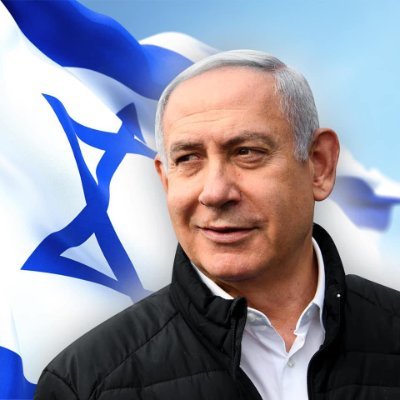
President Trump, my friend Donald - thank you for your extraordinary endorsement. Israel has never had a greater friend in the White House. Together we will never let Iran's regime get nuclear weapons. Thank you for your clarity, courage and unwavering support.
@realDonaldTrump
Ambassador Marc Sievers retweeted

This is exactly right. I argued it throughout my tenure as UK Ambassador for Yemen. The Houthis could’ve been defeated 7 years ago, driven out of Hodeidah & land-locked in the northern highlands. The weakness of the international community has inflicted this current mess upon us.
Saudi Arabia Has Few Options as Houthis Aim at Heart of Its Ambitions.
What I take away from this: we should have helped the Saudis win — not demanded an end to their war. Flawed and messy as it was.
nytimes.com/2026/10/11/world…

Ambassador Marc Sievers retweeted
Two people made a major contribution to Israel’s public discourse this week: Avinatan Or and Brett McGurk. One spent the war in Hamas’s tunnels, the other in the White House. Both laid out this week, in plain language, from right inside the events themselves, two positions that had until now been dismissed here as a desire for death, cynical politics and abandoning hostages. Or, held for two years in Gaza’s tunnels, explained in simple Hebrew why disproportionate deals with Hamas would only bring more kidnappings in the future. McGurk, Joe Biden’s senior adviser, explained in simple English that no such deal was ever really on the table anyway, until the military sword was at the terror organization’s throat.
I watched Avinatan Or on the Israeli 60 minutes, “Uvda” and felt ashamed all over again at how his mother, Ditza Or, was treated in real time for daring to say the same things. She and other parents from the Tikva Forum were portrayed as having abandoned their children, while those pushing for capitulation were cast as something like adoptive parents of our hostages. It was one more example of the distortion by which the people credited with bringing the hostages home aren’t the soldiers who risked their lives in Gaza, but those who protested demanding that Hamas’s demands be met (demands that, as noted, never actually crystallized into a real proposal). I also thought of Elchanan Kalmanzon, who fell in Be’eri on the morning of October 8, and who, months earlier at one of the Kaplan protests, had someone shout “you draft-dodger” at him, just because they saw his kippah. Certain elements on this side of the debate put no effort into actually arguing the case—only into trying to frame the opposing view as illegitimate.
I listened to Brett McGurk across a series of interviews and was reminded again how shallow, how skewed our discourse here really is. Only in a world like this could Nitzan Alon, who headed the IDF’s directorate for the hostage issue, toss out quotes like “they could have freed everyone earlier” into the public sphere without having to answer to the facts. In a world like this, you can publish books and “investigations” that portray Hamas as eager to make a deal and Israel as the hard-hearted, indifferent party determined to fight forever. Hostage families are allowed to say absolutely anything in real time (unless, of course, we’re talking about the Or and Mor families). But for commentators and experts, telling the truth is also an option.
Judged by results, and contrary to every accusation and prediction, every time a hostage deal was put forward, Israel’s government approved it by an overwhelming majority. The moment a proposal to end the war on terms Israel could live with landed on the table, the government backed it. The polls—in which Benjamin Netanyahu actually hit a high right after the deal was signed—also show just how foolish the claim was that Netanyahu wanted an endless war because it was the smart political move for him.
Until October 2025, and no amount of lying will change this, no proposal was ever put forward that would let Israel both get back all the hostages and avoid retreating to the old, bleeding border. As McGurk explained, patiently, as if to a struggling child, every framework involved an immediate withdrawal from Gaza down to the last Israeli soldier, with the hostages released in an agonizing drip-feed that, according to Hamas leader Yahya Sinwar, was never meant to end. Anyone who claims there’s no difference between a Gaza with hostages and no IDF and a Gaza with no hostages and an IDF presence is either ignorant or a propagandist and ought to be kept as far from public platforms as possible.
I also suspect the public has noticed—despite every attempt to muddy the waters—a strange pattern: the same people who argued for two years that Hamas had been defeated and the war could therefore end are now the ones arguing that Hamas is stronger than ever and the war is a failure. Voters will make Netanyahu pay for the gap between his promise of total victory and the reality on the ground. But if forced to choose at the ballot box between two ways of describing the situation in the Middle East—total victory or total failure—they won’t choose failure.

Ambassador Marc Sievers retweeted

اي هزيمة لمليشيات ايران في المنطقة واي خسارة لايران في اي مجال هو مكسب عسكري وانتصار استراتيجي لدول الخليج العربي
Ambassador Marc Sievers retweeted

Great news from Yemen today. Saudi-supported government have retaken Al-Mokha and other areas, sent Houthi fighters fleeing. Saudi should only stop when they’ve taken Saadah.
Other good news, Kepler reports energy exports through Hormuz Strait are above pre-war levels for the first time since Feb. 28, and Iran can do nothing about it.
Waiting for the news that says IRGC are fleeing from Tehran.