

Research Fellow @SISLaboratory @HooverInst at @Stanford | Making AI learn desirable behavior from human data with RL in non-verifiable domains. Ph.D. from TUM.
Palo Alto, CA
Joined November 2022
- Tweets626
- Following807
- Followers825
- Likes3.8K


Pinned Tweet
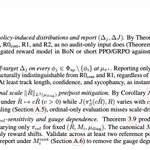
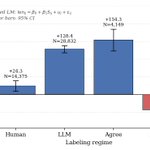
New paper: We identify a new class of reward hacking caused by mitigations, which we call reward bias substitution. We prove no standard benchmark detects it, even with oracle access to the true reward. We find it active in GRPO, in SOTA reward models, and published methods.
Max Lamparth retweeted

Come work with us @JHUCompSci! We're hiring tenure-track faculty in all areas, with a particular focus on
- AI systems
- AI safety and security
- AI reasoning and alignment
- AI ethics, policy, and governance
apply.interfolio.com/194231
(DMs are open if you have any questions)
Max Lamparth retweeted

Fellowship applications for 2027 with the @Kennedy_School @BelferCenter are open.
Applying could be a useful way to work and scheme with yours truly, plus more importantly, a long list of world-class science and policy academics at Belfer.
belfercenter.org/fellowships

Max Lamparth retweeted

Some news:
I graduated my PhD @Berkeley_EECS, and starting Fall 2027, I'll be starting as an Assistant Professor at Stanford CS & a center fellow @StanfordHAI!
In the interim, I'm spending a year @the_IAS & Princeton!
So grateful to @beenwrekt & too many mentors to name 💓


Max Lamparth retweeted

🚨The @AISecurityInst has teamed up with @evaluatingevals to make AI evaluation results more reproducible! 🚀
Many of UK AISI’s publicly reported evaluation methods and findings will now live on Eval Cards, under the EEE Schema. More details 👇
evalevalai.com/infrastructur…

Max Lamparth retweeted

Now’s prob a good time to mention that I’ll start as an Assistant Professor with appointments at @Kennedy_School and @HarvardEngineer in 2027, working on… AI evals! My lab will also work on monitorability, incident analysis, and verification to advance technical AI governance 1/

Max Lamparth retweeted

‼️ Hiring AI Safety Researchers ‼️
I am moving to Berlin to start a new research group on AI safety and societal impacts @HPI_DE. From September this year, I will be hiring fully funded PhDs, postdocs, and research interns.
My group will study the risks and benefits that emerge as we integrate highly capable AI systems into the social and political processes our societies depend on (e.g. communication, coordination, competition). We will measure these impacts through model evals, computational experiments, human studies, and develop technical mitigations. We will do important research that matters and have fun doing it.
Ideal candidates have a background somewhere between CS/NLP and the social sciences, are excited about working on AI in the current moment, and care deeply about making a positive impact through open research. If that sounds like you, PLEASE GET IN TOUCH using the form in the post below.
I am sad to be leaving @oiioxford and @AISecurityInst but will try my very best to bring the amazing energy of these places and their people to Germany. I am also very grateful to the DFG / Emmy Noether programme for funding my group for the next 6 (!) years.
Please spread the word, and I look forward to hearing from you 🤗


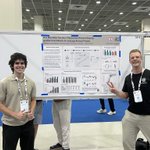
Come to the poster today at @icmlconf in Hall A #300 from 10:40 am - 12:00 pm and 3:40 pm - 5 pm!

2) Reward Bias Substitution: Single-Axis Bias Mitigations Redirect Optimization Pressure
with @DanielFein7, @andreas_h0wpt, @marcel_hussing, and @aiprof_mykel
xitter.cf/MLamparth/status/20603…
Come to the g̶r̶a̶v̶e̶y̶a̶r̶d̶HEADLINER poster session at ICML! Hall A #3212 at 5-6:45 pm with @DanielFein7
We present the most comprehensive side-by-side measurements of RM biases and show that simple first-order corrections can go surprisingly far (but only where they should).

1) One Bias After Another: Mechanistic Reward Shaping and Persistent Biases in Language Reward Models
With @DanielFein7, Violet Xiang, @aiprof_mykel, and
@nickhaber
xitter.cf/SISLaboratory/status/2…
Max Lamparth retweeted

New ICML Paper!
🚨 Activation steering can remove many biases from Reward Models🚨
Specifically, we systematically find biases in SOTA Reward Models including length, order, confidence, sycophancy, and model-style. Some of these can be addressed *even more reliably than bias decorrelation* by finding and removing directions in last-layer activations corresponding to this bias.
Surprisingly, even small, synthetic data can be used to find bias directions that generalize to new settings for both length bias and confidence bias.
The best part is that the method can be applied post-hoc, unlike most de-biasing methods, so biases can be fixed after they're found, without re-training.
Come talk to myself and @MLamparth Thursday evening, 5pm-6:45 in Hall A #3212

Max Lamparth retweeted

New work on reducing skill atrophy from AI overreliance! As AI tools improve capabilities, how can we use them to also support a human user’s own skill development?
At #ICML2026 #AI4GOOD, I’ll present Proximal State Nudging (PSN): an assistance algorithm that balances between task performance and human learning arxiv.org/abs/2605.20355 w/ @ToyotaResearch

Max Lamparth retweeted

If you're excited about Anthropic's J-space work, definitely worth checking out the original paper on Jacobian lenses by @evanqed and @arnab_api! arxiv.org/abs/2308.09124

Check out all the great works from Stanford at ICML! Thank you for featuring our papers, too.

Are you at ICML 2026 in Seoul? 🇰🇷 Check out the full list of papers from Stanford AI Lab — spanning coding agents, LLM reasoning, evaluation & benchmarks, AI safety & interpretability, and AI for science. See you there!
ai.stanford.edu/blog/icml-20…

🇰🇷I’m in Seoul for #ICML this week! Presenting two papers on faithfully learning and abstracting human preferences to ensure that AI models learn desirable behavior and resist reward hacking. Come check out the posters or reach out to chat. Would love to connect with people!


We show that fixing one reward-model bias just reroutes optimization pressure onto correlated features. E.g., penalizing length makes language models overconfident and less factually accurate. We prove audit benchmarks can't catch this, but policy-induced evaluation can.

Workshop on Agents in the Wild: Safety, Security, and Beyond
HALL B2
Sat, Jul 11, 2026 • 8:00 AM – 5:00 PM KST
Paper link: arxiv.org/abs/2605.27996v2
