
Agronomist, writer, shepherd, Studebaker driver and part-time janitor in South Central MN. Opinions expressed are those of whoever I happen to be at the time.
Joined August 2011
- Tweets1.3K
- Following931
- Followers1.2K
- Likes5.3K









Mark Bernard retweeted

Thanks MN Soybean. It was a great run. Hope to be able to continue to support MN in other ways. mnsoybean.org/blog-msrpc/all…


Mark Bernard retweeted

Waterhemp vs. Palmer amaranth: look for the length of the petiole on a mature leaf to tell the difference! Palmer amaranth will have long petioles; waterhemp has short ones. #ISUCrops
Mark Bernard retweeted
Soybean aphids are present on Early planted V4 soybeans in SW MN.
Very low numbers at this point. Hope they stay that way.

Mark Bernard retweeted

Here is this week's installment of the Crop & Weather Update! University of Minnesota Extension has an Alfalfa Harvest Alert system which provides growers with data related to the 1st cut of their hay harvest. You can read more at this link: blog-crop-news.extension.umn…...


Mark Bernard retweeted
We have quite an update related to our early planting demo! Tom & Kara dug a few corn seeds from each planting to show where they are in the germination stage. Our 2 earliest dates soybeans have also emerged! You can read more in the Crop & Weather Update included below.

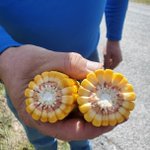
ALT Corn seeds from our three early planting dates and their germination stages. The corn seeds from our February 26th planting date did not survive the cold snaps and wet soil we have experienced since they were planted.

ALT Soybeans, planted February 26th. Picture taken 5/1/2024.

ALT Soybeans, planted March 19th. Picture taken 5/1/2024.

Mark Bernard retweeted
A perfect storm - if you were a migrating black cutworm moth. A significant influx of black cutworm moths arrived in Minnesota April 16-17. To follow the arrival of moths this spring and info on biology, scouting and management see swroc.cfans.umn.edu/research…


Mark Bernard retweeted
Time for the first installment of our Weekly Crop Weather Update! Our Feb 26 wheat is up!
This winter was the mildest in our records since 1931; a full 10 degrees warmer than normal and the snowfall total was only 15.5 in. That's 37 inches less than normal!
Read more below:


Mark Bernard retweeted

"George Rehm had a special relationship with those he worked with, especially farmers. He often said that his job was to help farmers, and if the scientific community was affected, so be it." nitter.gq/UMNNutrientMgmt/status…

Remembering George Rehm: swac.umn.edu/news/rememberin… Professor Emeritus George Rehm passed away Wednesday, January 17th in Rochester, Minnesota. He was 82 years old. @UMNExt @UMNswac @CFANS #MNag


Mark Bernard retweeted

The national estimates reflect Pro Farmer’s view on production & yields. They take into account data gathered during Crop Tour & other factors like weather, crop maturity, historical differences in Tour data versus USDA’s final yields, areas outside those sampled on Tour, etc.

Mark Bernard retweeted
Several species of sphinx (hawk) moths are active now. These three showed up in the blacklight trap a few nights ago. Top to bottom are Spurge, white-lined, and achemon. The white lined are particularly abundant here this year. – at New Ulm, MN


Mark Bernard retweeted
Sunny days = busy days at SROC! But let's take a look back at our wettest winter on record... we measured 69.8in of snow, our 14th snowiest with 6.97in of liquid equiv. precipitation. Our soil temps stayed near freezing and our deepest soil frost was 10in; normally we get 20in.

