

We advance science and technology to benefit humanity.
Joined February 2009
- Tweets10.2K
- Following1.8K
- Followers556K
- Likes5.8K




Microsoft Research retweeted

4B parameters. ZERO distillation. 61.5% on SWE-bench Verified 🤯
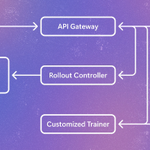
Meet FrogNano 🐸: Qwen3.5-4B post-trained purely with RL on synthetic tasks from TaskPilot.
Just 5 iterations × 300 tasks.
Who said coding agents have to be huge? 🐸

Microsoft Research retweeted

Coding agents understand code, but don't remember it. We released ShadowFrog, a set of open-source skills that build a persistent shadow knowledge base, so agent understanding compounds across sessions.
📝 microsoft.github.io/debug-gy…
💻 github.com/microsoft/ShadowF…
🧵 ↓
(1/10)
Microsoft Research retweeted

What if AI could predict your next medical event — like ChatGPT predicts your next word? @Microsoft Science president Peter Lee explains to @FrancesSSellers of @washingtonpost how that might be possible.
Microsoft Research retweeted

As AI and agents take on execution, our own agency expands. The question is whether organizations are built to capture it.
The 2026 #WorkTrendIndex Report is now live: msft.it/6009vKCx5

ALT Microsoft Work Trend Index 2026 closing slide with circular network graphic and colorful radial lines
Microsoft Research retweeted

Today we're sharing a major Skala update: new paper and model release. Skala is a deep-learned XC functional for DFT: 2.8 kcal/mol on GMTKN55, wins 32/55 subsets & surpasses SOTA hybrids in accuracy at semi-local cost.
Paper: arxiv.org/abs/2506.14665
Code: github.com/microsoft/skala

Microsoft Research retweeted

Microsoft has just received the 2026 INFORMS Prize at the INFORMS Edelman Gala, for their excellence in operations research and analytics. Congratulations! 👏
hubs.ly/Q04bTj-Z0

Microsoft Research retweeted
Just in! Microsoft was announced the 2026 Franz Edelman Award winner! 🏆 Congratulations to ALL six finalist teams, especially Microsoft. Read all about their award-winning project! 👏
hubs.ly/Q04bTqSv0

Microsoft Research retweeted
Congratulations to @Microsoft, the 2026 Franz Edelman Award winner! 🏆
Microsoft Research retweeted
Presentation of the 2026 Franz Edelman Award Winner — Microsoft
[YouTube] ▶️ hubs.ly/Q04bT-hd0
Awarded at the 2026 INFORMS Analytics+ Conference in National Harbor, MD.

Microsoft Research retweeted
Think of datacenter networking like water moving through pipes.
Traditional optical cables move data through a narrow, fast stream of light. While Microsoft’s new MicroLED system sends data through thousands of channels at once – more like a wide, slow-moving river carrying the same volume.
The result: a new approach that researchers estimate could use about 50% less energy than mainstream laser-based optical cables, while supporting the massive data flows behind AI and cloud services. Learn how: msft.it/6001QoewP

Microsoft Research retweeted

Excited to showcase the science and people behind our GigaTIME paper, recently published in Cell.
Paper: aka.ms/gigatime-paper
Model: aka.ms/gigatime-model
Code: aka.ms/gigatime-code
Azure Foundry: labs.ai.azure.com/projects/g…


Microsoft Research retweeted

We’ve trained a multimodal AI model to turn routine pathology slides into spatial proteomics, with the potential to reduce time and cost while expanding access to cancer care.
Microsoft Research retweeted
Love seeing how simulation, synthetic data, and human feedback come together here. Addressing the data scarcity challenge head‑on while keeping people in the loop feels like a strong foundation for building physical AI systems that are both capable and trusted.
Microsoft Research retweeted

🤖 I’m happy to announce rho-alpha 🤖, @Microsoft's first physical AI model for bimanual robotic manipulation 🦾🦾 built on Microsoft’s own phi-series VLM:
microsoft.com/en-us/research…
Rho-alpha is unusual among VLAs in a few ways. You can think of it as a VLA+, as we are experimenting with including tactile and force feedback into the set of rho-alpha’s “native” input modalities – in part, using simulation data we generate in #NVIDIA #IsaacSim - while also enabling rho-alpha to continually learn from real-time human feedback.
Perhaps most importantly, we envision Rho-alpha and its training pipelines as a foundation – a foundation to help @Microsoft's partners in the robotics space to create powerful physical AI models for their hardware using their data. Currently, the predominant paradigm for this is VLA finetuning. Rho-alpha’s tooling affords much richer approaches by injecting the partner’s data into virtually any rho-alpha training stage to produce custom Rho-alpha versions for the partner’s robots and use cases.
For the next few months, we will be refining rho-alpha and will report the results in due time. Why are we announcing rho-alpha already now? Because we want to invite you 🫵- robot OEMs, integrators, and operators - to work with us on the refinement process, and encourage you to apply for the Rho-alpha Research Early Access Program here:
tinyurl.com/38p6bn4u
Giant thanks and congratulations to @MSFTResearch SPEAR team (@t_hellebrekers, Michael Murray, Galen Mullins, @dean4ta__, Simran Bagaria, Harshavardhan Gajarla), our internal (Reuben Tan) and external research collaborators (@patrickhyin, @abhishekunique7), and TPM Vivan Amin for making rho-alpha happen. 👏
We have a lot more motors to fry and tactile sensors to burn out – that’s how progress in physical AI is made. Stay tuned! 🚀
#Robotics #physicalai @NVIDIARobotics

Microsoft Research retweeted

was a super fun experience to give a lecture in a bar!!
thanks @lecturesontap for the invitation and @Microsoft for the press release!
@lecturesontap🍺instagram.com/reels/DSBYDLoj…
Decoding the Language of Nature 🧬 read more: news.microsoft.com/signal/ar…
Microsoft Research retweeted

Experiment. Try things. Don’t be afraid of the possibility of failure.
Today’s AI environment allows for quick tests and rewards those who follow unexpected findings. Learn more from Microsoft Chief Technology Officer @kevin_scott’s recent insights for founders shared at @spc.
🔗: msft.it/6018tonLe

Microsoft Research retweeted

Today in @MSFTResearch we announced GigaTIME—a breakthrough AI tool for population-scale cancer research, published in the journal Cell. It is a multimodal AI model that simulates spatial proteomics from routine pathology slides. /1
Microsoft Research retweeted
Today in Cell, we published new research showing how AI can help accelerate cancer discovery. With GigaTIME, we can now simulate spatial proteomics from routine pathology slides, enabling population-scale analysis of tumor microenvironments across dozens of cancer types and hundreds of subtypes.
Developed in partnership with Providence and the University of Washington, our hope is that this work helps scientists move faster from data to insight, revealing new links between genetic mutations, immune activity, and clinical outcomes, and ultimately improving health for people everywhere.
Microsoft Research retweeted
Want to dive deeper? Tap to discover all 7 trends shaping the future: msft.it/6007tgIwh

Microsoft Research retweeted
AI didn’t just make progress this year, it delivered breakthroughs.
Microsoft researchers introduced Majorana 1, the world’s first quantum processor built with topological qubits, shared Aurora to predict extreme weather faster than ever, and developed FCDD to improve early breast cancer detection.
And that’s just the start. Explore 10 scientific innovations that made a global impact in 2025. msft.it/6007teLL3
