

Author of new children's book "God Bless America, 250 Years Strong." Also media law attorney, crisis communications adviser, adjunct professor, prosecutor.
Central Ohio
Joined May 2008
- Tweets31.3K
- Following1.2K
- Followers12.1K
- Likes33.1K




Pinned Tweet
1/ More than 50,000 people have graduated from Abington (PA) High School, so, last week, I was honored and humbled to have been among the 120 or so inducted into its Hall of Fame since 1928.

Real life rarely aligns with a preferred political narrative. So true.
This is a readable deep dive into a topic in which most have only taken a shallow dip.

The popular narrative about Amy Acton and her mother, Donna Arthur, may not be as cut-and-dried as some think, because real life seldom is. Read more. abernathyroad.substack.com/p…

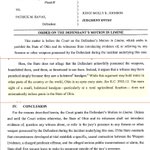
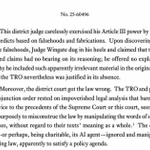
Strong judicial writing (reaching the proper legal and common sense conclusion) from Ohio Judge Molly Johnson. She's presiding over the county fair "jostling" case (the Court's words) that many in legacy media falsely reported as a violent attack against candidate Amy Acton.

Mark R. Weaver retweeted

CANFIELD FAIR CASE: JUDGE THROWS OUT THE GUN EVIDENCE
A Mahoning County judge ruled Thursday that prosecutors cannot tell a jury about the guns Patrick Havas was carrying at the Canfield Fair. Havas, 38, of Canfield, is charged with 4 misdemeanors — 2 counts of assault, inducing panic and disorderly conduct — from September 6, when he walked toward Dr. Amy Acton at the county Democratic Party tent and 2 Highway Patrol officers stopped him. He had 2 .22-caliber handguns and a pair of taser brass knuckles. None were drawn or used. Prosecutor Lynn Maro argued the weapons were "directly relevant to the inducing panic charge." Area Court Judge Molly K. Johnson wrote: "The weapons evidence does not make any consequential fact more or less probable." She wrote that "Ohio is an open carry state" and called the state's argument "illogical." Maro told the court Havas "never gets near her." Pretrial is November 6. The Vindicator's David Skolnick reported the ruling Friday.
Mark R. Weaver retweeted

Justice has been served. Today’s verdict sends a clear message: those who take the lives of our law enforcement officers will be held accountable.
Nothing can bring Deputy Larry Henderson home, but his sacrifice will never be forgotten. We will always stand with the men and women who wear the badge.


As a prosecutor and 1st Amendment attorney, I read many court opinions. Usually the tone is gently critical of legal mistakes. But this 5th Circuit takedown of a district court judge is among the harshest I've seen‼️

Mark R. Weaver retweeted

HBO's @LastWeekTonight has a long track record of citing social science findings without the appropriate context, massaging them to support whatever point @iamjohnoliver is trying to make.
Mark R. Weaver retweeted
Coach @JimTressel5 knows my record because we’ve worked together to support Ohio students and protect taxpayer dollars.
Proud to have his support as I work to bring that same commitment to the Attorney General’s office!
Mark R. Weaver retweeted
Few people know what it takes to serve as both Ohio's Auditor of State and Attorney General better than Betty Montgomery.
Betty is someone I've admired and looked up to throughout my career, and I'm incredibly honored to have her support.
Grateful for her kind words in today's Toledo Blade. Her confidence in me means a great deal!

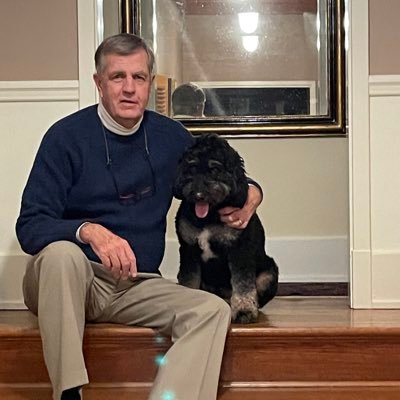
A beautiful day in Central Ohio! My wife and I took our dog out for a walk in what might be peak autumn colors. 😃
Freezing temps tonight then i'm back to court tomorrow, this time prosecuting a CSAM case. 😑
Mark R. Weaver retweeted

162 years ago today a Union army was surprised at dawn, routed, and driven in panic for miles, and then, in one of the most dramatic reversals in American military history, its commander came galloping up from fifteen miles away, turned his fleeing men around, and by nightfall had won one of the great victories of the war. This is the Battle of Cedar Creek, and the story of Sheridan's Ride.
The Confederate attack was a masterpiece. After the daring night march I described yesterday, Jubal Early's men came screaming out of the dawn fog on October 19 and smashed into the unsuspecting Union left. George Crook's corps was overrun in its camps, many men still asleep, and the surprise was so complete that the assault rolled up one Union position after another. By mid-morning Early had captured roughly 1,300 prisoners and 18 cannon, shattered a third of the Union army, and driven the whole force back several miles in confusion. It looked like a stunning, war-altering Confederate triumph.
And then Early made a fateful decision. With the Union army reeling but not destroyed, and his own hungry, ragged men scattering to plunder the rich Union camps, he hesitated. Rather than press the final attack that might have finished the job, he reportedly declared that this was glory enough for one day, and let the momentum stall. His subordinate John Gordon, who wanted to drive on, later called it the fatal halt.
Because the Union commander was coming. Philip Sheridan had spent the night in Winchester, about fifteen miles away, returning from Washington. That morning he heard the distant rumble of artillery, realized a battle was raging, and set off on what became legendary as Sheridan's Ride. He galloped south on his great black horse, Rienzi, and as he rode he met the tide of his own beaten, fleeing soldiers streaming to the rear. Instead of joining the retreat, he rode among them, waving his hat, shouting that they would be back in their camps by night, turning the panic around by sheer force of personality. Men cheered and turned and followed him back toward the front. His ride became so famous it was immortalized in a popular poem that schoolchildren memorized for generations.
Sheridan reformed his shattered army, steadied the line, and in the afternoon launched a massive counterattack. The Union infantry surged forward and the powerful Union cavalry, under hard-chargers like Custer and Merritt, swept around the flanks. Early's outnumbered, scattered army, caught in the middle of its own incomplete victory, broke and then collapsed into a total rout. The Confederates fled in disorder, losing not only the guns they had captured that morning but most of their own artillery and wagons as well. A triumphant morning had become a catastrophic evening.
Cedar Creek destroyed Early's Army of the Valley as an effective fighting force, for good. It secured the Shenandoah Valley permanently for the Union, ending the long story of that contested ground that ran through so many of these posts. And coming just weeks before the election, this spectacular come-from-behind victory, along with the fall of Atlanta, helped seal Abraham Lincoln's reelection and the Union's will to finish the war. Few single days contained such a complete reversal of fortune, from disaster to glory, as this one.

My latest comments on the crisis communications aspect of the WH Press Secretary flop.
A great story from @CarolinaLumetta (follow her for sharp insights)!
realclearpolitics.com/articl…

Mark R. Weaver retweeted
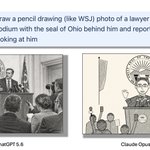
Sometimes bias gives itself away in the most subtle, but telling ways.


I'm in Day Three prosecuting a week-long jury trial. Felony cases are always interesting but it's hard to get anything else done.
And who needs more than five hours of sleep anyway?
🤖 Made with AI

Mark R. Weaver retweeted
Zero tolerance? $2.3 million was stolen at the Columbus Zoo while you served on its board. My office convicted five people, with four sentenced to jail or prison. That’s a record, not a tweet.

Mark R. Weaver retweeted
534 years ago today, a Genoese sailor most of Europe had written off as a crank changed the course of human history.
Columbus spent nearly a decade begging for a ship. Portugal turned him down. Spain's royal experts turned him down. They weren't wrong that the Earth was round (everyone knew that). They thought he was wrong about the distance, and the voyage would kill everyone aboard. He kept coming back. In 1492, Ferdinand and Isabella finally said yes.
What he got was three small wooden ships. The Santa María, the biggest, was roughly 60 feet long. The Niña was smaller than a lot of modern fishing boats. About 90 men crammed aboard. Only Columbus and a few officers had anything like a cabin. Everyone else slept on the open deck, in the wet, wherever they could find space between the cargo, the rigging, and each other. Food was hard biscuit, salted meat and fish, cheese, and wine. The water went bad in the casks. There was no rescue, no radio, no map of where they were going, because no map existed.
Three days out from Spain, the Pinta's rudder broke loose. Columbus suspected the ship's owners had sabotaged it so they wouldn't have to go. They limped into the Canary Islands and spent a month on repairs.
On September 6 they left the last known land behind and sailed west into nothing.
It got stranger the farther they went. The compass needle started drifting away from the North Star, something none of them had seen before. They sailed into the Sargasso Sea, miles of floating weed, and men feared they'd get stuck in it. The wind blew steadily from the east, day after day, which pushed them along beautifully and terrified the crew, because if the wind only ever blew west, how would they ever sail home?
On September 25, the Pinta's captain shouted that he saw land. The whole fleet dropped to their knees and sang the Gloria. By morning it was gone. Just clouds.
Columbus kept two logs the whole way: a real one, and a fake one with shorter distances so the men wouldn't panic about how far from home they were. Funny enough, the fake one turned out to be closer to the truth.
By early October they'd been out of sight of land longer than almost any European crew in history, and they were on the edge of mutiny. Columbus saw flocks of birds heading southwest, changed course to follow them, and held his men together a few more days. Then they started seeing signs: a green branch, a carved stick floating past.
At 2 a.m. on October 12, a lookout on the Pinta saw moonlight on a white beach and yelled "Tierra! Tierra!"
Getting home was almost worse. The Pinta's captain broke away on his own. On Christmas Eve, the Santa María ran aground off Hispaniola and was lost, and Columbus had to leave 39 men behind because there was no room for them on the little Niña.
In February 1493, mid-Atlantic, a storm hit so hard Columbus was sure they'd sink. The crew drew lots to decide who would make a pilgrimage if God spared them. Columbus wrote out an account of the discovery, sealed it in wax, and threw it overboard in a barrel so the world would know what they'd found even if every man died. They lived. The storms drove them first to the Azores, where Portuguese authorities briefly arrested half his landing party, then into Lisbon. He finally reached Palos on March 15, 1493, more than seven months after he left.
He crossed the Atlantic three more times. On his last voyage, stranded in Jamaica with his ships rotting and supplies running out, he used an astronomical almanac to predict the total lunar eclipse of February 29, 1504, and used it to convince the locals to keep feeding his men. Two years earlier, he'd warned the governor of Hispaniola a hurricane was coming. He was ignored, the treasure fleet sailed anyway, and most of it went to the bottom. Columbus's ships rode it out.
Now think about what he'd actually done.
The route he pioneered, riding the trade winds west and the westerlies back home, became the highway across the Atlantic for the next 300 years of sail. Within two years Spain and Portugal had literally divided the globe between them by treaty. Within 30, Magellan's expedition had sailed all the way around it.
And the exchange that followed remade every dinner table on Earth. Potatoes, corn, tomatoes, chocolate, and peppers went east. Wheat, horses, cattle, and sugar went west. Italian food without tomatoes, Irish food without potatoes, and the American West without horses would all be unimaginable, and every one of them traces back to that voyage. Two halves of the planet that had been cut off from each other for thousands of years were joined, permanently, for better and for worse.
He died in 1506 still believing he'd reached Asia. He never understood what he'd found. But the modern world starts on that beach.
Happy Columbus Day!

Mark R. Weaver retweeted

PHILADELPHIA FOP BLASTS REPORTER FOR SHOWING UP AT FALLEN OFFICER SHANE SEIBER’S HOME HOURS AFTER HIS DEATH
The Philadelphia Fraternal Order of Police Lodge #5 has issued a strongly worded statement condemning a reporter who allegedly showed up at the home of fallen Philadelphia Police Officer Shane Seiber and attempted to interview his grieving wife.
According to the FOP, the reporter arrived just hours after Officer Seiber was killed in the line of duty on Saturday, October 10.
The union called the reported encounter “completely unacceptable, disrespectful, and insensitive,” arguing that it crossed the boundaries of professional journalism.
“LEAVE THEM ALONE.”
That was the FOP’s direct message to news organizations as Officer Seiber’s family struggles to process an unimaginable loss.
The union acknowledged that journalists have a responsibility to report the news but emphasized that grieving families deserve privacy, compassion, and respect.
The FOP also vowed to continue protecting the families of fallen officers from harassment and unwanted intrusion.
Officer Seiber, 40, was a 10-year veteran of the Philadelphia Police Department. He leaves behind his wife and two young children, ages 7 and 3.
The FOP did not identify the reporter or news organization involved in its statement.
The public deserves to know what happened to Officer Seiber. His family also deserves the space to grieve without unwanted intrusion.
Statement issued by the Philadelphia Fraternal Order of Police Lodge #5 Executive Board.

Six years after COVID pushed many into remote work, bureaucrats in DC complain that they are being "rushed" back into the office.

Mark R. Weaver retweeted

This is absolutely devastating news. The officers were ambushed. Now one has died. Please pray for the @PhillyPolice


Mark R. Weaver retweeted

Criminal charges filed in investigation of Ohio community college dispatch.com/story/news/stat… via @lbischoff

RE: The lawsuit and criminal case against "Cornell 7."
I prosecute sex offenders. So I found this (from @TheFP column by @katrosenfield) well-said and 100% true.
I've said before: Allegations are easy, proof is hard. It's meant to be that way. One day you may be glad it is.
