Author: Traditional Logic, Classical Rhetoric. Editor: Classical Teacher magazine. Provost: Memoria College. Podcast: Classical, Et Cetera. Memoria Press
Kentucky, USA
Joined January 2009
- Tweets20.3K
- Following4.1K
- Followers4.1K
- Likes8.7K



It seems to me this is a diagnosis, not just of contemporary fiction, but of modernist fiction in general since the beginning of the 20th century. It has produced some truly great works thanks to some talented writers, but that seems to be the exception rather than the rule.

I’ve read a lot of shitty contemporary books over the past year, including Normal People, The Topeka School, My Year of Rest and Relaxation, and Flesh.
These books all have something in common, and it’s exactly what makes them so empty: they all glorify emotional restraint.
Such is the great disease of contemporary literary fiction, and its symptoms are sparse prose, flat dialogue, emotionally detached characters, and an absence of philosophical depth. For some reason, however, we’ve decided that these hallmarks are the epitome of literary sophistication.
All of these novels are observational rather than transformative; their characters no longer grapple with the great questions of human existence but simply drift through their petty lives: they have sex, smoke cigarettes, drink coffee, and exchange banal observations about their miserable circumstances.
Never do they experience spiritual or emotional transformation.
Literary minimalism strips literature of the only thing that makes it worth reading: the human soul.
I'm sure that's what things look like when you live in a world of false dichotomies. Passively listening to a lecture can (and should) yield active engagement.

MartinCothran retweeted

Want to teach a 5-year-old perseverance?
Skip the worksheet. Read Katy and the Big Snow.
A little red tractor plows out an entire city, one street at a time. Children understand it immediately.

MartinCothran retweeted
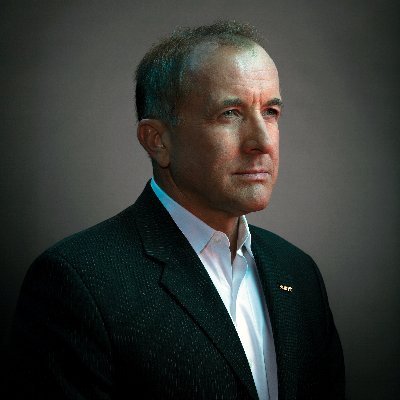
Here is my account of what happened to Scientific American before the latest meltdown, when the wokeness first began to rot this once great institution.
michaelshermer.substack.com/…
MartinCothran retweeted
As I've said many times, to think that AI is genuinely intelligent is like thinking that this is real magic. What these guys do merely simulates the effects of magical or preternatural causes, and what AI does merely simulates the effects of intelligence. And it's able even to simulate intelligence only because things that really are intelligent -- namely people -- have designed it to do so, just as the mechanisms used by Penn and Teller simulate magic only because they were designed to do so.
In both cases, the power to bring about the effects in question ultimately derives from people, not from the gadgets people have made. So, to look with awe upon AI as if it were some higher intelligence more suited to rule us than we are would be every bit as stupid as looking with awe upon the gadgets designed by Penn and Teller as if they had genuine preternatural powers. It is the rankest superstition, and that so many otherwise intelligent people fall for it today shows how extremely degenerate our intellectual culture has become.

I think that people can be roughly divided between those who think that the world is in some way enchanted and those who think it is fundamentally meaningless. The former is the more traditional and universal view, the latter a modern aberration.
"Orosius finds that there were four great kingdoms [corresponding to the ineffible ordering of God] to the four quarters of the earth: first the Babylonian in the East; then the Macedonian in the North; the African in the South; and, finally, the Roman in the West."—Henry Osborn Taylor, The Classical Heritage of the Middle Ages, p. 220
Education prescriptions are like diet advice: every generation it gets turned upside down and you find out that what was exalted at one time is entirely wrong. The only way out of the vicious cycle is to go back to the original education recipe: classical education.
The sexual ethics are very 1970s, but John D. McDonald's Travis McGee novels are masterpieces of detective fiction, in addition to defining Florida noir. I read every single one of them.

"The character can carry the entire novel."
Dean Koontz binged 34 John D. MacDonald books in 38 days fresh out of college. This is what he learned:
"He'd wanna tell you about this character, so he'd just stop. And he'd write three to five pages about this character."
"The first time I hit this, I went, 'what is this? I wanna read the rest of the story.' And then by the time I got to the end of page five of the character stuff when the story started again, I actually was saying, 'No! I wanna know more about this character.'"
"Kurt Vonnegut actually said about John D. MacDonald, if thousands of years from now, some alien race came to Earth, and they stumbled across the work of John D. MacDonald buried under the ruin of a house, it would be the greatest finding they could ever make to understand how the human race works."
MartinCothran retweeted

The study provided some answers. But didn’t change education.
“It’s just astonishing to me that we’re still fighting the same battles."
Read about the history of Project Follow Through.
apmreports.org/story/2026/10…

MartinCothran retweeted

I’m excited to head back to Thomas Aquinas College tomorrow, this time to their New England campus.
The course of study at Thomas Aquinas College (TAC), where there are no majors, is remarkably similar to the course of study at Harvard in the 18th and 19th century.
In the past, when I have posted that in 2026 Thomas Aquinas College is objectively more academically rigorous than modern Harvard, the Internet went insane. My posts about Thomas Aquinas College over the past five years total more than 12 million views.
A Catholic Great Books College with no majors may seem like an experiment, but this is exactly backwards, the modern university is the experiment. And let’s be honest, it’s not going well.
Thomas Aquinas College is the tried and true model. Deep reading, intense discussion, the passing down of a civilization inheritance, all while immersed in the beauty of the faith…If someone on the Internet has a better vision for what higher education should be I want to hear about it!

MartinCothran retweeted

Okay, not only withhold knowledge but withhold instruction on teaching them how to think.
If you had asked my young children what they wanted to be when they grew up, they would have talked about being a fireman, or a lumberjack, or a cowboy, or a chimney sweep, or a lighthouse keeper, or train engineer, or lion tamer. If they hadn't, I would have worried about them.
MartinCothran retweeted

Im not shre people realize how terrible math instruction is right now
No drills. No memorization of math facts. No direct instruction, modeling, or practice
Lots of “curiosity” and “exploration” to build “math confidence”
Essentially, kids are left to just figure it out
As I was saying...

I really appreciate Carl's skepticism of the "pyramid myth"—the widely recognized image of Bloom's Taxonomy as a six-tier triangle, with "knowledge" at the base and "evaluation" or critical thinking at the top. Nearly every teacher has seen this pyramid on classroom walls or in textbooks, treating it as the definitive representation of how learning progresses from simple to complex.
What Hendrick uncovers is that Bloom himself never created this pyramid, and it appears in neither the original 1956 taxonomy handbook nor the 2001 revised version. The actual document was a neutral classification system built by a committee of examiners to standardize test questions—more like a library's filing system than a hierarchy implying knowledge is somehow "lesser" than higher-order thinking.
Nobody even knows who drew the first pyramid or when. Hendrick traces early pyramid-like references to a 1963 writer, Leon Lessinger, and finds what may be the earliest literal drawn version in a 1972 University of Georgia training document. By the late 1970s and 80s, it spread into mainstream textbooks, eventually becoming the oversimplified symbol we all recognize today—despite having no real basis in Bloom's original work. carlhendrick.substack.com/p/…

MartinCothran retweeted

At the end of the day, education has become comfortable playing a quasi-therapeutic role it is poorly suited to do effectively. As this role becomes more central and informs classroom practice, it diminishes a school’s academic purpose and outcomes.