

'Dance like nobody's watching; love like you've never been hurt. Sing like nobody's listening; live like it's heaven on earth.’ https://xitter.cf/t.co/E9Vdr7Djg6
The Land of Plague & Brexit
Joined October 2015
- Tweets282K
- Following6.8K
- Followers26.3K
- Likes186K





Dr Martin retweeted

Small detail you missed, polls in Brazil close at 5 p.m., not 7 p.m. Voting is from 8 a.m. to 5 p.m. The extension was only announced at 5:03 p.m., when most polling stations had already closed. And a closed ballot machine can’t be reopened.
So the extension only applied to stations that were still open at that moment, roughly 1.5% of all machines, according to analyses of the public logs. Most voters had already gone home, believing, correctly, that voting had ended at 5.
Your “10 million votes an hour” assumes 128 million people voting evenly across 11 hours in every polling station in the country. In reality, it was 9 hours for almost everyone, and a few extra minutes in a handful of stations.
And you don’t have to trust me, the machine logs are public on the electoral court’s website. Several independent analyses, from different outlets, found between 34,000 and 35,500 votes after 5 p.m.
Dr Martin retweeted

The controversial 2-hour delay in voting at some ballot stations in Brazil yesterday only resulted in 34,000 extra votes -- irrelevant, given Lula beat Bolsonaro by 4.43 million
Source: TSE (electoral court)

Dr Martin retweeted

So much conspiracy out there over Brazil. Here are the facts.
1. Both candidates requested extension of voting hours. Both!
2. Allowing everyone time to vote is democratic obviously.
3. Voting is mandatory in Brazil.
4. Bolsonaro got nearly four million more votes in second round versus first, despite claims he lost votes.
5. He was always going to lose as almost all voters for anyone else weren't going to touch him.
6. It was a relative landslide win for Lula.
7. Lula has issues but isn't communist.
8. Begging Trump to invade in the name of democracy because you lost isn't a good reflection of your intelligence.
9. The right need to learn to lose and stop whining.
10. X posts don't make someone who couldn't find Brazil on a map an expert on their society and politics.
11. Lula now needs to do far better for Brazilians than he has in past and I've huge doubts he will frankly.
Dr Martin retweeted

Brazil's Election:
The far-right is pushing this narrative while leaving out half the story. Check the timeline and the numbers and the whole thing falls apart:
October 25:
Earlier in the day, @FlavioBolsonaro (PL) bragged on social media about having 200,000+ volunteer poll watchers in electoral zones.
~1pm: @LulaOficial (PT) files 1 request to extend voting (0603389-27.2026.6.00.0000), plus 1 addendum around 3pm.
~3pm: @FlavioBolsonaro (PL) ALSO asks to extend voting, with 2 separate requests (0603394-49.2026.6.00.0000 and 0603393-64.2026.6.00.0000).
~4pm: @LulaOficial takes his request to the STF.
~5pm: TSE president hadn't ruled yet. Zanin notes that BOTH candidates asked for an extension and orders it only for polling stations still open.
~8pm: TSE president Nunes Marques, appointed by Bolsonaro himself, declares Lula the winner and states on the record that the extension did not affect the result or compromise the voting system.
After 8pm: the heads of the Chamber and the Senate, and international leaders, recognize the result.
Now the math. Only 0.027% of votes came in after 5pm: 34,424 out of 127,697,270 (excluding abroad). @LulaOficial won by ~4.4M. He grew ~10M from the 1st round, @FlavioBolsonaro ~4M. That +14M came from fewer blank/null votes, third-party voters and lower abstention.
34k late votes don't flip a 4.4M lead.
Sources: public TSE ballot box logs, official TSE results, TSE/STF filings (0603389-27.2026.6.00.0000, 0603394-49.2026.6.00.0000, 0603393-64.2026.6.00.0000).

Dr Martin retweeted

The pattern was clear very early. The swing to Lula was across the board - it was picked up from the overseas votes, available early in the day. Analysts were clear - if Lula maintains that swing, he wins.
He did, and it was not even close. See my thread for explanations


Dr Martin retweeted

All that money for lovely sets and flags and high production value but the momentum has gone …. It was the money wot did it Nige. Only yourself to blame …
Dr Martin retweeted
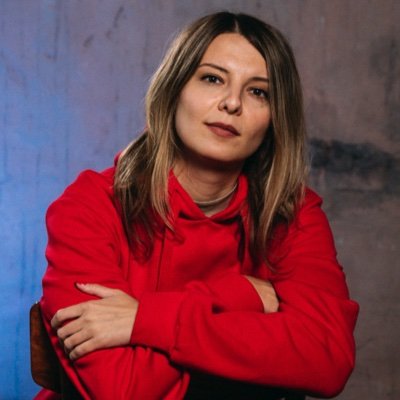
🚨🇺🇸 This may become one of the biggest political and corruption scandals in American history – directly connected to the Kremlin.
According to The New York Times, a $25 billion Alaska gas project discussed in U.S.-Russia talks had alleged secret Russian financing and involved people connected to Trump’s circle.
But if you look at the behavior of the White House from this perspective, the questions become even bigger. Intelligence support for Ukraine was disrupted, NATO and EU allies were attacked rhetorically, Putin was praised, and Starshield restrictions complicated Ukrainian operations.
🇺🇦 And if Musk is so concerned about Russian soldiers, there is a very simple solution: they can stay home in Russia and live. The moment they cross Ukraine’s internationally recognized border, Ukraine has every right to defend itself.
So the real question is: are American interests being sacrificed for Russia-linked business interests?
Share to spread the truth, tell me what you think in the comments, and subscribe to demonstrate your solidarity with Ukraine. 🔥💙💛
#StandWithUkraine #RussiaIsCollapsing #MakeRussiaSmallAgain #Ukraine
Dr Martin retweeted

A new, truly damning account of the government's catalogue of disasters in handling the pandemic. My review of Failures of State theguardian.com/books/2021/m…

Dr Martin retweeted
Congratulations, President @LulaOficial, on your re-election in Brazil.
The relationship between Canada and Brazil has flourished under our partnership. Let’s seize this opportunity to make it even stronger, together — to create major new trade opportunities, protect the environment, and build greater prosperity for both our peoples.


Dr Martin retweeted

HOW STUDENTS DEFEATED VUČIĆ WITHOUT PLAYING HIS GAME
In yesterday's early parliamentary elections in Serbia, the Student List, a political movement initiated by university students in December 2024, defeated Aleksandar Vučić's Serbian Progressive Party by 51 percent to 39 percent.
The outcome presents an analytical puzzle. The incumbent commanded all the traditional instruments of political survival: public finances, state institutions, a nationwide patronage apparatus, and fourteen years of accumulated power. The students possessed neither financial resources nor clientelistic networks, no leader, and had no prior electoral experience. Yet they defeated the regime without adopting its methods. I explain this outcome in five points.
1. The Accumulation of Discontent
The students' victory did not come out of nowhere. They inherited more than a decade of growing discontent with Vučić, which had repeatedly erupted into public protests but had never produced political change.
Vučić assumed power in 2012 by mobilizing widespread resentment against post-communist transition reforms that took place in 2001-2012. Over time, this dissatisfaction inverted. By 2016, the former incumbents (now in opposition) had lost credibility, prompting voters to search for alternatives and new agents. This dynamic produced a sequence of political new agents whose electoral appeal consistently deteriorated. Each initially raised hopes of political change, but these hopes faded as some newcomers undermined themselves while others struggled to compete in an increasingly unequal political environment. Meanwhile, Vučić had transformed Serbia's already weak democracy into a hybrid regime with increasingly authoritarian features. Control over state institutions, public resources, and much of the media allowed him to compensate for declining popular support, weaken the opposition, and maintain his hold on power.
Simultaneously, anti-regime sentiment manifested in successive waves of street protests, recurring roughly every 18 months on average. Each wave mobilized more people than the previous one, but each eventually subsided without achieving political change. (Similar dynamics was seen previosuly in Poland in 2015-2023.) Growing mobilization was thus accompanied by growing disappointment. Dissatisfaction with Vučić continued to accumulate, while confidence in the possibility of removing him gradually declined. By 2024, many voters had also lost faith in traditional opposition parties, which they perceived as part of the same clientelistic system. Increasingly convinced that political change was impossible, many withdrew from electoral politics altogether.
2. Overcoming the Coordination Dilemma
Discontent alone is insufficient to defeat an incumbent. Voters must also believe that others will support a viable alternative. Before the students emerged, many dissatisfied citizens abstained because they considered Vučić unbeatable and the opposition incapable of replacing him. Their expectations reinforced the very outcome they feared.
Beginning with university occupations in December 2024, mobilization culminated on March 15, 2025, when roughly 300,000 people gathered in Belgrade, in what was arguably the city's largest political demonstration since its liberation from German occupation in 1944. The event revealed the scale of opposition and, more importantly, made it visible to everyone. For the first time, many voters saw an alternative capable of defeating Vučić. Whether they identified with the students' political views became secondary. What mattered was their shared opposition to the incumbent and their belief that others would support the same alternative. The students had become a focal point for electoral coordination.
3. Clean Hands, No Ambition for Office
The students differed from previous opposition movements in another crucial respect: they were politically clean. Many established opposition politicians were widely perceived as belonging to the very clientelist system they claimed to oppose. The students, by contrast, were simply too young to have developed or joined such networks. They had no history of political deals, public appointments, or access to state resources. In a system defined by patronage, their lack of political experience became their greatest strategic advantage.
What followed was even more remarkable. When in May 2025 the students demanded early parliamentary elections, they imposed an unusual condition: no student could appear on their electoral list. The implicit message was clear: we want to remove the incumbent without taking his place. It was not about privileges, but about the system itself. This was a striking departure from conventional party politics, where parties seek power primarily to secure office and spoils for their leaders. When the students finally submitted their list of 250 candidates, not a single one was a student, let alone a member of the student movement.
By refusing to seek office themselves, the students made their promise to change the system more credible. This commitment appealed to voters on both the left and the right, including those disappointed by successive opposition failures and those who had withdrawn from electoral politics altogether. The breadth of this appeal was reflected in turnout of approximately 70 percent, with roughly 600,000 more people voting than in December 2023. Their self-denial did the trick.
4. Vučić Became Culturally Obsolete
The students' appeal was not simply that they were politically clean. They were also young, mostly in their late teens and early twenties. Like every generation, they had their own culture, their own values, and their own understanding of what was acceptable, desirable, or simply cool.
What Vučić (and not only him) represented did not belong in it. For them, Vučić was culturally obsolete. He represented a political world with which they no longer wanted to identify: patronage, clientelism, corruption, informal deals, and a system in which personal connections and political loyalty mattered more than education, competence, or merit. This was simply not their thing. The movement attracted and mobilized an extraordinary number of young people who saw Vučić as culturally irrelevant, in much the same way Vučić himself had mobilized voters resentful of post-communist transition reforms in 2012.
This attitude gradually spread beyond their generation. Older voters who had long grown dissatisfied with Vučić, but had repeatedly failed to find a credible alternative, began to identify with the students' rejection of his political culture. With this cultural innovation, the students changed the terms of political competition. Vučić could promise higher wages, offer young people subsidized apartments, or distribute cash benefits, but these traditional instruments had little effect on people who no longer wanted to belong to the political world he represented. It was precisely this system of corrupt clientelism and vote buying that they fought against.
5. It Wasn't the Economy, Stupid!
The explanations above emphasize what was unusual about the students' victory. But several more conventional factors also contributed to Vučić's defeat. Demographic change gradually weakened his electoral base, which relied heavily on pensioners, while younger voters constituted a core constituency of the student movement. Between the previous election and October 2026, approximately 270,000 people died, mostly elderly, while around 170,000 young people completed secondary school. The students also adopted a catch-all approach, attracting both pro-European liberals and nationally oriented conservatives who had previously supported different opposition parties.
The students also developed a different form of political organization. Instead of relying on patronage, financial incentives, and centralized party structures, they mobilized thousands of volunteers who contributed their time and energy without expecting personal rewards. Their motivation was arguably stronger than that of many members of Vučić's political machine. Political commitment thus became an alternative to the material incentives on which conventional party organizations depend.
Just as the students mobilized without material rewards, Vučić was defeated without an economic crisis. Authoritarian incumbents often become vulnerable when economic conditions worsen, as illustrated by Orbán's Hungary in April 2026. Ironically, Serbia was different. Over the preceding five years, the economy did well: living standards had risen, unemployment remained relatively low, real wages and pensions had increased, and the currency was stable.
6. Conclusion
Ultimately, the Serbian election was not merely a contest between political alternatives, but between two fundamentally different ways of organizing politics. The Serbian experience challenges conventional assumptions about the resources necessary to defeat an entrenched incumbent. The fact that a loosely organized, decentralized movement with meager financial resources, no leader (!), no clientelistic networks, and no political experience managed to defeat a powerful clientelistic political machine will become an important subject of scholarly research. The Serbian case will be taught at universities in comparative politics and political economy courses and discussed in academic articles and books.
Dr Martin retweeted

Hoje estamos testemunhando a maior derrota da extrema-direita no mundo. Brasil se converte no símbolo máximo da democracia.
Dr Martin retweeted

Sobre as eleições: você pode ser de esquerda ou de direita, só não seja burro.
1. Flávio (PL) faz publição nas redes sociais dizendo que tem mais de 200 mil fiscais voluntários em zonas eleitorais
2. ~13h: Lula (PT) protolocou 1 pedido de prorrogação da votação (0603389-27.2026.6.00.0000) com 1 aditamento às ~15h
3. ~15h: Flávio (PL) protocolou 2 pedidos de prorrogação da votação (0603394-49.2026.6.00.0000, 0603393-64.2026.6.00.0000)
4. ~16h: Lula (PT) faz pedido de prorrogação ao Supremo (STF)
5. ~17h: Sem um posicionamento do presidente do TSE, Zanin (STF), em reconhecimento que ambos candidatos pediram prorrogação, dá ordem para que seja feita onde ainda estiverem abertas as urnas.
6. ~20h: presidente do TSE Nunes Marques [indicado por Bolsonaro] declara Lula (PT) presidente admitindo que a prorrogação (1) não impactou o resultado e (2) não comprometeu o sistema eleitoral.
7. >20h: líderes da câmara e senado juntamente com líderes internacionais reconhecem resultado da eleição.
Dados:
1. Depois das 17h entraram 0,027% dos votos: 34.424 de 127.697.270 (sem exterior)
-- Fonte: logs das urnas disponíveis publicamente no site do TSE
2. Lula (PT) vence com diferença de ~4.4M: crecimento de ~10M do 1º turno versus crescimento de ~4M para Flávio (PL).
-- +14M = Menos nulos e brancos + votos da terceira via + diferença de abstenções
-- Fonte: resultados TSE
Estou fora do país e justifiquei meu voto, portanto não votei em nenhum dos dois candidatos, mas acredito que o Brasil pode ser um país melhor se nós começámos a pensar mais. Apenas matemática básica, acesso à internet e um pouco de força de vontade tornaram possível esse levantamento. Seja melhor para ter um país melhor.
#eleicoes2026


No fraud, just lying.

Terminamos de analisar os logs de urna do próprio TSE. (resultado das 06:40)
Para cada seção, contamos quantos votos entraram depois das 17h e quantos desses eleitores foram habilitados sem biometria. Os logs são públicos e qualquer pessoa pode conferir.
Analisamos os logs de 497.895 de 497.897 seções do Brasil (sem o exterior); as 2 restantes não têm log no site do TSE. Em seções onde a urna foi trocada durante o dia, lemos só o log da última urna; por isso 0,1% dos votos não entram na conta.
Resultado: 0,03% dos votos foram registrados depois das 17h (34.330 votos). Desses, 15,9% foram sem biometria (5.469 votos), contra 12,4% antes das 17h.
Atenção ao comparar: a hora acima é a do registro do voto, e a habilitação sem biometria demora mais (em média 67 s, contra 29 s com biometria). Por isso, parte de quem foi identificado antes das 17h só votou depois. Pela hora em que o eleitor foi identificado, 13,1% dos votos após 17h foram sem biometria (3.359 de 25.676), contra 12,4% antes das 17h.
Estados com maior fatia de votos depois das 17h: RO (0,06% dos votos após 17h, 9,4% deles sem biometria); DF (0,05% dos votos após 17h, 11,6% deles sem biometria); RR (0,05% dos votos após 17h, 11,0% deles sem biometria).
5.244 seções tiveram votos sem biometria registrados depois das 17h (3.195 pela hora da identificação) e foram sinalizadas, para comparar o resultado delas com o das demais.

Dr Martin retweeted

I'm still reading about this, but I find the selective framing here strange. Bolsonaro's campaign also sought voting extensions. Why omit that? He lost by over 4 million votes. This wasn't remotely close enough for a 2-hour extension to plausibly explain the result.

🇧🇷 “This has never happened before in the history of Brazil”
Flávio Bolsonaro slams the last-minute decision by Lula's former personal lawyer and current Supreme Court Justice Cristiano Zanin to extend voting by two hours.
He made the decision one minute after the polling stations should have closed
Dr Martin retweeted

Lula won by 4.4 million votes.
The number of votes cast after the polls reopened was under 36,000.
Anyone who tells you that this is why Lulu won or that it delegitimizes the outcome is pushing a completely fake narrative.
