

Fireman 🚒 turned SaaS founder. CEO @ Precision. Prev COO @ SaaS Academy, CEO @ UpLaunch (acq. 2020). Husband, father of 3 boys.
Frederick, MD
Joined July 2011
- Tweets2K
- Following2.8K
- Followers960
- Likes5K






founders tell me "my team can't get anything right"
cool
show me on your calendar where you train them
show me the process you wrote that they're not following
nothing there?
then the person you need to be frustrated with is you
when i made lieutenant my captain told me
"what you tolerate, you endorse"
a paper towel on the bathroom floor today
the trash can tomorrow
the fuel tank next week
then the water tank's low when somebody's bedroom is on fire
a standard is what you're willing to accept


ask your best employees who their lazy coworkers are
i promise you they know
they're the ones doing extra work to cover for them
despite their better judgment
want to know who's dragging the team down?
ask the people you'd fight to keep
🛸 Matt Verlaque retweeted

I'm starting to sense a divide in the tech industry:
- People thriving on autonomy who are reinventing how they work and what tools they use with AI: LOTS of work, but they're enjoying it and getting very efficient
- People used to being mentored / trained / or simply told what to do and how. Frustrated with the lack of guidance from management on what to do with AI; also frustrated by seeing some of their peers thriving; increasingly bitter about AI and the state of the industry, as a whole
Neither group seems to be aware that there's another group, or have empathy for the other group
🛸 Matt Verlaque retweeted

The founders you're told to copy can't all be right.
Instagram and WhatsApp raised venture money and grew as fast as they could.
37signals stayed small and calm on purpose.
@levelsio builds his companies alone.
The course-sellers say their system works for anyone who buys the course.
And my company, WP Engine, was built on 24/7 uptime and a lot of customer service.
You can't follow all of them. So which one is the right way to build a company?
None of them. They're outliers, even among the founders of their own time. Fewer than 10% of software companies raise money at all, so the Instagram path isn't a playbook. It's a rare exception that makes a good story. So is Smart Bear, so is WP Engine.
I couldn't even copy myself. If I tried to build a new company today the way I built Smart Bear in 2002 or WP Engine in 2010, it wouldn't work at all -- the world has changed, markets have changed, competitors have changed, to say nothing of AI.
The right path depends on your goals, your market, your life, and I guess everything else.
Your path doesn't need to look like ours. In fact, it probably won't.
longform.asmartbear.com/rela…

The first time I made a computer say "hello world," I felt like a freaking evil hacker 😈
That feeling is why people build things they don't need.
The question to ask first: should I build this, and is it the best use of my time?
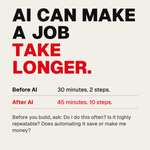
AI can turn a 30-minute job into 45.
I've seen 2 steps become 10 because building felt good. Before any AI build, ask three questions. Do I do this often? Is it highly repeatable? Does automating it save or make me money? If you're not 3 for 3, it might not be the best use of your time.

My rule for perfectionists: make it, then make it good.
If something has been almost ready for two weeks, send it to one person tomorrow.
Most companies are a 10-year overnight success.
Overnight success is the biggest load of shit in entrepreneurship. Nobody sees the thousand failures before it starts to work.

I sold my first company 5 weeks before COVID.
Luck picked the date. Years of fixing why customers quit made it worth buying.
Nobody understands marketing.
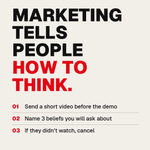
The best marketing sells the buyer a point of view, long before sales sells anything at all.
Send a short video before the demo. For everything you teach, give them a question with three options and tell them you're gonna ask about it on the call.
If they didn't watch it, cancel the call. Yes, really.
(My win rate against eight billion humans is terrible 😂)

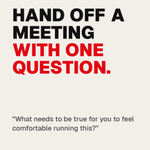
Handing off a meeting? Ask one question:
"What needs to be true for you to feel comfortable running this?"
Then be quiet long enough to get a real answer. People run the plans they helped write.

