
Data Scientist at Guardant Health. Opinions are my own
Frisco, CO
Joined August 2011
- Tweets114
- Following620
- Followers238
- Likes1.1K

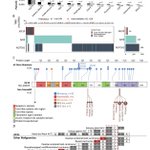
Proud to share our new publication in @JCOPO_ASCO exploring plasma-derived genomic instability status and rucaparib outcomes in TRITON2. Grateful to the team and collaborators who made this work possible! #ProstateCancer
ascopubs.org/doi/10.1200/PO-…

Matt Margolis retweeted

Prognostic Significance of Blood-Based Multicancer Detection in Circulating Tumor DNA: Five-Year Outcomes Analysis.
Read the full article. bit.ly/4sL1pvA
#MedEd

Matt Margolis retweeted

Five-year CCGA3 outcomes in @JCOPO_ASCO show that cancers with a cancer signal detected result using a blood-based multi-cancer early detection (#MCED) test had survival consistent with matched SEER populations, including early-stage disease.
The MCED test was likely to find clinically significant cancers without contributing to overdiagnosis.
Read the abstract: bit.ly/4s5ft2z
The Galleri test does not detect a signal for all cancers, and false positive and false negative results can occur. Diagnostic testing is needed to confirm cancer.

Our 5-year outcomes analysis of blood-based multicancer early detection is out in @JCO_PrecOnc.
Key takeaway: MCED test finds clinically significant cancers without contributing to overdiagnosis.
ascopubs.org/doi/10.1200/PO-…

2
72
Just shipped nhanes-mcp, an MCP server that gives
@ClaudeAI direct access to NHANES public health
data.
Open source below:
github.com/mattmargolis/nhan…
#PublicHealth #DataScience #AI

119
Matt Margolis retweeted

One important misconception around Substrate utilization during exercise is that during low exercise intensities you don’t use CHO as your energy is derived from fat...
When I started performing fat and CHO oxidation assessments in 2005, I was quite surprised by the amount of CHO oxidized (“burned”) even at low exercise intensities.
During rest, CHO contribution to total energy expenditure is ~40% while FAT is ~60%.
As exercise intensity increases, CHO contribution increases as well and by your Zone2 intensity, you are normally already burning slightly more CHO than FAT. At your Zone 3, your fat oxidation declines significantly and at your Zone 4, fat oxidation normally disappears (see picture 2- "the metabolic map").
Picture 1 is data that we presented at ACSM back in 2008. Check that at even low exercise intensities, you oxidize CHO and that at FATmax point you can oxidize ~2-2.5g/min. This is one of the reasons why if we ride at our zone 2 for 4h and don’t eat, you can eventually bonk.
When I started to see these numbers in 2005, I perceived that the current guidelines those days calling for 35-55g/h of CHO were quite low and then I proposed and started to use 80-100g/h, although I was highly criticized by most back then…
Picture 2 shows what I called “the metabolic map” trying to describe different metabolic “events” at different exercise intensities in relation also with muscle fiber recruitment. It is a very simplified version of exercise metabolism but I found through many talks and conferences over the years, that it is useful to many.
Picture 3 is the original figure of the “Crossover Concept” by George Brooks and Mercier where Fat and CHO oxidations are expressed in % of VO2max. You can also see that even at low exercise intensities (50-60% of VO2max), CHO is significantly utilized by muscle.
As an important point for this misconception, graphs haven’t helped as the visual seems that there is more FAT oxidation than CHO at low exercise intensities. At FATmax point, FAT oxidation can be generally ~0.3-0.7 (depending on fitness level). However, CHO oxidation at FATmax can be 2-2.5g/min which is still higher than FAToxidation although in the graphs it sits below…
Hope this helps 😉


Matt Margolis retweeted
A Targeted Methylation-Based Multicancer Early
Detection Blood Test Preferentially Detects High-Grade
#ProstateCancer While Minimizing Overdiagnosis of
Indolent Disease: brnw.ch/21wMo2u @BrandonMahal #pcsm


Great day participating my 7th @Cycle4Survival event in Washington DC to raise money for rare cancer research at @MSKCancerCenter @YJanjigianMD @DSolit
It's not too late to donate:
secure2.convio.net/mskcc/sit…

1
7
447


Great time this weekend at #CycleForSurvival in Boston to support and raise money for cancer research @MSKCancerCenter and #TeamHOPP @YJanjigianMD

Matt Margolis retweeted

Our latest study on disparities in genomic testing in oncology involving over half a million patients is out in New England Journal of Medicine with @LisaRotenstein, @MRamos_histmed, and @AnupamBJena nejm.org/doi/full/10.1056/NE…

Matt Margolis retweeted

New in @NEJM led by @DouglasMataMD with @AnupamBJena and Marco Ramos
Based on over 600K patient samples, we show increased use of next gen sequencing among historically underserved groups nejm.org/doi/full/10.1056/NE…
Matt Margolis retweeted
We’re honored to have @GalleriTest included in TIME’s Best Inventions of 2022 list! #TIMEBestInventions https://nitter.gq/t.co/4gYG53CN3V

ALT Cover of latest TIME magazine with the headline: The Best Inventions of 2022. 200 extraordinary innovations changing our lives, featuring a prosthetic hand with amazing precision; a color changing car; the best telescope ever; actually delicious fake steak; life-mapping artificial intelligence; diamonds made from air; a cancer-finding supertest.
Matt Margolis retweeted

Proud to join this fantastic @CD_AACR report by Dr. Kris Bosse & @CHOPCancerCntr team of ctDNA kinetics in pediatric neuroblastoma!
Am hopeful LBx can offer access to cancer genomic profiling even across rarer cancer types:
aacrjournals.org/cancerdisco…
Matt Margolis retweeted

Now online in @CD_AACR: Serial Profiling of Circulating Tumor DNA Identifies Dynamic Evolution of Clinically Actionable Genomic Alterations in High-Risk #Neuroblastoma @ChildrensPhila @PennMedicine #ctDNA aacrjournals.org/cancerdisco…

Matt Margolis retweeted

Serial Profiling of Circulating Tumor DNA Identifies Dynamic Evolution of Clinically Actionable Genomic Alterations in High-Risk #Neuroblastoma, by Bosse et al.
https://nitter.gq/t.co/HT8QfNvBp3
@ChildrensPhila @PennMedicine #ctDNA

Matt Margolis retweeted

Really excited about this discovery from a great team including @Matt_Margolis @BrennanJDecker @DouglasMataMD @DougLinMD @geoff_oxnard
Activating IGF1R hotspot non-frameshift insertions define a novel, potentially targetable molecular subtype of aden… pubmed.ncbi.nlm.nih.gov/3597…

Read my latest #research on a novel, potentially targetable molecular subtype of #IGF1R non-frameshift insertions in #AdenoidCysticCarcinoma #ACC, published with @SpringerNature in @ModernPathology
rdcu.be/cTFEZ
