

Atmospheric Informatics PhD @Wematics @MaticsLabs
San Francisco, CA
Joined September 2016
- Tweets5K
- Following1.4K
- Followers307
- Likes12.7K


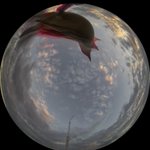





Large solar farms span kilometers, but sparse irradiance sensors miss cloud variability across the site.
This complicates performance verification, contractual guarantees, and maintenance diagnostics.
Introducing PyranoVision Networks: all-sky imagers for farm-wide solar power mapping.


Max retweeted

Our solar forecasting platform powered by the best Earth observation data and latest ML models is now live ! 🌤️ 🛰️
First weeks are on us - pick an asset (solar.wematics.cloud/#/) and get probabilistic forecasts delivered via @wematics' API.
Wondering how "earth system reasoning models" could be used for designing new observing systems.
In atmospheric sciences we currently run high-res simulations, build instrument simulators, retrieve variables and compare with the simulated reference.
How to identify which observations are worth the most? Currently it is a mix of domain expertise with vibes and sparse simulations. Do we even have evals for designing instruments?

ALT https://amt.copernicus.org/articles/18/4483/2025/amt-18-4483-2025.pdf
72
Semiconductors are dead
It’s now the era of personal asteroid mining and everyone just launches their own mining missions whenever they need raw materials I think

Hardware is dead
It's now the era of personal semiconductor fabs and everyone just establishes international supply chains whenever they need them I think
1
116
Deploying all-sky imager networks collecting proprietary data for cloud-resolving models (the evolution of current weather forecasting)


Technical moats are mostly over at this point. If you’re building something that is meant to be durable, the only moats now are:
• Proprietary data
• Network effects
• A physical component
1
1
55


Btw Dario did a PhD in biophysics

Claude has discovered a previously unknown enzyme system hidden in the DNA of bacteriophages. Beside the enzyme’s gene sits a long array of repeating DNA—a structure that looks somewhat similar to CRISPR.
We don’t yet understand what this system does, but only a handful of known systems share its features, and all of them are able to cut, copy, and paste DNA. Historically, the discovery of such programmable systems has helped revolutionize medicine. CRISPR, for instance, is now the foundation of genetic medicines. But it will take much more work to learn what this system does, and whether it can be put to similar use.
Read more: anthropic.com/news/claude-di…

103