

Stock Trader | Head of Research @TradencyRS
Joined December 2023
- Tweets4.7K
- Following8
- Followers3K
- Likes9.8K





Maximilian Hartinger retweeted
Same for $AMZN

Maximilian Hartinger retweeted
Core-Satellite
The core-satellite strategy means building a core of major established assets, with smaller satellites around it to boost performance or hedge risk. I could talk about unrealistic returns and fuel the easy-money dream, but this is about the cold, hard truth.
Realistic Goals:
Without realistic goals, you’re like a ship without a destination.
Saying “I want to make X$ per day, Y$ per week, or Z$ per month” is not a real plan.
You need to think in percentages, not absolute dollar amounts.
If you want to make $10K/month with a $10K account, that’s a 100% monthly return. With proper risk management, that’s nearly impossible to sustain and chasing that kind of goal just means you’ll be running after the fantasy dragon forever.
But $10K/month with a $100K account is more realistic. That’s a 10% monthly return, still very ambitious (120% yearly) and something only the very best traders can achieve consistently.
Personally, I aim for those 10% per month on my trading accounts. I aim for the stars to land on the moon. The key: It doesn’t stress me or push me into bad trades, but fires the desire to outperform.
On average, I hit around 5% per month some months negative, others as high as 12%.
At 5% monthly, that would compound to about 60% annually if i can keep it up.
And if I don’t hit it? That’s fine too. My investment accounts (65% of my portfolio) are already outperforming the SPX and Gold since April and YTD.
What’s the point of putting in all the extra work if I couldn’t even outperform those?
Why Dreaming Doesn’t Work in the Market:
These aren’t dream-selling numbers. They’re realistic goals. And yet most traders won’t even get there, because they’re too busy chasing the dragon.
Look at the SPX:
- +12% YTD without any timing, not spectacular.
- Round +80% from the 2022 low
- From the low, though, it’s up ~35%, all with far less risk than altcoins or single stocks.
Just note that not every year looks like this. This move is very aggressive and won't last forever.
BTC:
- +21% YTD
- Round 600% form the 2022 low
- +50% from the April low.
50% in 5 months is insane. Show me a trader who consistently pull off 10% monthly with size and prove. Not many out there.
The Point:
If your goal is to have as much freedom as possible, build a big-picture strategy that takes advantage of the major swings while adding or removing risk with your trading.
For me, the best approach is a core-satellite strategy:
Core: Established assets like Gold, SPX, NDX, or BTC, the safe anchors that increase your buying power in the long run.
Satellites: A smaller portion of your portfolio for trading, stock picking, or hedging.
This way i maximise efficiency and limit risk. Most stock pickers, altcoiners, and traders don’t even outperform the majors, while taking far more risk and burning far more time. The market makers know the urge to always do something is strong, and they profit from it. Most think: More work equals a better outcome.
Betty Crocker sends her greetings.
The Traits You Need
The most important traits for this kind of strategy are patience, timing, and discipline.
Without patience, you won’t wait for the big moves, sometimes years.
Without timing, you won’t create meaningful returns.
Without discipline, you won’t buy when the chance comes, nor rebuild cash when it’s time to step aside.
You don’t need perfection. You need to build assets at major pivot lows and cash at major pivot highs. Repeat this process, and your returns will likely outshine those spending 10x of your effort.
Buy assets = Reduce cash
Sell assets = Increase cash
Always think in percentages, not absolutes.
At major pivot points, your goal is to shift exposure as much as possible, building cash into highs, building assets into lows.
And I’m talking about established assets, majors like SPX, Gold, BTC. Altcoins or single stocks behave differently. They chop in violent ranges for months, trapping capital without producing real returns, while investors keep praying for targets that might never come.
Nobody knows, so don’t get stuck in hoping for “one last leg” or BCS targets. For altcoins and single lower cap stocks you need real trading skills.
Build layered positions that get validated or invalidated along the way, all while already booking profits in the process.
The Bigger Picture
A good trader might achieve 10% monthly consistently (some maybe more, haven’t seen prove for that tho), but usually with enormous time effort. And if you trade with only your own money, that part of your portfolio is probably too small to outperform your investment accounts in absolute numbers. Propfirms can help here, but they have their own steppingstones.
The average altcoiner still hasn’t booked real profits, still waiting for BCS targets, riding every swing like a rollercoaster. That’s not bad luck, it’s by design. Majors made people richer. Most alts only made their holders poorer.
Meanwhile, the average DCA investor makes ~10% annually without timing. Not impressive, but it’s real money compared to most “dragon chasers.” Enough to keep up with inflation and still add a little extra. Now add just a little timing, and the results change completely.
Imagine you caught BTC in the recent drop in April almost perfectly with a $100K account and are up 50%. That’s $50K profit.
For a small account this might not feel like much, but statistically, it’s already outperformance over all other majors and most other players. And once you let compounding do its work, you can still make it, as long as you have enough patience.
Final Thought:
The ones who chase unrealistic, non-mathematical dreams usually pay the price in losses and in stress.
Trading is a powerful tool: It can boost performance, teach you about yourself, and speed up your understanding of the game a lot. Trading can also be a source of joy and if that’s the case, why not pursue it as often as you can?
Personally, I don’t enjoy sitting in front of the computer all day that’s why I focus on refining macro strategies like this one. One the provides me real freedom of time, instead of making me a slave to the tape.


Maximilian Hartinger retweeted
For the past year, all of my main trading has shifted entirely to the stock market. For those who don’t know why I made the switch, this post is for you.
Compared to other markets, the stock market offers much cleaner inefficiencies to exploit. Crucially, it wasn’t created with the sole purpose of draining retail liquidity. Don't get me wrong, it is still a capital-generation engine on steroids. But compared to crypto for example, the structural differences are massive.
Here is my breakdown of why equities take the crown.
The Pros
Cleaner Price Action: The stock market is heavily regulated. This prevents many of the predatory, manipulative tactics rampant in unregulated markets, allowing cleaner technical setups to form.
Real Fundamental Backing: Behind these tickers are actual companies generating real revenue. These profits often flow back into the market via dividends or buyback programs, driving genuine macro growth rather than pure speculative boom-and-bust cycles.
Insane Trend Persistence: Once trend and momentum are established in a stock, they can last for weeks, months, or even years. This allows for stress&screen free trailing and extraordinary R:R performance on selected plays.
Built-In Mental Breaks: With the markets closed on weekends, your mind actually gets a chance to rest and reset.
The Cons
Overnight Gaps: Market opening times can lead to nasty overnight gaps, which can occasionally result in larger losses than originally planned in your risk management.
Fragmented Instruments: Trading vehicles can be confusing or expensive, and availability varies significantly depending on your country's regulations.
Capped Leverage: You won't find the degenerate 100x leverage here.
Why the Pros Win by a Mile
Personally, I don't need massive leverage. Some of these tickers are so inherently volatile that trading anything above 10x is pure madness anyway.
The real magic lies in the simplicity and the massive asymmetrical opportunities equities offer. When a play moves in your favor and you lock in initial gains, the R:R on the remaining position can reach completely absurd numbers. In fact, some of my short-term plays have performed so well that I've held them for over a year as "moonbags," driving extraordinary outperformance in my portfolio.
This is hands down the most swing-strategy-friendly market I have ever seen. The macro trends a stock can establish are perfect for riding positions for months. Compared to the choppy, range-bound, PVP nature of FX or crypto, I can trail my positions here for ages. Because major stocks are driven by real revenue, you aren't buying vapourware scams that exist only as a whitepaper narrative destined to go to zero.
My Blueprint for Finding Great Tradable Stocks
Building a consistent swing edge in this market is remarkably straightforward. High-probability stocks usually share a few core characteristics:
A Long-Term Upward Bias: They naturally tend to move up the majority of the time.
Solid Fundamentals: Focus mainly on established companies with real revenue and actual products. If you do play a speculative "idea" company, ensure the narrative is rock-solid, treat it as a high-risk play with clear TPs, and leave a small runner to ride the hype as long as it lasts.
High Liquidity: Look for consistent dollar volume above $30M–$50M. TradingView displays volume in shares by default, so make sure to calculate the actual dollar liquidity.
Technical Respect: They react beautifully to classic S&D, S&R, momentum lines, and MAs.
Moving forward, I’m going to start dropping more educational content focused on the stock market.
Honestly, it’s wild how many traders miss most of the easiest money plays on the planet or even burn out, because they're too busy over-refining and searching for a non-existent holy grail.
Stay tuned.
Maximilian Hartinger retweeted
Robotics
Another big one for the future and already a huge part of the present. In many industries, countless steps are automated: Entire car assembly lines operate with pre-programmed robotic systems. In just a few years, almost all stationary processes in modern industry will be performed by robots.
The main challenges for now remain creative thinking, non-stationary use cases, and costs. But enormous amounts of money and energy are already flowing into this sector, and with AI rapidly filling in the creative problem-solving gap, the missing puzzle pieces are coming together quickly.
The Missing Link
Until recently, the biggest limitations were free movement in space and autonomous problem-solving, but both have made massive leaps forward.
With modern AI, robots can now handle far more complex tasks, scanning and adapting to changing environments in real time. Kinetics and mechanics have also evolved rapidly: Today, you can (for a high price) order a humanoid robot that walks, balances, and performs surprisingly impressive actions.
They often haven’t fully lived up to the marketing yet, but the progress is undeniable. In a few years, it’s realistic to imagine robots taking over simple household jobs that humans find boring, for a “salary” no human can compete with. They don’t need sleep, food, or holidays. Replaceable jobs will be replaced.
How Can We Profit From This?
It has always paid off to stay ahead of technological shifts.
From an investment perspective, I’ve looked into companies betting big on this wave of innovation. All robots need:
- Batteries
- Mechanical parts
- Semiconductors
Some of the established players already deep in robotics include Toyota, Hyundai, and Tesla, as well as Synopsys, the hidden backbone of the semiconductor industry. I’m already involved in or have shared setups for all of them, either here or in the discord.
More speculative, smaller innovators also exist. Most global players focus on one specific part of the value chain, but all are crucial. Spreading capital across several of these sectors is wise; innovation could push one into a monopoly position in its niche.
Also, components like lithium batteries aren’t only used in robots, many of these companies are already highly profitable in other industries and are now expanding into robotics. Some even pay dividends.
What Still Needs to Be Solved
- Costs must be significantly reduced to make robots viable for everyday consumer use
- Security standards must be extremely high to prevent accidents and misuse
- Energy efficiency needs to improve, many humanoid robots are still too power-hungry
- Regulation and legal clarity are needed for liability, safety, and ethical concerns
- Data privacy must be guaranteed, especially for home robots that record their environment
- User interfaces need to become intuitive and idiot-proof for mass adoption
- Maintenance and repair networks must be established to support large-scale rollout
Final Thoughts
Robotics could easily be one of the defining industries of the coming decades. Development moves fast, the first “servant” robots are already operating inside major companies like MCD, and no, I’m not talking about lawnmowers.
The race for the first true end-consumer household robot has already begun. Early models will be stiff, and many will initially claim they don’t need one. But once prices drop and people realise they no longer have to wash dishes, clean floors, or do tedious chores, demand will explode.
AI alone will massively disrupt labor markets, but robotics is the atomic bomb by comparison. Make yourself useful, non-replaceable, or free from the system and stay on top of the trend. Otherwise, the future may not wait for you.

Maximilian Hartinger retweeted
I trust my own observations, conclusions, and experience more than the opinions of external experts.
If you want to succeed on your own terms, build your own framework, refine it through action, and let results shape your belief system.
Maximilian Hartinger retweeted
Don’t take advice from people who aren’t living the life you want to live. It’s like asking someone who’s unhealthy and overweight how to build the body of your dreams. They might talk, but they clearly can’t walk it.
Today the world is drowning in opinions. Millions of voices, thousands of podcasts, endless “experts” telling you how to live, sleep, eat, train, think and succeed. There’s nothing wrong with learning, I enjoy it too, but every few months there’s a new “groundbreaking” discovery that suddenly makes you feel like you’re doing everything wrong.
You see people who look visibly unhealthy explaining the best sleep schedule, the best nutrition, the best supplement stack, yet they can’t seem to apply any of it themselves. Maybe they’re driven by something else entirely, but that’s hard to detect when you only see a neatly packaged 1.5-hour showcase of them as an “expert.”
So here’s the simple question: If someone isn’t living the life you want, why take advice from them? Like Ray Dalio emphasises: Opinions are worthless without evidence.
Without evidence, results, or real-world proof, they’re worth nothing. There’s the scientist who can talk for hours about the perfect path to health, yet his own lifestyle shows he has no idea how to implement it. What’s all the theory worth then?
On the other hand, there might be someone who can’t explain everything in fancy, scientific terms, but lives a healthy, fulfilled, disciplined life and clearly knows how to make it work in reality. For me, the answer is obvious: I listen to the person who knows how to do it, not just how to explain it.
Another factor you should consider is that some people might be excellent in one area of life, but complete disasters in others. That’s why it’s wise to never judge a person by a single achievement. No matter how good someone is in one field, you should take a closer look at what price they paid and how they’re doing in the rest of their life.
Today, if someone is materially successful, society often praises them like some kind of god. But behind the scenes, that same person might be depressed, constantly stressed, physically unhealthy, or living a life you would never want for yourself.
Success in one dimension doesn’t automatically mean success in life as a whole.
And in our polished, filtered social media world, it’s almost impossible to know whether someone is actually who they claim to be. You only see the highlights and filtered moments, not the reality. So instead of categorising life simply as successful or not, look at the full picture. Consider health, peace of mind, relationships, purpose, and overall well-being. Material success alone doesn’t tell you anything about the true quality of someone’s life.
In a world overflowing with noise, I keep it simple: I take advice only from people who truly live the life I want to live in this specific area. Then I experiment, try things for myself, keep what works, and trust my own results instead of doubting everything every time a new opinion goes viral.
Maximilian Hartinger retweeted
I don't know about you, but I see a recurring pattern.
The FIFA World Cup is the biggest sports event on this planet, with the 2022 final reaching around 1.5 billion people.
Now you might ask what soccer has to do with the markets, and there are some very simple answers:
First, it makes people connect and talk. Messages, news, and emotions spread much faster in such an environment.
Second, it makes people emotional. Look at the fans, for them it’s a rollercoaster of emotions. Most people who actively engage in this event will experience heightened internal emotions, and the majority won’t be able to stay in control when additional emotional triggers from the outside world or the market come into play.
Third, it makes people consume more alcohol. Alcohol is arguably one of the worst drugs out there, and while I enjoy it at times too, I perform worse in all areas of life when I have too much of it. I become more emotional, weaker, complacent, negative and I see similar patterns in others who consume too much. Football games are a massive trigger and a reason for many to drink a beer or two more than usual.
Fourth, there is a huge betting industry behind all major sports events nowadays. More people get exposed to gambling and the thrill of it. Money is needed for this “hobby”, so why not get rid of those deep red bags from the scam market and doing finally something "smart" with it. After the event is over, many will look for other opportunities to satisfy these freshly unlocked addictions.
Fifth, and probably the most obvious one, it is simply a massive distraction for most people. If you consider that most who were ever going to invest have already entered crypto over the last few years, mostly at the wrong time. It means that the majority is deeply underwater and in pain, but programmed to hold or buy more. A proper distraction from that pain is more than welcome.
Many will leave the market behind, or at least pay less attention and look at the bright side of life, especially with the summer months hitting the Northern Hemisphere as well. Eventually, the cycle resets. Most have capitulated and want nothing to do with the market anymore, and while the biggest opportunities where quietly forming, they have spent their time with BBQ, beer, and football, while smart money was building their positions for the years to come.
Simply look at the timing between the market and the World Cup. Over the past decade, it has repeatedly happened during or after major HTF corrections in the newest and most retail/gambling-oriented market there is. People are desperate after losing it all or merely hoping to get back to break-even, and the World Cup becomes their temporary relief from the pain.
It’s all connected.
Bread and games haven’t vanished, they’ve evolved.

Maximilian Hartinger retweeted
Flow
If you want to become truly great at anything in life, you need to unlock the flow state. It’s that magical place where everything seems to align, you’re fully immersed in an activity, all the puzzle pieces fit together effortlessly, and time seems to disappear. There’s no overthinking, no second-guessing, just pure presence. You’ve been there before, that effortless, almost magical state where everything just flows. But have you ever wondered why it happens?
Being in flow means being completely absorbed by something that resonates with your true purpose. It’s an activity that’s neither too easy nor too hard. In the beginning, new things can feel overwhelming, but over time they become easier and often, you’ll naturally want to raise the difficulty to stay engaged. If something becomes too easy, boredom kicks in and you slip back into default mode. If it’s too hard, constant failure blocks you from entering flow. The sweet spot is the challenge that stretches you just enough, but remains doable.
Science has studied this phenomenon extensively, especially thanks to the pioneering work of psychologist Mihály Csíkszentmihályi and his book Flow. He identified key conditions that make people enter the flow state:
Clear Goals
Your brain needs a clear direction. Knowing exactly what you’re trying to achieve gives your attention something to lock onto. It doesn’t have to be a big goals, even a small, well-defined task works.
A Balance Between Challenge and Skill
Flow happens when the challenge level is just right: Not too easy (which causes boredom) and not too hard (which causes anxiety). This sweet spot stretches your abilities without overwhelming you.
Immediate Feedback
Activities that give instant feedback, like a musical instrument, sports, drawing, trading, writing or even good conversations, help your brain adjust and stay engaged in real time.
Deep Focus and Concentration
Distractions kill flow. When your attention is fully captured by what you’re doing, you enter a single-channel mental mode. Neuroimaging shows reduced activity in the prefrontal cortex during flow, which explains why self-consciousness and time perception fade.
Loss of Self-Consciousness
In flow, the inner critic quiets down. You stop thinking about how you look, what others might think, or whether you’ll succeed, you simply do.
Distorted Sense of Time
Time either speeds up or slows down. Many athletes, artists, and performers describe this as “time stopping” or “the world disappearing.”
Intrinsic Motivation
You’re doing it for its own sake, not for rewards. Flow thrives in activities you genuinely enjoy or find meaningful.
Neurologically, flow is a neurochemical cocktail:
- Dopamine sharpens focus and motivation.
- Norepinephrine boosts alertness.
- Anandamide (the “bliss molecule”) enhances lateral thinking and creativity.
- Endorphins reduce pain and create euphoria.
- Serotonin floods in after the state, leaving a sense of deep satisfaction.
This combination creates a state where your brain operates at peak performance while feeling effortless. That’s why athletes call it “the zone”, musicians call it “the groove”, and many spiritual traditions describe it as “being present”.
Interesting studies illustrate this clearly. Researchers gave people random quizzes during their daily lives and asked about their happiness in that moment. Many reported being happiest when deeply engaged in their work, yet at the same time, they also wished they were elsewhere. At home watching TV, most said they weren’t fulfilled but still preferred staying put. Strange, right?
The reason is simple: TV doesn’t challenge our abilities nor lead to meaningful outcomes. Recreation is important, but if you want a fulfilled life, more time should be spent doing meaningful things rather than just killing time.
Another fascinating study looked at elderly people living simple, remote lives in the Italian Alps. Their days were physically demanding: Producing food, caring for animals, and climbing steep terrain daily. They had little to no modern luxuries, yet ranked among the happiest groups ever studied. Their lives were purposeful, productive, and useful.
Younger generations from those same families, who moved to cities for higher salaries and easier lives, consistently reported lower fulfilment, poorer health, and less happiness, even though they enjoyed more comfort and luxury. They would never consider moving back, yet they were clearly missing something essential.
Reading about these studies opened my eyes: A fulfilling life doesn’t come from what you have, but from what you do. It’s about purpose, usefulness, being needed, and being productive. Modern society has largely turned into a machine that fuels unfulfilling material dreams. Many people spend their lives chasing things that don’t actually make them happy.
Most modern jobs lack purpose. Many are reduced to repetitive, isolated tasks to maximise efficiency. Add decades of doing the same thing and you see why so many people hate their jobs: They’re neither challenged nor fulfilled. Yet, almost any activity can produce flow if approached correctly. The key is doing whatever you do with 100% intention and focus. Even repetitive tasks can bring joy when you fully immerse yourself in the small magical details of the universe.
The happiest people I’ve met share a pattern: They’re useful, productive, and helpful. They don’t complain much, they support others, and they keep their hands and minds busy. They’re the heart of communities, the coworker everyone turns to for help, the neighbour who can fix anything, the person who radiates good energy.
Science is clear: Flow is the key to happiness and fulfilment. And flow can arise even in seemingly boring activities if you do them right. The world is full of magic, but most people rush past it on autopilot.
A simple piece of wood carries thousands of unique patterns.
The sky paints a new picture every single day.
Plants burst with endless shades of green and colours beyond counting.
Machines like cars are quiet wonders of human ingenuity.
Water never looks the same twice and has thousands of shapes and forms.
Even your body is in constant transformation, shifting moment by moment.
If you turn off autopilot and start living with intention, love, and curiosity, you can unlock flow in every area of your life.
When that happens, life becomes vibrant, exciting, and deeply fulfilling and everything you want to achieve starts flowing naturally.

Maximilian Hartinger retweeted
After two years of being locked in, living in a strange country in one of the most remote places imaginable, it is finally time to open a new chapter.
Here Is What I Gained During This Time:
Financial Independence: I quadrupled my yearly income by putting in the thousands of hours required to become a profitable trader. I also launched my first online business, simply by putting myself out there despite the discomfort and the fear of judgment.
Physical Mastery: Over the last two years, I pushed my body and physical health like never before. I took up skiing and mountaineering, and I approached my stretching and diet with the discipline of a professional athlete for most of the time. While there is still much room for improvement, I am genuinely happy with how far I have already come.
Mental Fortitude: By walking through the fire of prolonged isolation, I have built my mindset into an almost unconquerable fortress. In the process, I have become my own best friend, rarely needing validation from the outside world.
Intellectual Growth: My intellectual skills have reached an all-time high, sharpened by trading, writing, and the relentless pursuit of useful knowledge. I acquired several high value skills with no financial roof.
Spiritual Alignment: While I may have set some spiritual goals aside, the fact that I value and like myself more than ever is a spiritual achievement in its own right.
What I Paid For These Achievements:
Extreme Isolation: I cut my social life to an absolute minimum. In this environment, distractions don't exist, no bars, no clubs, and no mindless ways to squander my money or brain cells. In two years, I went out partying maybe seven times. In winter i was often cut off from the world by harsh weather, with no easy way to order goods or access the variety of food I was used to. Occasional power or water outages were not out of the ordinary, they were simply a part of life that required a constant state of readiness. While some of these constraints were ultimately positive, they require a brutal period of adjustment when moving from a major civilization hotspot.
Social Filtration: The contacts I did maintain were either for local insight or out of necessity. I’ve never been the biggest socialite, but over the last four years, including my travels, I have intentionally surrounded myself only with those who align with my goals, primarily my fiancé, the community I built online, and fellow mountaineers who share my drive. You become who you spend time with. I can still have fun with old friends, but when the goal is to retire from the system in your 30s, fun becomes secondary.
Family Sacrifice: I paid with the loss of quality time with my family. This is the cost that bothers me most. My parents and grandma are not getting younger, and their aging is the primary reason I intend to be more present from this point forward.
Emotional Disconnection: I paid by becoming detached from my emotions and, consequently, from those closest to me. Business and family don't always walk hand-in-hand, finding a balance almost cost me more than I was willing to pay. Fortunately, by shedding toxic beliefs and the people who pushed me toward them, I found my footing. Sometimes you have to swing to an extreme to find the center. My pendulum swung far past the target, but I’ve managed to slow it down near the balance point. Material success is valuable, but it isn't everything. Being obsessed all you life with it is just another way to play the game on their terms.
Pure Uncertainty: I paid in the currency of massive, daily uncertainty. I lived with no fixed income, in a foreign land, with no safety net, working in one of the most volatile fields in existence.
The Experiences That Shaped Me Most:
Life and Death in the Wild: Living this remotely fundamentally changed my relationship with death. These mountains are vast and unforgiving. You see wild horses and other animals roaming free, but if you understand how nature truly works, you know that freedom comes with a price. I have buried many dogs, found countless bloody animal carcasses in the wilderness, and encountered bear and wolf tracks more than once.
The Weight of Responsibility: We once hosted six street dogs, it was like running a kindergarten and, at times, incredibly stressful. Because they were all under three years old, their energy was chaotic. We couldn't bear to leave them outside in the winter, but eventually, it became too much to handle. We had to set a boundary, keeping only our own dog and one other who was recovering from a smashed hip. We decided to support the others as street dogs around our house instead.
Tragedy struck some time later when all the street dogs in the area were poisoned. Over twenty dogs died, including two of the ones we were still caring for. It was a brutal lesson in the limits of what one can control.
Reconnecting with the Food Chain: I’ve experienced what it truly means to take a life. We were invited to a traditional barbecue where we helped a local family slaughter a cow. I held the animal as the local ended its life, I helped hang it to bleed out and assisted in removing the organs. Believe me when i tell you, most people who make fun of vegetarians wouldn't touch meat again, if they had to face that process instead of just peeling back a plastic cover.
Similarly, we were gifted a chicken by nomadic locals living at 2,000 meters. I eventually had to butcher "Little Hansi" myself after one of our dogs caught him. As harsh as it sounds, this is how it should be. The industry has detached us from the reality of our food. People wouldn't eat meat every day if they had to take the life themselves.
The Humility of Wild Peaks Climbing: The mountain range here is entirely different from the Alps. These mountains are huge and humbling, but they aren't a playground. There are no signs, no established paths, and no guarantee of rescue. While the famous peaks of the Alps can feel like amusement parks where people are carried up regardless of skills, truly wild mountains demand a different level of respect. They shaped me into a real mountaineer.
Breaking the Loop by Living far from Home: Without social safety nets or familiar traditions, is a transformative experience. You are forced to build your own routines because the old ones no longer apply. You cease to be a mere product of your childhood, repeating the same cycle year after year. It’s like finally leaving the loop.
Operating globally has shown me how much is possible outside the system. People feel trapped because their entire life centre is rooted in one country. When you move beyond those borders, you realise the cage was never actually locked.
What’s Next:
Reconnecting with Roots: After four years away from home and family, it is time to return to them. I recognise that I don't know how much time they have left, and I refuse to live with the regret of not being present. Family is a priority now.
The Path of the Mountain Guide: A major life goal remains, becoming a certified mountain guide and completing my mountain rescue training. My intent isn't necessarily to spend my days carrying clients up peaks, but rather to push my technical skills to an elite level. This certification is also a prerequisite for a long-term dream: Starting my own helicopter operation for backcountry skiing. Furthermore, it will reintroduce me to the mountaineering community, one of the most genuine and high-caliber groups of people in the world.
Finding the Right Community: Living in total isolation has its disadvantages. It is difficult to find mentors or partners for high-stakes projects. Among the locals here, I am in the top 5%, and the community is simply too small for consistent growth. While skilled tourists pass through, they rarely stay long enough for the right conditions to align. In the Alps, however, I have a deep network and a community of experts in every valley.
A Gift from the Universe: For months, the direction was clear, but the destination was not. We knew we didn't want to return to our hometown or slip back into old, stagnant routines. We wanted to be back in Europe, but on our own terms.
Then, an incredible opportunity appeared out of nowhere: The chance to manage a mountain hut not far from where we grew up. We will be living at 1,000 meters on an open south facing mountains side, with some of the most stunning views in the region. We will have our own animals and can live there freely throughout the whole summer.
It is the perfect sanctuary, a place to intensify my guide preparation training and rejoin mountain rescue while gradually adjusting to the faster pace of Central European life. Finding a home with four animals and no traditional work contract is often a nightmare, this opportunity is a gift from the universe that simply cannot be planned.
The Reward of Trust: I am incredibly happy with how life is unfolding. Everything is falling into place. The hard work is paying off, and life is rewarding us for following our dreams despite the uncertainty and the fear.
In my view, this is exactly how life is meant to work: You stay open-minded with your intentions, you trust the process, and you show up for the work.
If you want to break free from old patterns and build yourself into the version of yourself you’ve always wanted to be, leaving everything behind for some time is the ultimate game-changer.
Write your own story.
Up only from here.
Maximilian Hartinger retweeted
$SPCX aka SpaceX is launching publicly on June 12.
I’m not a fanboy, but I’ve got to say I have a huge interest in this company. I use #Starlink on a daily basis since my lifestyle involves wandering from remote place to remote place, and I'm a very happy customer overall.
This tech is a massive step toward space travel and already a fully functioning, revenue-generating product.
Overall, it's one of the most interesting IPOs in a long while. The valuation is crazy, though, so once those first lockup periods end, initial sell pressure from early investors might be incredibly high.
They target $135 per share with only around 5% available to trade publicly. Elon holds about 42% of the equity but maintains roughly 82% voting power over his baby due to his Class B stock.
It's most likely gonna get bought up by major ETFs, creating massive buying pressure in the beginning. With so little supply until the first lockup periods, we might see a significant artificial hype rally.
This is what a typical high tier listing looks like: Initial pump, followed by a dump that ultimately establishes the true public price over the coming weeks, months or even years.
I will use the IPO to gain some exposure, starting small. If it gives me the right entries, I'll add some momentum-based LTF positions that can be turned into long-term holds after hitting local TPs.
If you watch my videos, you know exactly what I mean by that.
Don't just fall for the hype and agendas that will go alongside the pumps and dumps on this one. It's gonna be a volatile ride. Look deeper.
Elon can't sell any of his shares until 2027. This is not some meme coin without value to him, it's his purpose, his mission, and its funding requires serious long-term stability. We are talking about a private company that built infrastructure previously only achieved by entire nation-states. While it's a tradable asset like anything else, it's undeniably unique.
Just look at prior IPOs where Elon or other tech elites are involved. It’s rarely a straight line up. As an early investor, your goal is to generate massive public buying pressure first so you have the liquidity to offload later.
Space Sector Momentum & The Macro Liquidity Shift
I bought $RKLB around $80 with my mentees in early May and just locked in massive gains after a clean 100% rally.
Let's see how the broader space sector performs leading up to June 12th. The hype is steadily building, and the SpaceX IPO is most likely going to completely dominate the market's attention and suck up major liquidity right after launch.
Don't just stare at the $SPCX ticker next week. Look deeper into the supply chains that back the entire infrastructure of SpaceX.
They don't build every single component themselves. For a massive venture like global satellite internet and interplanetary space travel, you need high-end suppliers and specialised contractors.
A rising tide lifts all ships.
If you want to play the "picks and shovels" of this historic IPO mania, keep a sharp eye on these secondary plays:
The Metals: Companies like Carpenter Technology ($CRS) and Materion ($MTRN) providing extreme-temp alloys for Starship engines.
The Silicon: STMicroelectronics ($STM), the massive semiconductor backbone pumping out the chips for Starlink terminals.
The Proxies: EchoStar ($SATS), which holds a massive equity stake in SpaceX from a prior spectrum deal.
The whole sector has been doing incredibly well over the past few months and years. This could be the final event for it, creating peak attention, massive hype, and ultimate exit liquidity. Pay attention and play the long game.
Many growth companies in this sector are highly overvalued right now, which doesn't mean they can't go higher, but from a rational perspective, it's better to let prices come to you instead of chasing into a potential top.
Time to put on the tinfoil hat for a second: Look at the broader markets. Crypto just exit-pumped across the board, and the public debut of Elon's crown jewel is happening immediately after. From a capital-rotation perspective, those two events are almost certainly connected. Big money is liquidating crap while real assets keep on rising. Coincidence? I think not.
As Elon famously said: "The final step of DOGE is to delete itself." I would mark July 4th on my calendar if I were you.⏳
nitter.gq/elonmusk/status/186366…
Fun times ahead. My plan for the SpaceX IPO in short:
· Gain a very small amount of long-term exposure on day one. Just in case.
· Momentum scalp the potential initial hype pump using LTF and locking in local TPs, with the option to let a portion ride as a long-term hold.
· Go big on core long-term investments only after a potential repricing occurs following the expiration of the rolling lockup periods.
I recently shared an updated stock list built around my space travel and infrastructure narrative.
10 companies stand out. While some of them are still more narrative-driven growth stocks, others are already established global players or profitable businesses.
Space travel and the infrastructure required for it will be a major theme in the coming years. A lot of these companies are tied to U.S. government contracts, and huge amounts of capital are already flowing into the sector.
And it’s not just exploration driving this development, military and strategic interests will play a massive role as well.
The first country/company to build proper infrastructure up there will gain control over space.
Launch, fuel, software, shielding, satellites, antennas, life support, and manufacturing, these are the key pillars needed to make space travel work. A lot of companies are operating in this sector, and each one brings something important to the bigger picture. The key is to find the ones that either already have, or are aiming to build, a strong position in a critical part of the supply chain.
Some companies may have wild ideas and huge upside potential, but often it makes more sense to focus on the ones that already run profitable, proven business models, like LHX, NOC, BA, LMT, or AIR.
With companies like these, you can build relatively safe base exposure, because the more speculative “space” side of the business is often only a smaller piece of a much broader and already functioning operation. More speculative space names, on the other hand, are often betting almost everything on potential future dominance in one specific niche.
Companies like RKLB, ASTS, LUNR, and PL have very strong ideas, and some of them are already showing real progress. But there are still many variables involved, and space travel remains a dangerous, capital-intensive, and execution-heavy industry.
They are all interesting companies, ranging from established global players to highly speculative growth names. Many of them have already had strong runs over the last few years, but could still continue to perform well in the not-so-distant future.
The newer names especially look like they are in the up-leg of the typical pump-and-dump formation I’ve talked about many times before. And the reality is: These kinds of moves can last for years. If you wait for the “perfect entry” every single time, the entire narrative rotation might already be over by the time you finally decide to act. Adaptation is key.
That’s why it may be difficult to find clean, discount-based entries in this space right now. Regardless, there are still some names I want exposure to, so there will be a way.
The biggest hurdles for this sector remain:
- lowering costs
- reusability
- reliability
There are already rumors of SpaceX going public this year. And if that happens, it would be a major event for the entire sector. Because the truth is: SpaceX is the most advanced company in almost all of these categories.
They currently dominate in:
- Launch frequency
- Launch cost
- Rocket reusability
- Payload delivery
- Operational reliability
They are also the biggest satellite infrastructure company through Starlink, and one of the very few private companies already capable of sending humans into space.
For those reasons and given Elon’s history of taking tradable assets public, I suspect SpaceX would attract a massive share of the liquidity flowing into this sector if it were to launch publicly. That said, it’s important to also watch the supply chain.
For example, RKLB and SpaceX are already connected within the broader space ecosystem, and both could benefit from continued capital rotation into the sector. The same goes for parts of the semiconductor industry, because these ventures require huge amounts of advanced chips, communications hardware, and electronics.
These are just few examples out of many, so keep the supply chain in mind. It is often not just one company that builds an entirely new industry. Entire sectors are usually built by networks of companies, each one controlling a different but important piece of the puzzle.
This could become the modern equivalent of what the East India trading companies once were in the 1600s. But just like back then, the opportunity comes with major risk. This is likely one of the riskiest sectors out there.
Some companies will gain absolute dominance. Many others will fail.
But this does not automatically mean that SpaceX would go public and price is only move up from there. A lot of early private investors have likely been waiting for exactly that kind of event to offload profits from early-stage positions onto public buyers. So it makes sense to also study how other high-profile public launches behaved in the past.
Overall, it’s a company and sector in general that absolutely needs to stay on the radar.
If you are interested, this is my public watchlist of narrative-based stocks I’m watching:
tradingview.com/watchlists/1…
All setups and ideas can be found for free in my Discord.
discord.gg/Q3SespfzN2

Maximilian Hartinger retweeted
Everyone with a family, a job, hobbies, or simply a life should focus on swing trading.
The real edge for most people is building positions around higher timeframes, letting probabilities play out while life continues outside the screen.
Swing trading is about time freedom, location freedom, and scalable upside without turning your day into a constant battle with noise. Swing trading is very different from scalping. It demands patience through unrealised PnL, a solid macro perspective, and the ability to hedge positions with intention.
Once the skill is developed, positions can compound for months or even years. Management becomes minimal. You take a few calculated entries each week or month, while your focus stays on building businesses, experiences, and life outside the charts.
You get paid while you sleep. You operate with clarity instead of noise.
Minimum effort. Maximum result.
If you replace one job with limited time freedom by another that keeps you glued to the charts, you may gain location freedom and scaling potential, but you still sacrifice the most valuable resource: Time.
Without the ability to hold and manage swing positions, trading simply becomes another demanding routine.
Build the foundation first. Develop a style that works alongside your life, not against it. Once consistency is achieved in the most effective league of the game, you can still explore higher-frequency execution if you truly enjoy it, but then from a position of strength.
A solid swing framework pays you while you live your life, not only while you watch the screen.
This is what most people truly want, yet only a small group actually focuses on it. The majority gets pulled into the hardest, most time-consuming part of the game, mistaking constant activity for progress.
The real edge is not being everywhere at once. It is knowing where patience pays the most.
Master patience. Master positioning. Let the market work for you, not against your lifestyle.
Maximilian Hartinger retweeted
If you come to a fork in the road, take it.
Overcomplicating and overthinking are among the main issues of modern humans. If you’re reading this, there’s a high chance you rarely face truly life-threatening, high-consequence decisions.
Life is running on easy mode, so make a decision based on the data you have and accept the outcome.
In most cases, you won’t have certainty once you start going your own way instead of following the paved paths the system provides.
So when you reach a fork in the road, take it, or you might starve at the crossroads, never finding out where your path would have led you.
Maximilian Hartinger retweeted
You can't learn everything from one person.
I had many influential figures in my life. One of my superpowers was always recognizing the best and most genuine people in their field and differentiating them from the pretenders. Of course I chose the best people to learn from, as every smart observer would do.
Yet I also saw their weaknesses. Everybody has them, there is no shame or judgment in that. But it was always important for me to know in which areas of life I could listen to someone and in which areas definitely not.
Someone might be a master in one area or skill of life, but a complete failure in others. This doesn’t make their skills in the first craft any less valuable, but it defines the limits of what I can learn from them.
Defining success is also something very personal. What is a failure to me might be success to others. There is no absolute right or wrong, only what is right or wrong for my life and my family. These are the parameters I use when choosing the people I want to work with or learn from.
All those influential figures in my life taught me different things about life. Life is a vast spectrum of experiences, so it would be foolish to imagine you could learn everything from one single person and their unique worldview. Some taught me business, some taught me love, family & health, others taught me to work with my hands or to mountaineer.
I never elevated someone to hero status, even if he or she was the best in a certain field, because that often makes you blind to weaknesses, and we tend to adopt behaviours from people we admire. People and their values also change over time, so an occasional review makes sense, as even my own values evolve.
What was right for a certain time does not have to be right for the rest of life.
Maximilian Hartinger retweeted
I talk to people from around the world.
In the last three weeks alone I talked people from 19 different countries, and they are all saying the same things:
• The cost of living is getting too high
• Governments are thugs
• Banks are a scam
• Taxes are too high
• The future doesn’t look very bright
I see it when talking to friends and family back home, when I get to know locals in the countries I travel to, or by working with clients from all over the globe. Yes, in some countries it’s worse than in others, and the funny thing is that it often seems worst in the countries that are considered the “safest.”
The majority sees what’s going on, but almost nobody is taking action against it. We are the many, they are the few, and yet most people let themselves get played, scared of consequences or bound by their own comfort and addictions.
It has come to a point where the ones in power are not even hiding their shameless scams anymore. They do it publicly and nobody seems to care. People just nod when you tell them it’s all a scam, everyone accepting their fate as if there were no other way. But there is. There are many ways, actually, but they are the scarier and harder ones. It’s always harder to go against the stream or find your own way instead of following a paved path with clear signs.
The question remains what happens when decadence reaches its peak, with everyday people not caring and the powerful not giving a damn anymore about hiding their actions or maintaining even a tiny spark of fairness. Looking at history, it’s usually the end of a society which then gets replaced by something new. These transitions can take decades or even centuries, though, but the signs are there.
We are reaching, or may have already reached, peak decadence, and what usually follows is chaos, suffering for the many, and eventually something new. Often better, but not always. Then the cycle resets.
If history repeats itself, a big reset will strike most areas of this world, shifting the order and making room for something new. It might be something huge this time around, or just an ordinary economic collapse like the ones we have seen repeatedly over the past 400 years.
The biggest difference nowadays is that the tools and systems have changed from very local and concentrated to global and widely interconnected. If one domino falls, it will not just affect a single country or a small group of countries, the majority of the world will feel it. Everything is connected nowadays.
The powerful know this as well. That is why their focus is on emerging technologies, because the ones who win that race will win the race for power after the next major reset. These people are the architects of the systems running the world. They play the game on a decades-long timeframe, and the things that happen to you and everyone else are often part of a carefully laid-out plan.
Some things still remain within the realm of probabilities even for them, as they are not all dancing around the fire singing kumbaya. They are often in direct rivalry for power, and you can see the cracks in the system because of that. Otherwise it would look clean and perfect. Make use of that.
It doesn’t matter whether it’s going to be a local, controlled reset or something deeper and more systemic. The decades ahead are going to be wild. The amount of scams is reaching unsustainable levels, too many people are waking up, and those in power will have to react, otherwise they risk losing their positions.
They will increase fear and division so that, in the end, people hate and fight each other instead of them. You can already see the first steps playing out:
• Locals against foreigners
• The vaccinated against the unvaccinated
• “Be happy that your country is not being bombed”
• Speak out loud and you risk getting punished
• Stay in your cage, it’s safest here
• You need to be rich to be free
These are core principles behind many agendas being pushed. You can find them reflected in global events that are brought to the big stage. Read between the lines in modern movies, series, news, and even influencers who are pushed by algorithms.
People are waking up right now. What’s missing for most is taking action. If people don’t start taking action, they will be put back to sleep again through paralysing fear and hate. Stop spreading fear to sound smart or to get attention. Share solutions and break free from the loop that has been created.
If there is anything you should really focus on in the years to come, it’s this:
• Being brave
• Building connections
• Fighting for the things you love
• Standing up for what’s right & sharing the truth
• Creating time and location freedom for you and your loved ones
• Never forget who the real enemies are, no matter how intense the propaganda gets.
• Living your life
Maximilian Hartinger retweeted
The art of losing:
"If you want to be good in something, you have to admit that you are bad at it first."
You can learn everything, with enough patience, discipline and the right mindset. Some things will come easy for you, others don't. There are no limits in this world, besides the ones you make for yourself. (and the laws of physics of course).
Every beginning is hard. You don't know where to start. You don't know what to look for. The best thing that can happen is that you meet someone who is already good in what you want to learn, or you pay someone to teach you. With the right teacher you save a lot of time and mistakes, but without mistakes there is no progress and no learning. So the best thing you can do is to shut down your ego and admit you are bad at it.
Thats the fastest way to learn.
You made a mistake and what you do is to look at it, analyse it, learn and move on. If you try every time to convince yourself and others why it wasn't your fault and why you could be a little bit right anyway or it was just bad luck, you will never grow as fast as someone who is completely aware of his/her faults.
Ask yourself: Do i want to be right and comfortable all the time or do i want to get the best and fastest result?
Maximilian Hartinger retweeted
19 Reasons Most Aspiring Traders Never Make It
Depending on personality, every trader faces different pitfalls.
1. Overrisking:
Very common. Taking too much risk due to the urge to make it fast. Boom and bust cycles follow. Accounts get blown. Losses become oversized. Stress rises. Performance collapses. These traders rarely reach consistency. They sometimes grow accounts fast, but they lose them even faster.
Solution:
Develop patience and discipline. Use strict risk management. Treat trading as a marathon, not a sprint.
2. Underrisking:
Common. Better than blowing accounts, but it creates its own problems. It leads to hesitation, overmanagement, overanalysis, and missing optimal moments due to fear of the need of being perfect. Once consistency is reached, scaling up becomes difficult for these traders because their mindset resists size.
Solution:
Increase risk within your predefined system once you found consistency and accept the trade once you commit. Build tolerance by taking non-dangerous risks in daily life to train decisiveness.
3. Not sticking to a system:
Very common. The perpetual seeker. Never committing to one strategy. Jumping from system to system. Never collecting enough data to understand any method deeply. A few losses trigger abandonment and the search for the “holy grail” begins again. This mindset avoids the reality of uncertainty and falls for every shiny new or recycled system on the market.
Solution:
Commit to one strategy for a long enough period. It does not need to be perfect. Consistent execution builds the skills that make a strategy powerful. Without those skills, even the best system fails.
4. Never looking for other systems:
Common. Committing to one system is useful for skill building, but refusing to explore other approaches can stall progress or block consistency. The system might be weak. Even if it is solid, it may not fit your thinking style or personality. Traders who never look beyond their system often fear the unknown. Some become rigid believers in a single“truth” about the market and turn their strategy into a religion.
Solution:
First commit long enough to one system to build skill and gather clean data. After that, explore alternatives to find approaches that may offer better fit or performance. This also shows you that there are thousands of valid ways to make money. The right system is the one you can execute for years and that aligns with your mind and life.
5. Neglecting the investment approach completely:
Very common. Many people get destroyed early when trying to invest. Often through altcoins, but traditional assets can hurt too. As a result they abandon investing and assume trading is the only path. In reality most of them will not outperform major assets like SPX, Gold, or BTC on a year-to-date basis.
Solution:
Do not neglect investing. Zoom out. Major established assets trend up most of the time. Use your trading skill to time entries and exits on these assets. You can outperform most participants while spending a fraction of the effort. Allocate large portions of capital to these core plays. Use the rest to enhance returns or hedge downside.
6. Putting 100% of the attention on one market:
Very common. Many traders enter the game through a single asset class. If that market also gave them their first wins they build emotional attachment. This blocks their potential to extract opportunity elsewhere. They often stack multiple correlated positions in the same direction which amplifies losses.
Solution:
Explore other markets. You may find one that fits your timezone, your thinking style, or simply carries no emotional bias. Diversifying your focus reduces correlation risk and expands opportunity.
7. Only playing the market in one direction:
Very common. Similar to the trader fixated on a single market. Early wins, usually on the long side, create emotional bias. The trader becomes a permanent bull. He searches for longs even when the market is setup for a clean downswing. This blocks opportunity and limits the ability to hedge.
Solution:
Practice shorting. Once you master it, you remove directional bias. You no longer depend on rising prices to make money. It becomes a core tool that expands your freedom and improves your edge by adding hedging to the equation.
8. Thinking that leverage exists to build bigger position size:
Very common. Traders with small accounts see leverage as a shortcut to size. These traders often overlap with the over-risking group. They view leverage as a way to “go big", not as a tool to manage capital effectively. This mindset is dangerous. Without skill and discipline it leads to blown accounts or even total wipeout.
Solution:
Learn how leveraged products work before touching them. Use leverage to reduce margin, not to increase size. With the right understanding it becomes a risk-management tool that helps you deploy capital efficiently, not recklessly.
9. Falling for the wrong figures:
Very common. Where money flows, pretenders appear. Markets are complex and probabilistic. This makes it easy for shady figures to speak in vague riddles, use smart-sounding language, and package uncertainty as wisdom. Their statements are open enough to be “right” no matter what happens. Traders who fall for them are often insecure or unsure of their own judgment, so they seek someone who sounds certain.
Solution:
Research before trusting anyone. Study their statements over long periods. Save their claims and compare them with actual outcomes. A person who speaks in certainties is a clear red flag. These figures attract beginners by offering the illusion of clarity. But its easy to see through because certain statements are easy to disprove in markets.
On the other side are those who also lack skill but hide behind riddles or intellectual fog. They appear deep but deliver nothing testable. Not everyone who talks vaguely or confidently is a pretender, yet both styles are common tools for pretending. The safest filter is data. Observe the person behind the mask. Track their calls. Watch for proof of execution. Only then decide if they are worth learning from.
10. Doing things you are not ready for:
Very common. Trading is hard but it does not need to be exhausting every day. Many new traders watch experienced traders and assume they must match that performance immediately. They drop to lower timeframes because “something is happening” or to chase higher RR. They do this while they still lack the discipline to follow their plan on higher timeframes. These traders are driven by restlessness and the belief that doing more produces more profit. In trading the opposite is often true.
Solution:
Fix your dopamine patterns and increase difficulty slowly. Same logic as training. You do not walk into the gym and squat 160 kg without progressive load. Trading works the same. Build capacity first. Trade less and earn more is not just a slogan.
11. Becoming a professional studier instead of a trader:
Common. Studying is useful. Building knowledge before risking money is smart. Yet theory alone does not create trading skill. You cannot learn to drive by reading a manual. Many fall in love with studying because it is safe. No stops. No losses. No discomfort. Dreaming about being a trader becomes easier than being one.
Solution:
Execute. Execute Then execute again. Trade on nano size if needed. The goal is exposure and feedback. Execute as many trades as your schedule and mental health allow. Skill comes from doing, not from reading.
12. Never taking the time to integrate things:
Common. The opposite of the professional studier. This trader executes nonstop but never reflects or journals. The boring work is avoided. Without reflection or structured review the same mistakes repeat for far too long.
Solution:
Journal. Reflect. Integrate new lessons. Slow down enough to process what you learn. This shortens the feedback loop and accelerates consistency.
13. Chasing high RR:
Very common. Once traders learn about RR and position management they try to squeeze out the biggest R every time. This produces a low win rate in the early stages. Low win rate creates frustration and emotional baggage. That baggage slows progress and must be undone later.
Solution:
Prioritise a higher win rate early on. Increase RR with your skill and experience.
14. Having unrealistic goals:
Very common. Applies to monthly, yearly, and trade-by-trade expectations. Most beginners want to get rich fast. This creates unrealistic targets. Unrealistic targets create frustration and push traders toward over-risking.
Solution:
Learn to read charts so you can set realistic targets for each trade. Study traders with transparent track records and adjust your percentage goals to levels that align with reality.
15. Always aiming for best-case targets:
Very common. The RR of a trade is calculated from the best-case scenario, but expecting that scenario to hit with full size is a mistake. Traders with this trait often roundtrip winning trades or worse.
Solution:
Read market structure without bias. A best-case target is optional, not guaranteed. Markets are rarely perfect. Build layered ideas with gradual take-profits.
16. Not having a plan:
Very common. Trades get entered on emotion instead of logic. Many start this way due to unrealistic goals, influence from shady figures, and a lack of discipline.
Solution:
Create a plan and follow it. You will be wrong often, but each failed plan gives data about the market and about yourself. Proper plans reduce randomness and speed up learning.
17. Trading other people’s plans:
Very common. It comes from lack of understanding. These traders jump from opinion to opinion. When one plan fails they have no plan B. They open X and wait for their preferred teacher to post a new idea. If no idea appears they freeze and fall into analysis paralysis.
Solution:
Build your own plans and stick to them. Copying someone early to learn a strategy is fine, but real learning starts when you take your own trades with your own logic. Self-accountability is the teacher. It is more valuable to make your own mistakes than to win from someone else’s plan.
18. Not being intentional:
Very common. These traders are unclear about what they want from trading or from life. They trade for many vague reasons but lack a core purpose. Without direction they drift. Motivation fades. Hardship feels pointless.
Solution:
Be intentional. Form a clear picture of where you want to go and who you want to become. That north star carries you through difficulty and anchors your decisions. With a defined destination you move with purpose. Without it you drift like a ship with no course.
19. Overcomplicating instead of simplifying:
Common. Many aspiring traders try to prove something. Their intelligence. Their skill. Their superiority. This pushes them toward complexity. They build convoluted ideas instead of clean ones. Discussions with them reveal the core issue. They are not looking for the best solution. They are looking to be right.
Solution:
Simplify. Ask yourself why you are here. To make money and build the life you want. Or to prove a point. If your answer is money and freedom then direct all intention toward that. Let go of the need to be right and smart. Focus on what works and remove what doesn’t.

Maximilian Hartinger retweeted
I recently shared an updated stock list built around my space travel and infrastructure narrative.
10 companies stand out. While some of them are still more narrative-driven growth stocks, others are already established global players or profitable businesses.
Space travel and the infrastructure required for it will be a major theme in the coming years. A lot of these companies are tied to U.S. government contracts, and huge amounts of capital are already flowing into the sector.
And it’s not just exploration driving this development, military and strategic interests will play a massive role as well.
The first country/company to build proper infrastructure up there will gain control over space.
Launch, fuel, software, shielding, satellites, antennas, life support, and manufacturing, these are the key pillars needed to make space travel work. A lot of companies are operating in this sector, and each one brings something important to the bigger picture. The key is to find the ones that either already have, or are aiming to build, a strong position in a critical part of the supply chain.
Some companies may have wild ideas and huge upside potential, but often it makes more sense to focus on the ones that already run profitable, proven business models, like LHX, NOC, BA, LMT, or AIR.
With companies like these, you can build relatively safe base exposure, because the more speculative “space” side of the business is often only a smaller piece of a much broader and already functioning operation. More speculative space names, on the other hand, are often betting almost everything on potential future dominance in one specific niche.
Companies like RKLB, ASTS, LUNR, and PL have very strong ideas, and some of them are already showing real progress. But there are still many variables involved, and space travel remains a dangerous, capital-intensive, and execution-heavy industry.
They are all interesting companies, ranging from established global players to highly speculative growth names. Many of them have already had strong runs over the last few years, but could still continue to perform well in the not-so-distant future.
The newer names especially look like they are in the up-leg of the typical pump-and-dump formation I’ve talked about many times before. And the reality is: These kinds of moves can last for years. If you wait for the “perfect entry” every single time, the entire narrative rotation might already be over by the time you finally decide to act. Adaptation is key.
That’s why it may be difficult to find clean, discount-based entries in this space right now. Regardless, there are still some names I want exposure to, so there will be a way.
The biggest hurdles for this sector remain:
- lowering costs
- reusability
- reliability
There are already rumors of SpaceX going public this year. And if that happens, it would be a major event for the entire sector. Because the truth is: SpaceX is the most advanced company in almost all of these categories.
They currently dominate in:
- Launch frequency
- Launch cost
- Rocket reusability
- Payload delivery
- Operational reliability
They are also the biggest satellite infrastructure company through Starlink, and one of the very few private companies already capable of sending humans into space.
For those reasons and given Elon’s history of taking tradable assets public, I suspect SpaceX would attract a massive share of the liquidity flowing into this sector if it were to launch publicly. That said, it’s important to also watch the supply chain.
For example, RKLB and SpaceX are already connected within the broader space ecosystem, and both could benefit from continued capital rotation into the sector. The same goes for parts of the semiconductor industry, because these ventures require huge amounts of advanced chips, communications hardware, and electronics.
These are just few examples out of many, so keep the supply chain in mind. It is often not just one company that builds an entirely new industry. Entire sectors are usually built by networks of companies, each one controlling a different but important piece of the puzzle.
This could become the modern equivalent of what the East India trading companies once were in the 1600s. But just like back then, the opportunity comes with major risk. This is likely one of the riskiest sectors out there.
Some companies will gain absolute dominance. Many others will fail.
But this does not automatically mean that SpaceX would go public and price is only move up from there. A lot of early private investors have likely been waiting for exactly that kind of event to offload profits from early-stage positions onto public buyers. So it makes sense to also study how other high-profile public launches behaved in the past.
Overall, it’s a company and sector in general that absolutely needs to stay on the radar.
If you are interested, this is my public watchlist of narrative-based stocks I’m watching:
tradingview.com/watchlists/1…
All setups and ideas can be found for free in my Discord.
discord.gg/Q3SespfzN2
🤖 Made with AI
Maximilian Hartinger retweeted
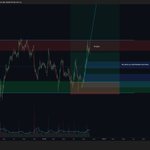
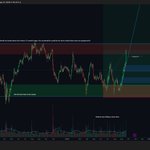
Deep Dive into BVOL:
As you can see in the 2018 to 2021 bullrun, all major HTF pivot points happend at the "resistance" in BVOL. It's like a switch. Everytime BVOL reaches for the red box we see at least a MTF change in trend (notice that MTF means in that context several weeks to months, while HTF means months to years).
Its not very precise to the exact day, but its still a major tool to decide if its time to look for longs or shorts on the MTFs/HTFs. Even Luna seems like it was programmed to some degree. In our current cycle i go deeper into each points as i remember better how the sentiment, news and exact PA was.
The grey box marks out what i would call a complete change of program, because since then the structure of BVOL and BTC changed completely.
As you can see the structure of quite a lot. A lot less volatilty and BTC went from a more like ZickZick fractal to an exhausting range, drop, pump, range pattern.
There is no clear instruction on this chart such as: "Wen green box you buying big!", but i found definitely something remarkable.
Most important seems the upper red and the lower green box, which i gave more density in colour. After we saw the HTF change in program, every touch at the upper red box was basically a top, with very intense bullish sentiment. Every touch with the green box was a nice buy area with a horrible looking PA, combined with even more horrible news. Recession, War, Liquidity fears and all these things only came up once we reached for that green boxes.
These sentiments intensified once we got closer to the lower green box. This chart seems to uncover the algos behind the BTC PA and the news sentiment, maybe even for the global markets as a whole. In the middle of the chart we were basically in no man's land. News were either neutral or countered each other from time to time.
Looking at this i have to admit that if i had just bought BTC in the green and sell in the red would have made me more money than with shitcoin chasing.
This chart has to be combined with other liquidity related or general charts and an understanding for TA. It should not act as trigger alone, but it's still a powerful confluence.
nitter.gq/Moneytaur_/status/1794…


Maximilian Hartinger retweeted
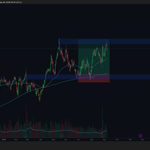
If an optimal bullish key level gets front‑run and many sell into the dump, the relief rally leaves plenty chasing the pump.
A potential sweep of the recent lows into that key level then triggers even more sell-side liquidity, exactly what whales need to fill their bags.