

AI Analyst @MilkRoadAI | Finding opportunities across AI, photonics, defense, space, and tech.
$1 to see my portfolio →
Joined June 2026
- Tweets2.4K
- Following225
- Followers31.2K
- Likes625





Pinned Tweet
Nebius just secured a $3.5 billion financing facility from Citi to help fund its global AI infrastructure expansion, including data centers and GPU purchases.
What makes this particularly interesting is the financing terms. The facility has a 364 day maturity and carries an initial interest rate of SOFR + 2.75%, potentially increasing to SOFR + 3.50%. SOFR is essentially a benchmark interest rate that banks use when lending money, meaning Nebius is borrowing at a relatively modest premium above that benchmark. Now, remember one of the biggest concerns surrounding neoclouds recently has been their ability to secure financing at attractive rates. Investors have been worried that companies like Nebius and CoreWeave would struggle to raise the billions of dollars needed to continue expanding, especially with borrowing costs remaining elevated and credit markets becoming increasingly cautious.
Well, this announcement directly challenges that concern, at least for Nebius. Not only has Nebius secured another $3.5 billion in financing, but it has managed to do so at what I consider fairly attractive rates for a capital intensive AI infrastructure company. And here’s another important point. Nebius already has more than $40 billion in long term customer commitments from investment grade customers, including Microsoft and Meta. Those contracts give lenders greater confidence that the infrastructure being financed will eventually generate revenue.
I’ve said this repeatedly, I don’t believe every neocloud will survive this AI infrastructure buildout. Access to capital is going to separate the winners from the losers, and Nebius continues to demonstrate why I believe it will be among the survivors. This is a very encouraging development for $NBIS shareholders, especially after all the concerns surrounding financing and the recent selloff.


We’ve secured a $3.5 billion financing facility from Citi to support our global growth.
The facility provides capital at attractive rates, diversifies our capital structure, and gives us greater flexibility over when and how we raise long-term financing.
Full release: nebius.com/newsroom/nebius-s…
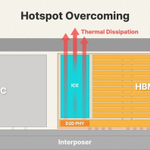
According to Korean media, SK Hynix has started talks with its suppliers to mass produce iHBM, its new technology for pulling heat out of HBM.
Heat is one of the BIGGEST problems in AI memory because the more layers you stack and the faster you move data, the hotter the stack gets.
iHBM adds a cooling element on top of the base die, the chip at the bottom of the HBM stack that talks to the GPU.
SK Hynix says this cuts thermal resistance by more than 30%, which lets HBM run reliably under heavy loads.
The plan is to use it starting with HBM5 around 2029, and SK Hynix is already validating HBM5 on TSMC's CoWoS packaging.
Samsung and $MU are catching up fast in HBM, so SK Hynix is trying to win the next round on technology before it even starts.
That kind of race is great for $NVDA, because every new generation of HBM lets its GPUs do more work.


Samsung is teaming up with its biggest foundry rival to build Nvidia's next memory chip.
According to Korean media, Samsung will use $TSM's 3nm process for the base die in $NVDA's custom NVHBM, at Nvidia's request.
The base die is the logic layer at the bottom of the HBM stack. Nvidia moved its memory controller into it, which frees up room on the GPU for more compute.
Nvidia reportedly wants the same TSMC base die across Samsung, SK Hynix and $MU to standardize performance.
Samsung is also testing its own 2nm process in case demand outgrows TSMC's capacity.
It is the first time Samsung and TSMC will work together on making HBM itself.

Memory prices are still going UP, and suppliers are now tearing up cheap orders.
A PC builder in the United States says its supplier raised DDR5 prices another 10% to 15% this week.
The supplier also canceled every open order that had not shipped yet, so customers have to order again at the new, higher price.
TrendForce still expects conventional DRAM contract prices to rise 10% to 15% this quarter, after roughly 80% in the second quarter and 40% in the third.
According to Taiwanese media, some smartphone makers are now downgrading their screens just to offset the cost of memory.
The market keeps treating slower price growth like a price crash but is not.
Prices are still climbing from record highs, and that is great for $MU, Samsung and SK Hynix.

Michael Dell just told the Wall Street Journal that the memory crunch is going to get WORSE.
On CNBC this week he said supply and demand get worse next year, and when asked about memory he called it "maybe a four year problem because there's just not enough supply."
His reasoning is that a new chip fab takes about four years to build, so the capacity being planned today may not produce anything until 2029 or 2030.
That is a STRUCTURAL shortage, and it is exactly what Samsung, SK Hynix and $MU want to hear after the brutal selloff in memory stocks this week.
The more interesting part is how $DELL plans to survive if the AI boom ever busts.
Dell builds just in time, so it isn't sitting on a mountain of inventory or debt like a lot of AI infrastructure players, and the WSJ says that gives it a CUSHION if demand collapses.
One of the biggest buyers of memory in the world is telling you the shortage isn't close to over.

Samsung and SK Hynix are quietly upgrading their factories in CHINA.
According to Reuters, Samsung is converting its Xian plant, which makes about 40% of its global NAND output, from roughly 200 layer chips to 286 layer V9 NAND.
The plan is to reach 5,000 wafers a month this December and 40,000 wafers a month by December 2027.
SK Hynix is moving its Dalian plant from 192 layers to 240 layers or more, and both companies say the work is being done in close consultation with Washington.
The reason is YMTC because China's NAND champion took 38.5% of the Chinese market in the second quarter, up from 28% last year, and passed Samsung.
Samsung says it is not adding capacity, only upgrading it.
More layers means more storage per wafer though, and AI data centers need every bit of storage they can get.
This is the NAND side of the AI trade that most people ignore, and it is good news for $SNDK and $MU too, because the whole industry is upgrading instead of flooding the market.

China's biggest DRAM maker is printing money.
CXMT expects about ¥131 billion in net profit for the first nine months of 2026. A year earlier it lost ¥5.3 billion.
Quarterly revenue went from ¥6.1 billion in Q1 2025 to an estimated ¥115 to ¥120 billion in Q3 2026.
But CXMT is still not in the HBM rankings. In Q2, SK Hynix had 50% of HBM, Samsung 33% and $MU 18%, according to Counterpoint.
The pressure is on regular DRAM. HBM still belongs to the big three for now.

Micron just told investors the memory shortage is not ending anytime soon.
At its technology webinar, Micron said supply will stay tight for at least two more years, and that it still cannot see the point where supply and demand come back into balance.
Every new generation of AI memory eats more wafers per bit than normal DRAM, and Micron said those trade ratios keep going UP.
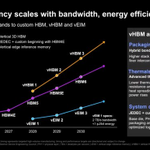
Micron also unveiled vertical HBM, which stacks memory directly on top of the processor instead of next to it, and its roadmap now runs from HBM4 this year all the way to HBM6 in 2030.
It also took a shot at China's CXMT, calling the density advantage of the 4F² DRAM design it is pushing "a bit of a myth."
That matters because fear of 4F² was part of this month's memory selloff, with investors worried that China could flood the market with cheaper supply.
$MU is still more than 25% below its June high, but the company is telling us the shortage will last LONGER than the market thinks.

The memory supercycle is about to get A LOT bigger,
Every single new wave of AI is creating an entirely NEW layer of demand for memory, and we're still in the EARLY stages of this cycle. HBM capacity per GPU has already increased 3.6X from Nvidia's H100 to B300. Memory per server is expected to DOUBLE over three years as inference and reasoning workloads become increasingly complex. Meanwhile, AI context lengths are growing roughly 30X annually as we move toward agentic AI, and autonomous vehicles could require more than 10X the DRAM capacity of today's advanced vehicles.
And here's what makes this so interesting for $MU. We're no longer talking about memory demand being driven primarily by training larger AI models. Every time these models become more capable, they need additional memory to store context, process information, run complex reasoning tasks, and interact with other AI agents. And as AI moves beyond data centers into robotics, autonomous vehicles, and physical devices, we're going to see an entirely new category of memory consumption. This is especially important because Micron isn't just exposed to HBM. It also benefits from server DRAM, LPDDR, and NAND storage, meaning the company has exposure across practically the ENTIRE memory hierarchy.
And unlike previous memory cycles, supply cannot simply expand overnight. Building new fabrication facilities takes YEARS, while manufacturers are increasingly allocating capacity toward more complex, higher value products like HBM. That's precisely why I continue to believe investors are underestimating just how long this memory upcycle could last. Bullish on $MU, if you want to see how I’m investing around this memory supercycle and the other AI infrastructure names I’m positioned in, check out my full Milk Road Pro portfolio below.
link.milkroad.com/d8cj6v

The memory boom is not slowing down but rather ACCELERATING.
According to Korean media, South Korea exported $27.5 billion of semiconductors in the first 20 days of October, up 222.5% from a year ago and a record for the period.
Total exports hit $61.6 billion, up 105.4%, and chips now make up 44.7% of everything Korea ships to the world.
There were more working days this year, 13 versus 10.5, but even average daily exports were up 65.9%.
Meanwhile Samsung and SK Hynix just went through one of their worst two week selloffs of the year on fears the AI cycle is peaking but the trade data says the opposite.
Customers are still buying every chip Korea can make, and that is great news for $MU too.

Memory stocks just lost about $738 BILLION in market value.
According to Goldman Sachs, shares of the major memory makers fell between 11% and 26% after China's CXMT announced its new DRAM cell architecture.
SK Hynix fell about 25%. Samsung fell about 20%. Even CXMT itself dropped about 15%.
Goldman still sees Samsung and SK Hynix moving to more advanced 1c nodes while CXMT stays mostly on older 1z technology through 2027.
The market sold first. Now it has to decide if the tech gap really closed.
$MU $SKHY

I’m an analyst at Milk Road, and my job is to find underrated gems before the market catches on.
We called names like MU, CRDO, NBIS, and BE over the last 3 months.
Join me and my team for just $1.milkroad.com/pro/?utm_medium…

Zuck $META "One of the things that I pointed out is we have more than 10 million people in the US and Canada who have set it up, but I think one of the biggest constraints so far is that because this is a compute intensive service to run, we have not launched it globally yet."
Capex about to go brrrr soon once again

Meta $META just dropped its Q3 earnings.
Meta reported $64.6 billion in revenue, beating expectations of $63.4 billion, with revenue growing 26% year over year. However, EPS came in at just $3.83 versus the $6.80 analysts were expecting, a massive 44% miss but what really caught my attention is the company's AI spending.
Meta is reportedly guiding for $135 billion to $145 billion in capital expenditures for 2026, while projecting Q4 revenue of $73 billion to $76 billion. We're talking about a company potentially spending nearly $140 billion in a SINGLE year, largely to expand its AI infrastructure, including GPUs, data centers, networking equipment, and the power required to support all of it.
And this is precisely why I'm still extremely bullish on the broader AI infrastructure trade. Meta is continuing to generate strong revenue growth while committing enormous amounts of capital to building out compute capacity. The biggest question now is whether all of this spending will eventually translate into meaningful earnings growth, especially as depreciation and infrastructure costs continue climbing.
For now, the demand for AI infrastructure certainly doesn't appear to be slowing down.

Zuckerberg: “In just a month and a half, more than 10 million people in the US and Canada have set up MUSE personal agents. Growth continues to be strong, and we have been number one in the App Store almost every day. Engagement and retention are also off to a strong start. About 25% of people who have set up MUSE use it on any given day. For our earliest adopters, the longer that they use MUSE, the better that retention seems to get. So to put this in perspective, this is more than twice the level that Threads started at, or where we believe that other AI apps started at as well. The most common use case for MUSE is shopping. With more than a quarter of people who are using MUSE engaging in this with an average purchase size of over $200, Plaid told us that they hadn't seen activity like they're seeing with their connector on any other service before. And in the first week, we had to work with Stripe to raise credit limits since the volumes were above what any of us expected.”
Meta $META just dropped its Q3 earnings.
Meta reported $64.6 billion in revenue, beating expectations of $63.4 billion, with revenue growing 26% year over year. However, EPS came in at just $3.83 versus the $6.80 analysts were expecting, a massive 44% miss but what really caught my attention is the company's AI spending.
Meta is reportedly guiding for $135 billion to $145 billion in capital expenditures for 2026, while projecting Q4 revenue of $73 billion to $76 billion. We're talking about a company potentially spending nearly $140 billion in a SINGLE year, largely to expand its AI infrastructure, including GPUs, data centers, networking equipment, and the power required to support all of it.
And this is precisely why I'm still extremely bullish on the broader AI infrastructure trade. Meta is continuing to generate strong revenue growth while committing enormous amounts of capital to building out compute capacity. The biggest question now is whether all of this spending will eventually translate into meaningful earnings growth, especially as depreciation and infrastructure costs continue climbing.
For now, the demand for AI infrastructure certainly doesn't appear to be slowing down.
$TSLA is planning to reach 400 MW of AI training compute capacity by the end of 2026, and this is a pretty significant expansion of its AI infrastructure.
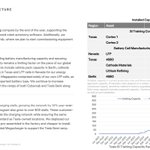
For context, Tesla currently has over 225 MW of training compute capacity operating across Cortex 1 and Cortex 2 in Texas, with another 40 MW of compute outside those two facilities. That means Tesla is planning to add more than 130 MW of additional capacity over the next few months, bringing its total to roughly 400 MW. And all of this compute is going toward developing the AI models that power both Full Self Driving and Optimus. As Tesla scales Robotaxi operations and prepares to ramp humanoid robot production, the amount of training compute required is only going to increase.
But the infrastructure investments don't stop there. Tesla is also expanding its battery manufacturing operations, with over 40 GWh of annual 4680 cell capacity in Texas, another 7 GWh of LFP capacity ramping in Nevada, and additional lithium refining and cathode manufacturing projects.
The company also confirmed that it plans to begin commissioning equipment at its Austin semiconductor fab in 2027. This is why I think investors need to look beyond Tesla's automotive business. Elon is building out the compute, semiconductor manufacturing, battery production, and energy infrastructure required to support Tesla's ambitions in autonomous vehicles and robotics.

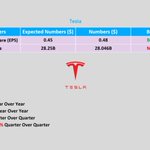
Tesla $TSLA just reported its Q3 earnings and the numbers are looking pretty solid.
According to the initial reports, Tesla delivered $28 billion in revenue, roughly in line with Wall Street expectations, while adjusted EPS came in at $0.48, beating estimates of around $0.43 to $0.44.
But the biggest surprise was free cash flow. Tesla reportedly generated $1.53 billion in positive free cash flow compared to expectations for nearly $5 billion in NEGATIVE free cash flow. That's a massive difference, especially considering just how aggressively Elon Musk has been investing in AI infrastructure, autonomous driving, robotics, and manufacturing capacity.
What makes this particularly interesting is that investors have been increasingly concerned about how Tesla plans to finance its ambitious expansion into Robotaxis, Optimus, and AI compute without putting enormous pressure on its balance sheet. And while these results are encouraging, the real story is going to be what Elon says about the company's capital expenditure plans, the Robotaxi rollout, Optimus production, and how quickly Tesla can scale these businesses.
I'm a proud shareholder of both $TSLA and $SPCX, and while I'm extremely bullish on Elon's long-term vision, execution and capital efficiency are going to matter more than ever as these businesses scale.
Now let's see what Elon has to say on the earnings call.
Meta $META just dropped its Q3 earnings.
Meta reported $64.6 billion in revenue, beating expectations of $63.4 billion, with revenue growing 26% year over year. However, EPS came in at just $3.83 versus the $6.80 analysts were expecting, a massive 44% miss but what really caught my attention is the company's AI spending.
Meta is reportedly guiding for $135 billion to $145 billion in capital expenditures for 2026, while projecting Q4 revenue of $73 billion to $76 billion. We're talking about a company potentially spending nearly $140 billion in a SINGLE year, largely to expand its AI infrastructure, including GPUs, data centers, networking equipment, and the power required to support all of it.
And this is precisely why I'm still extremely bullish on the broader AI infrastructure trade. Meta is continuing to generate strong revenue growth while committing enormous amounts of capital to building out compute capacity. The biggest question now is whether all of this spending will eventually translate into meaningful earnings growth, especially as depreciation and infrastructure costs continue climbing.
For now, the demand for AI infrastructure certainly doesn't appear to be slowing down.
It's absolutely INSANE how quickly Elon Musk has managed to transform $SPCX from a rocket and satellite company into one of the largest players in AI infrastructure.
Just look at how dramatically SpaceX's revenue mix has changed over the past year. In Q3 2025, SpaceX generated $5.6 billion in revenue, with just $800 million coming from its AI business, representing roughly 15% of total revenue. Fast forward to Q3 2026, and the company is now generating $14.6 billion in quarterly revenue, with a staggering $7.6 billion coming from its Super Intelligence segment. We're talking about AI revenue growing nearly 830% year over year, with its contribution to total revenue jumping from 15% to 52% in just four quarters. Even more impressive, SpaceX's AI business generated nearly three times the revenue it produced in Q2 alone, and significantly exceeded Deutsche Bank's $6.4 billion estimate.
SpaceX is no longer primarily a rocket company from a revenue standpoint. Its largest business is now Super Intelligence, which includes renting out computing capacity, cloud services, and AI products. It's essentially becoming a massive compute provider, competing for the same AI infrastructure spending that companies like $CRWV and $NBIS are targeting. And what's particularly interesting is that the rest of the business isn't slowing down either. Connectivity revenue, largely driven by Starlink, increased from $3.1 billion to $5.2 billion year over year, while the Space segment generated another $1.8 billion. SpaceX now has multiple growing revenue streams, but AI is clearly becoming the biggest driver of its growth.
This also has HUGE implications for the broader AI infrastructure market. If SpaceX wants to continue scaling its computing capacity toward its ambitious multi gigawatt targets, it's going to need enormous amounts of capital, GPUs, memory, networking equipment, power infrastructure, and cooling systems. And that spending creates opportunities across the entire AI supply chain, particularly for companies like $NVDA, $MU, and the businesses supplying the electrical and networking infrastructure needed to bring these data centers online. This is exactly why I remain so bullish on the broader AI picks and shovels trade and if you want to see what companies I am investing in to benefit from this, you can check out my portfolio here. link.milkroad.com/tx5qip

$SPCX just reported ABSOLUTELY INSANE earnings, and I don't think people realize how quickly Elon Musk is scaling this company.
SpaceX generated a staggering $14.6 BILLION in quarterly revenue, representing 161% year over year growth, while earnings per share surged 197% to $0.35. That's a 12% revenue beat and a 119% EPS beat against the estimates shown.
And the numbers get even CRAZIER. SpaceX reportedly generated $4.4B in net income and $8.8B in adjusted EBITDA, with EBITDA growing an incredible 306% year over year.
We're talking about a company that's not only more than doubling its revenue but potentially expanding its profitability at an even faster pace.

$SPCX and $TSLA are absolutely FLYING today.
$SPCX is up more than 10% today, while $TSLA is climbing over 3%, and now JPMorgan has more than DOUBLED its SpaceX price target from $240 to $500 but here's where things get even crazier. Elon Musk recently acknowledged that merging Tesla and SpaceX could actually be a good idea, with both companies reportedly exploring a potential merger.
And now, according to Kalshi, traders are pricing in a 75% probability that Tesla and SpaceX merge before 2028. What's particularly interesting is what @altcap the founder of Altimeter Capital, just said on CNBC. Brad believes that Tesla shareholders could receive somewhere between $420 and $550 per share in a potential merger, as Tesla's special committee would have a fiduciary responsibility to ensure shareholders receive a fair deal, especially considering Elon is involved with BOTH companies. That's a pretty significant range, with the upper end representing roughly a 42% premium to Tesla's current share price of $386.
And I think there's a pretty interesting argument for bringing these businesses together. Tesla is already building out autonomous driving, Optimus, robotics, and Terafab, while SpaceX is rapidly expanding its AI compute infrastructure alongside Starlink and its broader space operations. Combining these businesses could allow Elon to consolidate capital, engineering resources, semiconductor development, and AI infrastructure under one company.
And after SpaceX's latest earnings report, where revenue surged 161% year over year to $14.6 billion, including $7.6 billion from its superintelligence business, you can understand why investors are getting excited. Of course, a merger is still far from guaranteed, and there are plenty of regulatory, valuation, and shareholder approval hurdles to work through. I'm a proud shareholder of both $TSLA and $SPCX, and while I think the potential merger is extremely interesting, I'm far more excited about the underlying AI infrastructure opportunity both companies are pursuing.
The next few months are going to be VERY interesting.
🤝 Paid partnership


Melvin retweeted
This is absolutely INSANE and another reason why I remain extremely bullish on $NBIS and the broader AI infrastructure trade.
During NVIDIA GTC, @GavinSBaker pointed out that while the cost per AI token continues to decline, the cost of renting GPUs has actually been moving in the OPPOSITE direction, with GPU rental prices surging. And the explanation is pretty simple because as AI models become more efficient, each GPU can produce significantly more useful tokens per hour, making that GPU hour MORE valuable to customers, even as the cost of individual tokens continues to fall. But what really caught my attention was Nebius CEO Arkady Volozh's response when Gavin asked how many times the company had raised its prices over the past three months.
Arkady essentially said they've stopped counting, because Nebius is now adjusting prices every 12 minutes through its GPU auction system. And while prices can move in both directions, the fact that we're even having this conversation tells you how important pricing and capacity allocation have become.For months, investors have been worried that improving GPU efficiency would eventually destroy rental economics for neoclouds. But we're seeing evidence that the opposite can happen. More efficient hardware generates more valuable output, allowing infrastructure providers to maintain strong pricing when demand continues to outpace available capacity. Now, this doesn't mean every neocloud will succeed. I've said repeatedly that the majority of them probably won't survive. But for companies like $NBIS that are building out substantial capacity while investing heavily in their software platforms, the opportunity remains enormous. The market is still underestimating just how valuable access to AI compute could become over the next several years.
Market is making a MASSIVE mistake selling $NBIS right now.
According to their estimates, Nebius is expected to go from just $1.25 billion in annualized revenue run rate in 2025 to nearly $8 billion in 2026, $16.8 billion in 2027, $30 billion in 2028, and an absolutely INSANE $71.7 billion by 2030. We're talking about a company that could potentially grow its annualized revenue run rate by more than 57 TIMES in just FIVE years. And even after reaching nearly $30 billion in 2028, William Blair still expects the business to grow another 69.6% in 2029 and 41% in 2030.
Now, I know what everyone is thinking. What about the recent selloff? What about the debt? What about the enormous capital expenditures required to build all this infrastructure? These are legitimate concerns, and I'm not going to pretend otherwise. The market is clearly becoming increasingly concerned about how neocloud companies will finance their expansion, particularly as investors begin questioning whether the returns on all this spending will justify the investment. But here's where I think investors are making a HUGE mistake. They're treating every neocloud company as if they're operating the exact same business with the exact same economics.
They're NOT.
Nebius is building a full stack AI cloud platform, and what makes the company particularly interesting is how it's expanding across multiple layers of the AI ecosystem. They own and operate massive GPU clusters, data centers, networking infrastructure and the cloud software needed to train and run AI models at scale. But beyond that, they've also acquired Tavily, which provides real time web search capabilities for AI agents, and developed Nebius Token Factory, an inference platform that allows developers and enterprises to deploy AI models at scale. They've also strengthened their inference capabilities through Eigen AI and Clarifai's technology. And that's just the beginning. Nebius Group also owns Avride, which is developing autonomous vehicles and delivery robots in partnership with Uber, and TripleTen, an education technology business. The company also holds significant stakes in ClickHouse, one of the leading real time analytics database companies, and Toloka, which provides data and evaluation services for AI development. Now, not all of these businesses directly contribute to Nebius's core AI cloud revenue, but what excites me is the amount of OPTIONALITY the company has across the entire AI ecosystem. We're talking about exposure to AI infrastructure, model training, inference, AI agents, data analytics, and autonomous systems, all while the company continues securing major contracts with customers like Microsoft and Meta and expanding its global infrastructure footprint.
And what's particularly interesting to me is HOW the company is financing this growth. Nebius has already demonstrated that it can secure financing backed by deployed GPUs and contracted customer cash flows, including its $775 MILLION secured debt facility. That's an important distinction because there is a MASSIVE difference between borrowing billions to speculate on future demand and financing infrastructure supported by contracted demand. Now, does that eliminate the risks? Absolutely NOT. Nebius still needs to execute, deploy enormous amounts of capital, manage its debt, and ensure that the economics of providing compute remain attractive as the industry scales. But I think investors are focusing so heavily on the risks that they're completely overlooking the potential scale of the business. And here's my biggest question. Has the long term demand for AI compute suddenly disappeared? Have enterprises stopped adopting AI? Have frontier labs stopped needing more infrastructure? Have hyperscalers suddenly decided they don't need additional capacity?
NO, If anything, the underlying demand for AI compute continues to grow as models become more capable, inference workloads expand, and AI adoption accelerates across the economy. The industry still needs enormous amounts of infrastructure, and companies capable of delivering that capacity efficiently are positioned to capture a meaningful portion of that spending. What HAS changed is market sentiment. Investors have become increasingly concerned about AI infrastructure debt, capital expenditures, and whether the current pace of investment is sustainable. And those concerns have triggered a brutal selloff across the sector, including Nebius and CoreWeave. But from my perspective, the fundamental reason I invested in Nebius hasn't changed. The company is still pursuing an enormous opportunity, demand for AI compute remains strong, and its long term growth potential is still very much intact.
According to Korean media, activist fund Align Partners just disclosed a 1.5% stake in SK Inc., the holding company that sits on top of SK Hynix.
Align says its funds own about 1.09 million shares, and CEO Lee Chang hwan pitched the idea at the 13D Monitor Active Passive Investor Summit in New York.
The argument is that SK Inc. indirectly owns about 6.5% of SK Hynix through SK Square, and that stake alone is worth about 60 trillion won.
SK Inc.'s entire market cap, excluding treasury shares, was only about 24.9 trillion won as of October 16.
Align calls it a DOUBLE DISCOUNT, because SK Hynix's value gets cut once at SK Square and again at SK Inc and it puts SK Inc.'s net asset value at about 100 trillion won, a 75% discount.
Based on 2027 consensus profit of about 24.4 trillion won, SK Inc. trades at roughly 1 times earnings, the lowest in the KOSPI 200 and the market noticed.
SK Inc. shares jumped more than 13% at one point this morning in Seoul.
Align wants a real value up plan this year because if the memory keeps booming, the CHEAPEST way to own SK Hynix may be the company that owns it.

According to Korean media, the KOSPI fell below 5,600 this morning as Samsung and SK Hynix sold off AGAIN.
The index opened down 0.6% at 5,733.57 and was down 2.89% at 5,601.03 by 9:45 AM Seoul time, with an intraday low of 5,555.95.
SK Hynix was down 4.78% and Samsung was down 1.83% at that point.
This came right after Wall Street's chip rebound, so Asia is clearly not buying it.
The crazy part is that earnings estimates are still going UP.
From September 23 to October 19, Samsung fell 23.6% and SK Hynix fell 31.4%, while their 12 month forward EPS rose 1.8% and 3.3%.
Shinhan says forward P/E dropped as low as 3.4x for Samsung and 2.9x for SK Hynix.
The fear is not memory demand but rather whether neoclouds and hyperscalers can keep funding the data centers that buy the memory.
Spot memory prices and earnings outlooks are still solid but for now, the market is selling the multiple, not the numbers.

Memory is so tight that $NVDA may have to put LESS of it on each GPU.
According to Taiwanese media, DRAM contract prices are expected to rise about 20% quarter over quarter in the fourth quarter.
That is slower than the roughly 80% jump in the second quarter and 40% in the third, mostly because the base is now so high and long term contracts are starting to cap prices.
But the shortage is not easing because Taiwan's ESMT says the niche memory market is undersupplied by more than 30%, and it expects tightness to last into 2028 or longer.
Nvidia is reportedly considering 8 layer stacks instead of 12 for Rubin Ultra, which would cut HBM per GPU by about 33% but let the same DRAM supply cover about 50% more GPUs.
TrendForce also expects 8 layer HBM to cost 10% to 20% more per gigabit than 12 layer in 2027.
When the biggest chip company in the world has to redesign around memory supply, it tells you who holds the PRICING POWER.
That is $MU, Samsung and SK Hynix.

The AI compute shortage is getting WORSE and what's happening with NVIDIA's B200 GPUs right now is absolutely INSANE.
According to Ornn Exchange, rental prices for NVIDIA's B200 GPUs just reached a new all time high of $8.54 per GPU hour, with prices climbing another 12.9% in just the past trading week. Normally, as technology gets older and more capacity comes online, you would expect rental prices to gradually decline. But we're seeing the exact opposite happening with B200s. Rental prices are moving higher, which shows that customers are willing to pay a premium just to secure access to compute.
This is an incredibly BULLISH signal for the economics of AI infrastructure because higher utilization and stronger rental pricing can translate into better returns on deployed GPUs, especially for operators that have already secured capacity. And this is exactly why I remain so bullish on the long term opportunity for neoclouds. These companies are spending billions building out AI infrastructure and one of the biggest concerns investors have had is whether all this capacity will eventually lead to oversupply and collapsing rental prices but right now, the data is telling us a VERY different story. And demand for compute is already this strong TODAY, imagine what happens as these technologies begin scaling across the global economy.

SK Hynix is about to post a RECORD quarter, but its grip on HBM is slipping.
According to Korean media, SK Hynix's third quarter operating profit consensus is about 77 trillion won, with an operating margin around 78%.
But HBM4 shipments came in below expectations for the second straight quarter, partly because of delays to $NVDA's Rubin and longer than expected tuning of mass production chips.
Samsung has used that window because Counterpoint says Samsung's HBM revenue share jumped from 21% to 33% in the second quarter, while SK Hynix fell from 58% to 50%.
UBS now expects Samsung to pass SK Hynix in HBM bit shipments next year, and the industry believes Samsung's HBM4 yields have climbed to around 80%.
I don't see this as bad news for memory but rather a fight over who gets the biggest slice of a market that keeps getting BIGGER.

Samsung is teaming up with its biggest foundry rival to build Nvidia's next memory chip.
According to Korean media, Samsung will use $TSM's 3nm process for the base die in $NVDA's custom NVHBM, at Nvidia's request.
The base die is the logic layer at the bottom of the HBM stack. Nvidia moved its memory controller into it, which frees up room on the GPU for more compute.
Nvidia reportedly wants the same TSMC base die across Samsung, SK Hynix and $MU to standardize performance.
Samsung is also testing its own 2nm process in case demand outgrows TSMC's capacity.
It is the first time Samsung and TSMC will work together on making HBM itself.