

Passionate Exercise physiologist and pracademic focusing on metabolic health for Obesity, PCOS, NAFLD, Alzheimer's & Diabetes. ~Open yet critical mindset~
Joined July 2019
- Tweets3.6K
- Following368
- Followers2K
- Likes4.2K




Not only is it cheap and accessible, but it is also highly studied, low risk and potentially high reward ⭐

Just 3 grams of creatine a day improved several measures of cognitive function after four weeks.
The most consistent improvements were in reaction time, working memory, and inhibitory control, the ability to suppress an automatic response. Older women generally showed greater cognitive responses than younger women.
I’m (pleasantly) surprised to see benefits at this dose.
I take 10 grams daily, partly because of the research on creatine’s potential brain benefits (which I discussed with @darrencandow). So a study finding improvements at 3 grams gets my attention.
Creatine has value alongside resistance training for women, particularly after menopause, when maintaining muscle and strength becomes increasingly important.
The possibility of supporting cognitive function adds another reason to study it in this population, and this study suggests cognitive benefits may be achievable at the lower doses commonly used for muscle.

1
10
3,856

Kirsty Woods retweeted

Cutting salt to a very low level has a metabolic consequence. When 152 healthy adults spent one week on a very low-salt diet and one week on a high-salt diet, insulin resistance was higher after the low-salt week, aldosterone was about six times higher and norepinephrine rose too. The body reads a sharp drop in salt as a stress and turns on hormones that work against insulin, so for a person eating mostly unprocessed food, salting it to taste is usually a better choice than chasing the lowest number possible.
Kirsty Woods retweeted

Four weeks of wall squats reduced systolic blood pressure by nearly 10 points in adults with high blood pressure.
Researchers then compared continuing three sessions weekly with reducing to two, one, or none for another month. Systolic pressure remained roughly 7 mmHg below starting levels in the once- and twice-weekly groups. Continuing three sessions weekly produced the greatest reduction of about 14 mmHg. In those who stopped completely, blood pressure moved back toward baseline.
This fits with a previous analysis of randomized trials that identified isometric exercise, which involves holding a muscle contraction, as an effective way to lower resting blood pressure.
What interests me is the practical question - how much of an exercise benefit can we preserve when we temporarily have less time? This study suggests that reducing the frequency can retain part of the benefit for up to a month.

I see similar metabolic trends in clinic using ECAL @MHS_tweeting
"Worry more about what your burning (fat or glucose) not how fast your metabolism is" Ben Bikman

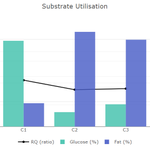
We always blame weight gain on a slow metabolism. But in a 10-year study of 775 individuals, resting metabolic rate did not predict who gained weight. The fuel the body burned at rest did.
At any given moment, the body is burning mostly fat or mostly glucose. Lean individuals who burned mostly glucose after an overnight fast were 2.4 times as likely to gain 11+ pounds.
The study didn't measure insulin, but insulin is the master metabolic hormone that dictates which fuel the body uses. When insulin stays high, the body keeps burning glucose and holds on to fat. I suspect that's what was driving the difference.
1
97
Kirsty Woods retweeted
Coffee consumption, both caffeinated and decaf, is consistently linked to better metabolic health, including a lower risk of type 2 diabetes.
There are plausible mechanisms behind this association. Coffee’s polyphenols, including chlorogenic acids, and caffeine can activate AMPK, a cellular energy sensor involved in fat burning and glucose regulation. Experimental research also suggests chlorogenic acid can suppress glucose production in the liver.
Much of this comes from cell and animal studies, so it helps explain the association, but doesn’t prove that coffee prevents diabetes in humans.

Drinking 2–3 cups of coffee daily is associated with a lower risk of type 2 diabetes
Both caffeine and chlorogenic acids can activate AMPK, a cellular regulator that ramps up fat-burning and glucose uptake while dialing down growth pathways
This is the same energy-sensing pathway activated by fasting and exercise, offering one potential explanation for coffee’s link to better metabolic health
Coffee may also influence glucose regulation through reduced inflammation and changes in gut bacteria
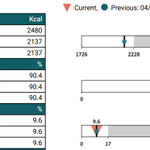
Last week I had the opportunity to attend the ANZOS obesity conference, showcasing METS IQ (@MHS_tweeting) & the clinical tools to help practitioners understand the individual metabolic response to obesity management seen in the research presented
#Measure #Motivate #Manage
1
88
Patient Quote 💬
F, 34, initial appt, focusing on reducing calories...
"Wow helps to explain why I keep on cycling with weight going up & down by a few kilos even though I'm motivated"
#Motivation #InformedChoice #Education
*Testing & data: METS IQ @MHS_tweeting

2 weeks ago I had the pleasure of facilitating this hands-on session using real-world tools to measure & manage metabolic health with our future dietitians to help transform patients' health, energy & performance - @MHS_tweeting
#MeasureToManage #PersonalisedCare
1/2


Although these markers can be useful, it is often neglected that we can actually TEST metabolic health with the gold-standard methods for human metabolism (indirect calorimetry), looking at RMR & metabolic flexibility/fat oxidation in clinic instead of guessing.

Here’s your metabolic health scorecard. What’s your score out of 7?
Mine is 7/7:
🩸Blood pressure: 100/55
💉Fasting insulin: 3
🧈Triglycerides: 40
😱HDL: 120
🍭HbA1c: 5.0%
🔥HsCRP: <0.3
📏Waist-to-height ratio: 0.39
(Pg 7 if Free Beginner’s guide to metabolic health 👇)

1
1
89
Kirsty Woods retweeted

Andrew Huberman's trick for falling back asleep at 3am: a pattern of eye movements under closed eyelids that shuts down the proprioceptive circuits in your cerebellum. "It costs nothing and it generally works."
@hubermanlab
youtube.com/watch?v=MGxcosNu…
This post is one of the reasons I love being able to look at things through a metabolic lens
#Physiology #CriticalYetOpenMindset #MetabolismMatters
Source & post: linkedin.com/feed/update/urn…

Kirsty Woods retweeted
Alcohol is a hot topic (and an odd one for a guy like me to bring up--I've never had a drop in my life). But there is a relevant metabolic angle to it.
If you drink most nights while trying to lose fat, you are regularly shutting down fat oxidation. The body clears alcohol first--it's a fuel that demands "priority boarding". While that is happening, fat burning drops hard, and more of the fat from your meals gets stored instead of burned.
In one study, subjects drank about 96 g of alcohol in a day (roughly seven drinks), and 24-hour fat burning fell by about a third. That drop showed up whether the alcohol was added on top of their meals or swapped in for other calories.
If you're looking to lose fat, I'd put alcohol at the top of the list of things to scrutinize.
pubmed.ncbi.nlm.nih.gov/1545…

Well said @nicknorwitz.
All diets (just not carnivore) can be a TOOL in the kit when conventional methods are not working.
It once again highlights that is there is no one-size-fits-all, and having an open yet critical mindset (not politics) can help transform lives.
The article “The Surprising Science of an All-Meat Diet,” which I published last week, is now on the most-read list for health articles and uptrending.
This morning, I also finished an interview with a major newspaper in the United Kingdom that was interested in covering my perspective on saturated fat and cholesterol for National Cholesterol Month in the UK.
A brief summary of my two major positions, because I don’t think they’re at all radical. I’ll be as concise as possible and link to more information below.
1) First, the carnivore diet is a tool, not a religion.
It’s a mistake to present it as the best diet for humans or to make strong claims that go beyond the literature, such as that it will improve longevity.
What we can say, accurately and humbly, is that it’s helping many people who have struggled with debilitating disorders and failed to find support through conventional approaches.
We can also say that there is strong biological plausibility for many of the conditions for which it’s being used, including mental health disorders and autoimmune and inflammatory conditions.
That’s not definitive proof. But it’s a possibility that deserves curiosity and compassion, not disdain.
If you want the full scientific breakdown in video form: “The Strange Science of Eating Only Meat”
youtu.be/WJnPDQ0XRXA
2) The second major point I’ll make is that CONTEXT matters.
Meat is vilified largely because of its saturated fat and cholesterol content. However, when it comes to improving the cardiometabolic health of the general population, focusing on reducing saturated fat intake is like worrying about a mosquito when you’re being chased by a tiger.
We now have randomized controlled trial data showing that low-carbohydrate ketogenic diets (despite typically being much higher in saturated fat and cholesterol) can provide greater improvements in many cardiometabolic risk markers than low-fat plant-based or Mediterranean-style diets higher in carbohydrates, particularly in people with obesity and insulin resistance.
More here: staycuriousmetabolism.substa…
At the end of the day, I don’t fancy myself a carnivore fanboy. Just carnivore-curious and open-minded. That’s enough.
P.S. There’s a tendency to make meat and diet unnecessarily political. Resist that tendency. What’s on my plate does not inform what I do at the ballot box. Stereotypes impair our ability to have thoughtful academic discourse.
Ht/ @MikhailaFuller for her contribution (including the click-boost from her adorable baby) @EpochTimes

1
125
Kirsty Woods retweeted
4/4) On a low-carb, ketogenic diet (red) – in a 6-month randomized controlled trial, and as compared to Mediterranean (blue) and Plant-Based (orange) diets, and where weight loss was controlled – the liver makes LESS new sugar 👇 + LESS new fat 👇
More here (free letter): staycuriousmetabolism.substa…

Kirsty Woods retweeted
Are you an Exercise Non-Responder?
1/6) If you’ve ever felt like your workouts just… aren’t working, you’re not alone. ~20% of people are “exercise non-responders.”
For years, this was chalked up to bad genetics. But a study in Nature Metabolism flips that idea on its head. (Don't miss 4/6 🧵👇)

Kirsty Woods retweeted

Source: frontiersin.org/journals/psy…

