

Crypto Influencer • Community Builder @inter_link • Regional Moderator 🇪🇹 • Contributor • Building RWA & Web3 https://nitter.gq/t.co/ms7kPzyvs4
Ethiopia
Joined April 2026
- Tweets2.8K
- Following2K
- Followers2K
- Likes4.2K




Pinned Tweet
@reina_itl
Thank you for rewarding me according to the value of my work. Thank you for recognizing my effort and showing me how much my hard work is worth.
A special thank you to Reina for the encouragement and motivation to keep pushing harder. I truly appreciate your support.
Although I may not fully understand the results, one thing is certain: I will not stop working.
I will keep learning, contributing, improving, and giving my best. My commitment remains strong, and I will continue moving forward. 💪❤️

WHY TRANSFERABLE $ITLG MATTERS IN THE STAKING VAULT ECONOMY
Digital assets become more meaningful when they have a clear role within an ecosystem.
A token should not simply exist as a balance displayed inside an application. Its purpose, utility, transferability, and relationship with other ecosystem activities all contribute to its economic importance.
This is one reason transferable $ITLG plays an important role in InterLink's proposed Staking Vault.
Under the proposed framework, both Human Nodes and Enterprise Nodes stake transferable $ITLG.
For individual participants, this means verified Linkers can use eligible transferable tokens through their verified wallets to participate in the staking economy.
For institutions, verified companies can register business wallets and commit transferable $ITLG under their legal identities.
The distinction between transferable $ITLG and non-transferable vITLG is also important.
Transferable $ITLG is intended to function as a digital asset within the wider ecosystem, while vITLG represents a non-transferable token form associated with a potential future pathway toward receiving $ITL under the applicable mechanism.
Human Nodes may have the option to upgrade staked $ITLG into vITLG, subject to the final rules.
Why does this matter?
Because it introduces different participation possibilities within the same ecosystem.
Participants can explore staking through transferable assets while also considering the potential long-term role of non-transferable vITLG.
However, users should carefully understand the conditions, conversion rules, and risks before making decisions involving their tokens.
A sustainable token economy requires clearly defined utility rather than relying on speculation.
Understanding the role of each digital asset is essential to understanding the future of the InterLink economy.
#InterLink #ITLG #ITL

𝐁𝐄𝐘𝐎𝐍𝐃 𝐓𝐎𝐊𝐄𝐍 𝐎𝐖𝐍𝐄𝐑𝐒𝐇𝐈𝐏: 𝐖𝐇𝐘 𝐕𝐄𝐑𝐈𝐅𝐈𝐄𝐃 𝐏𝐀𝐑𝐓𝐈𝐂𝐈𝐏𝐀𝐓𝐈𝐎𝐍 𝐂𝐎𝐔𝐋𝐃 𝐃𝐄𝐅𝐈𝐍𝐄 𝐓𝐇𝐄 𝐍𝐄𝐗𝐓 𝐆𝐄𝐍𝐄𝐑𝐀𝐓𝐈𝐎𝐍 𝐎𝐅 𝐁𝐋𝐎𝐂𝐊𝐂𝐇𝐀𝐈𝐍 𝐒𝐓𝐀𝐊𝐈𝐍𝐆
For years, cryptocurrency staking has largely revolved around one major principle: participants commit digital assets to a network and receive rewards according to its staking mechanism.
But is token ownership alone enough to build a sustainable blockchain economy?
InterLink's proposed $ITLG Staking Vault explores a broader approach by connecting digital asset ownership with verified identities and ongoing ecosystem participation.
The model introduces two categories of participants: 𝐇𝐮𝐦𝐚𝐧 𝐍𝐨𝐝𝐞𝐬 𝐚𝐧𝐝 𝐄𝐧𝐭𝐞𝐫𝐩𝐫𝐢𝐬𝐞 𝐍𝐨𝐝𝐞𝐬.
𝐇𝐮𝐦𝐚𝐧 𝐍𝐨𝐝𝐞𝐬 represent individuals who successfully complete ITLG KYC and stake transferable $ITLG through their verified wallets.
𝐄𝐧𝐭𝐞𝐫𝐩𝐫𝐢𝐬𝐞 𝐍𝐨𝐝𝐞𝐬 represent legally registered companies and institutions that complete KYB verification and participate through registered business wallets.
This distinction introduces an important concept: blockchain participation should have a recognizable identity behind it.
Rather than focusing exclusively on how much capital participants contribute, the proposed framework also emphasizes who is participating and how they contribute to the ecosystem.
𝐀𝐧𝐨𝐭𝐡𝐞𝐫 𝐢𝐦𝐩𝐨𝐫𝐭𝐚𝐧𝐭 𝐟𝐞𝐚𝐭𝐮𝐫𝐞 𝐢𝐬 𝐭𝐡𝐞 𝐬𝐡𝐚𝐫𝐞𝐝 𝐬𝐭𝐚𝐤𝐢𝐧𝐠 𝐩𝐨𝐨𝐥. Individual users and institutions are designed to participate within the same economic environment without a separate institutional reward rate.
The proposed system also connects staking with governance, ecosystem applications, and long-term engagement.
This could create a more connected relationship between token ownership and real economic activity.
Of course, verification alone cannot guarantee honest behavior or eliminate every form of manipulation. Strong security, privacy protections, and transparent governance will remain essential.
𝐓𝐡𝐞 𝐛𝐢𝐠𝐠𝐞𝐫 𝐨𝐩𝐩𝐨𝐫𝐭𝐮𝐧𝐢𝐭𝐲 𝐢𝐬 𝐜𝐫𝐞𝐚𝐭𝐢𝐧𝐠 𝐚 𝐛𝐥𝐨𝐜𝐤𝐜𝐡𝐚𝐢𝐧 𝐞𝐧𝐯𝐢𝐫𝐨𝐧𝐦𝐞𝐧𝐭 𝐰𝐡𝐞𝐫𝐞 𝐢𝐝𝐞𝐧𝐭𝐢𝐭𝐲, 𝐞𝐜𝐨𝐧𝐨𝐦𝐢𝐜 𝐩𝐚𝐫𝐭𝐢𝐜𝐢𝐩𝐚𝐭𝐢𝐨𝐧, 𝐚𝐧𝐝 𝐚𝐜𝐜𝐨𝐮𝐧𝐭𝐚𝐛𝐢𝐥𝐢𝐭𝐲 𝐰𝐨𝐫𝐤 𝐭𝐨𝐠𝐞𝐭𝐡𝐞𝐫.
The next evolution of staking may not be about holding more tokens. It may be about becoming a more meaningful participant in the network.
#InterLink #ITLG #ITL

𝐅𝐑𝐎𝐌 𝐈𝐍𝐃𝐈𝐕𝐈𝐃𝐔𝐀𝐋 𝐔𝐒𝐄𝐑𝐒 𝐓𝐎 𝐆𝐋𝐎𝐁𝐀𝐋 𝐈𝐍𝐒𝐓𝐈𝐓𝐔𝐓𝐈𝐎𝐍𝐒: 𝐓𝐇𝐄 𝐁𝐈𝐆𝐆𝐄𝐑 𝐕𝐈𝐒𝐈𝐎𝐍 𝐎𝐅 𝐈𝐍𝐓𝐄𝐑𝐋𝐈𝐍𝐊'𝐒 𝐒𝐓𝐀𝐊𝐈𝐍𝐆 𝐕𝐀𝐔𝐋𝐓
Imagine a blockchain ecosystem where individual users, technology companies, financial institutions, and businesses can participate within one connected economic environment.
This is the broader opportunity behind InterLink's proposed $ITLG Staking Vault.
The vision goes beyond creating another staking platform. It aims to establish a framework that connects verified human identities, institutional participation, digital assets, and decentralized governance.
𝐀𝐓 𝐓𝐇𝐄 𝐈𝐍𝐃𝐈𝐕𝐈𝐃𝐔𝐀𝐋 𝐋𝐄𝐕𝐄𝐋
Human Nodes allow verified Linkers to participate by completing KYC and staking transferable $ITLG through their verified wallets.
𝐀𝐓 𝐓𝐇𝐄 𝐈𝐍𝐒𝐓𝐈𝐓𝐔𝐓𝐈𝐎𝐍𝐀𝐋 𝐋𝐄𝐕𝐄𝐋
Enterprise Nodes introduce a pathway for legally registered businesses to complete KYB, register business wallets, and stake $ITLG under their legal identities.
Both categories are designed to participate in one shared staking pool.
This structure could create opportunities for cooperation between individuals and organizations.
𝐂𝐎𝐍𝐒𝐈𝐃𝐄𝐑 𝐓𝐇𝐄 𝐏𝐎𝐓𝐄𝐍𝐓𝐈𝐀𝐋 𝐁𝐄𝐍𝐄𝐅𝐈𝐓𝐒
𝐅𝐨𝐫 𝐈𝐧𝐝𝐢𝐯𝐢𝐝𝐮𝐚𝐥 𝐏𝐚𝐫𝐭𝐢𝐜𝐢𝐩𝐚𝐧𝐭𝐬: The model creates a pathway to participate in staking, ecosystem activities, and proposed governance mechanisms.
𝐅𝐨𝐫 𝐁𝐮𝐬𝐢𝐧𝐞𝐬𝐬𝐞𝐬: Enterprise Nodes could provide a framework for institutional engagement, transparent staking commitments, and future blockchain integrations.
𝐅𝐨𝐫 𝐓𝐡𝐞 𝐄𝐜𝐨𝐬𝐲𝐬𝐭𝐞𝐦: A combination of verified users and institutions could support the development of dApps, payments, business services, and decentralized applications.
𝐓𝐇𝐄 𝐑𝐎𝐋𝐄 𝐎𝐅 𝐈𝐁𝐓𝐄
The proposed connection with IBTE adds another dimension to this vision. Companies may be required to become Enterprise Nodes before listing, connecting institutional verification with participation in the wider network.
𝐖𝐇𝐀𝐓 𝐖𝐈𝐋𝐋 𝐃𝐑𝐈𝐕𝐄 𝐆𝐋𝐎𝐁𝐀𝐋 𝐀𝐃𝐎𝐏𝐓𝐈𝐎𝐍?
However, global adoption will require more than an ambitious concept. It will depend on reliable infrastructure, regulatory compliance, real-world utility, security, and sustainable economic incentives.
The opportunity is to build a network where blockchain technology serves both people and businesses.
𝐈𝐍𝐓𝐄𝐑𝐋𝐈𝐍𝐊'𝐒 𝐋𝐎𝐍𝐆-𝐓𝐄𝐑𝐌 𝐕𝐈𝐒𝐈𝐎𝐍
InterLink's long-term vision is about connecting human participation with institutional adoption to create a broader digital economy.
#InterLink #ITLG #ITL

𝐖𝐇𝐘 𝐋𝐎𝐍𝐆-𝐓𝐄𝐑𝐌 𝐏𝐀𝐑𝐓𝐈𝐂𝐈𝐏𝐀𝐓𝐈𝐎𝐍 𝐌𝐀𝐓𝐓𝐄𝐑𝐒 𝐌𝐎𝐑𝐄 𝐓𝐇𝐀𝐍 𝐏𝐀𝐒𝐒𝐈𝐕𝐄 𝐒𝐓𝐀𝐊𝐈𝐍𝐆
Staking is often viewed as a way to lock digital assets and receive rewards over time.
But what happens when participants deposit their tokens and disappear without contributing to the network?
This is an important question for blockchain ecosystems that want to encourage genuine participation.
InterLink's proposed Human Node mechanism introduces activity requirements designed to encourage participants to remain connected to the ecosystem.
Under the proposed framework, Human Nodes are expected to maintain ongoing activity to remain eligible for staking rewards.
𝐓𝐇𝐄 𝐓𝐇𝐑𝐄𝐄 𝐈𝐍𝐀𝐂𝐓𝐈𝐕𝐈𝐓𝐘 𝐒𝐓𝐀𝐆𝐄𝐒
𝟑𝟎 𝐃𝐀𝐘𝐒 — 𝐒𝐋𝐄𝐄𝐏 𝐌𝐎𝐃𝐄
If a Human Node remains inactive for 30 days, it is designed to enter sleep mode and stop earning rewards.
𝟗𝟎 𝐃𝐀𝐘𝐒 — 𝐕𝐀𝐔𝐋𝐓 𝐑𝐄𝐌𝐎𝐕𝐀𝐋
After 90 days of inactivity, the proposed mechanism removes the participant's stake from the Vault.
𝟏𝟖𝟎 𝐃𝐀𝐘𝐒 — 𝐖𝐀𝐈𝐓𝐈𝐍𝐆 𝐏𝐄𝐑𝐈𝐎𝐃
Following removal, a 180-day waiting period is proposed before the participant can stake again.
𝐖𝐇𝐘 𝐃𝐎𝐄𝐒 𝐋𝐎𝐍𝐆-𝐓𝐄𝐑𝐌 𝐏𝐀𝐑𝐓𝐈𝐂𝐈𝐏𝐀𝐓𝐈𝐎𝐍 𝐌𝐀𝐓𝐓𝐄𝐑?
These conditions demonstrate that the proposed model is not designed around passive token ownership alone.
Instead, it emphasizes continued participation and engagement.
This could help encourage users to remain involved in dApps, digital payments, ecosystem activities, and governance.
𝐓𝐑𝐀𝐍𝐒𝐏𝐀𝐑𝐄𝐍𝐂𝐘 𝐀𝐍𝐃 𝐅𝐀𝐈𝐑𝐍𝐄𝐒𝐒
However, the exact activity verification process and certain staking parameters are still being finalized. Participants should follow official announcements for the definitive rules.
It is also important to understand that activity requirements should be transparent, measurable, and fair to users.
𝐁𝐔𝐈𝐋𝐃𝐈𝐍𝐆 𝐀 𝐒𝐔𝐒𝐓𝐀𝐈𝐍𝐀𝐁𝐋𝐄 𝐁𝐋𝐎𝐂𝐊𝐂𝐇𝐀𝐈𝐍 𝐄𝐂𝐎𝐍𝐎𝐌𝐘
A healthy blockchain economy needs participants who contribute over time, not simply wallets that remain inactive.
Long-term ecosystem growth requires more than staking capital. It requires consistent participation and meaningful activity.
#InterLink #ITLG #ITL

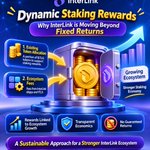
𝐃𝐘𝐍𝐀𝐌𝐈𝐂 𝐒𝐓𝐀𝐊𝐈𝐍𝐆 𝐑𝐄𝐖𝐀𝐑𝐃𝐒: 𝐖𝐇𝐘 𝐈𝐍𝐓𝐄𝐑𝐋𝐈𝐍𝐊 𝐈𝐒 𝐌𝐎𝐕𝐈𝐍𝐆 𝐁𝐄𝐘𝐎𝐍𝐃 𝐅𝐈𝐗𝐄𝐃 𝐑𝐄𝐓𝐔𝐑𝐍𝐒
When people hear about cryptocurrency staking, one of the first questions they usually ask is: How much can I earn?
Many staking platforms advertise fixed or predictable reward rates. However, these systems can create unrealistic expectations when network conditions, token economics, or available rewards change.
InterLink's proposed $ITLG Staking Vault introduces a different approach through 𝐝𝐲𝐧𝐚𝐦𝐢𝐜 𝐬𝐭𝐚𝐤𝐢𝐧𝐠 𝐫𝐞𝐰𝐚𝐫𝐝𝐬.
Instead of promising a permanent fixed return, the proposed system is designed to distribute rewards according to the ecosystem's reward mechanism.
There are two important reward sources identified in this vision.
𝟏. 𝐄𝐗𝐈𝐒𝐓𝐈𝐍𝐆 𝐓𝐎𝐊𝐄𝐍 𝐀𝐋𝐋𝐎𝐂𝐀𝐓𝐈𝐎𝐍
A portion of the existing $ITLG token allocation is proposed to support staking rewards.
This means rewards are connected to an established token distribution framework rather than requiring unlimited new token creation.
𝟐. 𝐄𝐂𝐎𝐒𝐘𝐒𝐓𝐄𝐌 𝐅𝐄𝐄𝐒
Fees generated through InterLink dApps and ITLX are also identified as potential sources for staking rewards.
As the ecosystem develops, the economic activities of its applications could contribute to the broader reward structure.
𝐇𝐎𝐖 𝐃𝐎𝐄𝐒 𝐄𝐂𝐎𝐒𝐘𝐒𝐓𝐄𝐌 𝐆𝐑𝐎𝐖𝐓𝐇 𝐂𝐎𝐍𝐍𝐄𝐂𝐓 𝐓𝐎 𝐒𝐓𝐀𝐊𝐈𝐍𝐆?
This creates an interesting connection between ecosystem adoption and staking economics.
For example, if more useful applications attract genuine users and generate sustainable activity, the associated ecosystem fees could become increasingly relevant to the reward mechanism.
However, higher adoption does not automatically guarantee higher individual rewards.
The final distribution will depend on the actual reward formula, available allocation, eligible stakes, ecosystem revenue, and other published parameters.
𝐏𝐑𝐎𝐏𝐎𝐒𝐄𝐃 𝐑𝐄𝐖𝐀𝐑𝐃𝐒 𝐕𝐒. 𝐆𝐔𝐀𝐑𝐀𝐍𝐓𝐄𝐄𝐃 𝐑𝐄𝐓𝐔𝐑𝐍𝐒
This is why participants should understand the difference between a proposed reward model and a guaranteed financial return.
𝐓𝐇𝐄 𝐁𝐈𝐆𝐆𝐄𝐑 𝐏𝐈𝐂𝐓𝐔𝐑𝐄
The objective is to connect staking incentives with the development of the ecosystem.
Sustainable staking should be supported by transparent economics, not unrealistic promises of guaranteed profits.
#InterLink #ITLG #ITL


𝐖𝐇𝐘 𝐎𝐍𝐄 𝐍𝐎𝐃𝐄, 𝐎𝐍𝐄 𝐕𝐎𝐓𝐄 𝐂𝐎𝐔𝐋𝐃 𝐂𝐇𝐀𝐍𝐆𝐄 𝐓𝐇𝐄 𝐖𝐀𝐘 𝐁𝐋𝐎𝐂𝐊𝐂𝐇𝐀𝐈𝐍 𝐆𝐎𝐕𝐄𝐑𝐍𝐀𝐍𝐂𝐄 𝐖𝐎𝐑𝐊𝐒
Decentralized governance is one of the most important ideas in blockchain technology.
It gives participants an opportunity to influence decisions about the development, direction, and future priorities of a network.
However, traditional token-weighted governance has an important challenge: participants holding larger amounts of tokens can often exercise greater voting influence.
This raises an important question.
𝐒𝐡𝐨𝐮𝐥𝐝 𝐠𝐨𝐯𝐞𝐫𝐧𝐚𝐧𝐜𝐞 𝐩𝐨𝐰𝐞𝐫 𝐝𝐞𝐩𝐞𝐧𝐝 𝐞𝐧𝐭𝐢𝐫𝐞𝐥𝐲 𝐨𝐧 𝐟𝐢𝐧𝐚𝐧𝐜𝐢𝐚𝐥 𝐨𝐰𝐧𝐞𝐫𝐬𝐡𝐢𝐩, 𝐨𝐫 𝐬𝐡𝐨𝐮𝐥𝐝 𝐯𝐞𝐫𝐢𝐟𝐢𝐞𝐝 𝐩𝐚𝐫𝐭𝐢𝐜𝐢𝐩𝐚𝐭𝐢𝐨𝐧 𝐚𝐥𝐬𝐨 𝐦𝐚𝐭𝐭𝐞𝐫?
InterLink's proposed $ITLG Staking Vault introduces an alternative governance vision based on 𝐎𝐧𝐞 𝐍𝐨𝐝𝐞, 𝐎𝐧𝐞 𝐕𝐨𝐭𝐞.
Under this proposed principle, voting influence would be connected to verified node participation rather than being determined entirely by the number of tokens held.
This is particularly interesting because the ecosystem is designed around two types of nodes.
𝟏. 𝐇𝐔𝐌𝐀𝐍 𝐍𝐎𝐃𝐄𝐒 — 𝐕𝐄𝐑𝐈𝐅𝐈𝐄𝐃 𝐈𝐍𝐃𝐈𝐕𝐈𝐃𝐔𝐀𝐋𝐒
Human Nodes represent verified individuals who complete KYC.
𝟐. 𝐄𝐍𝐓𝐄𝐑𝐏𝐑𝐈𝐒𝐄 𝐍𝐎𝐃𝐄𝐒 — 𝐕𝐄𝐑𝐈𝐅𝐈𝐄𝐃 𝐁𝐔𝐒𝐈𝐍𝐄𝐒𝐒𝐄𝐒
Enterprise Nodes represent legally verified businesses that complete KYB.
Both categories are intended to participate in the shared staking economy and contribute to the broader ecosystem.
The proposed governance framework could allow eligible nodes to participate in decisions concerning ecosystem development, reward distribution, and business integrations.
𝐖𝐇𝐘 𝐂𝐎𝐔𝐋𝐃 𝐓𝐇𝐈𝐒 𝐌𝐀𝐓𝐓𝐄𝐑?
It could help reduce the concentration of voting influence among a small number of large token holders.
It could also encourage participants to become active members of the ecosystem rather than simply holding digital assets.
Nevertheless, one-node-one-vote governance requires strong protections. The network must ensure that one real participant cannot create multiple eligible voting identities and that institutional participation follows clearly defined rules.
𝐆𝐎𝐕𝐄𝐑𝐍𝐀𝐍𝐂𝐄 𝐈𝐒 𝐌𝐎𝐑𝐄 𝐓𝐇𝐀𝐍 𝐕𝐎𝐓𝐈𝐍𝐆.
It is about ensuring that decisions are transparent, representative, and accountable.
The real strength of decentralization comes from meaningful participation, not simply the distribution of tokens.
#InterLink #ITLG #ITL

𝐏𝐑𝐎𝐕𝐄, 𝐄𝐀𝐑𝐍, 𝐆𝐎𝐕𝐄𝐑𝐍: 𝐓𝐇𝐄 𝐓𝐇𝐑𝐄𝐄 𝐏𝐑𝐈𝐍𝐂𝐈𝐏𝐋𝐄𝐒 𝐁𝐄𝐇𝐈𝐍𝐃 𝐈𝐍𝐓𝐄𝐑𝐋𝐈𝐍𝐊 𝐍𝐎𝐃𝐄𝐒
A successful blockchain ecosystem needs more than tokens and transactions. It needs participants, accountability, economic incentives, and a governance structure that allows the community to influence its direction.
InterLink's proposed $ITLG Staking Vault brings these ideas together through three fundamental principles: 𝐏𝐫𝐨𝐯𝐞, 𝐄𝐚𝐫𝐧, 𝐚𝐧𝐝 𝐆𝐨𝐯𝐞𝐫𝐧.
Let's understand what each principle means.
𝟏. 𝐏𝐑𝐎𝐕𝐄 — 𝐄𝐬𝐭𝐚𝐛𝐥𝐢𝐬𝐡𝐢𝐧𝐠 𝐆𝐞𝐧𝐮𝐢𝐧𝐞 𝐈𝐝𝐞𝐧𝐭𝐢𝐭𝐲
The first responsibility of a node is to establish who stands behind it.
Human Nodes are designed for individuals who complete ITLG KYC, while Enterprise Nodes must complete KYB verification to establish their legal business identities.
This approach aims to reduce anonymous or unverified participation and create greater accountability across the ecosystem.
𝟐. 𝐄𝐀𝐑𝐍 — 𝐂𝐨𝐧𝐧𝐞𝐜𝐭𝐢𝐧𝐠 𝐏𝐚𝐫𝐭𝐢𝐜𝐢𝐩𝐚𝐭𝐢𝐨𝐧 𝐖𝐢𝐭𝐡 𝐄𝐜𝐨𝐧𝐨𝐦𝐢𝐜 𝐈𝐧𝐜𝐞𝐧𝐭𝐢𝐯𝐞𝐬
After verification, eligible participants can stake transferable $ITLG through the Vault.
The proposed system distributes staking rewards dynamically rather than promising fixed returns.
This creates a relationship between verified participation, staking, and the economic activities of the wider ecosystem.
𝟑. 𝐆𝐎𝐕𝐄𝐑𝐍 — 𝐆𝐢𝐯𝐢𝐧𝐠 𝐏𝐚𝐫𝐭𝐢𝐜𝐢𝐩𝐚𝐧𝐭𝐬 𝐚 𝐕𝐨𝐢𝐜𝐞
The third principle focuses on decentralized decision-making.
The proposed governance vision includes participation in important ecosystem decisions, such as development priorities, reward distribution, and future business integrations.
One particularly interesting idea is the proposed 𝐎𝐧𝐞-𝐍𝐨𝐝𝐞-𝐎𝐧𝐞-𝐕𝐨𝐭𝐞 principle.
Rather than allowing voting influence to depend entirely on the number of tokens held, this approach aims to give verified nodes a more balanced role in governance.
Its effectiveness will depend on the final voting rules, identity protections, and implementation details.
𝐁𝐫𝐢𝐧𝐠𝐢𝐧𝐠 𝐓𝐡𝐞 𝐓𝐡𝐫𝐞𝐞 𝐏𝐫𝐢𝐧𝐜𝐢𝐩𝐥𝐞𝐬 𝐓𝐨𝐠𝐞𝐭𝐡𝐞𝐫
Together, these three principles create a broader vision for blockchain participation.
A node should represent a verified participant, contribute to the ecosystem's economic structure, and potentially help shape its future.
Prove your identity. Participate in the economy. Contribute to governance.
That is the philosophy behind the proposed InterLink node model.
#InterLink #ITLG #ITL

FROM TAPPING TO STAKING: HOW THE FUTURE OF $ITLG EARNING COULD CHANGE
For many Linkers, the familiar experience of participating in InterLink has involved app-based mining and regular engagement.
However, the proposed transition toward Open Mainnet introduces a different vision for how participants could earn $ITLG.
The future model is designed to move from app-based tapping toward staking through verified Human Nodes.
This represents an important change in the underlying economic structure.
Instead of relying primarily on the traditional tapping process, eligible participants would stake transferable $ITLG through their verified wallets and participate in the Staking Vault.
The proposed system also introduces several important elements.
First: Transferable Staking Assets
Participants would stake transferable $ITLG, connecting their participation to the broader token economy.
Second: Dynamic Rewards
Staking rewards are proposed to be dynamic rather than guaranteed at a fixed percentage. This means participants should not assume a permanent or guaranteed return.
Third: Ecosystem-Based Reward Sources
The proposed reward model identifies existing token allocations and ecosystem fees generated through InterLink dApps and ITLX as reward sources.
Fourth: Verified Participation
Human Nodes must complete ITLG KYC, helping connect staking participation with verified individuals.
Another interesting possibility is the option for Human Nodes to upgrade staked $ITLG into non-transferable vITLG. This could create a potential pathway toward receiving $ITL in the future, subject to the applicable rules.
This transition is about more than changing how people earn tokens. It represents a proposed evolution from app-based engagement toward a staking economy connected to verified identities and ecosystem activity.
The actual implementation, reward calculations, and eligibility conditions will be important factors to watch.
The next chapter of $ITLG earning could be defined by staking, verification, and meaningful participation.
#InterLink #ITLG #ITL

𝐌𝐞𝐭𝐢 retweeted

HOW DOES INTERLINK SPONSORSHIP WORK?
Know a friend who’s getting started with InterLink? Your invitation code can do more than connect them to the network. It lets you sponsor them through ITLG KYC.
Here’s how it works: Once you pass InterLink KYC Level 1, you’ll receive a unique invitation code. Share it with a friend. After they enter your code, confirm their sponsorship on your side. Sharing the code is the first step; confirming the sponsorship is what completes your part.
What’s in it for your friend? Depending on your account stats, friends you sponsor may get verified faster and may be eligible to receive more transferable $ITLG. These benefits aren’t guaranteed and can vary by sponsor.
What can you earn as a sponsor?
• 100 transferable $ITLG for your first eligible friend who uses your code and passes ITLG KYC.
• 50 transferable $ITLG for each additional eligible friend who uses your code and passes ITLG KYC.
An invite alone doesn’t count as a reward. Your rewards are confirmed when your account is processed, based on which of your sponsored friends meet the eligibility requirements at that time.
Already passed InterLink KYC Level 1, Linkers? Share your invitation code in the comments below!
#InterLink #ITLG #ITL #ITLGMainnet

ONE STAKING POOL, TWO TYPES OF NODES: UNDERSTANDING THE INTERLINK ECONOMIC MODEL
One of the interesting aspects of InterLink's proposed $ITLG Staking Vault is the idea of bringing individual users and institutional participants into a shared staking environment.
But why would this matter?
In many blockchain ecosystems, different categories of participants operate under different structures. Individual token holders may stake through personal wallets, while institutions participate through specialized arrangements.
InterLink introduces a model that aims to connect these participants through one common staking pool.
The system is designed around two node categories.
Human Nodes: These represent individual Linkers who have completed ITLG KYC and stake transferable $ITLG through their verified wallets.
Enterprise Nodes: These represent verified businesses and institutions that complete KYB and stake through registered business wallets.
An important distinction is that both categories are intended to share the same staking pool without a separate institutional reward rate.
This does not necessarily mean every participant will receive identical rewards. The applicable dynamic reward mechanism, stake conditions, and activity requirements will determine how rewards are calculated.
The shared-pool approach is significant because it creates a common economic environment where individuals and organizations participate under the same broad staking framework.
It also introduces an opportunity for cooperation between different types of ecosystem participants.
Individuals can contribute through their verified participation and ecosystem activities, while businesses can bring institutional involvement and potential real-world integrations.
The long-term objective is to build an ecosystem where economic participation, identity verification, and governance work together.
The model will ultimately depend on transparent implementation and clearly published staking parameters.
A shared staking economy could become an important meeting point between individual participation and institutional adoption.
#InterLink #ITLG #ITL

𝐄𝐍𝐓𝐄𝐑𝐏𝐑𝐈𝐒𝐄 𝐍𝐎𝐃𝐄𝐒: 𝐂𝐎𝐍𝐍𝐄𝐂𝐓𝐈𝐍𝐆 𝐑𝐄𝐀𝐋-𝐖𝐎𝐑𝐋𝐃 𝐁𝐔𝐒𝐈𝐍𝐄𝐒𝐒𝐄𝐒 𝐓𝐎 𝐓𝐇𝐄 𝐅𝐔𝐓𝐔𝐑𝐄 𝐎𝐅 𝐖𝐄𝐁𝟑
Blockchain adoption cannot reach its full potential through individual users alone. Businesses, financial institutions, service providers, and established organizations also have an important role to play in the digital economy.
This is why InterLink's proposed Enterprise Node model deserves attention.
Enterprise Nodes are designed to allow legally registered companies and institutions to participate in the $ITLG Staking Vault through verified business identities.
Unlike individual participants, businesses must complete KYB (Know Your Business) verification to establish their legal identity.
After successful verification, an enterprise can register its business wallet and stake transferable $ITLG under its legal name.
Another important element is the locking mechanism. Enterprise Nodes are designed to lock their staked $ITLG to demonstrate long-term commitment to the ecosystem.
Why is this significant?
First, verified institutional participation can improve transparency by connecting blockchain activity to identifiable legal entities.
Second, publicly disclosed institutional stakes can provide additional information about an organization's commitment to the network.
Third, Enterprise Nodes could create opportunities for traditional businesses to explore blockchain-based payments, digital services, and decentralized applications.
The proposed model also connects with the future vision of IBTE (InterLink Business Token Exchange).
Under this vision, companies would become Enterprise Nodes before listing, creating a relationship between institutional verification and participation in the InterLink ecosystem.
However, institutional verification does not automatically guarantee financial stability or eliminate investment risks. Effective oversight, transparent rules, and strong technical security remain essential.
The bigger opportunity is the possibility of connecting real businesses with a human-powered blockchain economy.
Enterprise Nodes are not simply about companies holding tokens. They represent a proposed framework for bringing institutional accountability into Web3.
#InterLink #ITLG #ITL

HUMAN NODES: WHY REAL PEOPLE COULD BECOME THE FOUNDATION OF THE NEXT BLOCKCHAIN ECONOMY
Blockchain technology has traditionally been designed around wallets, cryptographic keys, transactions, and validators. But there is another important element that deserves attention: the human beings participating in the network.
InterLink's Human Node concept introduces a different perspective by placing verified individuals at the center of its proposed staking economy.
A Human Node is designed to represent an individual Linker who has successfully completed ITLG KYC and stakes transferable $ITLG through a verified wallet.
This creates a connection between digital participation and a verified human identity.
Why Does This Matter?
In many digital ecosystems, one person can potentially operate multiple accounts or wallets. Without appropriate verification systems, distinguishing genuine participants from automated or duplicate activity can become challenging.
Human Nodes aim to address this challenge by connecting participation to verified individuals.
However, identity verification is only one part of the bigger picture.
Human Nodes and Ecosystem Participation
Human Nodes are also envisioned as participants in the wider InterLink ecosystem, including dApps, digital payments, ecosystem activities, and governance.
Under the proposed Staking Vault model, Human Nodes can stake transferable $ITLG and receive dynamic rewards based on the applicable reward mechanism.
Activity Requirements and Staking Continuity
The concept also introduces an activity requirement:
- 30 Days of Inactivity: A Human Node is designed to enter sleep mode and stop earning rewards.
- 90 Days of Inactivity: Its stake is proposed to be removed from the Vault.
- 180-Day Waiting Period: A waiting period is proposed before staking again.
These mechanisms aim to encourage continuous participation rather than passive staking.
A Human-Centered Blockchain Philosophy
The most interesting aspect is the broader philosophy: a blockchain ecosystem should recognize genuine human participation, not simply the number of wallets interacting with it.
If successfully implemented, Human Nodes could become an important component of InterLink's human-powered blockchain vision.
A stronger digital economy begins with understanding who participates in it.
#InterLink #ITLG #ITL

THE FUTURE OF BLOCKCHAIN STAKING: WHY INTERLINK IS PUTTING VERIFIED HUMANS AT THE CENTER
What if the future of blockchain staking depended on more than just how much cryptocurrency someone owns?
Traditional blockchain staking systems generally focus on token ownership, validators, and the amount of capital participants can commit. While this model has helped secure many blockchain networks, it also raises an important question: How can blockchain ecosystems recognize the actual people and institutions contributing to their growth?
This is where the proposed $ITLG Staking Vault introduces an interesting approach.
InterLink envisions a shared staking economy built around two categories of verified participants: Human Nodes and Enterprise Nodes.
Human Nodes represent individual Linkers who complete identity verification through ITLG KYC and stake transferable $ITLG through their verified wallets.
Enterprise Nodes, on the other hand, represent legally registered companies and institutions that complete KYB verification and participate through registered business wallets.
One important feature of this vision is that both categories participate in the same staking pool rather than receiving separate institutional reward rates.
The objective is to connect individual participation with institutional involvement under a shared economic framework.
This approach introduces three important principles:
1. Identity and Accountability: Each node represents a verified individual or legitimate business.
2. Economic Participation: Participants stake transferable $ITLG and may receive dynamic rewards according to the ecosystem's reward mechanism.
3. Decentralized Governance: Verified nodes are intended to participate in decisions affecting the development and direction of the ecosystem.
The proposed model moves the conversation beyond simply holding tokens. It emphasizes identity, participation, responsibility, and long-term commitment.
Of course, the actual success of this system will depend on implementation, transparent reward calculations, security, and clear governance rules.
InterLink's vision raises an important possibility: blockchain networks could become more meaningful when they recognize both the value of digital assets and the people behind them.
The future of staking may not be determined by capital alone. It may also depend on verified participation.
#InterLink #ITLG #ITL

𝐌𝐞𝐭𝐢 retweeted

This article highlights our goal of becoming one of the most decentralized blockchains in history, with Human Nodes working alongside Enterprise Nodes. One brings decentralization, while the other brings trust from institutions.

🔒 𝟏𝟎𝟎 𝐁𝐈𝐋𝐋𝐈𝐎𝐍 $𝐈𝐓𝐋𝐆. 𝐎𝐍𝐄 𝐅𝐈𝐗𝐄𝐃 𝐒𝐔𝐏𝐏𝐋𝐘 𝐂𝐀𝐏.
The ITLG Supply Invariant Protocol is designed to ensure that the total $ITLG supply never exceeds 𝟏𝟎𝟎 𝐛𝐢𝐥𝐥𝐢𝐨𝐧 𝐭𝐨𝐤𝐞𝐧𝐬, regardless of transfers, staking, bridging, or changes across the ecosystem.
More utilities may create more ways to use $ITLG, but they should never increase its maximum supply.
𝐌𝐨𝐫𝐞 𝐮𝐭𝐢𝐥𝐢𝐭𝐲. 𝐎𝐧𝐞 𝐬𝐮𝐩𝐩𝐥𝐲 𝐜𝐚𝐩. 𝐍𝐨 𝐚𝐝𝐝𝐢𝐭𝐢𝐨𝐧𝐚𝐥 𝐢𝐬𝐬𝐮𝐚𝐧𝐜𝐞. 🔥
#InterLink #ITLG #ITL #ITLGMainnet

𝐌𝐞𝐭𝐢 retweeted
🔒 100 BILLION $ITLG. ONE SUPPLY CAP.
As $ITLG gains more uses across InterLink, it may move between chains, be staked in vaults, or transition between token states. Those actions can change where $ITLG is held or what holders can do with it. They should never increase its total supply.
That’s the principle behind the ITLG Supply Invariant Protocol: across the entire ecosystem, the total supply of $ITLG must never exceed 100 billion tokens.
The protocol is designed to account for every $ITLG across these changes, prevent duplicate issuance, and make the total supply verifiable on-chain. The goal is for the community to be able to verify that the cap is respected, even as more applications and services use $ITLG.
A supply cap is not the same as circulating supply. The 100 billion cap sets the maximum total supply. It does not mean all 100 billion tokens are circulating or available to transfer at any given time.
There’s still a lot to build and deliver before the end of 2026. As we expand what people can do with $ITLG, the supply rule stays the same: more ways to use it, no increase in the cap.
#InterLink #ITLG #ITL #ITLGMainnet


𝐈𝐍𝐓𝐄𝐑𝐋𝐈𝐍𝐊 𝐍𝐄𝐓𝐖𝐎𝐑𝐊 𝐈𝐒 𝐆𝐀𝐈𝐍𝐈𝐍𝐆 𝐀𝐓𝐓𝐄𝐍𝐓𝐈𝐎𝐍 𝐈𝐍 𝐓𝐇𝐄 𝐂𝐑𝐘𝐏𝐓𝐎 𝐌𝐈𝐍𝐈𝐍𝐆 𝐒𝐏𝐀𝐂𝐄!
What makes a cryptocurrency mining project stand out in 2026? Accessibility, innovation, community participation, and long-term ecosystem development are becoming increasingly important.
A recent article published by 𝐓𝐞𝐜𝐡𝐒𝐥𝐚𝐬𝐬𝐡, titled “Top Mining Crypto with Huge Potential in 2026,” features 𝐈𝐧𝐭𝐞𝐫𝐋𝐢𝐧𝐤 𝐍𝐞𝐭𝐰𝐨𝐫𝐤 among the projects discussed.
🔹 𝐀𝐜𝐜𝐞𝐬𝐬𝐢𝐛𝐥𝐞 𝐌𝐢𝐧𝐢𝐧𝐠: InterLink introduces a mobile-based approach that makes participation more accessible.
🔹 𝐇𝐮𝐦𝐚𝐧-𝐂𝐞𝐧𝐭𝐞𝐫𝐞𝐝 𝐄𝐜𝐨𝐬𝐲𝐬𝐭𝐞𝐦: Its vision focuses on building a global network powered by real human participation and identity verification.
🔹 𝐂𝐨𝐦𝐦𝐮𝐧𝐢𝐭𝐲 𝐆𝐫𝐨𝐰𝐭𝐡: With its growing community, InterLink aims to connect users through a broader digital ecosystem.
🔹 𝐅𝐮𝐭𝐮𝐫𝐞 𝐃𝐞𝐯𝐞𝐥𝐨𝐩𝐦𝐞𝐧𝐭: Its direction extends beyond mining, with ambitions involving digital payments, decentralized applications, and real-world utility.
The growing discussion around accessible crypto mining shows why projects like InterLink are attracting attention.
However, long-term success will depend on actual development, adoption, transparency, and sustainable utility—not just attention or expectations.
🌐 𝐑𝐄𝐀𝐃 𝐓𝐇𝐄 𝐅𝐔𝐋𝐋 𝐀𝐑𝐓𝐈𝐂𝐋𝐄:
techslassh.com/blog/top-mini…
💙 𝐈𝐧𝐭𝐞𝐫𝐋𝐢𝐧𝐤 𝐢𝐬 𝐛𝐮𝐢𝐥𝐝𝐢𝐧𝐠 𝐭𝐨𝐰𝐚𝐫𝐝 𝐚 𝐟𝐮𝐭𝐮𝐫𝐞 𝐰𝐡𝐞𝐫𝐞 𝐡𝐮𝐦𝐚𝐧 𝐩𝐚𝐫𝐭𝐢𝐜𝐢𝐩𝐚𝐭𝐢𝐨𝐧 𝐦𝐞𝐞𝐭𝐬 𝐛𝐥𝐨𝐜𝐤𝐜𝐡𝐚𝐢𝐧 𝐢𝐧𝐧𝐨𝐯𝐚𝐭𝐢𝐨𝐧.
@inter_link
@kv_interlink @reina_itl @itl_fdn @itlx_defi @scott_itlg @miratang16 @MaheshMagnus1 @hogri_itl
#InterLink #ITLG #ITL #CryptoMining #Web3 #Blockchain


