

We market Chandler crop and livestock products that enhance biological performance and improve yields. We also operate a soil health lab.
Erie, IL
Joined February 2019
- Tweets17
- Following11
- Followers21
- Likes8





MidwestBioTech retweeted

Join us for the free National Cover Crop Summit, March 17-18, to hear from Maryland grower Trey Hill about how he uses cover crops to balance organic matter production and nutrient availability on his 10,000 ace farm.
Register now >> ow.ly/4z2S50DYBIH

Scott Tess shares how #compost topdressing improved the turfgrass performance of the @CityofUrbana’s City Building during #MGGWeek’s March 24th webinar. Register at bit.ly/MGGsoilhealth21

#MGGWeek webinars feature 15+ different speakers. We asked each speaker why they will participate in this series of #sustainablelandscaping webinars. Read their responses at bit.ly/MGGwkWhy
MidwestBioTech retweeted

Cucurbita maxima, aka Hubbard squash, from our farm, originated as a species in South America from the wild Cucurbita andreana over 4000 years ago. A welcome meal of #soilhealth #carbon!


IRTH worked great for this study of the dynamics of microbial response!

IRTH is perfectly designed for studies like to this comparing efficacy of organic soil amendments. Study by @MidwestBio
#soil #soilhealth #IRTH #Solvita
bit.ly/3oFt27O

MidwestBioTech retweeted
These Bourbon Reds are currently listed as “threatened”. Wonderful old breed from Kentucky, my neighbor raises them so “counter-intuitively, by eating we contribute to their conservation “

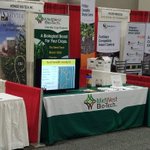
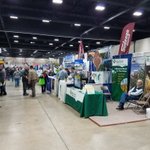
Demonstrating Solvita IRTH at the Illinois Fertilizer and Chemical Association convention in Peoria.

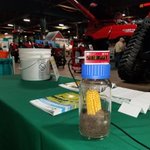
Solvita IRTH at the Quad City Farm Show in Rock Island, IL measuring microbial decay activity #soilhealth

1
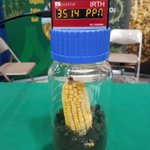
The microbes decaying this ear are working very hard -- Solvita IRTH shows over 12,000 ppm CO2. Mold on the kernels shows they are decaying and not germinating.

1

Displaying the new Solvita IRTH sensor at the Peoria Farm Show. The jar contains a decaying ear of corn, and the initial CO2 level is quite good.

1
These radishes were sown just before Labor Day, and I dug them out last week. Pretty impressive growth for a relatively cool and wet fall.

We are at the Hawkeye Farm Show at Cedar Falls, IA this week. Midwest Bio-Tech has been at this show every year for 32 years.

Aaron, this mix includes clovers and Austrian peas, but the early root mass largely comes from fescue. A local seed company offers an inexpensive blend based on their end-of-season inventory, so I guess they had a lot of fescue left over.
Cover crop mix under snow in December. Not much foliage above ground due to late seeding, but there is 4-5 inches of thick root growth below.
