

WWII Historian, Author and former soldier, sharing his deep knowledge on glider operations, the Army Air Corps, and the Mighty Eighth.
Joined August 2026
- Tweets199
- Following83
- Followers1.9K
- Likes788




If you are coming along to my Schweinfurt/Regensburg talk this Thursday evening you may enjoy some pre-talk listening. The @Mighty8thPod
Did a pod on the momentous raid in August 1943. We had @PaulBingley
As a special guest.
open.spotify.com/episode/0HV…
The Beatrice Shilling story is amazing...deserves much more exposure. Great post.

Every time a German Messerschmitt pilot wanted to escape a Spitfire on his tail, he did the same thing.
He pushed the nose down.
In a dive, the German engine kept running — it used fuel injection. The British Spitfire's engine cut out. For one and a half seconds the Merlin went dead, the aircraft shuddered, and by the time it caught again the German was gone. Worse: if a German was behind a British pilot and the British pilot dove to escape, the German could follow and keep shooting while the British engine was silent.
Pilots were dying because of a carburetor.
The engineers at Farnborough knew about the problem. They were working on a long-term solution — a redesigned carburetor that would take years to perfect and manufacture.
A woman named Beatrice Shilling fixed it with a washer.
She was born in Hampshire in 1909 and was the kind of child who spent her pocket money on Meccano sets and tools. At fourteen she bought her first motorbike. Her mother, with the inspired instinct of someone who understood what her daughter actually was, found the Women's Engineering Society and arranged an apprenticeship at an electrical firm.
She went to Manchester University — one of the first two women ever to study engineering there — graduated with a degree in electrical engineering, stayed another year for a master's in mechanical engineering, and in 1936 joined the Royal Aircraft Establishment at Farnborough as a scientific officer.
By the late 1930s she was one of the best carburetor engineers in Britain. She was also one of only three women to hold the British Motorcycle Racing Club's Gold Star — awarded for lapping the Brooklands racing circuit at over 100 miles per hour on a motorcycle.
She had reportedly told her future husband, an engineer named George Naylor, that she wouldn't marry him until he earned his own Brooklands Gold Star first.
He earned it. They married in 1938.
The problem with the Merlin was specific and lethal. The SU carburetor used a float chamber to regulate fuel flow. Under negative g-forces — the forces experienced in a sudden dive — the fuel flooded to the top of the float chamber and starved the engine for 1.5 seconds. Just enough time for a German pilot to turn the tables entirely.
The RAF had known about this since the Battle of France. The formal solution — a redesigned pressure carburetor — was in development but wouldn't be ready for years.
Shilling was thirty-one years old, working in carburetor research, and she designed a fix in weeks.
A brass thimble with a precisely calibrated hole in the center — later simplified to a flat washer — fitted inline in the fuel line just before the carburetor. It restricted maximum fuel flow to just enough to prevent flooding without cutting off power. The key breakthrough: it could be fitted without taking the aircraft out of service. No downtime. No factory return.
The old guard at the RAE looked at it and called it a plumbing fix. They called her a plumber. The first batch of 5,000 units was made by a Birmingham firm that normally manufactured plumbing fixtures, which they found embarrassing.
The RAF pilots who flew Spitfires with Messerschmitts on their tails called it something else.
They called it Miss Shilling's Orifice. With deep affection.
By March 1941 she had organized a small team and was personally touring RAF fighter stations across England — traveling between bases on her old racing motorcycle — fitting the device to every Merlin engine they could reach. Squadron leaders all over the country were demanding installations. The word spread faster than the official channels could keep up with.
The Germans noticed. They couldn't explain why British fighter pilots had suddenly started following them into dives. They were baffled by the new aggression. They didn't know about the washer.
The restrictor remained in use until 1943, when the full pressure carburetor finally arrived. It had kept British pilots alive for two years in the middle of the war they couldn't afford to lose.
After the war she worked on the Blue Streak missile. She studied what wet runways do to braking distances. She helped design a bobsled for the RAF Olympic team. In 1967 she solved overheating problems on an Eagle Mk1 Formula 1 car.
She never received a top promotion at the RAE. Such positions, she was told, were for men.
She received an OBE in 1949. The citation said "services to aviation." It did not mention the washer.
She retired from the RAE in 1969. She kept racing motorcycles and sports cars. She modified and tuned both in her home workshop until she couldn't anymore.
She died on November 18, 1990. She was 81.
The Battle of Britain is one of the most documented events in British military history. Hundreds of books. Dozens of films. Memoirs by the pilots who flew in it. Almost none of them mention the carburetor problem. Almost none of them mention her.
The pilots who benefited most never knew her name. They just knew that when they pushed the nose down, the engine kept running.

One for your diary if you are in the Ridgewell area on 29 October. I will be talking about the ill-fated Schweinfurt raid in the church frequented by many men from the 381st Bomb Group (H). Hopefully see some of you there.

Well, safely back from an epic trip to the Airborne battlefields of NW Europe. The first Drop Zone tour. Over six days we covered Eben Emael, Market Garden and we managed to bounce the Rhine! Thanks to the teams at Battle Honours and Tripsmith for their support - 100% succesful.

Mike Peters retweeted

Visited this year with the great @MikeHistorian on his warfare through the ages fascinating to walk the ground


Yesterday we managed to fit a visit to the Reichswald War Cemetery into our itinerary. Among the massed ranks of RAF Bomber Command headstones we identified the Glider Pilot graves from Op Varsity. It was an opportunity to pay our respects to both GPR and RAF pilots KIA.


The Tripsmiths Drop Zone 1 Tour is now complete and we are returning to Blighty. Yesterday's foray into Germany to tour the Op Varsity battlefield was the perfect conclusion to our six-days of WWII Airborne history. Already looking forward to DZ 2 Tour in Crete.


We had a full afternoon in and around Hamminkeln following 6th (British) Airborne Division through Op Varsity on 24 - 25th MArch 1945. Interesting to contrast the execution of the Rhine crossing Op with Market Garden.


Our final day of Airborne history was taken us over the River Rhine and into Germany. We are exploring the much contested Landing Zones of Operation Varsity. It was a real pleasure to highlight the contribution made to the mission by the US 17th Airborne Division.


Topical...

82 years ago today, Easy Company takes part in Operation Pegasus with their new CO, Lt. Frederick “Moose” Heyliger.🪖
Royal Canadian Engineers & the men of Easy Company successfully evacuate 138 British 1st Airborne troops trapped in German occupied territory who had been in hiding since the Battle of Arnhem. 🪂
Painting by Gil Cohen 🎨

It's been a rewarding day exploring the Oosterbeek perimeter. As ever, so much to see and not enough time!


I took a moment to reflect at the small 19 Flight GPR memorial yesterday. It commemorates the detached Flight of B Squadron Glider Pilots that accompanied their loads to the Arnhem road bridge on 17 September 1944. The GPs fought as part of Frost's 2 PARA Battlegroup.

The end of a full day on the Landing Zones around Arnhem. We had an interesting time directing the 1st (British) Airborne Division plan and the German response to it. A fascinating day culminating with the 2 PARA battle to hold on to the Northern end of the highway bridge.

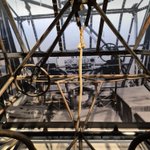
It was interesting to see the WACO GG4 cockpit laid bare in the National Liberation Museum at Groesbeek today. The swing over control column is so different to a conventional stick. Great exhibitions...

We had a very enjoyable day covering the US Airborne Divisions and their roles in the Market Garden plan today. As ever stacks to talk about as we moved from South to North towards Arnhem. More to come tomorrow on Day 4 of the DZ 1 Tour.

Best way to take a bridge? Both ends at once! We called in at John S. Thompson bridge at Grave to do just that. A remarkable feat of leadership that resulted in the US 82nd AB Division achieving one of its key objectives during Operation Market Garden.

So it begins! We start our study of Operation Market Garden at the Belgian-Dutch border. The daring armoured Coup de Main mounted by Vandeleur's Irish Guards to secure the Neerpelt bridgehead - JOE'S Bridge.

Walking the ground at Eben Emael is time well spent. The strategic importance of the fort is clearly evident on site. The blast damage and wreckage is testimony to the ferocity of the brilliantly executed Granit attack. A spectacular debut for the Assault Glider as a weapon.


We had a great visit to Fort Eben Emael today. It was a comprehensive tour of the fortress both underground and above the surface. We had the opportunity to view the Belgian defences and the Landing Zones used by Kampfgruppe Granit in the early hours of 10 May 1940.

Mike Peters retweeted

We love seeing photos while on tour and the group with @MikeHistorian enjoyed an exclusive tour of Fort Eben Emael today!


