

Math & Computer Science Teacher. B.S. in Mathematics and M.Ed in Instructional Design & Technology
New Jersey, USA
Joined April 2017
- Tweets458
- Following239
- Followers66
- Likes368





Ms. Aleyna Mannerberg retweeted

The 2026 AP Computer Science Principles Exam scores:
5: 10%; 4: 23%; 3: 30%; 2: 21%; 1: 16%
The 2026 AP Computer Science Principles exam was taken by 163,000 students, ~1% of the U.S. high school population.
AP Computer Science Principles Multiple-Choice Questions (MCQ):
• Students showed superb mastery of questions that assessed their understanding of abstraction in program development: students achieving AP 4s and AP 5s generally answered 100% of these questions right, and students earning AP 3s typically earned at least 75% of these points.
• Students performed at similarly high levels on questions related to computing innovations. Students attaining AP 4s and 5s typically earned more than 90% of these points, and students attaining AP 3s typically earned more than 75% of these points.
• The most challenging MCQ content for students focused on code analysis. These questions differentiated AP 5s, who were typically able to earn 100% of these points, from AP 4s, who typically earned 90% of these points, from AP 3s, who typically earned 70% of these points, from students receiving AP 2s, who typically earned 50% of these points.
AP Computer Science Principles Free-Response Questions (FRQ):
The AP CSP free-response section consists of a Create Performance Task and two Written Response tasks.
The free-response questions are available here: apcentral.collegeboard.org/m…
Create Performance Task, the Program Design and Development task:
This task — the cornerstone of AP CSP's project-based learning model — required students to create an original program that incorporated a student-developed procedure, list manipulation, selection, and iteration, and then document their work through a video, a Personalized Project Reference, and written responses. This project has 6 points possible, and contributes 30% of the overall AP score. Students achieving AP 5s generally earned all points possible, students achieving AP 4s earned all but 1 point, and students achieving AP 3s earned all but 2 points.
Written Response Prompt 1, about Program Documentation, asked students to describe one piece of documentation that would be appropriate to include with or in their program and explain how another programmer could use that documentation to better understand a specific code segment. This prompt assessed students’ understanding of appropriate uses of program documentation, including acknowledgment of code segments written by someone else or descriptions of what a code segment does or how it works. Earning this point was one of the most telling differentiators of AP scores of 3+ from AP scores of 1 and 2, as students achieving AP 3+ scores consistently earned this point, whereas other students did not.
Written Response Prompt 2, a three-part response based on each student’s own Personalized Project Reference, asked students to reason about how their program’s iteration works, how erroneous behavior can occur with some inputs, and how their use of data abstraction manages complexity:
Part A, about Iteration and Loop Termination, asked students to identify the variable(s) that control when the first iteration statement in their procedure stops, give specific values that cause the loop to terminate, and explain why those values produce termination. Students who understand the relationship between their loop structure and the variables that control it were best positioned to answer this precisely. 46% of students earned this point, which required them to identify the specific variables and values controlling an iteration statement and explain why the loop terminates.
Part B, about Procedure Test Cases, asked students to write a specific procedure call with accepted arguments that would cause their procedure to behave incorrectly, describe the incorrect behavior, and explain why it occurs. If no such call could exist, students were asked to explain why this was the case for their procedure. This prompt tested students’ ability to analyze their own code and identify edge cases, boundary conditions, or logical gaps that might surface in real-world testing. This point was the most challenging to earn, as it required students to identify specific argument values that would cause their own procedure to behave incorrectly and explain why — a genuinely rigorous testing and debugging exercise that mirrors the work of real software engineers. Accordingly, earning this point differentiated students achieving AP 4s and AP 5s, who were typically able to earn this point, from students earning AP 3s, did not typically earn this point.
Part C, about Data Abstraction, asked students to explain how their list uses abstraction to manage complexity in the program, then describe how the relevant code segment would need to change if the list were removed — or explain why the same behavior would be impossible without the list. This prompt asks students to reason about the fundamental benefit of data structures as an abstraction mechanism, connecting a specific design choice in their own code to a broader principle of computer science. 43% of students earned this point —which required students to explain how their use of a list manages the complexity of their program.
Students were best prepared for their exam-day written responses when their programs contained elements they understood well and could explain accurately, including how data are stored and used, how their procedure worked, and how their code used selection and iteration to produce its intended result. Well-designed programs gave students clear, authentic opportunities to engage with the concepts assessed by the exam-day prompts.
All subjects' AP score distributions for 2026 will be posted here when available: apstudents.org/score-distrib….

Ms. Aleyna Mannerberg retweeted

JTHS will host pet therapy visits provided by Creature Comfort Pet Therapy during midterm week! 🐶❤️


Ms. Aleyna Mannerberg retweeted

It’s time to reframe the story: CS isn’t just for some—it’s for everyone. See how #CSisEverything is breaking stereotypes and inspiring the next generation. brnw.ch/21wRe4i
Ms. Aleyna Mannerberg retweeted
Computer science isn’t just an elective—it’s a foundation for the future. As CS becomes a staple in K-12 education, we must ensure every student has access to these life-changing opportunities. brnw.ch/21wQCtG


Ms. Aleyna Mannerberg retweeted
DYK? Computer Science literally changes your brain. 🧠 A study found learning CS grows grey matter in areas tied to problem-solving, reasoning, and persistence. Pretty powerful stuff. brnw.ch/21wQcxa

Ms. Aleyna Mannerberg retweeted
A single computer science class in high school can lead to higher wages and prepare students for the future.
Here's why CS grad requirements matter: brnw.ch/21wQ9Da #CSforAll #FutureOfWork

Ms. Aleyna Mannerberg retweeted

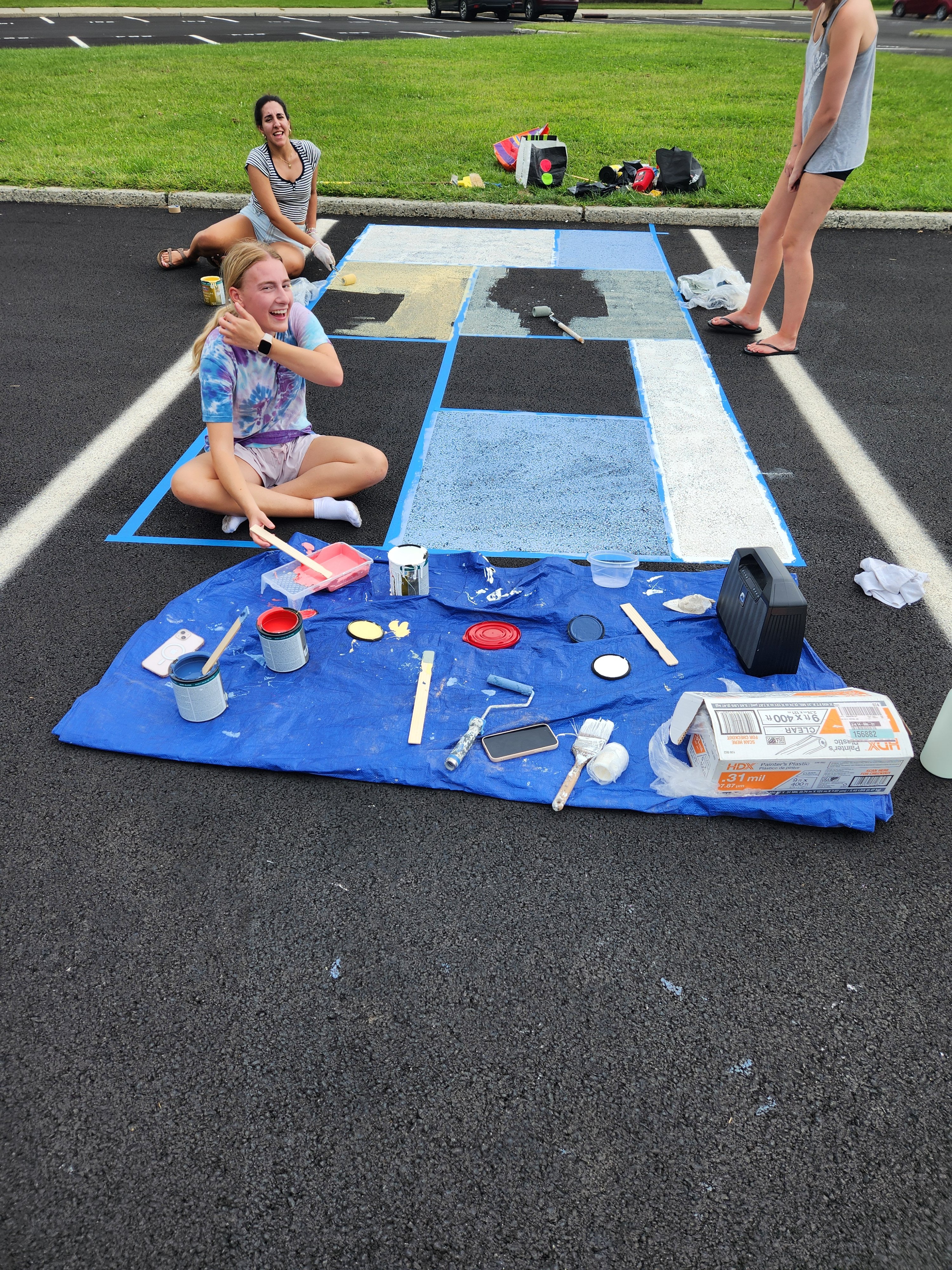
.@JTHSFalcons has done it! #NJVolleyball outlasted @Raritan_Vball, 25-22, 26-24 for its first Group title. It’s also the first @jthsathletics Group title in any sport since 2004.



Ms. Aleyna Mannerberg retweeted

2024 #APExam scores are available starting today. Login to your College Board account to view your scores.
View your scores: apstudents.collegeboard.org/…

Ms. Aleyna Mannerberg retweeted

#TeacherTwitter, we know you do so much for your students! That's why today we're giving away FIVE $100 Amazon e-gift cards!
To enter:
🌟 Follow us
🌟 RT and like this post
🌟 Comment with a memorable teaching moment!🤗
#TeacherAppreciationWeek #5DaysOfGiveaways

Ms. Aleyna Mannerberg retweeted

Calling all high school seniors! Planning to study #computerscience next year? Apply for the CodeHS Student Scholarship! Applications are open until Monday, May 20th ➡️ buff.ly/3FiBROr

Ms. Aleyna Mannerberg retweeted
Erna was told programming wasn't for girls, but she never thought of quitting: “If I had quit when people told me to stop, I probably wouldn’t be where I am now." YES! Computer science is for everyone! 👩💻 brnw.ch/21wJs6W


Ms. Aleyna Mannerberg retweeted
Did you know that in addition to her iconic Hollywood career, Hedy was a visionary inventor? She co-patented a groundbreaking frequency-hopping technology, laying the foundation for modern Wi-Fi and GPS. 📡🌐 #RoleModelsInCS
