

I am Program Fellow for Jewish Legal Studies at @Harvard_Law; Associate Editor at @TabletMag; Publisher of @ShikeyPress; and President of @TheIJRPub
Cambridge, MA
Joined March 2013
- Tweets31.2K
- Following606
- Followers6.1K
- Likes10.2K



Menachem Butler retweeted

A series of 3 remarkable original photographs, taken in Jerusalem in the early 1960s, are up for auction next week at Kedem in Jerusalem.
They document a fascinating and somewhat surprising episode in the history of the Satmar community, involving a Chassidic Rebbe who had once been one of the closest members of Rav Yoel Teitelbaum’s inner circle, but who in the photos is sitting with senior representatives of the Zionist establishment to help establish a new Chassidic community in Israel.
The Rebbe in the photographs is Rav Chanania Yom Tov Lipa Mayer-Teitelbaum, the Sassover Rebbe, a blood relative of Rav Yoelish, and ultimately they became even more closely related by marriage. He was born in 1904, the son of Rav Chanoch Henoch Mayer, the Sassov-Keretzky Rebbe, and Rebbetzin Esther, daughter of Rav Chanania Yom Tov Lipa Teitelbaum, the Kedushas Yom Tov of Sighet. Rav Yoelish was also a son of the Kedushas Yom Tov, which made him Rav Chanania Yom Tov Lipa Mayer-Teitelbaum’s uncle.
In 1924, Rav Chanania married Rav Yoelish’s daughter, Chaya Roiza. After his marriage, Rav Chanania lived very close to Rav Yoelish and became one of his most trusted associates. He was his right-hand man in administering the yeshivas in Orshiva, Krula and Satmar. He also served as the rabbi of Semihaly and as the head of the Beis Din of Satmar.
To be clear: Rav Chanania wasn’t some distant relative who happened to have a connection with Satmar. He was intimately involved with Rav Yoelish, his family, and his institutions, and was deeply embedded in the world that would eventually become synonymous with Rav Yoelish’s uncompromising opposition to Zionism and the State of Israel.
During the Holocaust, Rav Chanania and his wife Chaya Roiza escaped through Romania and they reached Eretz Yisrael in 1943. Rav Yoelish escaped later, ultimately reaching safety through the famous Kastner rescue train.
After arriving in Jerusalem, Rav Chanania established the Torah institutions of Satmar there. During the War of Independence he left Eretz Yisrael, and eventually moved to America, where he once again joined his father-in-law. Then, in 1953, his wife Chaya Roiza died having not had any children.
Two years later, the childless Rav Chanania remarried. His second wife was Bluma, widow of the remarkable Lithuanian Torah scholar Rav Mordechai “Mottel” Pogremanski. With this marriage, and the children they had together, Rav Chanania began a new chapter in his life, rebuilding the Sassover Chassidic dynasty in America.
But the story took another fascinating turn at the beginning of the 1960s. Rav Chanania returned to Israel, where he decided to establish a new Chassidic community between Ganei Tikva and Kiryat Ono. The new neighborhood would be called Kiryat Yismach Moshe, and establishing it required something that would have been utterly contrary to the approach championed by his former father-in-law: direct cooperation with the institutions of the State of Israel and the Zionist establishment.
The man sitting opposite the Sassover Rebbe is the legendary Zionist pioneer Yosef Weitz, one of the most important figures in the history of the Jewish National Fund and Zionist land acquisition in Eretz Yisrael. From 1960 until 1964 Weitz was the first director of the Israel Lands Administration.
At this historic meeting, the Sassover Rebbe and Yosef Weitz were discussing the establishment of Kiryat Yismach Moshe. Behind them, hanging prominently on the wall, are large topographical maps of Israel. On the reverse of the photographs are official stamps identifying them as photographs produced by the photographic service of the Jewish Agency in Jerusalem.
At the time, this meeting must have been highly controversial. Rav Yoel Teitelbaum’s opposition to Zionism was more than just a theological disagreement with Zionist ideology. His position demanded the total separation of his followers from the Zionist state and its institutions, which became one of the defining principles of Satmar.
And yet, sitting across the table from one of the most senior officials responsible for administering land in the State of Israel, was Rav Yoel’s own former son-in-law and close blood relative, a man who had served as his right-hand man and as head of the Beis Din in Satmar, and who had personally established Satmar’s Torah institutions in Jerusalem.
I want to stress that the Sassover Rebbe clearly wasn’t becoming a Zionist by meeting Weitz, and these photographs don't suggest that he was. But the photos do reveal that by this stage of his life his approach to dealing with the State of Israel and its institutions had diverged significantly from the uncompromising separation advocated by his former father-in-law (who was still alive and very vocal about his anti-Zionism).
That is what makes these images so fascinating. They capture a moment when one of the closest members of Rav Yoelish’s family and former inner circle sat down with representatives of institutions that Satmar regarded as ideologically illegitimate, and worked with them to establish a Chassidic community in the State of Israel.
Kiryat Yismach Moshe was indeed established, and Rav Chanania Yom Tov Lipa headed it as its rabbi. He died in 1966, only a few years after these photographs were taken. Today his son, Rav Yosef David Teitelbaum – who studied under the famous Klausenberger Rebbe, who also broke away from Rav Yoelish’s uncompromising attitude towards the State of Israel – serves as the Sassover Rebbe and as Rav of Kiryat Yismach Moshe.
Whatever one thinks about the ideological issues involved, these photographs are an extraordinary physical record of a little-known chapter in the complicated relationship between the Charedi world, the Satmar dynasty, and the State of Israel during its early decades.
Here is the link to the Kedem lot: il.bidspirit.com/ui/lotPage/…
Lot 307.
Rav Chanania Yom Tov Lipa Mayer-Teitelbaum, the Sassover Rebbe.
Jerusalem, early 1960s.


Menachem Butler retweeted
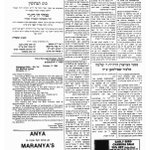
I wonder whether the NYPD still publishes notices like this one (from Der Yid, October 26, 1984), asking residents to move their cars ahead of the New York City Marathon.


Menachem Butler retweeted
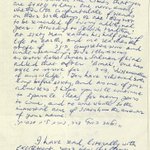
and, @Eli_Rubin, here is Chimen Abramsky’s 1969 letter to Isaiah Berlin on his sixtieth birthday, invoking Rabbi Shneur Zalman of Liadi’s distinction between binah and daʿat in a nod to Berlin’s Chabadic ancestry, while praising his intellectual achievements...

Menachem Butler retweeted

RIP. “Empire at Bay” remains one of the most important books of twentieth-century global history, on the fate of the British empire and U.S. policymaking as the country embraced global hegemony. liberalarts.utexas.edu/plan2…

Menachem Butler retweeted
By the way, after months of perusing microfilm as part of some other research projects, I think I finally tracked down who’s responsible for coining and then repeatedly using the OTD designation in the late 1990s. Working on a @TabletMag piece about it now, @a_a_viswanath!
Menachem Butler retweeted

I have often wondered if the 21st-century stream of OTDs will bring an explosion of Jewish cultural and especially literary creativity like that of the late 19th, or whether that was a one-time deal.

An impressively low attrition rate for them tbh. But these derech drop-outs could matter a lot more than their numbers suggest, considering how much of modernity is the result of Jews leaving the shtetl nitter.gq/b_judah/status/2110354…
Menachem Butler retweeted
Reading Frumspeak’s translation of the Gettysburg Address’s final sentence, I imagined @JYuter’s friend arriving for his interview:
“Where do you study?”
“By YU.”
“Where do you want to work?”
“By you.”
“How did you hear about us?”
“By a friend.”


Menachem Butler retweeted
I am particularly interested in whether there was a self-awareness of the non-lexical aspects of Yeshivish. Can you give an example of a sort of sentence that might have been uttered in an interview if not for this guidance?
Menachem Butler retweeted
Was there awareness of more subtle Yeshivish syntax, vocabulary, intonation? Or was it just focused on Yiddish and Hebrew words?
Menachem Butler retweeted
#TrueStory: In the late 90s, Yeshiva University's job placement office specifically instructed candidates to avoid speaking yeshivish on interviews and in the office, even to frum colleagues.

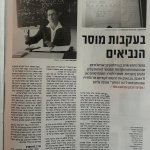
my latest article with Aviad Hacohen in memory of Prof. Uriel Simon, published today in @MakorRishon.


Menachem Butler retweeted
and then a decade later, amidst his own scandal that led to his own exit from denominational Orthodoxy, The Jewish Spectator reprinted “Organic Growth vs. Petrification.”


Menachem Butler retweeted
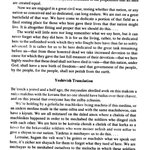
and defending Alexander Altmann, see the important early essay by Louis Jacobs, “Organic Growth vs. Petrification,” The Jewish Spectator, vol. 17, no. 10 (November 1952): 9-11, @Eli_Rubin.


Menachem Butler retweeted
If you're mad about musical Hallel now, wait until the Beit HaMikdash gets rebuilt.
Menachem Butler retweeted

At Entebbe, Israeli commandos rescued Anne Neuberger’s parents. Fifty years later, her father remembers a miracle sustained by the prayers of the Jewish people; she sees a debt to protect others. For one family, deliverance became obligation.
@MyShtender
tabletmag.com/sections/belie…
