
Deputy Director @cecanexus and freelance researcher - env. policy, evaluation, and child friendly cities. Formerly Director of Policy Studies Institute (PSI)
London
Joined June 2012
- Tweets783
- Following433
- Followers274
- Likes49


Pinned Tweet
Our new research just out ‘Neighbourhood Design – working with children towards a child friendly city’ by @dbornat and @N4BenShaw available from zcdarchitects.co.uk/research…
#childfriendlycities #urbanchildhoods #urbandesign
Some key messages:

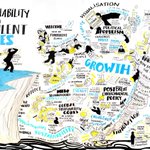
Hi Tim, you know my research on children's independent mobility but I also do cycle instruction and coaching with children. I'm struck by the significant resource that goes into giving children the technical ability to cycle - Bikeability

The case for cycling would be strengthened if it focused on benefits for children, and made children’s views more central. Would shift debate beyond the short-term, and lift it above sectional spats. Have any local or national groups or projects done this? #childfriendlycities
1
1
Casualty rates don't necessarily reflect road safety. This was a key motivation for PSI's work on children's independent mobility. In 1971, 86% of primary school children came home from school alone. In 2010 only 25% did.

.@grantshapps says we have amongst the safest roads in world, we have a fabulous, perhaps not fabulous if anyone is being killed but notable safety record by comparison to any other country in the world, but there is more than we can do.
Fear of traffic was the main reported concern of parents in not allowing their children out independently. psi.org.uk/children_mobility
Interesting blog on joint problem framing - one of the challenges of tacking complex problems and relevant to our work at @cecanexus esp. Participatory Systems Mapping - A heuristic framework for reflecting on joint problem framing i2insights.org/2020/06/23/fr…
RT @trishgreenhalgh: This is the best article I've read on #COVID19.
"Countries that are prepared will see a fatality rate of 0.5-0.9%. Countries that are overwhelmed will have a fatality rate of 3-5%".
Let's act to flatten the curve.
medium.com/@tomaspueyo/coron…
This last one is a great idea - it would, as you know, make complexity explicit, is simple to understand and creates a shared understanding of policy process and assumptions.

1) how 2 broaden impact of evaluation, 2) how 2 do complexity evaluation in practice, 3) making tools/guides usable, & a great suggestion (for my bias) of a new function for analysis profession - policy system mapping, equal with lit rev, economics/appraisal, & eval functions.

RT @jamesgleave1: Finally got around to reading this by @jillian_anable, who knocks it out of the park. Transport planning had the chance to do gradual change. We didn't. Time for major surgery. creds.ac.uk/rearranging-elep…

RT @ben_derbyshire: Great to see @dbornat @PhilipGlanville insisting on inclusive design & quality delivery @BBCLondonNews. Check 12 minutes in to tonight’s bulletin: bbc.co.uk/iplayer/episode/m0… via @BBCiPlayer
It's a small proportion of drivers but this sort of dangerous driving is a daily occurence in the area and needs acting on. @MPSStroudGreen @kirstenhearn @DanielOrenStone @haringeycouncil
You’re unable to view this post because this account owner limits who can view their posts. Learn more
1
1
Aligns with our research with 9-10 year olds which found girls at bottom of hierarchy of use on public space zcdarchitects.co.uk/estate-r…

Yes, really great to see what's been done in Hackney RT @Jono_Kenyon: Big shout out to @feryaldemirci and her team for pioneering #schoolstreets in London on a borough wide level.
One for you @MattShawArt

Anyone who works with children will know they benefit from having lots of resources and materials to play with.
Read our info sheet sourcing materials for children's play playwales.org.uk/eng/news/10… #looseparts #play #playwork

The methods we've been developing in @cecanexus are relevant to this challenge

'The emergence of new anticipatory regulation practices have started to reshape the role of regulation as a forward-facing, inclusive, proactive and innovation-enabling system' @HarryJArmstrong @nesta_uk sifted.eu/articles/anticipat…


Thanks, a thread of key messages from the report at nitter.gq/N4BenShaw/status/10938…

A Must Read for everyone who supports #playeveryday #playbuildschildren @HackneyMayor @MayorofLondon @timrgill @wkrussell @CathPrisk Congratulations @ZCD_Architects
RT @outdoorpeeps: Why we think @ZurichVolSec should reconsider its decision about #AdventurePlaygrounds and why they (and others) should help them to help children #buildresilience outdoorpeople.org.uk/blogs/j… @playengland @londonplay
