
Graduate Researcher | Machine Learning, Digital Fabrication | Ex-Founder | Mentor | Aligning with RNGs
Helsinki, Finland
Joined March 2016
- Tweets3.6K
- Following919
- Followers1K
- Likes29.7K





I'm feeling sad/happy that I spent so much of my free time (~1h per day) on the PyTorch forum, reading and answering questions!
+ Happy side: It *was* an amazing way of learning ML and PyTorch as a newbie, and such a nice community! I got so excited about it that I realized I'm near the top of the leaderboard for having useful answers/comments. discuss.pytorch.org/u/nikron…
- Sad side: Now, it's being LLM-infested, which makes me so sad as it'd be hard to have the same experience as before.
o The challenge is that as a newbie with having access only to public and online resources, it was a very welcoming and reliable place to build yourself. I'm worried how people in similar situation are feeling these days. :(

Nikan Doosti retweeted

🎓 Eighth lecture is live on YouTube! ▶️
Introduction to Deep Learning Research 🔬
Lesson 08: A softer perceptron, part IV: hardening and multi-class
One update rule 🔁 w ← w + (y − ỹ)f(x), soft 🍦 or hard 🧊, 2 classes or K
youtu.be/-5CbEost-0E

Nikan Doosti retweeted

Thrilled to announced that I am happy to say that I am super stoked to see that this is being talked about.
It's not the noise — it's the babble of a bubble. The vacuousness is load-bearing.

I had such an amazing time at the Symposium on Geometry Processing (#SGP26) conference 😍 held in Bern-Switzerland, especially being among a super welcoming and inclusive community 🤗, that after a decade I decided to change the profile picture!
Had an discussion with the legend @jaakkolehtinen 😍, and I felt amazingly represented and understood by him just in a short meeting!
That's why he has won multiple School of Science Teaching awards!
An awesome event given my passion for Graphics4Science/Eng by pushing explicit representation, here geometry!

Inspired by #CVPR2026?
📣 Announcing: Call For Papers on Geometric Intelligence @ ECCV26!
geo-int.github.io/
Submission deadline: 13th of July
👀 Computer vision and AI are increasingly playing a role in scientific discovery. 1/n


My entire timeline is about @CVPR talks/papers/highlights/etc, and as a person with FOMO, I'm in pain while browsing the articles. :)
Hoping for the future...
During my master's thesis, for a period I had only access to my $200 student laptop, hence couldn't run any big simulation or training.
The result was that I independently introduced a Fourier feature upscaling for topology optimization which was included in the paper I published

Nikan Doosti retweeted

🚀 I'm delighted to share an **open postdoc position** joint between our group at @MIT_CSAIL and @MITIBMLab, mentored by me, Ankit Gupta, @LChoshen, and friends; the start date can be as early as fall 2026.
It's field dependent:
Fields that gatekeeping is not only punished but rewarded, which also have "open scam" (paid open access) principle, make socio-economical status through H-index like KPIs.
So, if it's replicable, finding "paper factory" research would be easy!


"...the design was inspired by a human cognitive process/strategy, of attending back and forth over some data sequentially."
Just a reminder on why I'm interested in making the underlying principles, such as human intuition aligned operations, a differentiable optimization layer.

The (true) story of development and inspiration behind the "attention" operator, the one in "Attention is All you Need" that introduced the Transformer. From personal email correspondence with the author @DBahdanau ~2 years ago, published here and now (with permission) following some fake news about how it was developed that circulated here over the last few days.
Attention is a brilliant (data-dependent) weighted average operation. It is a form of global pooling, a reduction, communication. It is a way to aggregate relevant information from multiple nodes (tokens, image patches, or etc.). It is expressive, powerful, has plenty of parallelism, and is efficiently optimizable. Even the Multilayer Perceptron (MLP) can actually be almost re-written as Attention over data-indepedent weights (1st layer weights are the queries, 2nd layer weights are the values, the keys are just input, and softmax becomes elementwise, deleting the normalization). TLDR Attention is awesome and a *major* unlock in neural network architecture design.
It's always been a little surprising to me that the paper "Attention is All You Need" gets ~100X more err ... attention... than the paper that actually introduced Attention ~3 years earlier, by Dzmitry Bahdanau, Kyunghyun Cho, Yoshua Bengio: "Neural Machine Translation by Jointly Learning to Align and Translate". As the name suggests, the core contribution of the Attention is All You Need paper that introduced the Transformer neural net is deleting everything *except* Attention, and basically just stacking it in a ResNet with MLPs (which can also be seen as ~attention per the above). But I do think the Transformer paper stands on its own because it adds many additional amazing ideas bundled up all together at once - positional encodings, scaled attention, multi-headed attention, the isotropic simple design, etc. And the Transformer has imo stuck around basically in its 2017 form to this day ~7 years later, with relatively few and minor modifications, maybe with the exception better positional encoding schemes (RoPE and friends).
Anyway, pasting the full email below, which also hints at why this operation is called "attention" in the first place - it comes from attending to words of a source sentence while emitting the words of the translation in a sequential manner, and was introduced as a term late in the process by Yoshua Bengio in place of RNNSearch (thank god? :D). It's also interesting that the design was inspired by a human cognitive process/strategy, of attending back and forth over some data sequentially. Lastly the story is quite interesting from the perspective of nature of progress, with similar ideas and formulations "in the air", with a particular mentions to the work of Alex Graves (NMT) and Jason Weston (Memory Networks) around that time.
Thank you for the story @DBahdanau !

An example in 3D vision and graphics:
human-made objects are based on sweep surfaces which allows efficient, interactive editing, and detailed when parameterized.
And by making it differentiable, you get *differentiable neural sweeper* which is self-supervised!

Reference:
- project page: mingrui-zhao.github.io/Sweep…
- paper: arxiv.org/abs/2407.06305
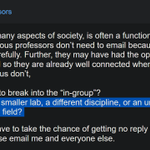
After talking to many senior PhD students, researchers and professors, I reached to this conclusion which was mentioned explicitly by many:
"𝑵𝒐𝒕 𝒅𝒐𝒊𝒏𝒈 𝒂 𝑷𝒉𝑫 𝒊𝒔 𝒃𝒆𝒕𝒕𝒆𝒓 𝒕𝒉𝒂𝒏 𝒂 𝒃𝒂𝒅 𝑷𝒉𝑫."
That's why I spend loads of my free time sending cold emails to such people to guide me.

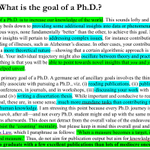
I get many DMs from people who want to do a PhD and are asking about potential difficulties. Here are some thoughts:
1. Don’t embark on a PhD at any cost. It is not an end in itself. A mediocre PhD is not valuable. Heck, even an average PhD is not that valuable either given the opportunity cost (see the point below).
2. A PhD only unlocks extremely competitive jobs. This is to say that most PhD graduates end up in positions for which a PhD was not necessary.
3. Do not fund your PhD under any circumstances (I hear this often from applicants from third countries), or accept a low stipend relative to the cost of living. The worst offenders I’m aware of seem to be the UK, Italy and France (and the best stipends appear to be in Switzerland).
4. Think twice before becoming an international student. Sure, it’s fun to go abroad, but you’re going to be broke (see the point above). It also exposes you to visa and housing issues, difficulties visiting your home country (for example, limited-entry visas in the US), or complicated situations when trying to do internships.
That said, there are definitely good reasons to do a PhD, and I may write a post about this another time.
As an overthinker, I even check personal websites of the authors I have cited!
Just an example, I noticed a co-author I've cited does artistic type of work that I liked; so I sent an email to her to just say 'cool work'.
Drawback? overoptimization!

Okay so, we just found that over 50 papers published at @Neurips 2025 have AI hallucinations
I don't think people realize how bad the slop is right now
It's not just that researchers from @GoogleDeepMind, @Meta, @MIT, @Cambridge_Uni are using AI - they allowed LLMs to generate hallucinations in their papers and didn't notice at all.
It's insane that these made it through peer review👇

Nikan Doosti retweeted
Announcing SGI 2026! Undergrads and MS students: Apply for 6 weeks of paid summer geometry processing research. No experience needed: 1 week tutorials + 5 weeks of projects. Mentors are top researchers in this emerging branch of graphics/computing/math. sgi.mit.edu

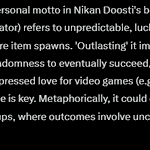
I asked grok to analyze what I say in my bio, what it means.
grok's focus on the "Outlasting RNGs" is interesting, and in fact the explanation matches closely. This is the part so resonating:
'𝘖𝘶𝘵𝘭𝘢𝘴𝘵𝘪𝘯𝘨' 𝘪𝘵 𝘪𝘮𝘱𝘭𝘪𝘦𝘴 𝘦𝘯𝘥𝘶𝘳𝘪𝘯𝘨 𝘰𝘳 𝘱𝘦𝘳𝘴𝘪𝘴𝘵𝘪𝘯𝘨 𝘵𝘩𝘳𝘰𝘶𝘨𝘩 𝘳𝘦𝘱𝘦𝘢𝘵𝘦𝘥 𝘣𝘢𝘥 𝘭𝘶𝘤𝘬, 𝘧𝘳𝘶𝘴𝘵𝘳𝘢𝘵𝘪𝘰𝘯, 𝘰𝘳 𝘳𝘢𝘯𝘥𝘰𝘮𝘯𝘦𝘴𝘴 𝘵𝘰 𝘦𝘷𝘦𝘯𝘵𝘶𝘢𝘭𝘭𝘺 𝘴𝘶𝘤𝘤𝘦𝘦𝘥, 𝘰𝘧𝘵𝘦𝘯 𝘣𝘺 𝘨𝘳𝘪𝘯𝘥𝘪𝘯𝘨 𝘰𝘳 𝘳𝘦𝘱𝘦𝘢𝘵𝘦𝘥 𝘢𝘵𝘵𝘦𝘮𝘱𝘵𝘴. 𝘛𝘩𝘪𝘴 𝘳𝘦𝘴𝘰𝘯𝘢𝘵𝘦𝘴 𝘸𝘪𝘵𝘩 𝘩𝘪𝘴 𝘦𝘹𝘱𝘳𝘦𝘴𝘴𝘦𝘥 𝘭𝘰𝘷𝘦 𝘧𝘰𝘳 𝘷𝘪𝘥𝘦𝘰 𝘨𝘢𝘮𝘦𝘴 (𝘦.𝘨., 𝘋𝘰𝘵𝘢 2, 𝘉𝘢𝘵𝘵𝘭𝘦𝘧𝘪𝘦𝘭𝘥 𝘝, 𝘊𝘺𝘣𝘦𝘳𝘱𝘶𝘯𝘬, 𝘢𝘯𝘥 𝘪𝘯𝘥𝘪𝘦𝘴), 𝘸𝘩𝘦𝘳𝘦 𝘴𝘶𝘤𝘩 𝘱𝘦𝘳𝘴𝘦𝘷𝘦𝘳𝘢𝘯𝘤𝘦 𝘪𝘴 𝘬𝘦𝘺.

One of the main lessons my supervisors emphasized during my bachelor’s thesis was that real progress requires leaving your 𝗰𝗼𝗺𝗳𝗼𝗿𝘁 𝘇𝗼𝗻𝗲.
At the time, I was working on classic computer vision. For my master’s thesis, I moved into 𝗰𝗼𝗺𝗽𝘂𝘁𝗮𝘁𝗶𝗼𝗻𝗮𝗹 𝗳𝗮𝗯𝗿𝗶𝗰𝗮𝘁𝗶𝗼𝗻, a domain that was entirely uncharted for me.
Over time, I realized this was not just situational, but a 𝗰𝗼𝗿𝗲 𝗮𝘁𝘁𝗿𝗶𝗯𝘂𝘁𝗲 𝗼𝗳 𝗵𝗼𝘄 𝗜 𝗼𝗽𝗲𝗿𝗮𝘁𝗲. I noticed this clearly at Aalto: in most gatherings, people tend to cluster by similar cultural or national backgrounds (shared language, nationality, and so on). Meanwhile, because I prioritize 𝘃𝗮𝗹𝘂𝗲𝘀 𝗼𝘃𝗲𝗿 𝗳𝗮𝗺𝗶𝗹𝗶𝗮𝗿𝗶𝘁𝘆, these factors have never guided where I belong or who I engage with. Through this, I noticed I have the most diverse group around me which makes me happy, especially that if you're being criticized by this group, there's a consistent reason, not just temporary feelings.
I am genuinely drawn to avoiding comfort zones and to working in 𝘶𝘯𝘤𝘩𝘢𝘳𝘵𝘦𝘥 𝘥𝘰𝘮𝘢𝘪𝘯𝘴, where outcomes are uncertain but the journey is unique and deep!
How is being 𝐚 𝐦𝐞𝐭𝐡𝐨𝐝𝐨𝐥𝐨𝐠𝐢𝐜𝐚𝐥 𝐭𝐨𝐮𝐫𝐢𝐬𝐭, 𝐨𝐫 𝐬𝐨𝐦𝐞𝐨𝐧𝐞 𝐰𝐢𝐭𝐡 𝐚 𝐫𝐞𝐬𝐞𝐚𝐫𝐜𝐡 𝐪𝐮𝐞𝐬𝐭𝐢𝐨𝐧 𝐭𝐫𝐞𝐚𝐭𝐞𝐝 𝐟𝐨𝐫 𝐠𝐫𝐚𝐧𝐭𝐬?
I personally always assumed that you have a question that want to address and apply for grants to cover that. But apparently we have many cases that "hot" topics define the research questions even on a yearly basis.