
Nephrology Fellow, Ramathibodi hospital, Thailand
Thailand
Joined April 2025
- Tweets348
- Following127
- Followers43
- Likes35


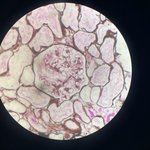

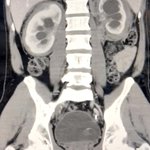
80's F, MDS background. Subacute nephrotic syndrome + active sediment (dysmorphic RBCs) UPCR 7.4 , Cr 2.5, ANA 1:1280 but dsDNA neg, C3/C4 normal, ANCA neg.
#renalpath


Natthasith Trakarnsrisunun retweeted

Podocytes, tubular cells, endothelium undergoing extensive vacuolization due to PEGylated pegcetacoplan used to treat recurrent C3GN in 36 yo man. Significance of this lesion appears to be undetermine kidney-international.org/art…


Natthasith Trakarnsrisunun retweeted

Proliferative Glomerulonephritis with “Monoclonal” Immunoglobulin Deposits: Time for Revising the Name and a New Classification
kidney-international.org/art…

Natthasith Trakarnsrisunun retweeted

#Sparsentan as First-Line Treatment in #IgAN From #SPARTAN
#VisualAbstract by @thana_susan
kireports.org/article/S2468-…

Natthasith Trakarnsrisunun retweeted

CAR T cells and T cell engagers for desensitization in kidney transplantation dlvr.it/TWHfkk

Natthasith Trakarnsrisunun retweeted

Simultaneously published in @JASN_News for @ISGDtweets Clinical Trials Summit -
Finerenone in primary and secondary FSGS: Data from FIND-CKD
ovid.com/jnls/jasn/fulltext/…

Natthasith Trakarnsrisunun retweeted

Outcomes of kidney transplantation in scleroderma patients: a U.S. National Database Study
doi.org/10.1093/ckj/sfag400


Natthasith Trakarnsrisunun retweeted

Approach to Hyperkalemia: The Role of Diet and Pharmacological Therapies
bit.ly/4ftihTp
@anniebelch

Natthasith Trakarnsrisunun retweeted
Metabolic Acidosis and Progression of CKD: Current Guidelines and Considerations
bit.ly/4fmLdLr
@theCKDdietitian @WesleyVisser @AndrewMorrisRD

Natthasith Trakarnsrisunun retweeted

Great post @brian_rifkin nephjc.com/news/daravsplexmm on the recent paper on Plasma Exchange and Daratumumab for Myeloma Cast Nephropathy @AjHematology @ShrutiGkidney @onconephsociety

Natthasith Trakarnsrisunun retweeted

Trends in nephrology:
from nihilism to targeted treatment of antibody-mediated rejection
🆓doi.org/10.1093/ndt/gfag011

Natthasith Trakarnsrisunun retweeted
Outcomes Following Kidney Failure From IgA Nephropathy Compared to Diabetic Kidney Disease and Other Glomerular Diseases
bit.ly/4zA5B4x
@tpinto_stats @germjacq

ALT Distribution of leading causes of death
7/ On assessment, albumin alone is explicitly discouraged as a marker of nutritional status, since it largely reflects inflammation and comorbidity. PEW should be diagnosed with MIS, 7-point SGA or the ISRNM PEW score (2C), with screening every 3-4 months (1C).
9
6/ Potassium may be the most practice-changing section. Routine restriction is not advised without hyperkalaemia (2C). Hypokalaemia is common in PD, associated with peritonitis and death in cohorts, and should prompt assessment for PEW. Suggested target 4-5 mmol/L.
1
4
5/ Energy: 25-35 kcal/kg/day (1C), with dialysate glucose counted. At roughly 70% absorption a 2 L CAPD exchange supplies about 71, 119 and 202 kcal at 1.5%, 2.5% and 4.25%. Four 2.5% exchanges come to about 476 kcal/day. Individual uptake varies with transport status.
1
4
4/ For RKF the direction may reverse. In a 60-patient RCT, a supplemented low-protein diet (0.6-0.8 g/kg) preserved RKF best over 1 year, a 1.0-1.2 g/kg diet worst, with similar nutritional status. That underpins the caution about high protein in incremental PD.
1
4
3/ The observational data point lower. In a Chinese cohort of 668 PD patients, mortality was higher at 0.61-0.79 g/kg/day than at 0.80-0.99, with no further gain at ≥1.0. Both upper groups were in positive nitrogen balance.
1
9
2/ Protein: 1.0-1.2 g/kg/day for metabolically stable patients (1B), unchanged from KDOQI 2020. It rests partly on nitrogen balance in 8 CAPD patients, neutral at 1.0 g/kg and clearly positive at 1.4 g/kg.
1
23
1/ ISRNM and ISPD have published the first joint practice recommendation on nutrition in PD (Wang et al, PDI 2026). Most of it is graded 1C or 2C, which says as much about the PD evidence base as about the recommendations.
#NephTwitter #RenalNutrition #PeritonealDialysis


1
52