

NeuroScope: Clear, visual videos on Alzheimer’s, Parkinson’s & more. Understand the brain’s mysteries. Subscribe to stay informed.
Joined July 2025
- Tweets11.8K
- Following1.4K
- Followers11.5K
- Likes7.9K



Harshi Peiris, Ph.D. retweeted
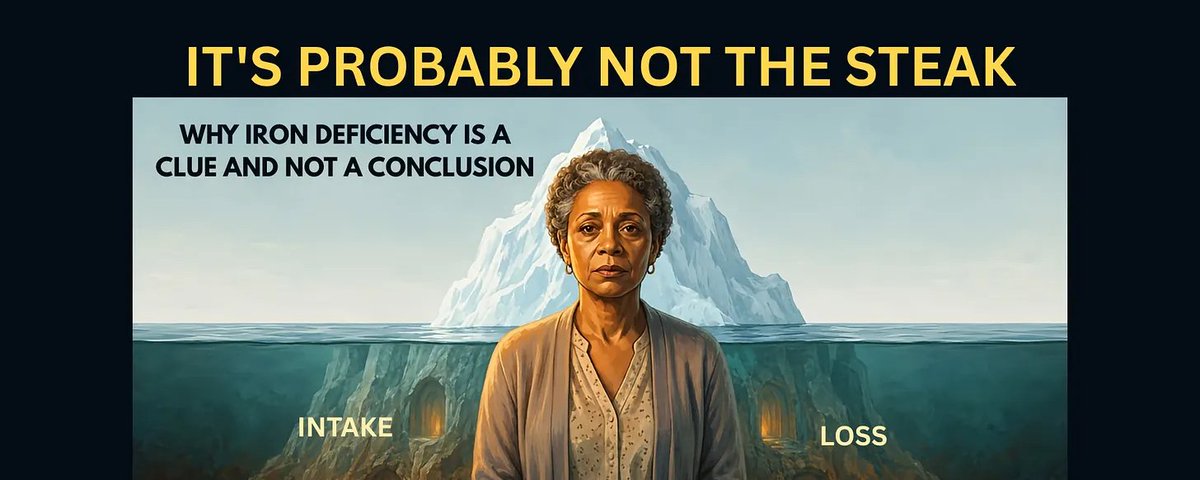
This is the first article of a series focusing on iron deficiency. I plan to cover different causes, from aging to cancer, and which tests to order to rule out other diseases.
Harshi Peiris, Ph.D. retweeted
Just premiered:
A Mayo Clinic study of nearly 800 people found the gut signal in Long COVID was weak overall, but strong in two groups.
People whose symptoms were mostly gut related, and people whose main symptom was fatigue.
What that means 👇

Harshi Peiris, Ph.D. retweeted
She was told it was Parkinson’s.
She fell twice. The room went grey when she stood. Her meds “maybe” helped.
3 red flags. Nobody caught them.
What does Ruth really have? 👇
Harshi Peiris, Ph.D. retweeted
Did you know?
1. 1 in 4 Parkinson’s disease cases are misdiagnosed. In some studies, this can be up to 50%
2. Parkinsonism is not Parkinson’s disease. Levodopa does not treat this.
3. Parkinson’s is not hereditary. Only about 10-15% are passed down.
4. New clinical trials are coming up.
5. Demand biomarker diagnosis: ask your doctor about targeted diagnostic testing or a biomarker panel to help identify the exact cause of your symptoms. 👇

Harshi Peiris, Ph.D. retweeted
For over two and a half years, I’ve been reading hundreds of papers and going through clinical trials one by one, trying to understand Long COVID without picking a side. Because the second I pick a side, I will abandon patients and their suffering.
What I keep coming back to is this: Long COVID is not one disease. It’s a label sitting on top of several different problems that can look the same from the outside.
That’s why no single answer you hear on a podcast fits everyone. Some approaches may already help some people. The hard part is knowing who has which problem.
I don’t claim to know everything. New studies come out every week. But I read them critically, and I try to listen to everyone.
That’s what this series is about.
Today is the 6th and 7th boxes out of 8 I have outlined.
Dysautonomia and Mitochondria.

Harshi Peiris, Ph.D. retweeted
A teenager sleeps 20 hours a day, eats everything in sight, and says the world looks fake. Then he wakes up one morning completely normal. The sleep lab found something nobody expected.
Premiering tonight. 👇

Harshi Peiris, Ph.D. retweeted
In a year-long trial, older adults who walked briskly three times a week grew their hippocampus, the brain's memory center, by about 2%.
That roughly reversed one to two years of age-related shrinkage.
The most powerful brain medicine is still free.
Harshi Peiris, Ph.D. retweeted
Onions are one of the richest quercetin sources in your kitchen. The "anti-inflammatory" claim is where it gets messy. 🧅🧵
Quercetin is the compound behind the hype. In animals it looks great: quercetin-rich onion peel extract shifted fat-tissue adipokine expression in obese rats.
Then humans enter the chat:
🔬 12 weeks, overweight/obese women: no effect on systemic inflammation markers
🔬 10 weeks, male smokers: better HDL, blood pressure and glucose, but no change in IL-6 or sVCAM-1
🔬 8 weeks, women with PCOS eating raw red onion: no significant change in mean adiponectin, leptin or hs-CRP
So what does this mean?
→ Cardiometabolic signals look more promising than inflammation signals
→ Most trials use concentrated extracts, not a salad topping
→ Trials are small and short, so "no effect" isn't "proven useless"
My take: eat the onion because it's delicious, cheap and linked to better metabolic markers. Just don't expect it to work as an anti-inflammatory drug.
Where do you stand? Food as medicine, or food as food? 👇
Harshi Peiris, Ph.D. retweeted
Social media is full of "Minecraft helps ADHD memory".
I was intrigued, so I went and read the actual study.
Spoiler: it wasn't Minecraft. It was something much simpler, and it only worked for some kids.
Here's the honest, unhyped version 🧵
Harshi Peiris, Ph.D. retweeted
Your brain has an age. Spinach might be making it younger. 🧵
Researchers followed 960 older adults for years. The ones who ate ~1 serving of leafy greens a day declined more slowly than people who rarely ate them.
The gap was equal to being 11 years younger cognitively.
Not 11% or 11 days. Eleven years.
Here's the mechanism researchers point to:
🥬 Nitrates: your mouth bacteria turn them into nitrite, then nitric oxide, which relaxes blood vessels. In a small trial, a high-nitrate diet increased blood flow to the frontal lobe white matter in older adults. That's the region tied to executive function and dementia risk.
👁️ Lutein: a carotenoid that concentrates in your eyes and brain.
The catch (because I'd rather be credible than clickbait):
The 960-person study is observational. It shows association, not proof.
The blood-flow trial was tiny (14 adults) and short-term.
Greens beat supplements here. AREDS2 found lutein/zeaxanthin pills didn't clearly protect cognition.
So the takeaway isn't "eat spinach, cure aging." It's that the cheapest thing in the produce aisle has some of the best brain data in nutrition.
Reply with your go-to way to eat greens. I'll build a "no-boring-salad" list from the best answers. 👇
Harshi Peiris, Ph.D. retweeted
Garlic is the most over-hyped AND under-appreciated food in your kitchen. Both are true.
Let's separate the science from the Instagram wellness noise 🧵
The hype: "Garlic cures high blood pressure! Kills infections! Melts cholesterol!"
The reality: Multiple meta-analyses (the top of the evidence pyramid) find garlic can lower blood pressure and cholesterol, but the effects are modest. And it's mostly shown with aged garlic extract, not just tossing cloves into your pasta.
The plot twist: You've heard "allicin is the magic compound," right?
Aged garlic extract contains little to none. The benefits seem to come from other sulfur compounds that form during aging. The most famous molecule in garlic isn't necessarily the one doing the heavy lifting in the trials.
What "modest" means: A helpful nudge, not a replacement for medication. If you're on BP meds or statins, garlic is not a swap. Talk to your doctor, especially since garlic supplements can interact with blood thinners.
The free upgrade: Crush or chop your garlic, then wait ~10 minutes before it hits the pan. That rest lets allicin form before heat deactivates the enzyme behind it. Zero cost, and you get more of the good stuff.
The antimicrobial claim? Impressive in a petri dish. Much less proven in actual humans. "Works in a lab dish" ≠ "replaces antibiotics."
Bottom line: Garlic is a solid, evidence-backed supporting actor, but not the miracle cure the internet wants it to be.
Now I want to know: what's the wildest garlic health claim you've ever heard? 👇
Harshi Peiris, Ph.D. retweeted
Long COVID isn't one disease. It's at least 8 different biological processes that can all cause the same symptoms: fatigue, brain fog, and more.
Today's episode: Box 5, microclots. Tiny blood clots that some researchers think may be driving symptoms in a subset of patients.
What the science actually says 👇

Harshi Peiris, Ph.D. retweeted
Carrots do NOT give you superhuman night vision. 🥕👀
The story goes back to WWII, when Britain reportedly pushed it as cover for its new radar. It stuck.
Here's what the science says:
✅ If you're vitamin A deficient, carrots (beta-carotene) can prevent and reverse night blindness. That's real.
❌ If you're already getting enough, extra carrots won't upgrade your eyes past normal.
⚠️ And the twist: high-dose beta-carotene pills raised lung cancer risk in smokers in two big randomized trials.
Food ≠ supplement. Dose and context matter.
Which brings me to Anne. She ate a "perfect" diet, took every supplement her nutritionists recommended, and her hair started falling out. Her vitamin A intake was 8x the recommended amount. 😳
The full story (and how it ended): 👇
Harshi Peiris, Ph.D. retweeted
In 2019, doctors dosed a dying young woman with a drug made for her alone.
The House passed a bill so they could start before animal safety testing was even finished.
Last week, that drug beat placebo in a Phase 3 trial.
Reckless, or the future of medicine? 🧵
Harshi Peiris, Ph.D. retweeted
Japan approved a therapy that puts new neurons into the brains of people with Parkinson's.
The evidence behind it? Seven patients. No placebo group.
Is this the future of neurology or its boldest gamble yet?
Harshi Peiris, Ph.D. retweeted
Check out the sleep watch and oura ring ranking based on clinical trials. 👇🏼


Harshi Peiris, Ph.D. retweeted
The newest episode focusing on autoimmune diseases and Long COVID came out. I focused on the prominent clinical trials linking autoimmunity to Long COVID.
These studies were run by Dr. Iwasaki at Yale University.
This is the 4th box out of 8.
youtu.be/rCPE0N3i9Cc?si=qYwW…

Harshi Peiris, Ph.D. retweeted
There is a big connection between senescent cells and cancer.
Many people know that aging is the biggest risk factor for cancer, but fewer know why ...
Read it here 👇
afar.org/ask-the-expert/judi…